- Company Articles
- Products and Technology
- Product knowledge
- How Single Side Aluminum Pipe Reduces Downtime During Production Line Reconfigurations

How Single Side Aluminum Pipe Reduces Downtime During Production Line Reconfigurations
Related Product
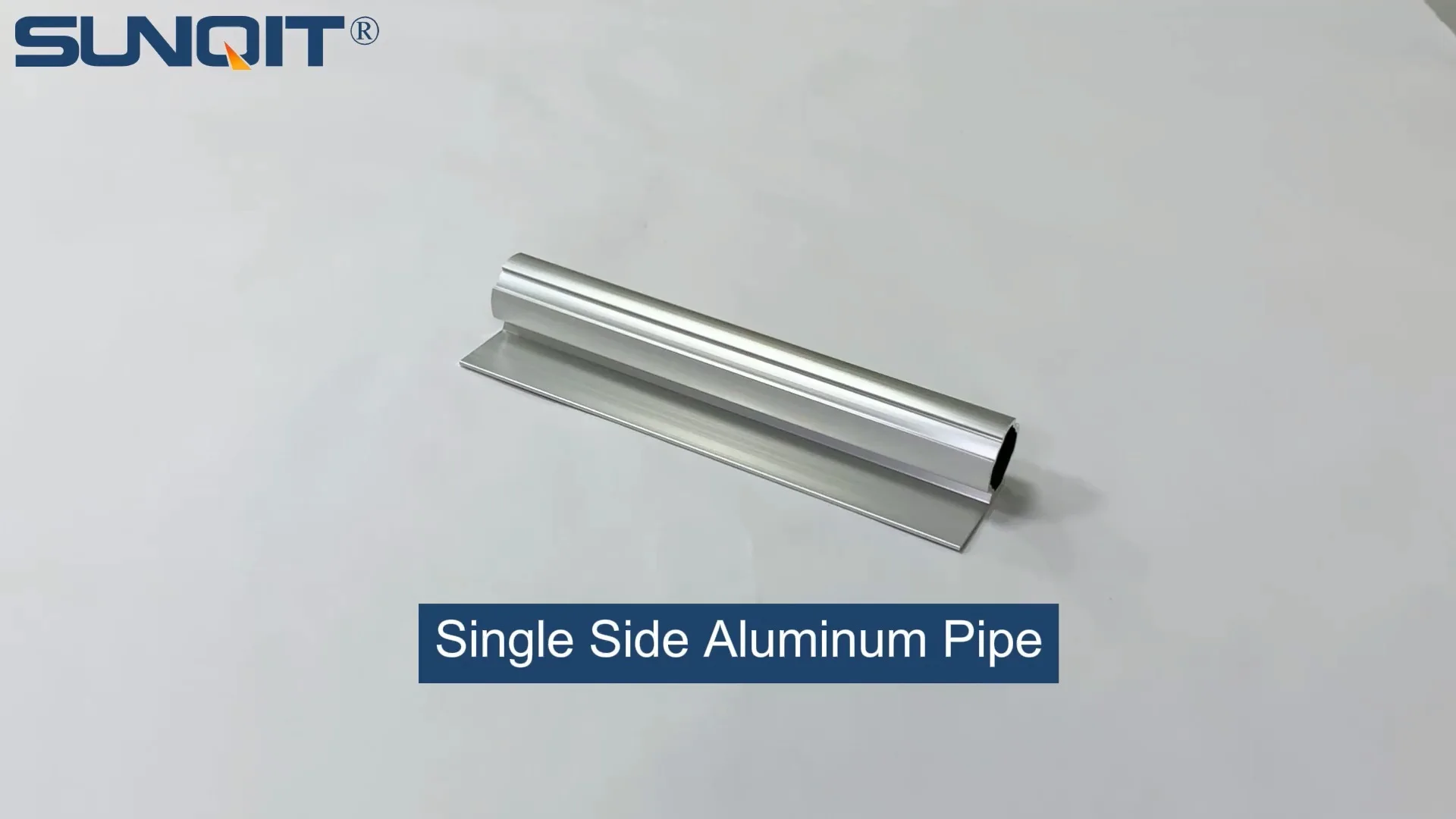
Single Side Aluminum Pipe
The single-sided plane can be installed with a back-mounted material box, and can also be used as a sidewall or partition.
It's 8:15 AM on a Wednesday, and Maria, the production manager at a mid-sized electronics plant, is staring at her watch. Her team was supposed to start assembling the new smartwatch model by 8:00—customer orders are piling up—but the assembly line is still stuck in "old product mode." The metal workbenches are bolted to the floor, the conveyor rails are welded together, and the material racks? They might as well be part of the building's foundation. By 10:30, two hours of production time have vanished, and Maria's already fielding calls from the CEO. "Why can't we move faster?" he asks. Maria sighs. She knows the answer: their production line is built for stability, not speed.
If this scenario hits close to home, you're not alone. In today's manufacturing landscape—where customer demands shift overnight and product lifecycles shrink by the quarter—flexibility isn't a luxury. It's survival. And yet, countless factories are still relying on rigid, fixed structures that turn even minor reconfigurations into all-day projects. The solution? It might be simpler than you think: single side aluminum pipe . This unassuming component, paired with the right aluminum profile accessories , is quietly revolutionizing how manufacturers adapt to change—slashing downtime, boosting productivity, and turning "we can't" into "we did it yesterday."
The Hidden Cost of "Set It and Forget It" Production Lines
Downtime is often talked about in terms of lost revenue, but its true cost runs deeper. Let's break it down: According to the Manufacturing Technology Insights report, the average factory loses 5% to 20% of its productive capacity to downtime. For a facility running three shifts, that's 72 to 288 hours of wasted time annually. If your plant generates $500 per hour in profit, that's $36,000 to $144,000 down the drain—just from planned reconfigurations. And that's before you factor in overtime pay for rushed retooling, missed delivery deadlines, or the demoralizing effect on your team when they're stuck waiting instead of building.
The root of the problem? Traditional production setups are designed for permanence. Steel pipes welded into frames, wooden workbenches nailed together, conveyor systems bolted to concrete—these were the norms when product lines stayed the same for years. But today? A consumer electronics manufacturer might update its smartphone model every 6 months; a medical device company could pivot to a new diagnostic tool overnight due to regulatory changes. Rigid systems can't keep up. By the time you've cut, welded, and repainted, your competitors have already shipped the next big thing.
Industry Insight: A 2024 survey by the Manufacturing Leadership Council found that 68% of manufacturers cite "inability to quickly reconfigure production lines" as a top barrier to meeting customer demand. Of those, 41% reported losing contracts directly due to slow retooling times.
Single Side Aluminum Pipe: Flexibility Built Into Every Inch
So, what makes single side aluminum pipe different? Let's start with the basics. Unlike traditional steel or plastic-coated lean pipes, single side aluminum pipe is lightweight (about 1/3 the weight of steel), corrosion-resistant, and designed with a unique T-slot profile running along one side. This slot isn't just a design quirk—it's a gateway to rapid customization. Pair it with aluminum profile accessories like clamps, joints, and brackets, and you've got a system that can be assembled, disassembled, and reassembled in a fraction of the time it takes to weld a steel frame.
How It Works: The T-Slot Advantage
Imagine building with a set of adult-sized Legos—only stronger, more durable, and tailored for industrial use. The T-slot on single side aluminum pipe allows accessories to slide into place and lock securely with a simple hand screw or lever. No drilling, no welding, no special tools. Need to adjust the height of a workbench? Loosen the clamps, move the pipe, retighten. Want to add a new shelf to a material rack? Slide on a bracket, lock it, and you're done. It's modularity at its most intuitive.
Take, for example, the internal straight aluminum joint —a small, unassuming accessory that connects two lengths of single side aluminum pipe in seconds. Unlike traditional welding, which requires a skilled technician and hours of work, one worker with a hex key can connect pipes in minutes. And if you make a mistake? No problem. Just loosen the joint and readjust. There's no scrap metal, no rework, and no wasted materials—just progress.

From 8 Hours to 80 Minutes: A Real-World Transformation
Case Study: Precision Electronics Inc. Cuts Reconfiguration Time by 85%
The Problem: Precision Electronics, a manufacturer of circuit boards, was struggling to keep up with customer demand for custom prototypes. Their old production line used steel lean pipes welded into fixed workstations. Switching between prototype A (small, delicate components) and prototype B (larger, heat-sensitive parts) took 8 hours—two full shifts of downtime. "We were turning down orders because we couldn't reconfigure fast enough," says James, the plant engineer.
The Solution: James's team replaced their steel setup with single side aluminum pipe and aluminum profile accessories, including adjustable workbenches, modular conveyor rails, and quick-connect material racks. They chose aluminum for its lightweight design and compatibility with ESD (electrostatic discharge) accessories—critical for protecting sensitive electronics.
The Result: The first reconfiguration with the new system took 2 hours. By the third time? 80 minutes. "We went from losing a full day to losing a coffee break," James laughs. "Last month, we took on three prototype orders we would've declined before. The ROI on the aluminum pipe system? We hit it in 6 weeks."
Precision Electronics isn't an anomaly. Manufacturers across industries—from automotive parts to medical devices—are reporting similar results. Why? Because single side aluminum pipe addresses the three biggest causes of reconfiguration downtime: labor intensity , tool dependency , and material waste . Let's break down how:
- Labor Intensity: Traditional reconfigurations require skilled welders, electricians, or carpenters. With aluminum pipe, any team member can learn the system in an hour. No special training, no certifications—just common sense.
- Tool Dependency: Welding torches, drills, and saws are expensive, bulky, and slow. Aluminum profile accessories often require nothing more than a hex key or hand wrench—tools that fit in a toolbelt.
- Material Waste: Cut a steel pipe too short? It's trash. Weld a joint at the wrong angle? Start over. Aluminum pipe systems are reusable—take them apart, move them, and rebuild with zero waste.

Beyond Downtime: How Aluminum Pipe Strengthens Your Lean System
At its core, lean system philosophy is about eliminating waste—whether that's wasted time, materials, or effort. Single side aluminum pipe doesn't just reduce downtime; it aligns perfectly with lean principles, turning your production floor into a hub of continuous improvement.
1. Kaizen-Friendly Design
Kaizen, or continuous improvement, thrives on small, iterative changes. With rigid systems, even a minor tweak (like adjusting a workbench height by 2 inches) requires a formal project. With aluminum pipe, your team can experiment on the fly. "Last week, our assemblers suggested tilting the material rack by 15 degrees to reduce reaching," says Maria, the production manager we met earlier (yes, she switched to aluminum pipe). "We made the change in 10 minutes. Productivity went up 5% that day. That's kaizen in action."
2. Just-In-Time (JIT) Compatibility
JIT manufacturing relies on delivering materials exactly when they're needed—no sooner, no later. Single side aluminum pipe makes it easy to reconfigure material flow paths, adjust conveyor heights, or build temporary storage racks to support JIT. For example, if a supplier delivers parts earlier than expected, you can quickly assemble a temporary holding rack instead of scrambling for space.
3. Employee Engagement
Here's an unexpected benefit: aluminum pipe systems empower workers. When your team can physically adjust their workspace to fit their needs—raising a workbench to avoid back strain, adding a shelf for frequently used tools—they feel valued. And engaged employees are 17% more productive, according to Gallup research. It's a win-win: your team works smarter, and your bottom line grows.

Comparing the Options: Why Aluminum Beats Steel, Plastic, and Wood
You might be thinking, "We already use lean pipe—why switch to aluminum?" Or "Isn't wood cheaper?" Let's put this to rest with a side-by-side comparison of common materials:
| Material | Reconfiguration Time | Durability | Weight | Cost Over Time |
|---|---|---|---|---|
| Steel Lean Pipe (Welded) | 8–12 hours (requires welding) | High (prone to rust) | Heavy (hard to move) | High (wasted materials, labor costs) |
| Plastic-Coated Steel Pipe | 4–6 hours (bolted joints) | Medium (coating chips, steel rusts) | Medium-Heavy | Medium (reusable but limited lifespan) |
| Wood | 6–8 hours (cutting, nailing, painting) | Low (warps, rots, scratches) | Medium | High (frequent replacement, waste) |
| Single Side Aluminum Pipe | 1–3 hours (tool-free assembly) | High (corrosion-resistant, no rust) | Lightweight (easy to maneuver) | Low (reusable for years, minimal labor) |
The data speaks for itself. Aluminum pipe isn't just faster to reconfigure—it's more durable, easier to handle, and more cost-effective over time. And when paired with aluminum profile accessories like ESD-safe joints or locking casters, it's versatile enough for even the most specialized industries, from aerospace to pharmaceuticals.
Getting Started: Your First Step Toward Flexible Manufacturing
Ready to say goodbye to all-day reconfigurations and hello to "we can do that by lunch"? Here's how to start:
1. Audit Your Pain Points
Walk your production floor with your team and ask: Which reconfigurations take the longest? Which structures cause the most frustration? Where do we waste the most time? Jot down these pain points—they'll guide your first aluminum pipe project.
2. Start Small, Think Big
You don't need to replace your entire line at once. Start with a high-impact area: maybe the workbench station that takes 4 hours to reconfigure, or the material rack that's always in the wrong place. Complete one project, measure the time saved, and use that success to build momentum.
3. Partner With a Supplier Who Gets It
Not all aluminum pipe suppliers are created equal. Look for a partner who offers not just parts, but expertise. They should help you design your setup, recommend the right accessories (like 90° aluminum pipe joint inside connection for tight corners), and provide training for your team. A good supplier turns "I'm not sure" into "Let's try this."
The Future of Manufacturing Is Flexible—Are You Ready?
Maria's plant now reconfigures its assembly line in under 2 hours. The CEO hasn't called about delays in months, and the team is pitching new process improvements weekly. "We used to dread product switches," Maria says. "Now? We look forward to them. It's like solving a puzzle—one that makes us better at what we do."
The message is clear: in a world where change is the only constant, rigidity is a liability. Single side aluminum pipe isn't just a tool—it's a mindset shift. It's about building production lines that adapt as quickly as your ideas, that empower your team instead of limiting them, and that turn downtime into uptime. So, the next time someone asks, "Why can't we move faster?" you'll have an answer: "We already are."