- Company Articles
- Products and Technology
- Solution
- How Single Side Aluminum Pipe Supports Just-In-Time (JIT) Production Systems

How Single Side Aluminum Pipe Supports Just-In-Time (JIT) Production Systems
Related Product
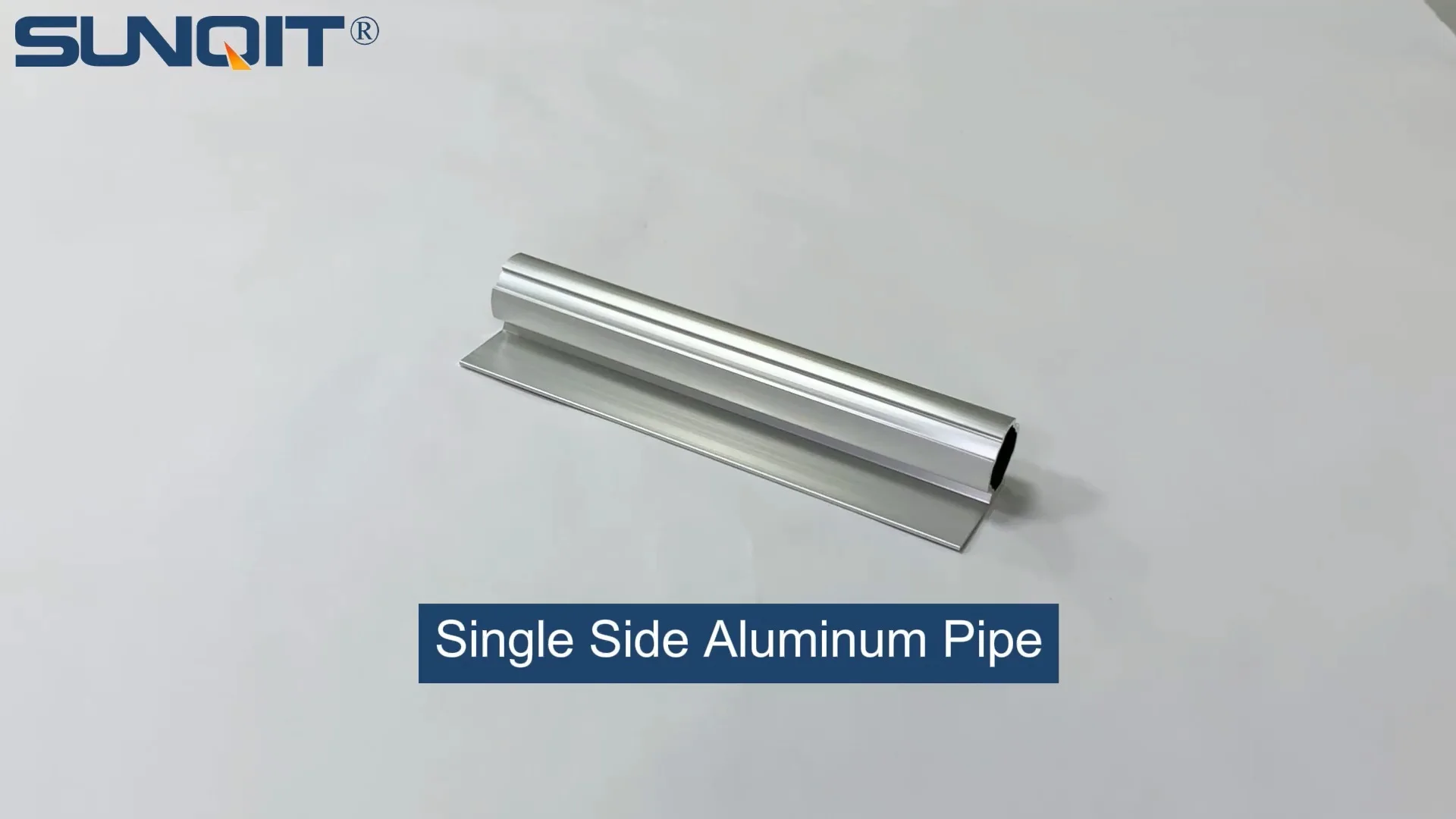
Single Side Aluminum Pipe
The single-sided plane can be installed with a back-mounted material box, and can also be used as a sidewall or partition.
Introduction: The Heartbeat of JIT Production
In the fast-paced world of manufacturing, where every second and every cent counts, Just-In-Time (JIT) production has emerged as more than just a methodology—it's a philosophy. Born from the Toyota Production System, JIT revolves around one core principle: produce only what is needed, when it is needed, and in the exact quantity needed. By slashing waste (or muda , as it's known in lean terminology), reducing inventory, and streamlining workflows, JIT helps manufacturers stay agile, cut costs, and respond swiftly to changing customer demands. But here's the catch: JIT doesn't just happen. It relies on a delicate balance of precision, flexibility, and efficiency—especially when it comes to how materials move, workspaces are organized, and teams collaborate.
Imagine a factory floor where parts pile up because the assembly line can't keep pace, or where workers spend hours reconfiguring a rigid workstation to accommodate a new product. These are the silent killers of JIT. To truly thrive, JIT demands systems that adapt as quickly as production needs change. That's where single side aluminum pipe comes into play. Lightweight, modular, and infinitely reconfigurable, this unassuming component is quietly revolutionizing how manufacturers build, adapt, and optimize their production environments. In this article, we'll explore how single side aluminum pipe isn't just a material handling tool—it's a cornerstone of JIT success, bridging the gap between rigid traditional setups and the dynamic needs of modern manufacturing.
The Core Challenges of JIT: Why Flexibility Matters
Before diving into the specifics of single side aluminum pipe, let's first unpack why JIT is both powerful and challenging. At its core, JIT aims to eliminate seven types of waste: overproduction, waiting, transportation, overprocessing, inventory, motion, and defects. To do this, manufacturers must minimize downtime, reduce setup times, and ensure materials flow seamlessly from one process to the next. But in practice, these goals often collide with reality:
- Demand volatility: Customer orders fluctuate, and product mixes change. A production line built for one product may struggle to switch to another without costly retooling.
- Space constraints: JIT thrives on compact, efficient layouts. Bulky, fixed workbenches or storage racks eat up valuable floor space, limiting workflow optimization.
- Labor inefficiency: When workers spend time searching for tools, moving heavy materials, or adjusting rigid equipment, they're not adding value to the product—they're creating waste.
- Material flow bottlenecks: If parts don't reach the assembly line exactly when needed, workers wait, and production stalls. Traditional conveyors or static racks often can't keep up with variable demand.
These challenges share a common thread: rigidity. Traditional manufacturing setups—think welded steel racks, fixed conveyor belts, or heavy wooden workbenches—are designed for stability, not change. They're built to last decades, but in a JIT environment, "lasts decades" can mean "becomes obsolete in months." What manufacturers need is a system that's sturdy enough to handle daily use but flexible enough to evolve with production needs. Enter single side aluminum pipe.

Single Side Aluminum Pipe: The Basics of a Modular Marvel
So, what exactly is single side aluminum pipe? At first glance, it might look like any other metal tube, but its design is purpose-built for adaptability. Unlike traditional steel pipes, which are heavy and require welding or complex tools to assemble, single side aluminum pipe is lightweight (about 1/3 the weight of steel), corrosion-resistant, and designed to work with a simple but ingenious system of joints and accessories. These pipes typically feature a T-slot design along one side, allowing them to connect seamlessly with aluminum profile accessories like brackets, clamps, and hinges—no welding, no drilling, just a few turns of a wrench.
But the real magic lies in its modularity. Single side aluminum pipe isn't just a standalone product; it's part of an ecosystem. Pair it with lean pipe joints, caster wheels, roller track guide rails, or workbench components, and you can build everything from a simple assembly workbench to a complex flow rack system in hours, not days. This modularity is a game-changer for JIT, where the ability to reconfigure a workspace in response to a new order or a process improvement is often the difference between profit and loss.
Let's break down its key features:
- Lightweight yet durable: Aluminum's strength-to-weight ratio means single side aluminum pipe can support heavy loads (think toolboxes, raw materials, or finished products) without being cumbersome to move or reconfigure.
- Tool-free assembly: Most single side aluminum pipe systems use friction-fit or bolt-on joints, like internal rotatary aluminum joints or parallel aluminum joint A, which can be tightened by hand or with a basic hex key. This cuts setup time from days to hours.
- Corrosion and wear resistance: Unlike steel, aluminum doesn't rust, making it ideal for factories with strict cleanliness standards (like electronics or food processing). It also holds up well to daily wear and tear, ensuring longevity without frequent replacements.
- Compatibility with lean accessories: Single side aluminum pipe plays well with other lean components, from roller track and caster wheels to plastic roller track guide rails (yellow or grey, depending on your workflow needs). This means you can build a fully integrated system tailored to your JIT goals.

Real-World Impact: How Single Side Aluminum Pipe Solves JIT's Toughest Problems
Enough theory—let's get practical. How does single side aluminum pipe actually support JIT in day-to-day manufacturing? Let's explore three critical areas: workbench design, material flow systems, and mobile material handling.
1. Workbenches: Ergonomic, Adaptable, and Ready for Change
Workbenches are the workhorses of any production line. In a JIT environment, they need to be more than just flat surfaces—they need to adapt to different tasks, operators, and products. Traditional workbenches, often made of solid wood or welded steel, are fixed in height, shape, and layout. If a new product requires a longer bench, or if an operator needs a lower surface to reduce back strain, you're stuck: either live with inefficiency or invest in a brand-new bench.
Single side aluminum pipe changes this. Take, for example, the Workbench E (single deck-without caster) , a common configuration built with single side aluminum pipe. Out of the box, it might look like a standard workbench, but with a few adjustments, it can transform: add a shelf for tools using aluminum profile brackets, lower the height by swapping out shorter pipes, or even attach a roller track along one edge to feed parts directly into the workspace. Because the pipe and joint system is modular, these changes take minutes, not days. Operators can customize their workbenches to their specific tasks, reducing motion waste (reaching, bending) and boosting productivity.
One electronics manufacturer we worked with recently upgraded from wooden workbenches to single side aluminum pipe setups. They reported a 25% reduction in operator fatigue (thanks to adjustable heights) and a 15% faster assembly time for small components—all because the workbenches could be tailored to each step of the production process.
2. Flow Racks & Roller Tracks: Keeping Materials Moving
In JIT, material flow is everything. Parts should arrive at the assembly line exactly when they're needed, with minimal handling. This is where flow racks and roller tracks shine—and single side aluminum pipe is the perfect backbone for these systems. Traditional flow racks, often made of steel, are heavy and hard to reconfigure. If you need to adjust the angle of the rollers to speed up or slow down part movement, or if you need to add more lanes to accommodate a new product, you're looking at welding or drilling—time-consuming and costly.
Single side aluminum pipe flow racks, by contrast, are built for adaptability. Using components like plastic roller track guide rails (yellow or grey) and roller track placon mount brackets , manufacturers can adjust roller angles, add or remove lanes, or even extend the rack length in minutes. For example, a automotive parts supplier we partnered with needed to switch from a 2-lane flow rack to a 3-lane setup to handle a new order. With their old steel racks, this would have taken a full day of downtime. With single side aluminum pipe, their team did it in under two hours during a lunch break—no production loss, no overtime costs.
Roller tracks, too, benefit from aluminum's flexibility. 38 aluminum roller track yellow with side guide , for instance, can be mounted directly onto single side aluminum pipe frames, creating a smooth, gravity-fed path for parts. If a bottleneck forms downstream, operators can quickly reposition the track or add a swivel roller ball (1 inch) to redirect flow—keeping materials moving and JIT schedules on track.
3. Turnover Trolleys & Material Racks: Mobility for On-Demand Delivery
JIT isn't just about stationary workspaces—it's about getting materials to the right place at the right time. Turnover trolleys and material racks are critical here, but traditional steel trolleys are heavy, hard to maneuver, and often too rigid to carry different part sizes. Single side aluminum pipe changes this with lightweight, mobile solutions that can be customized on the fly.
Take the material rack B (3 row and 3 floor) , a common setup for storing and transporting small to medium parts. Built with single side aluminum pipe and caster wheels (lockable for stability when loading/unloading), this rack is light enough for one person to push, even when fully loaded. If a production line needs parts delivered to a different station, the trolley can be quickly reconfigured with additional shelves or dividers using aluminum profile accessories. No more waiting for a forklift or struggling with a heavy steel cart—just grab the trolley and go.
A food packaging plant we worked with recently replaced their steel turnover trolleys with aluminum pipe versions. The result? A 40% reduction in time spent moving materials between stations, and a noticeable drop in workplace injuries from heavy lifting. Plus, since the trolleys could be sanitized easily (thanks to aluminum's corrosion resistance), they met strict food safety standards—something their old steel trolleys struggled with.

Traditional vs. Single Side Aluminum Pipe Systems: A Comparative Look
To truly appreciate the impact of single side aluminum pipe on JIT, let's compare it to traditional material handling systems. The table below breaks down key metrics that matter most to JIT success:
| Metric | Traditional Steel/Wood Systems | Single Side Aluminum Pipe Systems |
|---|---|---|
| Setup Time | Days to weeks (requires welding, drilling, or custom fabrication) | Hours (modular joints and tool-free assembly) |
| Reconfiguration Effort | High (often requires cutting/welding; parts are not reusable) | Low (disassemble and rebuild with the same parts) |
| Weight | Heavy (steel/wood is dense, hard to move) | Lightweight (1/3 the weight of steel, easy to maneuver) |
| Durability | High, but prone to rust (steel) or warping (wood) | High, with corrosion resistance and minimal wear |
| Cost Over Time | Higher (frequent replacements, high labor for changes) | Lower (reusable parts, minimal labor for reconfigurations) |
| Flexibility | Low (fixed design, hard to adapt to new products) | High (infinitely reconfigurable for changing needs) |
The data speaks for itself: single side aluminum pipe systems outperform traditional setups in nearly every category that matters for JIT. By reducing setup time, lowering reconfiguration effort, and improving flexibility, they directly address the waste and inefficiency that plague rigid manufacturing environments.
Choosing the Right Components: Beyond the Pipe
Of course, single side aluminum pipe is only as effective as the components it's paired with. To build a truly JIT-friendly system, you'll need to select the right accessories—from joints and brackets to casters and roller tracks. Here are a few key components to consider:
- Lean pipe joints: These are the "glue" of the system. Look for internal rotatary aluminum joints or 90° aluminum pipe joint inside connection for flexibility in angles. For heavy-duty applications, parallel double end fixed lean pipe joints provide extra stability.
- Caster wheels and accessories: Mobility is critical for JIT, so invest in high-quality caster wheels with locks. Caster accessories like brake pedals or swivel locks ensure trolleys and workbenches stay put when needed.
- Roller tracks and guides: For material flow, roller track placon mount brackets and plastic roller track guide rails (yellow or grey) help parts glide smoothly. Consider swivel roller balls (1 inch or 0.5 inch) for multidirectional movement in workstations.
- Aluminum profile accessories: Items like aluminum guide rail A or aluminum profile rubber strips add functionality—guide rails keep parts aligned, while rubber strips reduce noise and prevent scratches on delicate components.
When sourcing these components, partnering with a reliable lean system supplier is crucial. Look for suppliers that offer a full range of single side aluminum pipe and accessories, and that can provide technical support for custom configurations. A good supplier won't just sell you parts—they'll help you design a system that aligns with your specific JIT goals.
Future-Proofing JIT: Why Single Side Aluminum Pipe Will Only Grow in Importance
As manufacturing evolves—with trends like Industry 4.0, smart factories, and mass customization—JIT will only become more critical. These trends demand even greater flexibility, as manufacturers shift from high-volume, low-mix production to low-volume, high-mix. In this environment, rigid systems will fail; modular systems will thrive.
Single side aluminum pipe is uniquely positioned to support these future needs. Its compatibility with IoT devices (sensors, smart trackers) makes it easy to integrate into connected factories, where real-time data on material flow can further optimize JIT processes. Additionally, aluminum is 100% recyclable, aligning with the growing focus on sustainability in manufacturing. Unlike steel, which requires significant energy to recycle, aluminum can be melted down and reused with minimal environmental impact—making it a choice that benefits both the bottom line and the planet.
Perhaps most importantly, single side aluminum pipe grows with your business. As production needs expand, you can add more pipes, joints, and accessories to your existing system—no need to tear down and rebuild. This scalability ensures your investment today continues to deliver value tomorrow, even as your JIT processes evolve.
Conclusion: Building a JIT-Ready Future with Single Side Aluminum Pipe
Just-In-Time production isn't about cutting corners—it's about cutting waste. It's about creating a manufacturing environment where every action adds value, every material moves with purpose, and every workspace adapts to the task at hand. Single side aluminum pipe embodies this philosophy. By combining lightweight durability, modular flexibility, and ease of use, it transforms static factories into dynamic ecosystems where JIT principles aren't just followed—they're lived.
Whether you're building a simple workbench, a complex flow rack, or a fleet of mobile trolleys, single side aluminum pipe gives you the tools to respond to change, reduce waste, and keep production flowing. It's not just a material handling solution; it's a strategic investment in your JIT success.
So, the next time you walk your factory floor, ask yourself: Are my workspaces holding me back, or are they helping me thrive? If the answer is the former, it might be time to consider the power of single side aluminum pipe. Your operators, your bottom line, and your JIT goals will thank you.