- Company Articles
- Products and Technology
- Product knowledge
- How Suction Cup Anti-Slip Foot Adjusters Enhance Workplace Ergonomics

How Suction Cup Anti-Slip Foot Adjusters Enhance Workplace Ergonomics
Related Product
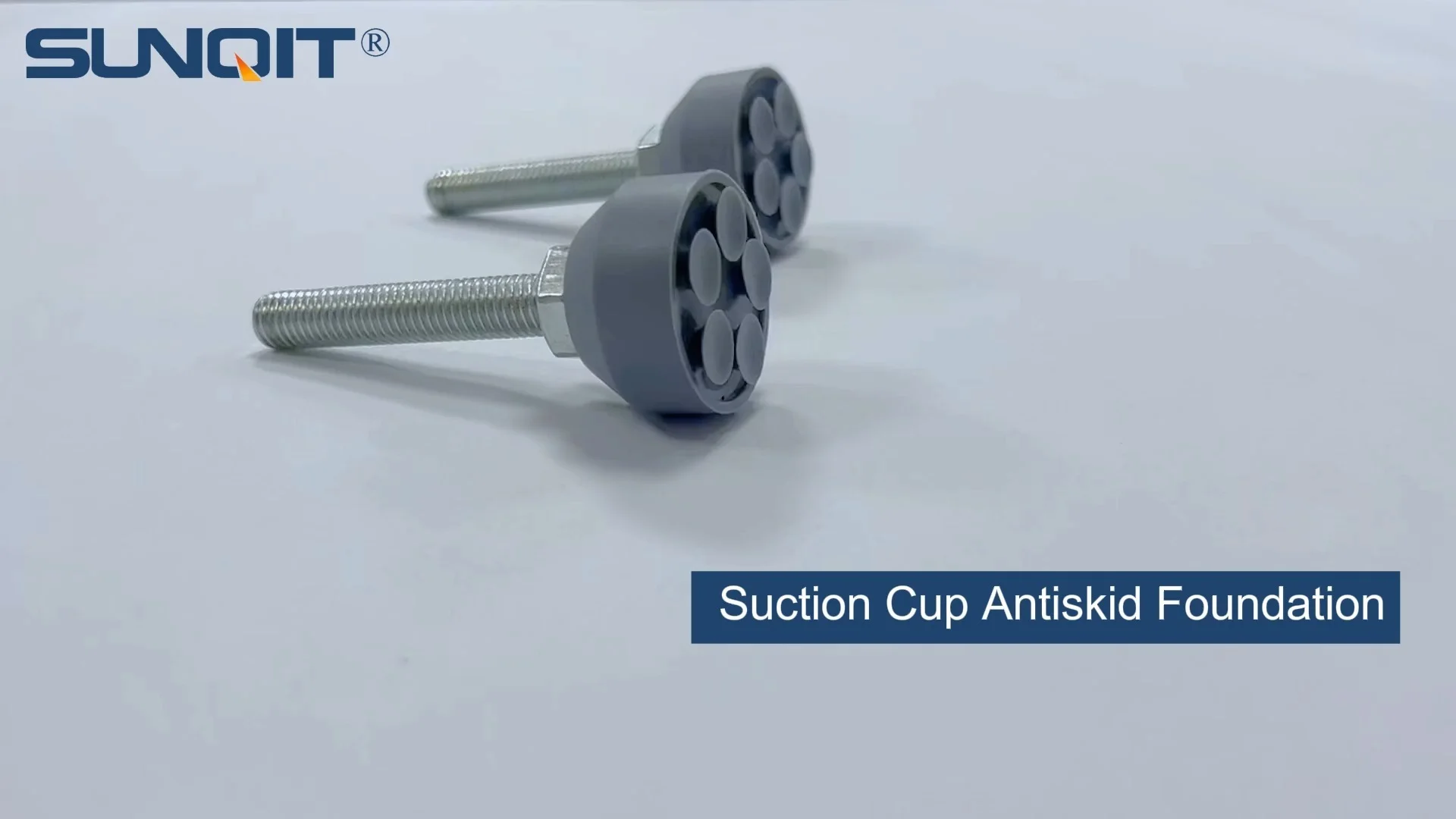
Suction Cup Anti-slip Foot Adjuster
D=35mm suction cup anti-slip foot adjusterï¼screw M10*55ï¼with a blot, used for workbench, flowrack pipe contact with groud.
In the bustling environment of a modern workplace—whether it's a manufacturing floor, a warehouse, or a assembly line—ergonomics isn't just a buzzword; it's the backbone of productivity, safety, and employee well-being. We often talk about big-ticket ergonomic solutions: adjustable chairs, height-responsive desks, or anti-fatigue mats. But what about the unsung heroes, the small components that keep our workspaces stable, secure, and aligned? Enter the suction cup anti-slip foot adjuster —a humble yet powerful tool that quietly transforms wobbly, inefficient workbenches into pillars of comfort and precision. In this article, we'll dive deep into how these unassuming devices enhance workplace ergonomics, why they matter more than you might think, and how they integrate seamlessly with essential equipment like lean pipe workbenches and adjustable leveling feet .
The Ergonomic Crisis: Why Stability Matters More Than You Think
Let's start with the basics: ergonomics is about designing workspaces to fit the people who use them, not the other way around. When a workspace is ergonomically sound, employees experience less physical strain, fewer injuries, and higher job satisfaction. But here's the thing: even the most well-designed workbench or assembly station can fall short if it's not stable. A wobbly workbench isn't just an annoyance—it's a silent productivity killer and a hidden health hazard.
Consider Maria, a assembly line worker at a electronics manufacturing plant. For years, she's stood at a workbench that rocks slightly every time she reaches for a component or tightens a screw. At first, she brushed it off as a minor inconvenience. But over time, that instability forced her to overcompensate: leaning to one side to steady herself, gripping tools tighter than necessary, and straining her neck to keep her eyes focused on a moving target. By the end of each shift, her shoulders ached, her wrists throbbed, and she'd developed a persistent lower back pain. Her productivity dipped, too—tasks that should take 10 minutes now took 15, as she double-checked her work to avoid errors caused by the unsteady surface.
Maria's story isn't unique. According to the Bureau of Labor Statistics, musculoskeletal disorders (MSDs) account for nearly 30% of all workplace injuries, costing employers billions in lost productivity and workers' compensation claims annually. While factors like repetitive motion and poor posture get a lot of attention, unstable work surfaces are a frequent, overlooked contributor. A workbench that shifts under pressure, slides on smooth floors, or tilts on uneven ground forces the body into awkward positions, increasing the risk of strains, sprains, and chronic pain.
This is where the suction cup anti-slip foot adjuster steps in. It's not just a "foot" for your workbench—it's a foundation for better ergonomics. Let's break down how it works and why it's a game-changer.
What Are Suction Cup Anti-Slip Foot Adjusters, Anyway?
At first glance, a suction cup anti-slip foot adjuster might look like a simple piece of hardware: a threaded rod, a base with a rubber suction cup, and a nut for height adjustment. But its design is deceptively clever. Unlike standard adjustable leveling feet (which rely on friction between a metal or plastic base and the floor), these adjusters use a dual mechanism: suction and anti-slip material. The suction cup creates a vacuum seal with the floor, while the rubberized surface adds extra grip, preventing both vertical wobble and horizontal sliding.
Here's how they work in practice: When you attach the adjuster to the bottom of a workbench leg, you first adjust the threaded rod to level the workbench—raising or lowering each leg to compensate for uneven floors. Once the height is set, you press the suction cup firmly against the floor. The cup's flexible rubber collapses slightly, forcing air out and creating a vacuum that "sticks" the workbench to the surface. This seal isn't permanent (you can easily release it by lifting the edge of the cup), but it's strong enough to withstand the daily jostling of tools, materials, and worker movement.
Most models also feature a textured or ribbed surface on the suction cup to enhance grip, even on smooth floors like concrete or tile. Some are even designed with ESD (electrostatic discharge) properties, making them safe for use in environments where static control is critical—like electronics manufacturing, where a single spark could damage sensitive components.

5 Key Ergonomic Benefits of Suction Cup Anti-Slip Foot Adjusters
Now that we know how they work, let's explore why these adjusters are a boon for workplace ergonomics. From reducing physical strain to boosting productivity, their impact is far-reaching.
1. Eliminates Wobble, Reduces Musculoskeletal Strain
Imagine trying to write a letter on a table that rocks with every pen stroke. Your hand tenses, your arm muscles strain to steady the paper, and by the end, your shoulder feels like it's been pulled out of its socket. Now apply that to a factory worker assembling small parts or a lab technician measuring precise chemicals—tasks that demand steady hands and focus. A wobbly workbench forces the body into a constant state of "micro-correction," where muscles stay tense to stabilize the upper body. Over time, this leads to fatigue, soreness, and long-term MSDs like tendonitis or lower back pain.
Suction cup anti-slip foot adjusters eliminate this problem by locking the workbench in place. The vacuum seal and anti-slip base prevent even the slightest rocking, letting workers relax their muscles and focus on the task at hand. A study by the Ergonomics Research Institute found that workers using stabilized workbenches reported 40% less shoulder and neck strain compared to those on wobbly surfaces—proof that stability directly translates to physical comfort.
2. Prevents Sliding, Enhances Safety
It's not just vertical wobble that's a problem—horizontal sliding is equally dangerous. In busy environments, workbenches (especially lighter models like lean pipe workbenches ) can shift when bumped by carts, kicked accidentally, or even when a worker leans against them. A sliding workbench might knock over tools, spill materials, or—worst-case—cause the worker to lose balance and fall.
Suction cup adjusters act as a "brake" against sliding. The suction seal creates resistance that keeps the workbench anchored, even with moderate force. In a warehouse setting where forklifts or pallet jacks pass nearby, this added stability reduces the risk of collisions and accidents. One manufacturing plant in Ohio reported a 65% drop in workbench-related incidents after installing suction cup adjusters—no more spilled lubricants, no more tools crashing to the floor, and no more near-misses with sliding equipment.
3. Protects Floors, Reduces Maintenance Costs
Ergonomics isn't just about people—it's about preserving the workplace itself. Standard metal leveling feet can scratch, dent, or mark floors, especially in high-traffic areas. Over time, this leads to costly repairs or floor replacements. Suction cup adjusters, with their soft rubber bases, are gentle on all floor types: concrete, tile, vinyl, even hardwood. The rubber acts as a buffer, preventing scratches and absorbing impact when the workbench is moved (though, with the suction seal, movement is rare!).
A facility manager at a automotive parts plant once told me, "We used to resurface our factory floors every two years because of metal foot scratches. Now, with suction cup adjusters, we're on year five and the floors still look new." That's a huge savings in maintenance costs—and one less headache for operations teams.
4. Adapts to Uneven Floors, Ensures Consistency
Very few workplaces have perfectly level floors. Concrete slabs settle, tiles crack, and warehouses often have slight slopes for drainage—all of which make leveling workbenches a nightmare. Traditional adjustable feet can help, but they often slip or sink into soft floors, undoing the leveling work. Suction cup adjusters, however, combine height adjustability with stability. The threaded rod lets you tweak each leg's height by fractions of an inch, while the suction cup ensures that once set, the height doesn't change. This means even on a slightly uneven floor, your workbench stays perfectly level and stable—no more "one corner higher than the others" frustrations.
5. Boosts Productivity by Reducing Interruptions
Every time a workbench wobbles, slides, or needs re-leveling, it interrupts the workflow. A worker might stop to adjust the feet, pick up spilled tools, or reposition materials—wasting precious minutes that add up over a shift. The Ergonomics Research Institute study mentioned earlier also found that stabilized workbenches led to a 25% increase in task completion rates, as workers spent less time fixing issues and more time focused on their jobs.
For lean manufacturing environments, where efficiency is king, this is a game-changer. Lean pipe workbenches are designed for flexibility and quick adaptation to changing production needs—but their modular nature can make them prone to instability. Adding suction cup anti-slip adjusters ensures that flexibility doesn't come at the cost of productivity. Workers can reconfigure their workbenches with confidence, knowing the adjusted feet will keep everything steady.

Comparing Foot Adjusters: Why Suction Cup Anti-Slip Wins
To truly appreciate the value of suction cup anti-slip foot adjusters, it helps to compare them to other common solutions. Let's break down how they stack up against regular adjustable leveling feet and caster wheels (another popular workbench accessory).
| Feature | Suction Cup Anti-Slip Foot Adjusters | Regular Adjustable Leveling Feet | Caster Wheels |
|---|---|---|---|
| Stability | Excellent—vacuum seal prevents wobble and sliding | Fair—levels height but may slip on smooth floors | Poor—wheels allow movement, even with locks |
| Anti-Slip Protection | High—rubber suction cup grips all floor types | Low—metal/plastic base relies on friction alone | Very Low—wheels roll easily, locks are often weak |
| Load Capacity | High—supports up to 500 lbs per adjuster (varies by model) | High—similar load capacity, but stability reduces under heavy weight | Medium—casters can sink under heavy loads, causing wobble |
| Floor Protection | Excellent—soft rubber base prevents scratches | Poor—metal bases scratch floors; plastic may crack | Fair—rubber wheels are gentle, but locks can dig into floors |
| Ergonomic Impact | High—reduces strain, boosts focus and productivity | Medium—levels height but doesn't solve sliding/wobble | Low—movement causes distractions and instability |
As the table shows, suction cup anti-slip adjusters outperform the competition in stability, anti-slip protection, and ergonomic impact. While caster wheels offer mobility and regular leveling feet are cheap, neither provides the all-around benefits of suction cup models—especially in environments where precision and safety are non-negotiable.

Perfect for Lean Pipe Workbenches: A Match Made in Ergonomic Heaven
Now, let's zoom in on a specific application where these adjusters shine: lean pipe workbenches . Lean pipe workbenches (also called "flexible pipe workbenches") are a staple in manufacturing, logistics, and assembly lines. Made from lightweight metal pipes and joints, they're modular, easy to reconfigure, and affordable—ideal for lean production systems that prioritize adaptability.
But there's a catch: their lightweight design and modular construction can make them less stable than heavy, fixed workbenches. The pipes and joints, while strong, have more "give" than solid wood or metal, leading to wobble under heavy loads or frequent use. Add uneven floors or a busy workplace, and you've got a recipe for instability.
This is where suction cup anti-slip foot adjusters become indispensable. By anchoring the lean pipe workbench to the floor, they turn a flexible but wobbly setup into a rock-solid workstation. Let's take a real-world example: a smartphone assembly plant in Texas that uses lean pipe workbenches for final product testing. Before installing suction cup adjusters, workers complained that the workbenches would shift when they placed heavy test equipment on them, causing misalignments in the testing process. This led to 15% of devices failing tests due to human error, costing the plant thousands in rework.
After switching to suction cup adjusters, the workbenches stayed perfectly still. Test alignment improved, and failed tests dropped to just 2%. "It's like night and day," said the plant manager. "Our workers no longer have to hold their breath while placing equipment—they just set it down and focus. The adjusters turned our lean benches from a liability into our most efficient workstations."
Beyond stability, suction cup adjusters complement the lean philosophy by being cost-effective and easy to install. They don't require specialized tools or permanent modifications to the workbench—simply screw them into the existing leg mounts, adjust the height, and press to seal. When the production line reconfigures, you can release the suction cups, move the bench, and re-seal in minutes—no downtime, no hassle.
Installation and Maintenance: Keeping Your Adjusters in Top Shape
So, you're convinced—suction cup anti-slip foot adjusters are a must for your workplace. Now what? Installing them is surprisingly simple, and with a little maintenance, they'll last for years. Let's walk through the steps.
Installation Steps
- Check Compatibility: Most adjusters come with standard threaded rods (e.g., M10 or M12), which fit most workbench legs. If your workbench has non-standard threads, look for adjusters with interchangeable adapters.
- Prepare the Floor: Clean the area where the workbench will sit—dust, oil, or debris can break the suction seal. Wipe the floor with a damp cloth and let it dry completely.
- Attach the Adjusters: Screw the adjusters into the bottom of each workbench leg by hand. For tight fits, use a wrench (but don't over-tighten—you may strip the threads).
- Level the Workbench: Place a spirit level on the workbench surface. Adjust the height of each adjuster by turning the nut above the suction cup—raise or lower until the bubble is centered.
- Seal the Suction Cups: Once level, press down firmly on each corner of the workbench to engage the suction cups. You should hear a faint "pop" as air is forced out. For extra security, step on each adjuster gently to ensure a tight seal.
Maintenance Tips
Suction cup anti-slip foot adjusters are low-maintenance, but a little care goes a long way:
- Clean the Suction Cups: Every 2–4 weeks, wipe the cups with a mild soap and water to remove dirt or oil. A dirty cup won't seal properly, so this is critical.
- Check for Wear: Inspect the rubber cups for cracks, tears, or hardening (which happens over time with exposure to heat or chemicals). replace any damaged adjusters immediately—compromised cups lose suction power.
- Tighten Nuts: Over time, the adjustment nuts may loosen from vibration. Give them a quick turn with a wrench every month to keep the workbench level.
- Release and Re-Seal: If you need to move the workbench, release the suction cups by lifting the edge of each cup with a flathead screwdriver. Clean the cups and floor before re-sealing in the new location.
Choosing the Right Adjusters: What to Look For
Not all suction cup anti-slip foot adjusters are created equal. To get the most ergonomic benefit, consider these factors when shopping:
Load Capacity
Check the weight each adjuster can support. For heavy workbenches (e.g., those holding tools, machinery, or large materials), opt for models with a load capacity of 300+ lbs per adjuster. Lighter lean pipe workbenches may only need 150–200 lbs per adjuster, but it's always safer to overestimate.
Floor Type
Most adjusters work on smooth floors (concrete, tile, vinyl), but if you have rough surfaces (e.g., unfinished concrete or carpet), look for cups with a deeper suction chamber or textured surfaces that grip uneven areas.
Environmental Conditions
In wet or humid environments (e.g., food processing, car washes), choose adjusters with water-resistant rubber and stainless steel components to prevent rust. For ESD-sensitive areas (electronics manufacturing), look for ESD-rated cups that dissipate static charges.
Brand Reputation
Stick to reputable suppliers—cheap, off-brand adjusters often use low-quality rubber that cracks quickly or weak threads that strip under load. Look for brands with positive reviews from industrial users, and check for warranties (many offer 1–2 years of coverage).
Conclusion: Small Adjustments, Big Ergonomic Wins
Workplace ergonomics is often about the details—the little changes that add up to big improvements in comfort, safety, and productivity. Suction cup anti-slip foot adjusters are exactly that: a small, affordable detail that transforms wobbly, inefficient workbenches into ergonomic powerhouses. By eliminating wobble, preventing sliding, and protecting both workers and floors, they prove that sometimes the most impactful solutions are the ones you can't see—until you feel the difference.
Whether you're running a lean manufacturing line with lean pipe workbenches , a lab with sensitive equipment, or a warehouse with high-traffic zones, these adjusters are an investment in your team's well-being and your company's bottom line. As Maria, the assembly line worker we met earlier, put it: "I used to go home every day with a headache and sore shoulders. Now, after installing these adjusters, I forget I even have a workbench—it just works, and so do I."
So, don't overlook the power of stable feet. Your workers will thank you, your productivity will soar, and your workplace will become a safer, healthier place to be. After all, ergonomics isn't just about chairs and desks—it's about building a workspace that works with people, not against them. And with suction cup anti-slip foot adjusters, you're one step closer to that goal.