- Company Articles
- Products and Technology
- Product knowledge
- How Swivel Stem Caster Wheels with Brake Reduce Downtime in Manufacturing

How Swivel Stem Caster Wheels with Brake Reduce Downtime in Manufacturing
Related Product
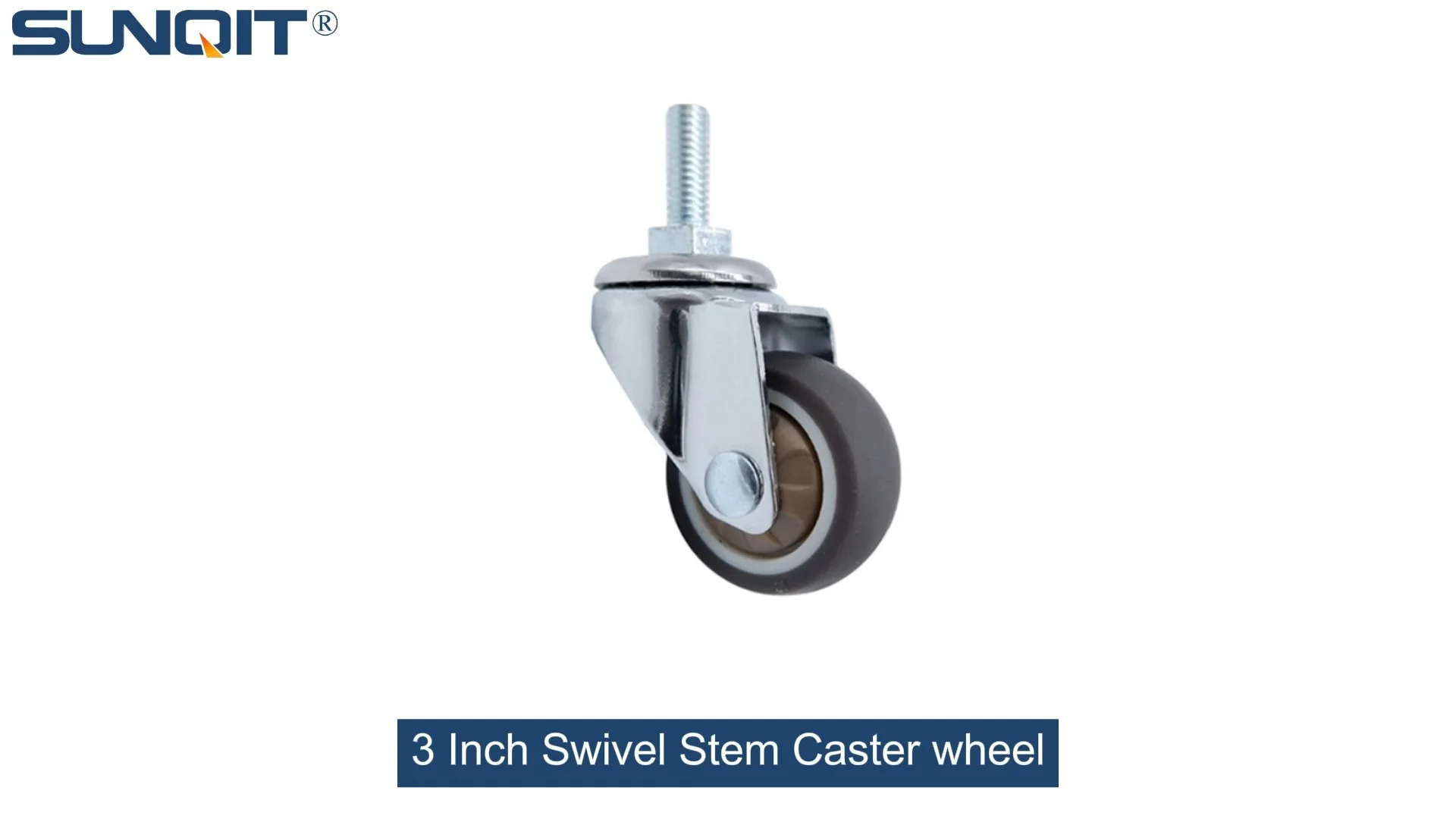
Swivel Stem Caster wheel
360 Degree Swivel Stem Caster. Threaded-post mount design, castors diameter 3 inch.Each swivel caster wheels loading 70KGS. Heavy enough and widely suit for carts, chairs, cabinet, flow rack, workbench, turnover rolley.
In the fast-paced world of manufacturing, downtime is the silent profit killer. Every minute a production line stalls, a workbench sits idle, or a material cart gets stuck translates to lost revenue, missed deadlines, and frustrated teams. According to industry reports, unplanned downtime can cost manufacturers anywhere from $50,000 to $250,000 per hour—numbers that make even the most seasoned operations managers wince. While large-scale issues like machine breakdowns or supply chain disruptions often grab the spotlight, many downtime incidents stem from smaller, overlooked components: the tools and hardware that keep day-to-day operations moving. One such unsung hero? The swivel stem caster wheel with brake. These seemingly simple devices play a critical role in keeping workflows smooth, safe, and efficient—directly cutting down on the delays that eat into your bottom line.
The Hidden Cost of Downtime: It's Not Just About Lost Production
Before diving into how swivel stem caster wheels with brake tackle downtime, let's first unpack why downtime matters. It's easy to think of downtime as just "time not making products," but its impact runs deeper. For starters, there's the direct cost: labor hours paid for unproductive work, energy wasted on idle machinery, and materials that sit unused (or worse, spoiled). Then there are the indirect costs: missed customer orders that damage relationships, rushed rework to catch up that increases error rates, and the demoralizing effect on teams who watch their hard work get derailed by preventable issues.
Consider a typical scenario on the factory floor: A workbench loaded with sensitive electronic components needs to be repositioned to align with a new assembly line layout. The old casters on the workbench are stiff, don't swivel smoothly, and lack reliable brakes. Two operators struggle to move it, accidentally knocking over a bin of small parts. Now, they're not only spending 20 minutes cleaning up the mess but also hunting for replacement parts—all while the assembly line downstream waits for components. That's 20 minutes of downtime multiplied by the number of workers affected, plus the cost of lost parts. Multiply that by dozens of similar incidents monthly, and the numbers add up fast.
Or take a turnover trolley and rack used to transport raw materials from the warehouse to the production floor. If its casters lock up unexpectedly or fail to brake securely when loading, materials can shift, fall, or even collide with other equipment. Suddenly, you're dealing with damaged inventory, a blocked pathway, and potential safety hazards—all of which grind operations to a halt. These are the kinds of "small" problems that swivel stem caster wheels with brake are designed to eliminate.
What Are Swivel Stem Caster Wheels with Brake, Anyway?
At first glance, a caster wheel might seem like a basic piece of hardware: a wheel attached to a mount, right? But swivel stem caster wheels with brake are engineered for precision and reliability. Let's break down their key components:
- Stem Mount: The "stem" refers to the vertical rod that attaches the caster to the equipment (like a workbench or turnover trolley). This stem is designed to fit snugly into pre-drilled holes or mounting brackets, ensuring a secure connection that won't wobble or loosen over time.
- Swivel Mechanism: Unlike fixed casters that only roll forward and backward, swivel casters rotate 360 degrees, allowing equipment to maneuver easily around tight corners, obstacles, or uneven floor surfaces. High-quality swivel mechanisms use precision bearings to reduce friction, ensuring smooth rotation even under heavy loads.
- Brake System: The brake is what sets these casters apart. Most models feature a foot-operated brake lever that, when engaged, locks both the wheel (preventing rolling) and the swivel mechanism (preventing rotation). This dual-locking feature ensures the equipment stays exactly where you put it—no unexpected movement, no slippage, no accidents.
- Wheel Material: Depending on the application, wheels can be made from rubber, polyurethane, nylon, or steel. Rubber and polyurethane are ideal for indoor use, as they absorb shocks, protect floors from scratches, and reduce noise. Steel wheels, on the other hand, are better for heavy loads or rough outdoor surfaces.
These components work together to create a caster that's both highly mobile (when you need it to be) and rock-solid stable (when you don't). It's this balance that makes them indispensable in manufacturing settings, where equipment needs to be both flexible and reliable.

5 Ways Swivel Stem Caster Wheels with Brake Slash Downtime
Now, let's get to the heart of the matter: How do these casters actually reduce downtime? Let's explore five key ways they make a difference on the factory floor.
1. Stability During Operations: No More "" (Unexpected Movement)
One of the biggest causes of downtime related to equipment is unexpected movement. Imagine an operator working at a workbench assembling delicate circuit boards. If the workbench's casters don't brake properly, a slight bump or even the operator's weight shifting could cause it to roll. Tools slide off, components scatter, and the operator has to stop work to reset everything. In worst-case scenarios, sensitive equipment could fall off the bench, leading to costly damage.
Swivel stem caster wheels with brake eliminate this risk. With a simple press of the brake lever, both the wheel and swivel mechanism lock into place. The workbench becomes stationary, providing a stable surface for precise tasks. Operators can focus on their work without worrying about the bench shifting, reducing errors and the need for interruptions. Even in high-traffic areas where forklifts or other equipment pass by, the locked casters ensure the workbench stays put—no more last-minute dashes to catch a rolling table.
This stability is especially critical for lean system implementations, where every second of productivity counts. Lean manufacturing relies on minimizing waste, and "waste" includes time spent correcting mistakes or repositioning equipment. By keeping workbenches and trolleys stable, these casters support the "continuous flow" principle of lean—ensuring that production moves forward without unnecessary stops.
2. Effortless Mobility When You Need to Reconfigure
Manufacturing isn't static. Production lines change, new products are introduced, and floor layouts are reorganized to improve efficiency. In the past, reconfiguring equipment meant either struggling with heavy, immobile workbenches or using casters that were so flimsy they made movement more trouble than it was worth. Both scenarios lead to downtime: either you're spending hours recruiting a team to lift and carry equipment, or you're dealing with casters that jam, get stuck on floor seams, or damage surfaces.
Swivel stem caster wheels with brake solve this paradox. When you need to move a workbench or turnover trolley, simply release the brake, and the swivel mechanism allows for smooth, 360-degree rotation. Even heavy loads become easy to maneuver—thanks to precision bearings that reduce friction and high-quality wheels that roll over cracks, cords, and uneven floors without getting stuck. Operators can reposition equipment single-handedly, cutting reconfiguration time from hours to minutes.
For example, a food packaging plant might need to switch from packaging cereal boxes to snack bags, requiring the assembly line to be shortened. With casters that brake securely and roll smoothly, workers can quickly move conveyors, workbenches, and material racks into the new layout without stopping production entirely. The result? Minimal downtime during transitions, keeping the plant agile and responsive to changing demands.
3. Safety First: Reducing Accidents and Injuries
Downtime isn't just about equipment—it's also about people. A single workplace injury can shut down a production line for hours (or days) while investigations are conducted, medical assistance is provided, and safety protocols are reviewed. Caster-related accidents are more common than you might think: trolleys that roll away and hit someone, workbenches that tip over due to unstable casters, or operators straining their backs trying to move equipment with stuck wheels.
Swivel stem caster wheels with brake prioritize safety in two key ways. First, their reliable braking systems prevent unintended movement, so equipment stays where it's parked—even on sloped floors or when bumped. Second, their smooth-rolling design reduces the physical strain on operators. When casters swivel and roll easily, workers don't have to exert excessive force to move equipment, lowering the risk of musculoskeletal injuries.
Consider a warehouse where workers use turnover trolley and rack units to transport heavy pallets. Without brakes, a trolley left unattended could roll downhill, endangering anyone in its path. With swivel stem casters, the worker simply engages the brake when loading or unloading, and the trolley stays secure. Even if someone accidentally bumps it, the locked wheels hold firm. This not only prevents injuries but also avoids the downtime associated with accident investigations and worker absences.
4. Durability That Minimizes Maintenance Downtime
Cheap casters might save money upfront, but they cost far more in the long run. Flimsy wheels crack under heavy loads, bearings seize up, and brakes fail after a few months of use. When a caster breaks, the equipment it's attached to becomes immobile until repairs are made. Suddenly, you're ordering replacement caster accessories, waiting for parts to arrive, and paying technicians to install them—all while the workbench or trolley sits idle.
Swivel stem caster wheels with brake are built to last. They're constructed with high-grade materials: steel or aluminum stems for strength, polyurethane or rubber wheels that resist wear and tear, and brake mechanisms made from corrosion-resistant alloys. Many models also feature sealed bearings to prevent dust and debris from clogging the swivel joint, ensuring smooth operation even in dirty factory environments.
This durability means fewer breakdowns and less maintenance. Instead of replacing casters every 6–12 months, you might go 3–5 years before needing to swap them out. When maintenance is needed, quality caster accessories (like replacement brake pads or bearings) are readily available, making repairs quick and easy. For example, if a brake lever wears out, a technician can replace just the lever instead of the entire caster—minimizing downtime and cost.
5. Compatibility with a Wide Range of Equipment
Manufacturing floors are filled with diverse equipment: workbenches, turnover trolleys, material racks, conveyor systems, and more. Using mismatched or incompatible casters across these tools can lead to inefficiencies and downtime. For example, a caster that works well on a lightweight workbench might not support the weight of a heavy material rack, leading to premature failure.
Swivel stem caster wheels with brake come in a variety of sizes, load capacities, and wheel materials, making them compatible with almost any equipment. Need to outfit a small workbench for electronics assembly? Choose a 2-inch wheel with a 150-pound load rating. Transporting heavy metal parts on a turnover trolley? Opt for a 5-inch steel wheel with a 1,000-pound capacity. This versatility means you can standardize on a single type of caster across multiple tools, simplifying inventory management and maintenance.
For instance, a car parts manufacturer might use the same swivel stem casters on their assembly workbenches, tool storage racks, and parts trolleys. When a caster needs replacement, they can grab a spare from the same stock, reducing the time spent hunting for the right part. Standardization also makes it easier to train technicians on maintenance—they learn to service one type of caster instead of dozens—further cutting downtime.

Comparing Traditional Casters vs. Swivel Stem Caster Wheels with Brake
| Feature | Traditional Casters (No Brake/Swivel Issues) | Swivel Stem Caster Wheels with Brake | Impact on Downtime |
|---|---|---|---|
| Stability During Use | Low—may roll or swivel unexpectedly | High—locks wheel and swivel mechanism | Traditional: High downtime from repositioning, errors, or spills. Brake-equipped: Near-zero downtime from movement-related issues. |
| Mobility for Reconfiguration | Poor—stiff swivel, hard to maneuver heavy loads | Excellent—smooth swivel and rolling, even with heavy loads | Traditional: Hours of downtime for layout changes. Brake-equipped: Minutes, with minimal labor. |
| Safety Risk | High—risk of equipment rolling, operator strain | Low—brakes prevent movement; smooth rolling reduces strain | Traditional: Frequent downtime from accidents/injuries. Brake-equipped: Rare downtime from safety incidents. |
| Durability/Maintenance | Low—wear out quickly; hard to repair | High—built to last; easy to service with caster accessories | Traditional: Frequent downtime for caster replacement/repairs. Brake-equipped: Minimal downtime—long lifespan, quick fixes. |
| Compatibility | Limited—one-size-fits-few | Wide—multiple sizes, load ratings, and materials | Traditional: Downtime from mismatched casters. Brake-equipped: Standardization reduces inventory and repair time. |

Real-World Results: How One Manufacturer Cut Downtime by 30% with Brake Casters
To put these benefits into perspective, let's look at a real example. A mid-sized electronics manufacturer in the Midwest was struggling with frequent downtime on their assembly lines. Their main issues? Workbenches that rolled during component installation, leading to misplaced parts and rework; turnover trolleys that were difficult to move, slowing material transport; and caster failures that left equipment stranded.
The manufacturer decided to upgrade all their workbenches and trolleys to swivel stem caster wheels with brake. Within three months, they saw dramatic improvements: Repositioning equipment went from taking 45 minutes per line change to just 10 minutes. Accidents related to rolling equipment dropped by 80%. And caster-related breakdowns fell from once per week to once every six months. Overall, production downtime decreased by 30%—translating to an estimated $200,000 in annual savings.
The plant manager summed it up: "We used to think casters were just 'wheels on a stick.' Now we realize they're a critical part of our efficiency. The brake casters keep our lines moving, our workers safe, and our customers happy. It was one of the best investments we've made."
Choosing the Right Swivel Stem Caster Wheels with Brake for Your Facility
Not all swivel stem caster wheels with brake are created equal. To maximize their downtime-reducing benefits, you need to choose the right model for your specific needs. Here's what to consider:
Load Capacity
Start by calculating the total weight of the equipment plus its typical load. Choose casters with a load capacity rating that exceeds this weight (aim for 20–30% extra to account for uneven loading). For example, a workbench that holds 300 pounds of tools and parts should use casters rated for at least 360–400 pounds total (divided by the number of casters—usually 4).
Floor Type
Smooth concrete floors work well with hard wheels (like nylon or steel), while uneven or delicate floors (like epoxy) require softer wheels (polyurethane or rubber) to prevent scratches and improve traction.
Environment
If your facility is wet (like a food processing plant) or corrosive (like a chemical factory), opt for stainless steel stems and wheels to resist rust. For cleanrooms, choose casters with sealed bearings to prevent dust buildup.
Brake Type
Most swivel stem casters come with either a "total lock" brake (locks wheel and swivel) or a "wheel-only" brake. For maximum stability, total lock is preferred—especially for workbenches and trolleys that need to stay completely stationary.
Caster Accessories
Invest in quality caster accessories like replacement brake pads, bearing lubricants, and stem extenders. Having these on hand ensures quick repairs when needed, minimizing downtime.
Maintenance Tips to Keep Your Casters Rolling (and Braking) Smoothly
Even the best casters need regular maintenance to perform at their best. Here's a simple routine to keep them in top shape:
- Clean Regularly: Wipe wheels and swivel joints with a damp cloth to remove dirt, debris, and grease buildup. In dusty environments, use compressed air to blow out bearings.
- Lubricate Bearings: Apply a few drops of lubricating oil to swivel bearings every 3–6 months (more often in high-use areas). This keeps the swivel mechanism smooth and prevents seizing.
- Inspect Brakes: Check brake pads for wear and ensure the brake lever engages and releases smoothly. replace worn brake pads immediately—don't wait for them to fail.
- Tighten Connections: Periodically check that the stem is securely mounted to the equipment and that wheel axles are tight. Loose connections can cause wobbling and premature wear.
Conclusion: Small Wheels, Big Impact on Downtime
In the grand scheme of manufacturing, swivel stem caster wheels with brake might seem. But as we've explored, their impact on reducing downtime is significant. By providing stability during operations, effortless mobility during reconfigurations, enhanced safety, long-lasting durability, and broad compatibility, these small components deliver big returns—cutting costs, improving productivity, and keeping your facility running smoothly.
So the next time you're looking to boost efficiency or reduce downtime, don't overlook the casters under your workbenches and trolleys. Upgrading to swivel stem caster wheels with brake isn't just a "nice-to-have"—it's a smart investment in your facility's success. After all, in manufacturing, every minute counts—and these casters help ensure those minutes are spent making products, not fixing problems.