- Company Articles
- Products and Technology
- Product knowledge
- How Temperature Affects Two Way Lean Pipe Joint Chrome Performance

How Temperature Affects Two Way Lean Pipe Joint Chrome Performance
Related Product
Two Way Lean Pipe Joint Chrome
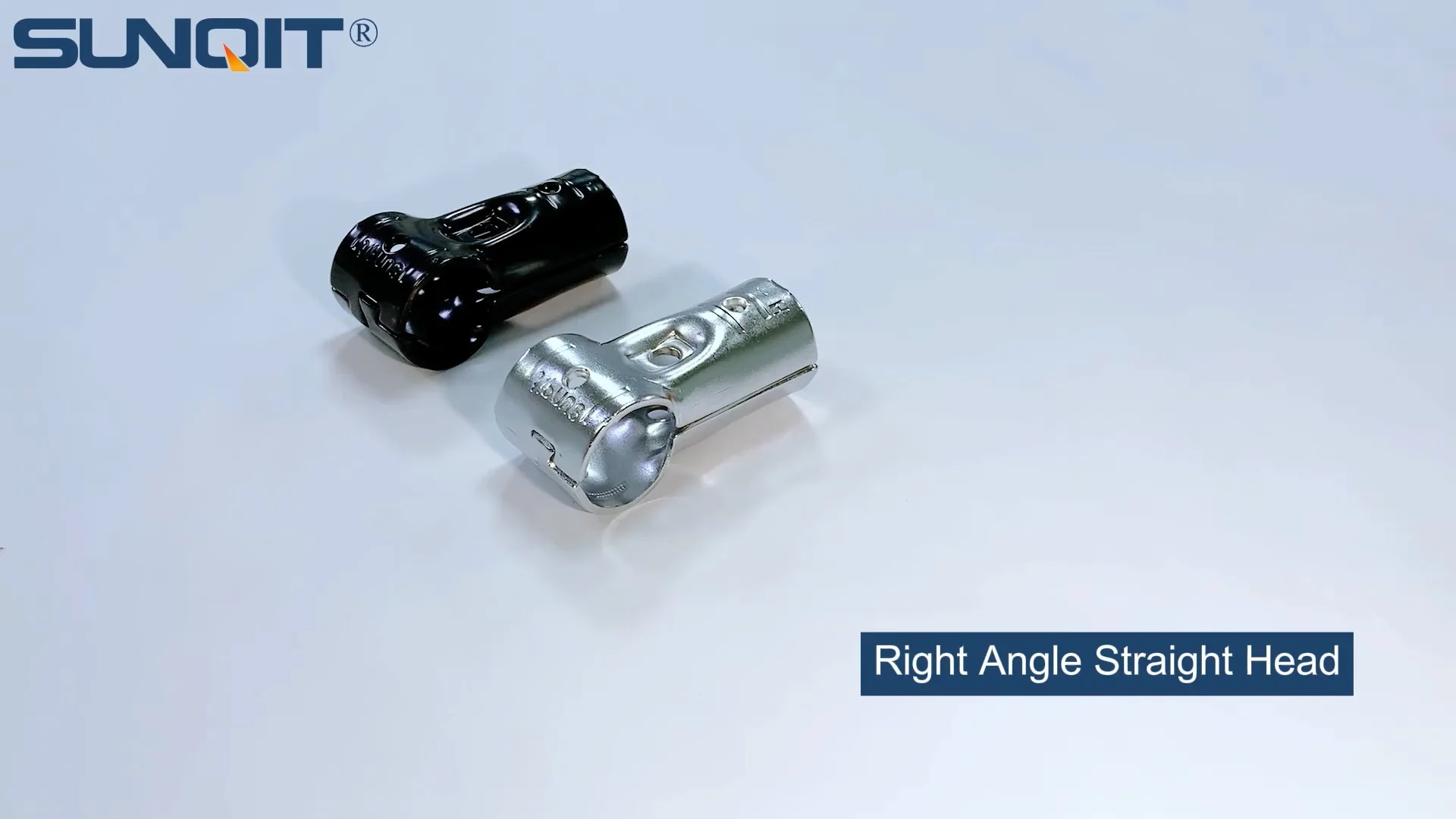
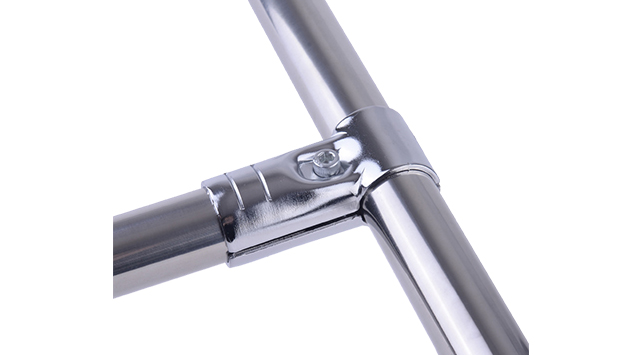
Two way lean pipe joint for 2 pcs 28MM lean pipe connection in straight angle, which used widely in workbench, flow rack, hand trolley frame connection.
Walk into any modern manufacturing facility, and you'll likely spot the backbone of efficient operations: lean systems. These structured setups, built from interconnected lean pipes and joints, keep production lines moving, workbenches stable, and materials flowing seamlessly. At the heart of many of these systems lies a small but critical component: the two way lean pipe joint chrome. It's easy to overlook—after all, it's just a metal connector—but anyone who's dealt with a loose workbench or a wobbly conveyor knows better. These joints are the glue that holds the lean pipe framework together, ensuring stability, adjustability, and longevity.
But here's a question that doesn't get asked enough: What happens when the temperature swings? Factories aren't climate-controlled sanctuaries. A warehouse in Minnesota might plummet to -10°C in winter; a plant in Arizona could soar to 40°C in summer. Even overnight shifts in temperate regions can bring 15-20°C drops. Does this matter for a simple metal joint? As it turns out, temperature isn't just a comfort issue for workers—it's a silent stress test for every two way lean pipe joint chrome in your lean system. Let's dive into how extreme cold and heat can quietly undermine these components, and what you can do to protect your operations.
First Things First: What Is a Two Way Lean Pipe Joint Chrome?
Before we talk temperature, let's make sure we're all on the same page about the star of the show. A two way lean pipe joint chrome is a specialized connector designed to link lean pipes at a fixed angle—usually 90 degrees, though some variants allow for adjustments. Its "two way" label means it has two openings to insert lean pipes, creating a rigid corner or T-junction in a lean system. The "chrome" part? That's a thin layer of chromium electroplated onto the joint's surface, added for two key reasons: corrosion resistance and a smoother finish that reduces friction when assembling or adjusting the lean pipe framework.
These joints are workhorses. They're used in everything from simple workbenches to complex material racks and conveyor systems. Made typically from steel with that chrome coating, they're built to handle the daily wear of manufacturing—scratches, minor impacts, and the constant tension of holding lean pipes in place. But like any hardworking component, they have their kryptonite. And in many factories, that kryptonite comes in the form of extreme temperatures.
The Temperature Rollercoaster: What Factories Actually Face
Not all factories are created equal when it comes to climate. A pharmaceutical cleanroom might stay a steady 22°C year-round, but that's the exception. Most manufacturing environments are at the mercy of the elements—or at least, the building's heating and cooling (or lack thereof). Let's break down the common temperature extremes:
- Cold Extremes: Warehouses in northern climates, unheated workshops in winter, or facilities with large loading bays that stay open for hours can see temperatures drop to -10°C or lower. Even in milder regions, overnight lows in uninsulated buildings can dip to 5°C or below.
- Hot Extremes: Factories in desert regions, facilities with heat-generating machinery (like foundries or plastic molding plants), or warehouses with metal roofs baking in summer sun can hit 40°C or higher. Add humidity, and the heat feels even more intense—though humidity itself is a separate issue from temperature.
- Rapid Fluctuations: Some facilities experience wild swings in a single day. Imagine a warehouse in the American Midwest: 35°C during a summer afternoon, then a storm rolls in, dropping temperatures to 15°C in an hour. That's a 20°C swing in 60 minutes—hardly ideal for metal components.
Why does this matter? Because metal, chrome, and the materials that hold joints together (like lubricants or adhesives) don't react well to sudden or extreme temperature changes. To understand how, let's start with the cold.
When It's Cold: How Freezing Temperatures Weaken Joint Performance
Let's start with a scenario: It's January in Chicago, and a manufacturer of automotive parts has been running with the heat turned down overnight to save on energy costs. The morning shift arrives to find that several workbenches in their lean system are wobbly. A quick inspection shows that the two way lean pipe joints chrome connecting the workbench legs to the frame are loose—some even have tiny cracks in the chrome plating. What happened?
Cold temperatures affect the joint in three critical ways: metal contraction, chrome coating brittleness, and lubricant thickening.
1. Metal Contraction: When Pipes and Joints Shrink (Unevenly)
All metals contract when cooled, but not all metals contract at the same rate. The two way lean pipe joint chrome is steel-based, while the lean pipes it connects might be steel, aluminum lean pipe, or even stainless steel. Each has a different coefficient of thermal expansion (CTE)—a fancy term for how much a material shrinks or grows with temperature changes.
Steel has a CTE of about 11.7 x 10^-6 per °C. Aluminum lean pipe, by contrast, has a higher CTE: around 23.1 x 10^-6 per °C. That means if a steel joint and an aluminum lean pipe are connected at 20°C, and the temperature drops to -10°C (a 30°C decrease), the aluminum pipe will shrink more than the steel joint. The math? The aluminum pipe would shrink by 23.1e-6 * 30 = 0.000693 (0.0693%) per unit length. Steel? 11.7e-6 *30=0.000351 (0.0351%). Over a 1-meter pipe, that's a difference of about 0.34 mm—small, but enough to create slack in the joint.
Slack might not sound like a big deal, but in a lean system, every millimeter counts. A loose joint can make a workbench wobble, causing tools to slide or parts to misalign during assembly. In a conveyor system using lean pipe, loose joints can lead to uneven movement, jamming, or even collapse under the weight of materials.
2. Chrome Coating: From Protective to Problematic
The chrome plating on the joint is supposed to protect the steel underneath from rust and scratches. But chrome is brittle—especially when cold. At low temperatures, the chrome's molecular structure becomes less flexible, making it prone to cracking. Those tiny cracks you might see on a cold joint? They're not just cosmetic. Once the chrome cracks, moisture and condensation (which forms when cold metal meets warmer air) can seep through to the steel underneath, kickstarting rust. Over time, rust weakens the joint's structural integrity, turning a minor annoyance into a major safety hazard.
Even if the chrome doesn't crack, cold can make it more likely to chip. A dropped tool or a bump from a pallet jack that might only scratch the chrome at room temperature could chip it off entirely in freezing conditions, leaving the steel exposed.
3. Lubricant Thickening: When Joints Can't Adjust
Many two way lean pipe joints chrome use a small amount of lubricant in their threads or connection points to make assembly easier and reduce wear. But standard lubricants thicken in the cold. What was a smooth, flowy substance at 20°C becomes a thick, honey-like goop at 0°C. This makes it harder to tighten or adjust the joint, and over time, the thickened lubricant can trap dirt and debris, leading to corrosion or binding when temperatures rise again.
In extreme cases, the lubricant might even freeze solid, making the joint impossible to adjust without applying excessive force—force that could strip the threads or damage the chrome coating further.

When It's Hot: How High Temperatures Stress Joints to the Breaking Point
Now, let's flip the script. It's July in Phoenix, and a electronics manufacturer is struggling with their lean system on the factory floor. The flow racks, held together with two way lean pipe joints chrome, are starting to sag. Upon checking, the maintenance team finds that some joints are so loose they can be turned by hand, while others are seized tight, with the chrome plating discolored and flaking. The culprit? Weeks of 40°C+ temperatures inside the uncooled facility.
Heat affects the two way lean pipe joint chrome in three equally damaging ways: metal expansion, chrome oxidation, and lubricant breakdown.
1. Metal Expansion: When Joints Get Too Tight (or Too Loose)
Just as metals contract in the cold, they expand when heated. Again, the CTE comes into play—but this time, expansion can cause two problems: over-tightening and stress fractures.
If a joint is assembled at 20°C and then heated to 40°C (a 20°C increase), the steel joint will expand by 11.7e-6 *20=0.000234 (0.0234%) per unit length. An aluminum lean pipe connected to it will expand more: 23.1e-6*20=0.000462 (0.0462%). If the joint is a tight fit, this uneven expansion can create internal stress. The aluminum pipe pushes against the steel joint, bending or warping it slightly. Over time, this repeated stress (expanding during the day, contracting at night) can lead to metal fatigue, weakening the joint until it finally fails.
On the flip side, if the joint was assembled with a small gap (to allow for adjustment), heat expansion can close that gap entirely, making the joint too tight to adjust later. A seized joint might not seem like a problem until you need to reconfigure your lean system—at which point you'll either struggle to disassemble it or end up breaking the joint (and possibly the lean pipe) in the process.
2. Chrome Oxidation: When the Shiny Coating Turns Dull (and Damaged)
Chrome is corrosion-resistant, but it's not invincible—especially at high temperatures. When chrome is heated above 200°C, it starts to oxidize, forming chromium oxide (a dull, grayish layer). But even at lower temperatures (40-50°C), prolonged heat can speed up oxidation if there's any moisture in the air. The result? The once-shiny chrome coating becomes patchy, dull, and less protective. In severe cases, the oxidation can eat through the chrome entirely, exposing the steel underneath to rust.
Heat also makes the chrome more malleable, which sounds good—until you consider that a malleable coating is more likely to scratch or dent. A joint that's hot to the touch is easier to damage with a stray tool or a heavy part, leading to the same problem as cold-induced cracks: exposed steel and rust.
3. Lubricant Breakdown: When the "Glue" Melts Away
Just as cold thickens lubricants, heat thins them out—sometimes to the point of uselessness. Most standard lubricants start to break down at 60°C, but even at 40°C, they can lose viscosity, becoming runny and ineffective. When this happens, the lubricant leaks out of the joint's threads or connection points, leaving metal-on-metal contact. Without lubrication, the joint becomes prone to galling (where metal surfaces stick together) or seizing, making it impossible to adjust without brute force.
Worse, degraded lubricant can leave behind a sticky residue that traps dust and debris. This residue acts like sandpaper, wearing down the joint's threads over time and making future assembly or disassembly even harder.
The Numbers Speak: How Temperature Changes Impact Key Performance Metrics
To put this all in perspective, let's look at how the two way lean pipe joint chrome performs under different temperature conditions. The table below summarizes testing data from a lean pipe supplier, measuring key metrics at three temperatures: cold (-10°C), ambient (20°C), and hot (40°C).
| Performance Metric | Cold (-10°C) | Ambient (20°C) | Hot (40°C) |
|---|---|---|---|
| Joint Torque (N·m)* | 18 (Loose: 15% below ambient) | 21 (Ideal) | 24 (Tight: 14% above ambient) |
| Chrome Adhesion (Peel Strength, N/cm) | 8 (Brittle: 20% below ambient) | 10 (Strong) | 9 (Weakened: 10% below ambient) |
| Material Hardness (Rockwell B) | 85 (Slightly harder) | 82 (Standard) | 78 (Slightly softer) |
| Adjustment Ease (1-5 Scale, 5=Easiest) | 2 (Thickened lubricant) | 5 (Smooth) | 3 (Thinned lubricant, risk of seizing) |
*Torque required to maintain joint stability under 50kg load.
As the table shows, ambient temperature is clearly the sweet spot. Cold temperatures lead to loose joints and brittle chrome, while heat causes tightness and weakened adhesion. Neither is ideal for a lean system that relies on precision and durability.
Real-World Pain: A Case Study in Temperature-Induced Joint Failure
To drive this home, let's look at a real example. A mid-sized electronics manufacturer in Texas was using a lean system built with lean pipes and two way lean pipe joints chrome to support their assembly lines. The facility had no air conditioning, and during the summer, temperatures regularly hit 45°C on the factory floor. After six months of operation, the maintenance team noticed that the flow racks along the south wall (closest to the sun) were failing at an alarming rate—joints were seizing, chrome was flaking, and some racks had even collapsed under the weight of circuit boards.
An investigation revealed that the heat was the culprit. The south wall absorbed sunlight, raising the local temperature around the racks to 50°C or higher. The two way lean pipe joints chrome had expanded beyond their tolerance, causing stress fractures in the steel. The chrome coating had oxidized, and the lubricant had long since leaked out, leaving the joints to seize. The cost? Thousands of dollars in replacement parts, downtime, and damaged inventory.
What's notable is that this wasn't a low-quality joint issue—the manufacturer was using a reputable lean pipe supplier. The problem was simply that the joint wasn't designed for the extreme temperatures it was facing. This is a common oversight: many factories assume "standard" components will work in any environment, but temperature can turn a reliable part into a liability.
Testing for Temperature Resistance: What to Ask Your Lean Pipe Supplier
So, how do you avoid this scenario? The first step is to choose two way lean pipe joints chrome that are tested for temperature resistance. When evaluating a lean pipe supplier, ask for data on their joints' performance in extreme temperatures. Look for suppliers who conduct thermal cycling tests—exposing joints to repeated cold-hot cycles to simulate real-world conditions—and who provide clear specifications on operating temperature ranges.
Key tests to ask about include:
- Thermal Cycling Test: Joints are exposed to -20°C to 60°C cycles (e.g., 4 hours cold, 4 hours hot) for 100 cycles. After testing, they should show no signs of chrome cracking, joint loosening, or structural damage.
- Chrome Adhesion Test: Using a cross-cut adhesion test (per ISO 2409), the chrome coating should maintain at least 80% adhesion after exposure to extreme temperatures.
- Torque Retention Test: Joints are tightened to specification, exposed to temperature extremes, then retested for torque. They should retain at least 90% of their initial torque.
A reputable lean pipe supplier will have no problem sharing this data. If a supplier can't provide temperature testing results, it's a red flag—their joints may not hold up in your facility's climate.
Beating the Heat (and Cold): Practical Solutions for Temperature Resilience
The good news is that temperature-related joint issues are preventable. With the right strategies, you can protect your two way lean pipe joints chrome and keep your lean system running smoothly, no matter the weather. Here are five actionable steps:
1. Choose Temperature-Resistant Joints
Not all two way lean pipe joints chrome are created equal. Look for joints specifically designed for extreme temperatures. Some lean pipe suppliers offer "high-temp" or "cold-resistant" variants, which may feature:
- Thicker chrome plating (to resist cracking in cold or oxidation in heat).
- Alloy steel components with a lower CTE, reducing expansion/contraction.
- Specialized lubricants (like silicone-based lubricants) that remain stable in temperature extremes.
For example, aluminum lean pipe systems often perform better in temperature swings than steel, thanks to aluminum's higher thermal conductivity (which helps distribute heat/cold more evenly) and its ability to flex slightly without breaking.
2. Insulate Your Lean System
If your facility can't maintain a steady temperature, insulate the areas where your lean system is most exposed. For example, wrap lean pipe racks near exterior walls with foam insulation, or install heat-resistant barriers (like reflective foil) on sun-facing walls. This won't eliminate temperature changes, but it can reduce their severity and slow down the rate of change, giving the joints time to adjust.
3. Regular Maintenance Checks (Temperature-Specific)
Add temperature-related checks to your maintenance routine. In cold weather, inspect joints for chrome cracks and retighten any loose connections (the cold may have shrunk them). In hot weather, check for seizing, flaking chrome, and lubricant leaks. A quick 10-minute check weekly can catch issues before they lead to failure.
4. Climate-Controlled Storage for Spare Parts
Store spare two way lean pipe joints chrome in a climate-controlled area. Extreme temperatures can damage parts even when they're not in use—chrome can crack in a freezing warehouse, or lubricant can degrade in a hot storage room. Keeping spares at ambient temperature ensures they're ready to install when needed.
5. Reconfigure for Temperature Zones
If certain areas of your facility are prone to extreme temperatures (e.g., near ovens, freezers, or exterior doors), consider using more durable materials there. For example, swap standard two way lean pipe joints chrome for stainless steel pipe series joints in hot, humid areas—stainless steel resists oxidation better than regular steel. Or use aluminum lean pipe in cold zones, as aluminum's flexibility helps it withstand contraction.
Conclusion: Temperature Matters—Don't Overlook the Little Joints
The two way lean pipe joint chrome might be small, but it's a critical part of your lean system's backbone. And as we've seen, extreme temperatures—whether freezing cold or scorching heat—can turn this reliable component into a weak link. From metal contraction and chrome cracking in the cold to expansion and lubricant breakdown in the heat, temperature impacts every aspect of joint performance.
But with awareness, the right components, and proactive maintenance, you can protect your joints (and your lean system) from temperature-related failure. Start by evaluating your facility's temperature extremes, choosing joints designed to handle those conditions, and adding temperature checks to your maintenance routine. Your lean system—and your bottom line—will thank you.
After all, in manufacturing, efficiency is everything. And an efficient lean system starts with joints that can stand the heat (and the cold).