- Company Articles
- Products and Technology
- Product knowledge
- How Three Way Aluminum Pipe Joints Enable Quick Reconfiguration of Workstations

How Three Way Aluminum Pipe Joints Enable Quick Reconfiguration of Workstations
Related Product
Three Way Aluminum Pipe Joint
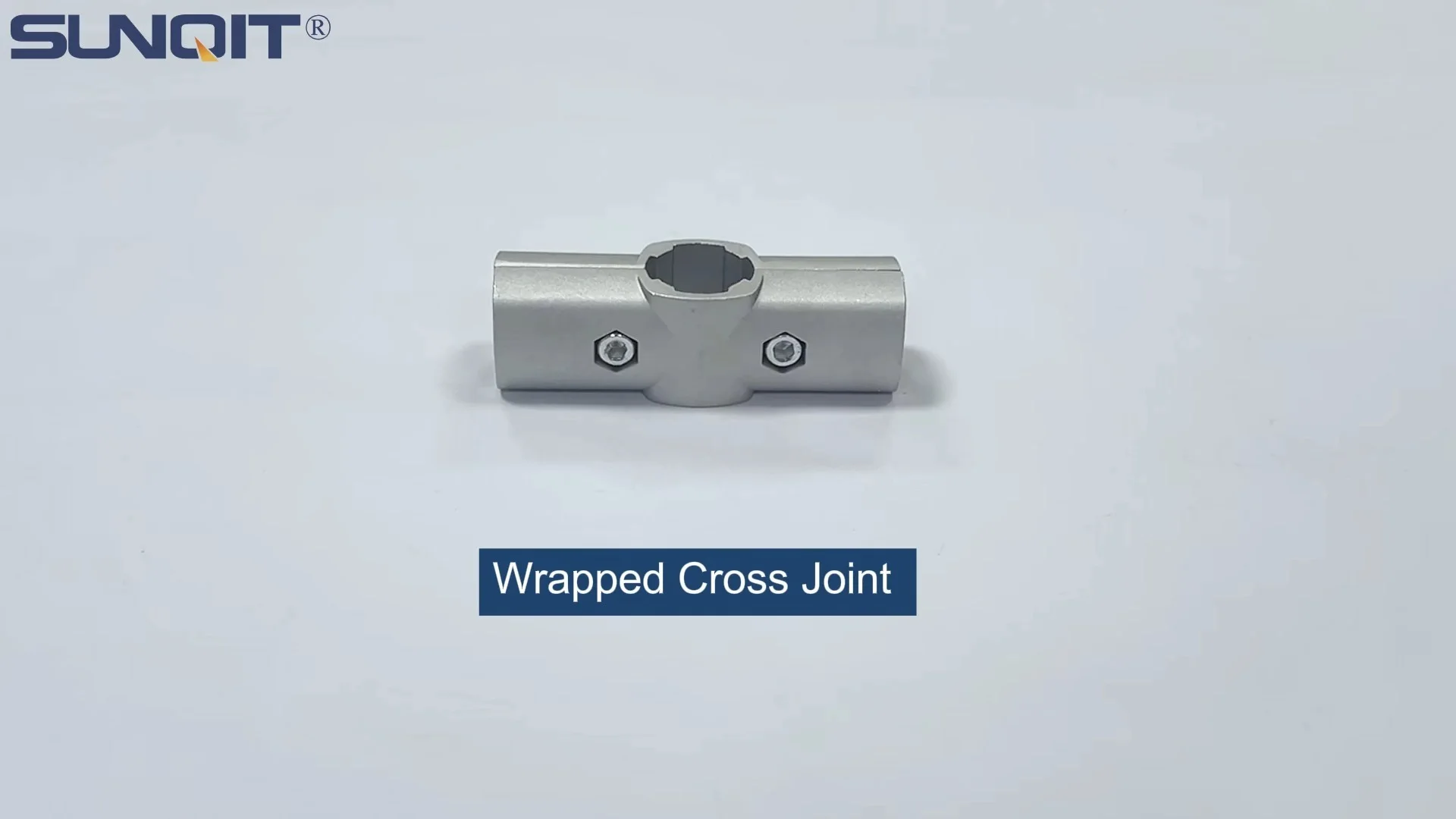
Aluminum 3 way pipe joint for 28mm aluminum pipe connection in 3 direction.
Imagine walking into a manufacturing facility where the production line looks almost unrecognizable from last month. Not because they've torn down walls or invested in brand-new machinery, but because their workstations, material racks, and assembly lines have been reimagined —adjusted, expanded, or repurposed to fit a new product launch. For many factory managers, this scenario sounds like a dream. In reality, most are stuck with workbenches bolted to the floor, material racks welded in place, and the frustrating reality that reconfiguring a single production line can take weeks (or even months) of downtime. But what if there was a simpler way? Enter the three way aluminum pipe joint —a small, unassuming component that's quietly revolutionizing how workplaces adapt to change.
In this article, we'll explore how these humble joints, paired with aluminum profiles , are transforming static workstations into dynamic, flexible hubs. We'll break down their design, their role in lean manufacturing, and how they make quick reconfiguration not just possible, but routine. Whether you're running a small workshop or a large-scale production plant, understanding the power of three way aluminum pipe joints could be the key to unlocking the agility your business needs to thrive in today's fast-paced market.
The Problem with Static Workstations: Why Flexibility Matters More Than Ever
Manufacturing isn't what it used to be. A generation ago, factories could rely on long production runs of the same product, with workstations designed to do one job—and do it well—for years on end. Today, the landscape is different. Customer demands shift overnight, product lifecycles shrink, and customization is no longer a luxury but an expectation. A factory that produces 10,000 units of a single item might next month need to produce 10 variations of that item, each requiring different tools, workflows, and space.
Static workstations simply can't keep up. Consider a typical scenario: A electronics manufacturer gets a rush order for a new smartphone model. To assemble it, they need longer workbenches to accommodate larger circuit boards, additional shelving for new components, and a material feeding system that can deliver parts faster. With traditional wood or steel workbenches, this would mean: ordering new materials, hiring welders or carpenters, shutting down part of the line for installation, and hoping the new setup works—all while the clock ticks on the deadline. By the time the workstation is ready, the rush order might already be late, and the company has sunk money into a setup they might only use once.
This rigidity isn't just costly—it's a barrier to innovation. Employees can't experiment with better workflows if rearranging a workbench requires a toolbox and a day of downtime. Managers can't implement lean principles like 5S (Sort, Set in Order, Shine, Standardize, Sustain) if tools and materials are locked into fixed positions. And businesses can't respond to opportunities—like a sudden surge in demand for a niche product—if their production line can't pivot quickly.
The solution? Workstations that are as adaptable as the businesses they serve. And that's where three way aluminum pipe joints come into play.
What Are Three Way Aluminum Pipe Joints, Anyway? A Closer Look at the Design
At first glance, a three way aluminum pipe joint might not seem impressive. It's a small, often T-shaped or Y-shaped component, typically made from die-cast aluminum, with a few holes and slots. But don't let its size fool you—this little joint is the linchpin of flexible workstation design. Let's break down what makes it so special.
First, the material: Aluminum. It's lightweight (so structures are easy to move, even when fully assembled), corrosion-resistant (critical for factory environments where spills or humidity are common), and strong enough to support heavy loads. Unlike plastic joints, which can crack under stress, or steel joints, which add unnecessary weight, aluminum strikes the perfect balance of durability and practicality.
Next, the design: Most three way joints are engineered to connect aluminum profiles at 90-degree angles, forming stable, rigid structures. They feature threaded holes or T-slot compatible fasteners that allow profiles to be inserted and secured with a simple Allen wrench. What sets them apart from traditional fasteners (like bolts or welds) is their reusability . Loosen the fastener, adjust the profile, retighten—and you've got a whole new configuration. No welding, no drilling, no permanent modifications.
Take, for example, a basic T-shaped three way joint. One end connects to a vertical aluminum profile (the "leg" of a workbench), another to a horizontal profile (the "shelf"), and the third to a cross-brace (adding stability). Tighten the bolts, and it's rock-solid. Need to raise the shelf by 6 inches? Loosen the joint, slide the horizontal profile up, retighten, and you're done. It's that simple.
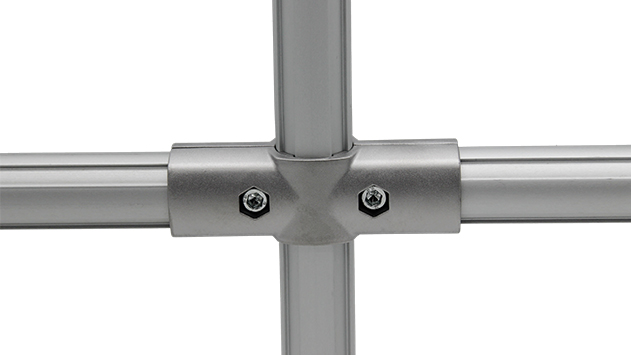
But three way joints aren't limited to T-shapes. Some are designed for 45-degree angles, others for cross-connections (like a plus sign), and many are compatible with accessories like casters, roller tracks, or ESD (electrostatic discharge) components. This versatility means they can be used for everything from simple workbenches to complex material handling systems—all with the same core component.
Aluminum Profiles: The Perfect Partner for Three Way Joints
Three way aluminum pipe joints are powerful on their own, but their true potential shines when paired with aluminum profiles. If joints are the "glue" that holds a workstation together, profiles are the "building blocks." Let's take a closer look at why aluminum profiles are the ideal partner for these joints.
Aluminum profiles—also called aluminum extrusions—are long, hollow bars of aluminum with a cross-sectional shape designed for strength and versatility. Most feature T-slots: grooves running the length of the profile that allow bolts, brackets, and (you guessed it) three way joints to be attached anywhere along the length, without drilling. This is a game-changer. Traditional steel or wood beams require pre-drilled holes, limiting where you can attach components. With T-slot profiles, you can add a shelf, a tool holder, or a roller track exactly where you need it, when you need it.
Profiles come in a range of sizes, from small 20x20mm (2020) for light-duty tasks to large 40x80mm (4080) for heavy machinery. This means you can mix and match: use 3030 profiles for a lightweight workbench top, 4040 profiles for the legs (to support heavier tools), and 2020 profiles for side shelves. Three way joints seamlessly connect these different sizes, creating a cohesive structure that's tailored to your needs.
Another key advantage? Weight. Aluminum is about 1/3 the weight of steel, so even large structures—like a 6-foot material rack—can be moved by two people without heavy equipment. This is critical for facilities that need to rearrange their floor plan regularly (hello, 5S and continuous improvement!). And because aluminum doesn't rust, profiles maintain their strength and appearance even in harsh environments, from automotive shops to food processing plants.
To put it simply: Aluminum profiles provide the flexibility of a modular system, while three way joints provide the stability of a fixed structure. Together, they create a workstation that's both strong enough to get the job done and adaptable enough to change when the job changes.

How Three Way Joints Enable Quick Reconfiguration: A Step-by-Step Example
Let's make this tangible. Imagine you run a small assembly shop that builds custom audio equipment. Your current setup includes a basic workbench (single deck, no casters) used for assembling speakers. Suddenly, a client orders a batch of amplifiers, which are larger, heavier, and require more tools and parts. You need to reconfigure your workstation to: (1) widen the work surface, (2) add a second shelf for tools, (3) include a roller track for feeding raw materials, and (4) make the whole thing mobile (so you can move it closer to the testing area). With traditional tools, this would take days of work. With three way aluminum pipe joints and profiles, here's how it might go:
Step 1: Gather your components. You already have a base structure made from 4040 aluminum profiles and three way joints. To widen the workbench, you'll need two additional 4040 profiles (6 feet long), four more three way joints, and a sheet of aluminum honeycomb panel for the new shelf. For the roller track, you'll need a 40mm aluminum guide rail, plastic roller track guide rails (grey, to match your existing setup), and roller track placon mounts to attach it to the back of the workbench. Finally, you'll add four casters (with brakes) to the legs for mobility.
Step 2: Widen the workbench. Start by loosening the three way joints that connect the existing horizontal profiles to the vertical legs. Slide the horizontal profiles outward by 12 inches, then insert the new 6-foot profiles into the open ends of the three way joints. Tighten the bolts—now your work surface is 12 inches wider, with no drilling or cutting required.
Step 3: Add the second shelf. Using two more three way joints, attach vertical support profiles (3030 size, since the shelf will hold lighter tools) to the existing horizontal profiles, 18 inches above the work surface. Connect these vertical supports with another horizontal profile (using three way joints), then lay the aluminum honeycomb panel on top. In 15 minutes, you've doubled your storage space.
Step 4: Install the roller track. Using roller track placon mounts, attach the aluminum guide rail to the back of the workbench's vertical legs. Snap the plastic roller track guide rails into the rail, and you've got a smooth surface for sliding amplifier chassis into place—no more lifting heavy parts across the workbench.
Step 5: Add mobility with casters. Loosen the feet at the bottom of the workbench legs, remove them, and attach the casters using the same three way joints (many joints are designed to accept casters or leveling feet interchangeably). Tighten the bolts, lock the brakes, and your workstation is now mobile.
Total time? About 2 hours. No welding, no sawdust, no downtime waiting for parts. Just a few Allen wrenches, a handful of components, and a workstation that's now perfectly suited for amplifiers. When the next speaker order comes in? You can reverse the process just as quickly.

Beyond Flexibility: The Hidden Benefits of Aluminum Pipe Joint Systems
Quick reconfiguration is the most obvious benefit of three way aluminum pipe joints, but it's far from the only one. These systems offer a host of advantages that add up to long-term value for businesses, from cost savings to improved safety to better alignment with lean system principles.
Cost Savings Over Time: Traditional workstations require you to invest in multiple fixed setups (one for each product or workflow). With aluminum pipe joints, you invest in a single modular system that adapts to changing needs. Over time, this reduces waste (no more storing unused workbenches) and lowers capital expenses (no need to buy new equipment for every product launch).
Durability and Reusability: Aluminum profiles and joints are built to last. Unlike wood, which warps or rots, or steel, which rusts, aluminum stands up to years of use—and abuse. Even better, components are reusable. If a profile bends or a joint wears out, you can replace just that part, not the entire workstation. This "repairable, not replaceable" model saves money and reduces environmental impact.
Safety First: Factories are busy places, and accidents happen. Aluminum pipe joint systems are designed with safety in mind: no sharp edges (unlike welded steel), no protruding bolts (thanks to T-slot fasteners), and stable structures that resist tipping (even when loaded). Many components are also ESD-compatible, making them ideal for electronics manufacturing where static electricity can damage sensitive parts.
Supporting Lean Manufacturing: Lean principles like 5S (Sort, Set in Order, Shine, Standardize, Sustain) depend on workplaces that can evolve with continuous improvement. Three way joints make it easy to implement 5S: Rearrange tools for better flow, add shadow boards for organization, or reposition material racks to reduce walking time—all without disrupting production. In short, they turn "continuous improvement" from a buzzword into a daily practice.
Traditional vs. Aluminum Pipe Joint Systems: A Head-to-Head Comparison
Still not convinced? Let's put traditional workstation setups and aluminum pipe joint systems side by side. The table below breaks down key factors like setup time, cost, and adaptability to help you see the difference:
| Aspect | Traditional Workstation (Wood/Steel) | Aluminum Pipe Joint System |
|---|---|---|
| Initial Setup Time | 2–4 weeks (requires welding, cutting, and bolting to the floor) | 1–2 days (assembled with hand tools; no special skills needed) |
| Reconfiguration Time | Weeks (often requires rebuilding from scratch) | 2–4 hours (loosen/tighten joints; no cutting or welding) |
| Cost Over 5 Years | High: $15,000+ (multiple fixed setups, storage costs) | Lower: $8,000–$10,000 (single modular system, reusable parts) |
| Weight | Heavy (500+ lbs for a large workbench; hard to move) | Lightweight (200–300 lbs for the same size; movable with casters) |
| Adaptability to Lean Systems | Limited: Static layouts hinder 5S and continuous improvement | High: Supports quick changes to workflows, tool placement, and material flow |
| Customization Options | Limited: Requires custom fabrication for unique needs | Unlimited: Mix and match profiles, joints, and accessories (roller tracks, casters, etc.) |
Real-World Impact: How One Factory Cut Downtime by 80% with Aluminum Joints
To illustrate the real impact of these systems, let's look at a case study. A mid-sized automotive parts manufacturer in the Midwest was struggling with seasonal demand. In peak months (spring and summer), they needed 12 assembly lines to keep up with orders for air conditioning components. In off-peak months, they only needed 6, leaving half their workstations idle and taking up valuable floor space. Worse, reconfiguring lines between seasons took 2–3 weeks of downtime, eating into their peak production window.
After researching solutions, they invested in aluminum pipe joint systems and aluminum profiles for all 12 lines. The results were staggering:
• Seasonal reconfiguration time dropped from 3 weeks to 3 days. By using three way joints, they could split workbenches into smaller units, reposition material racks, and add roller tracks for material flow—all without welding or heavy tools.
• Floor space usage decreased by 40%. Idle workstations were disassembled, and components were stored compactly (profiles stacked, joints in bins). The freed-up space was repurposed for a new testing area, eliminating the need for a costly expansion.
• Employee satisfaction improved. Workers could now adjust their workstations to fit their height (reducing ergonomic injuries) and rearrange tools for better flow (increasing productivity by 15% per line).
• Costs dropped by $75,000 in the first year. Savings came from reduced downtime, lower storage costs, and fewer worker's compensation claims (thanks to better ergonomics).
The plant manager summed it up: "We used to dread seasonal changes. Now, we look forward to them. With aluminum joints, we can experiment, adapt, and improve—all without stopping production. It's like having a factory that can think on its feet."
Choosing the Right Components: Tips for Getting Started
Ready to explore aluminum pipe joint systems for your own workspace? Here are a few tips to ensure you choose the right components:
Start with the basics: profiles and joints. Focus on standard profile sizes (like 3030 or 4040) to maximize compatibility with accessories. For most workbenches and material racks, three way joints will be your workhorse, but don't overlook other joint types (45-degree, cross joints) for more complex structures.
Consider your load requirements. Lighter tasks (like small electronics assembly) can use 2020 or 3030 profiles. Heavier loads (like automotive parts) need 4040 or 4080 profiles. Check the weight capacity of both profiles and joints—suppliers typically provide this data.
Don't forget accessories. Casters add mobility, roller tracks improve material flow, and end caps give a finished look (and prevent snags). Even small details, like plastic roller track guide rails (yellow for high-visibility areas), can make a big difference in usability.
Buy from a reputable supplier. Look for suppliers that offer a full range of components (profiles, joints, accessories) and provide technical support. A good supplier will help you design your first workstation and troubleshoot any issues.
Conclusion: The Future of Workstations Is Flexible
In a world where change is the only constant, the ability to adapt quickly isn't just a competitive advantage—it's survival. Three way aluminum pipe joints, paired with aluminum profiles, are making that adaptability accessible to businesses of all sizes. They turn static workstations into dynamic tools that grow, evolve, and reimagine themselves alongside your business.
Whether you're building a simple workbench or a complex production line, the message is clear: The future of manufacturing isn't about rigid, one-size-fits-all setups. It's about systems that can keep up with your ideas. And it all starts with a small, powerful component: the three way aluminum pipe joint. So the next time you look at your workstation, ask yourself: Is this setup holding me back? Or could it be the first step toward a more flexible, efficient, and innovative future?
The answer, thanks to three way aluminum pipe joints, is entirely up to you.