- Company Articles
- Products and Technology
- Product knowledge
- How Three Way Aluminum Pipe Joints Support Flexible Production Lines

How Three Way Aluminum Pipe Joints Support Flexible Production Lines
Related Product
Three Way Aluminum Pipe Joint
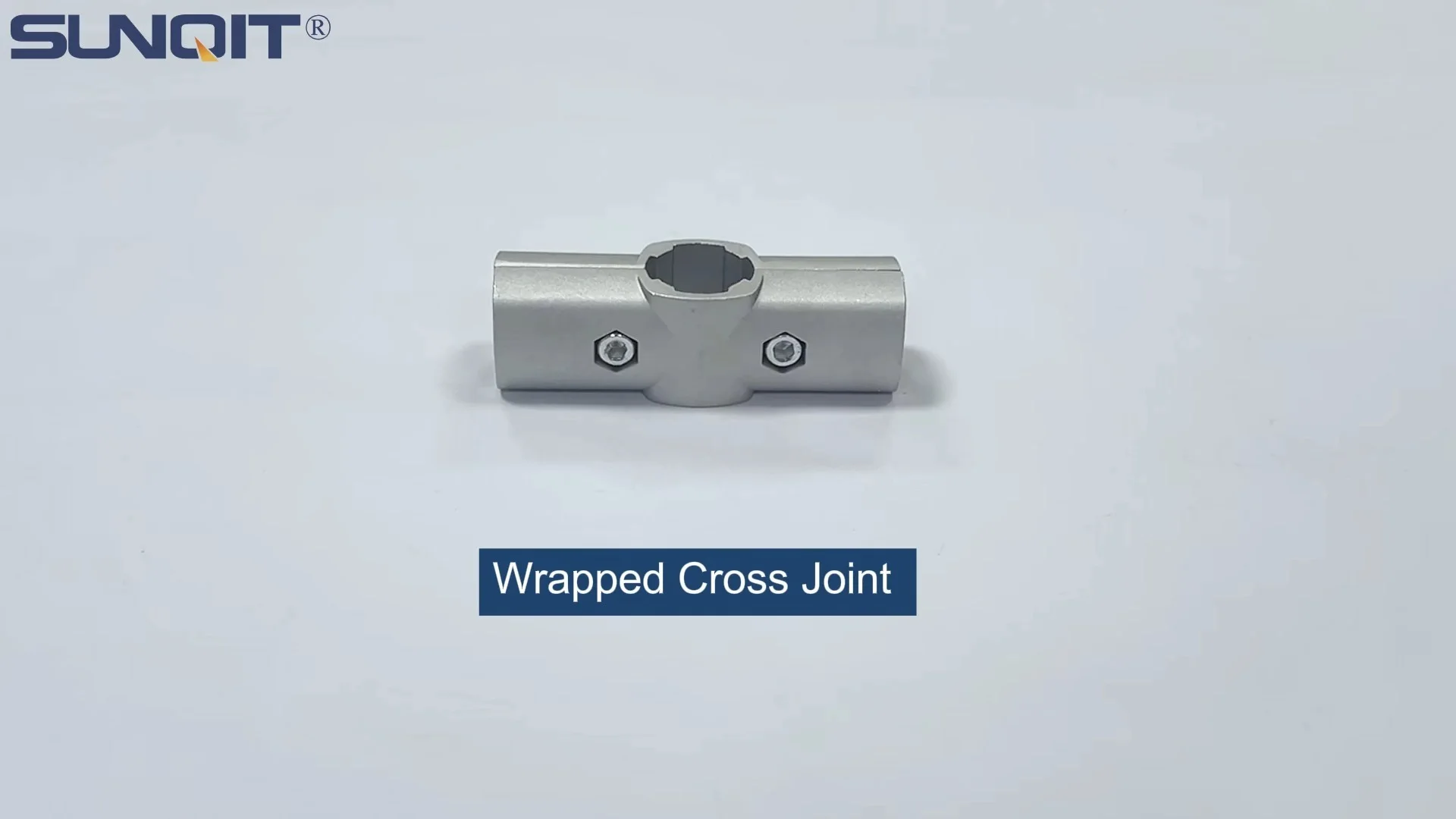
Aluminum 3 way pipe joint for 28mm aluminum pipe connection in 3 direction.
In today's fast-paced manufacturing landscape, where customer demands shift overnight and product life cycles shrink by the quarter, rigidity is the enemy of progress. Production lines that once thrived on fixed, one-size-fits-all setups now struggle to keep up with the need for customization, rapid prototyping, and quick scaling. Imagine a factory floor where reconfiguring a workstation to accommodate a new product takes weeks of welding, drilling, and downtime—or worse, requires investing in entirely new equipment. For many manufacturers, this isn't a hypothetical scenario; it's a daily reality. But what if there was a simpler way to build, adapt, and evolve production systems without grinding operations to a halt? Enter the unsung hero of flexible manufacturing: the three way aluminum pipe joint.
At first glance, these small, unassuming components might seem like little more than industrial hardware. But dig deeper, and you'll discover they're the backbone of modular production systems that empower factories to pivot on a dime. Designed to connect aluminum pipes (and often aluminum profiles) at multiple angles, three way aluminum pipe joints transform static structures into dynamic, reconfigurable frameworks. Whether you're building a workbench, a flow rack, or an entire assembly line, these joints turn "permanent" into "temporary" and "fixed" into "flexible." In this article, we'll explore how three way aluminum pipe joints are revolutionizing production lines, supporting lean systems, and becoming indispensable tools for manufacturers aiming to stay competitive in an era of constant change.
What Are Three Way Aluminum Pipe Joints, Anyway?
Let's start with the basics. A three way aluminum pipe joint is a precision-engineered connector designed to join three aluminum pipes or profiles at 90-degree, 45-degree, or even custom angles. Unlike traditional steel fittings that require welding or heavy tools, these joints are typically made from lightweight, corrosion-resistant aluminum alloys and feature internal threads, grooves, or clamping mechanisms that secure pipes with minimal effort. Most can be tightened or loosened with a simple hex key, making assembly and disassembly a one-person job.
What sets them apart is their versatility. A single three way joint can serve as a corner connector for a workbench frame, a branch point for a flow rack, or a pivot for a mobile trolley. Some models even allow for rotation or swiveling, adding another layer of adjustability. And because they're made from aluminum, they're strong enough to support heavy loads (think toolboxes, raw materials, or finished products) but light enough to be moved and repositioned without specialized equipment. It's this combination of strength, lightness, and simplicity that makes them a favorite among manufacturers who value agility.
Flexibility: The Name of the Game
The most obvious—and most critical—advantage of three way aluminum pipe joints is their ability to enable flexibility in production line design. Let's say a electronics manufacturer needs to shift from assembling smartphones to tablets. With a traditional steel workstation, this might involve cutting and rewelding the frame to adjust the height, adding new shelves, or even replacing the entire structure. With aluminum pipes and three way joints? It's a matter of loosening a few bolts, repositioning the pipes, and tightening the joints back into place. The same workstation that held smartphone components yesterday can now accommodate larger tablet parts today—no welding, no cutting, no waiting for a maintenance crew.
This flexibility isn't just about saving time (though that's a big part of it). It's about reducing waste, a core principle of lean systems. In lean manufacturing, "muda" (waste) includes anything that doesn't add value to the product, and unnecessary downtime or overinvestment in fixed equipment are prime examples. Three way aluminum pipe joints eliminate this waste by turning capital expenses into reusable assets. A set of pipes and joints used to build a temporary assembly line for a seasonal product can be disassembled and repurposed into a flow rack for inventory storage once the season ends. There's no need to scrap materials or buy new ones—just reimagine how the components fit together.
Consider the impact on small to medium-sized manufacturers (SMEs), which often operate on tight budgets and can't afford to overspend on specialized equipment. For these businesses, modular systems built with three way joints are a game-changer. They can start small, with a single workbench, and scale up as orders grow—adding more workstations, extending flow racks, or building material trolleys using the same base components. It's manufacturing on a "pay-as-you-grow" model, and it's only possible because the joints make reconfiguration so accessible.
Aluminum Profiles: The Perfect Partner
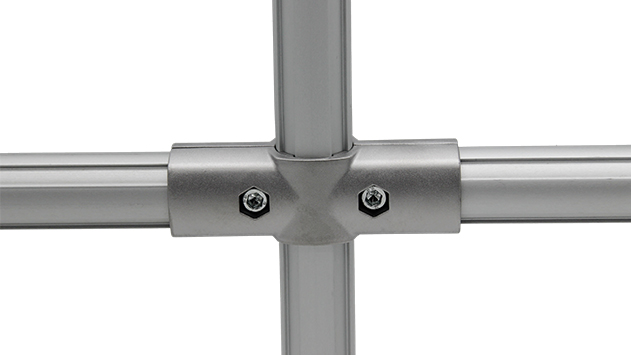
Three way aluminum pipe joints don't work in isolation. Their true power shines when paired with aluminum profiles—another staple of modern modular manufacturing. Aluminum profiles (often called "extrusions") are long, hollow bars with T-shaped slots running along their length, designed to accept screws, brackets, and accessories. When combined with three way joints, they form the building blocks of everything from simple workbenches to complex conveyor systems.
Why aluminum profiles? For starters, they're incredibly strong for their weight. A 40x40mm aluminum profile can support hundreds of pounds, making it ideal for heavy-duty applications like assembly lines or material handling. They're also corrosion-resistant, which is crucial in factories where spills, humidity, or chemicals might degrade steel over time. And because they're extruded, they come in standardized sizes and shapes—think square, rectangular, or round—so components from different suppliers (including three way joints) are almost always compatible.
Let's visualize this partnership in action. Suppose you're building a workbench for an automotive parts assembly line. You start with two parallel aluminum profiles for the front and back rails, connected by shorter profiles for the sides—all joined at the corners with three way joints. Then, you add vertical profiles for legs, secured with more three way joints, and top it off with a plywood or aluminum honeycomb panel. Need a shelf halfway up? Just attach two more profiles between the legs using three way joints, and you're done. Want to add a tool rail along the back? Slide a bracket into the T-slot of the rear profile, tighten a screw, and you're ready to hang wrenches and screwdrivers. Every step is reversible, adjustable, and tool-friendly—no specialized skills required.
This compatibility between three way joints and aluminum profiles also simplifies maintenance. If a profile gets dented or a joint wears out, you don't need to replace the entire structure—just swap out the damaged part. It's like fixing a Lego set: if one brick breaks, you replace that brick, not the whole castle. This modularity reduces downtime and keeps spare parts inventories lean, aligning perfectly with the principles of lean system management.

Supporting Lean Systems: From 5S to Just-In-Time
Lean manufacturing isn't just a buzzword; it's a philosophy centered on maximizing value and minimizing waste. At its core are practices like 5S (Sort, Set in Order, Shine, Standardize, Sustain), just-in-time (JIT) production, and continuous improvement. Three way aluminum pipe joints play a quiet but critical role in making these practices actionable.
Take 5S, for example. "Set in Order" (the second S) emphasizes organizing tools and materials so they're easy to find and use. A cluttered workbench with tools scattered everywhere violates this principle—but a modular workbench built with aluminum profiles and three way joints fixes it. You can add tool holders, bins, and dividers exactly where workers need them, ensuring every screwdriver, wrench, or component has a designated spot. And if a new tool is introduced or a process changes? Simply reposition the holders using the T-slots and joints—no drilling new holes or building new shelves.
JIT production, which aims to deliver materials to the production line exactly when they're needed (and not a minute sooner), relies heavily on efficient material flow. Flow racks—structures that use gravity to feed parts from the back to the front—are a JIT staple, and three way aluminum pipe joints are key to building them. By connecting aluminum profiles with three way joints, you can create multi-level flow racks with adjustable angles (to control how quickly parts slide down) and custom widths (to fit different container sizes). If a product's packaging changes, you don't need a new rack—just adjust the angle or add a divider using extra joints and profiles.
Continuous improvement (kaizen) is another area where three way joints excel. Kaizen encourages workers to suggest small, incremental changes to improve efficiency—and many of these changes involve reconfiguring workspaces. A line operator might notice that a conveyor is positioned too low, causing ergonomic strain. With traditional systems, fixing this would require calling maintenance to adjust the conveyor legs. With a modular conveyor built with aluminum profiles and three way joints, the operator (or a supervisor) could loosen the joints, raise the frame by an inch or two, and retighten—all in 10 minutes. This empowers frontline workers to take ownership of their workspace, turning "that's how we've always done it" into "let's make it better."

Real-World Applications: Workbenches, Flow Racks, and Beyond
Enough theory—let's look at how three way aluminum pipe joints are used in real production environments. We'll focus on two common applications: workbenches and flow racks, both of which are foundational to efficient manufacturing.
Workbenches: The heart of any assembly line, workbenches need to be sturdy, ergonomic, and adaptable. A modular workbench built with aluminum profiles and three way joints checks all these boxes. For example, a electronics manufacturer might use a workbench with a 1200mm x 800mm top, supported by 40x40mm aluminum legs joined at the base with three way joints for stability. The back rail could feature a tool bar with hanging bins (attached via T-slot brackets), and the sides might have adjustable shelves for raw materials. If a new product requires a wider workspace, the operator can detach the side shelves, add longer profiles to the front and back rails (using additional three way joints), and reattach the shelves—expanding the bench in under an hour.
Ergonomics are also easier to address with modular workbenches. If workers complain about back strain from bending, the legs can be extended by adding longer profiles (connected with three way joints) to raise the height. Need a cutout for a keyboard or a monitor mount? Simply attach a custom bracket to the T-slot of the front rail using a screw—no drilling required. Over time, as processes evolve, the workbench evolves with them.
Flow Racks: In warehouses and production lines, moving materials efficiently is half the battle. Flow racks (also called "gravity racks") solve this by using inclined roller tracks to let products slide from the loading end (the "back") to the picking end (the "front"). Three way aluminum pipe joints are essential here because they allow for precise angle adjustments and easy expansion. For instance, a food packaging plant might use a flow rack with three levels (each built from aluminum profiles and three way joints), each holding boxes of packaging materials. The roller tracks are angled at 5 degrees to ensure smooth sliding, and the height of each level can be adjusted by moving the vertical support profiles up or down in the three way joints. If demand increases and more storage is needed, additional levels can be added by inserting new horizontal profiles into the existing vertical supports—no need to build a new rack from scratch.
But the applications don't stop there. Three way aluminum pipe joints are also used in mobile trolleys (for moving materials between stations), safety barriers (to separate work zones), and even temporary enclosures (for dust-free assembly areas). The common thread? They turn "permanent infrastructure" into "temporary tools" that can be adapted to whatever the day's tasks require.
Traditional vs. Modular: A Comparison
To truly appreciate the impact of three way aluminum pipe joints, it helps to compare them with traditional manufacturing setups. Let's break down the differences in a table:
| Aspect | Traditional Steel/Wood Systems | Aluminum Profile + Three Way Joint Systems |
|---|---|---|
| Assembly Time | Weeks (requires welding, drilling, painting) | Hours (tool-free or hex key assembly) |
| Reconfigurability | Minimal (requires cutting/welding; often permanent) | High (loosen joints, reposition pipes, retighten) |
| Weight | Heavy (difficult to move without equipment) | Lightweight (easily repositioned by hand) |
| Durability | Prone to rust/corrosion; wood rots over time | Corrosion-resistant aluminum; long lifespan |
| Cost Over Time | High (frequent replacement of fixed structures) | Low (reusable components; minimal replacement) |
| Customization | Limited (requires custom fabrication for changes) | Unlimited (mix/match profiles, joints, and accessories) |
The data speaks for itself. Traditional systems excel in stability for long-term, unchanging applications, but they fail miserably when flexibility is needed. Modular systems built with three way aluminum pipe joints and aluminum profiles, on the other hand, are designed for change—and in today's manufacturing world, change is the only constant.
Case Study: A Small Manufacturer's Lean Transformation
Let's wrap up with a real-world example (disguised to protect confidentiality) of how three way aluminum pipe joints transformed a manufacturing operation. Meet "Acme Precision," a small manufacturer of medical device components with 50 employees and a single production line.
Before adopting modular systems, Acme's production line was a hodgepodge of fixed steel workbenches, wooden shelves, and welded flow racks. When a new client requested a custom component requiring different assembly steps, the team faced a dilemma: reconfigure the existing line (which would take 2 weeks of downtime and $10,000 in welding/tooling costs) or turn down the order (losing $50,000 in revenue). They chose the former, but the experience highlighted their vulnerability to changing demands.
Six months later, Acme invested in aluminum profiles, three way joints, and roller track accessories. They started by replacing two steel workbenches with modular ones, then built a new flow rack for raw materials. The results were immediate: reconfiguring the line for the next custom order took just 8 hours (instead of 2 weeks) and cost $500 (mostly labor, no new materials). Within a year, they'd expanded to three modular workstations and a flexible conveyor system, allowing them to handle three different product lines simultaneously. Downtime plummeted by 40%, and employee satisfaction rose—workers reported less fatigue from ergonomically adjustable workbenches.
Today, Acme's CEO calls the investment in three way aluminum pipe joints "the best $20,000 we ever spent." It didn't just improve efficiency; it turned them into a company that could say "yes" to new opportunities instead of "we can't afford the downtime."
Looking Ahead: The Future of Modular Manufacturing
As manufacturing continues to evolve, three way aluminum pipe joints are poised to play an even bigger role. Here are a few trends to watch:
Smart Joints: Imagine joints with built-in sensors that monitor load capacity, vibration, or temperature. If a workbench is overloaded, the joint could send an alert to a supervisor's phone, preventing accidents. While this is still in the prototype stage, early testing shows promise for industries like aerospace, where precision and safety are critical.
3D-Printed Custom Joints: For specialized applications (e.g., non-standard angles or unique load requirements), 3D printing could allow manufacturers to create custom three way joints on-demand. This would eliminate the need for large minimum orders from suppliers and open up new design possibilities.
Integration with Industry 4.0: As factories become more connected, modular systems built with three way joints could serve as "digital twins"—virtual replicas of physical structures that can be reconfigured in software before being adjusted in real life. This would allow for even faster prototyping and testing of new layouts.
Conclusion: The Backbone of Flexible Manufacturing
Three way aluminum pipe joints may not grab headlines like robots or AI, but they're the quiet enablers of the flexible manufacturing revolution. By turning rigid structures into modular frameworks, they empower manufacturers to adapt, innovate, and thrive in a world where change is the only constant. Whether paired with aluminum profiles to build workbenches, flow racks, or entire assembly lines, these joints embody the lean principle of "doing more with less"—less time, less money, and less waste.
For manufacturers still relying on fixed, traditional setups, the message is clear: flexibility isn't a luxury; it's a necessity. And three way aluminum pipe joints are the most accessible, cost-effective way to achieve it. So the next time you walk through a factory floor, take a closer look at those unassuming connectors holding the workbenches and racks together. Chances are, they're not just building structures—they're building the future of manufacturing.