- Company Articles
- Products and Technology
- Product knowledge
- How Three Way Lean Pipe Joint Boosts Production Line Efficiency

How Three Way Lean Pipe Joint Boosts Production Line Efficiency
Related Product
Three Way Lean Pipe Joint
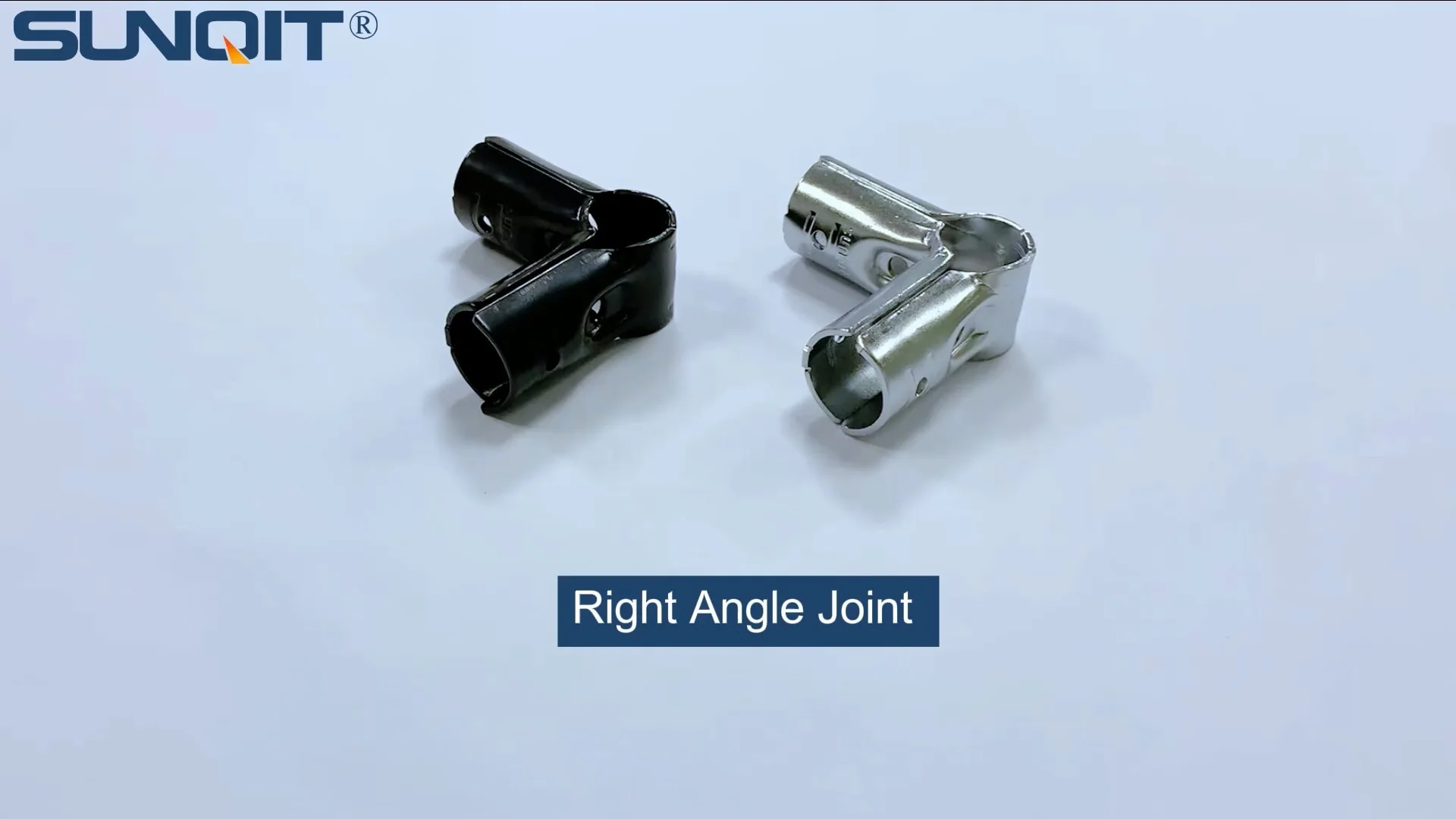
Three way lean pipe joint for 3 pcs 28MM lean pipe connection in straight angle, which used widely in workbench, flow rack, hand trolley frame connection.
The Hidden Hero of Busy Factories
Walk into any manufacturing plant, and your eyes will likely be drawn to the big machines—the robotic arms assembling cars, the conveyor belts snaking through warehouses, the towering stacked with materials. These are the obvious stars of the production show. But if you look closer, past the noise and motion, you'll find a quieter player that's just as critical: the humble connectors holding everything together. Today, we're shining a light on one such unsung hero: the
three way lean pipe joint
. It's small, it's simple, and it might just be the key to unlocking the efficiency your production line has been missing.
Let's set the scene. Imagine (oops, scratch that—let's
visit
) a mid-sized electronics factory. The floor is bustling: workers in blue uniforms huddle over workbenches, soldering components onto circuit boards. Carts loaded with parts weave between stations. A supervisor, Maria, stands near the back, frowning at her clipboard. Her team has been struggling to keep up with demand lately. The problem? Their assembly line feels like a rigid maze. When a new product model came in last month, reconfiguring the workbenches took two full days—days lost to production. When a rush order arrived yesterday, they had to jury-rig a temporary flow rack using zip ties and duct tape because the existing shelving was too fixed to adjust quickly. "There's got to be a better way," Maria mutters, staring at a jumble of metal pipes and brackets in the corner. Spoiler: there is. And it starts with that three way lean pipe joint.
What Even Is a Three Way Lean Pipe Joint?
Let's start with the basics. A three way lean pipe joint is a small, often plastic or metal connector designed to join three lean pipes (also called "lean tubes") at once. Think of it as a T-junction for your production line's skeleton. Lean pipes themselves are typically lightweight—often made of steel with a plastic coating, aluminum, or even stainless steel—and they're the building blocks of everything from workbenches to material racks. The joint? It's the glue that holds these blocks together, but with a twist: it's not permanent. Unlike welding or bolting, which locks structures in place, these joints let you snap pipes together, adjust angles, and take things apart in minutes.
You might be thinking, "So it's just a fancy connector. Why does that matter?" Here's the thing: in manufacturing, flexibility is everything. Lean manufacturing principles—like those pioneered by Toyota—revolve around eliminating waste, and one of the biggest wastes is
inflexibility
. If your production line can't adapt quickly to new products, changing demand, or even just daily workflow tweaks, you're leaving time, money, and productivity on the table. That's where the three way lean pipe joint comes in. Its design lets you build, modify, and rebuild structures on the fly, turning your rigid assembly line into a dynamic, shape-shifting tool that bends to your needs—not the other way around.

The Problem with "Set It and Forget It" Assembly
To understand why three way lean pipe joints are game-changers, let's first talk about what came before. Traditional production line structures—think heavy steel frames welded together or bolted shelving units—are built to last. That sounds like a good thing, right? But "built to last" often translates to "built to never change." Maria's factory used these for years. Their workbenches were welded steel monsters: sturdy, sure, but impossible to adjust. When a new employee who was 5'2" joined the team, she had to work on a stack of phone books because the bench height was fixed for someone 6 feet tall. Ergonomics? Out the window. When they needed to add a shelf for new tools, the maintenance team had to drill holes into the steel frame—risking damage and taking hours of labor.
Then there were the modular systems that came next—think metal brackets and screws. These were better, but not by much. Adjusting a shelf meant unscrewing dozens of bolts, realigning the brackets, and re-screwing everything back in. By the time you were done, half your shift was gone. And if you made a mistake? You'd stripped a screw or bent a bracket, rendering the whole section useless. These systems were like trying to solve a puzzle with pieces that only fit one way. No wonder Maria's team dreaded reconfigurations.
The worst part? All this rigidity was costing them. According to lean manufacturing studies, companies lose up to 20% of productive time to "setup waste"—the time spent preparing tools, rearranging workspaces, or adjusting equipment. For a factory like Maria's, with 50 workers clocking 8-hour shifts, that's 80 hours of lost work
every week
. That's two full workweeks a month. And that's not even counting the cost of scrap materials from jury-rigged solutions or the frustration that comes with working in a space that doesn't fit your needs.

Three Way Lean Pipe Joint: The Flexibility Revolution
Enter the three way lean pipe joint. Let's break down why this tiny component is causing such a stir in production circles. First, it's
fast
. No welding, no drilling, no endless screws. Most joints snap or twist into place, securing pipes with a simple lever or clamp. Maria's team, for example, once spent a day and a half reconfiguring a traditional workbench. With lean pipe joints? They built a custom
lean pipe workbench
from scratch in under two hours. Two hours! That's the difference between losing a shift and getting back to production before lunch.
Second, it's
flexible
. Traditional joints only connect pipes at fixed angles—usually 90 degrees. Three way lean pipe joints? They often swivel or lock at multiple angles, letting you build structures that bend, curve, or branch off in any direction. Need a workbench with a side shelf at 45 degrees for easier tool access? Done. Want a flow rack that tapers at the end to fit into a tight corner? No problem. This flexibility means your workspace can adapt to your workers, not the other way around. Remember that 5'2" employee? With a lean pipe workbench, Maria's team adjusted the height in 10 minutes using nothing but a hex key.
Third, it's
durable
. Don't let the "lean" in the name fool you—these joints are tough. Many are made from high-strength plastic (like nylon) or aluminum, designed to handle the daily wear and tear of a factory floor. They can support heavy loads, too. A well-built lean pipe structure with quality joints can hold hundreds of pounds of materials without wobbling. Maria tested this herself: she stacked 50-pound boxes of circuit boards on a lean pipe flow rack they built, and it didn't so much as creak. "I was skeptical at first," she admits. "It looks so simple, but it's surprisingly strong."
Finally, it's
cost-effective
. Lean pipe systems are often cheaper upfront than welded steel, but the real savings come later. Because they're reusable—you can take apart a workbench and rebuild it as a cart, then take that cart apart and build a shelf—you're not constantly buying new equipment. Maria's factory saved over $10,000 in the first year alone by repurposing old lean pipe structures instead of purchasing new shelving. Plus, with less setup time, they're producing more goods, which means more revenue. It's a win-win.

From Workbench to Flow Rack: Real-World Wins
Let's get concrete. How exactly does a three way lean pipe joint transform day-to-day operations? Let's look at two common applications: the
lean pipe workbench
and the
flow rack
. These are workhorses in any factory, and they're where the joint's magic really shines.
Lean Pipe Workbench: The Heart of the Assembly Line
A workbench isn't just a table—it's a worker's command center. It needs to be at the right height, have space for tools, and keep materials within arm's reach. With traditional workbenches, you're stuck with whatever layout the manufacturer decided on. With lean pipe and three way joints? You design it for your process. Maria's team built a workbench with a custom layout: a main surface for assembly, a side shelf at a 30-degree angle for tools (so they don't roll off), and a lower shelf for bins of parts. They added a small overhead rack for cables and manuals, held up with—you guessed it—three way joints. Best of all, when a new assembly process required a wider main surface, they simply unsnapped a few joints, added a longer pipe, and reconnected everything. Total time: 45 minutes. "The workers love it," Maria says. "They feel like they own their space now, and that makes them more invested in keeping it organized."
A workbench isn't just a table—it's a worker's command center. It needs to be at the right height, have space for tools, and keep materials within arm's reach. With traditional workbenches, you're stuck with whatever layout the manufacturer decided on. With lean pipe and three way joints? You design it for your process. Maria's team built a workbench with a custom layout: a main surface for assembly, a side shelf at a 30-degree angle for tools (so they don't roll off), and a lower shelf for bins of parts. They added a small overhead rack for cables and manuals, held up with—you guessed it—three way joints. Best of all, when a new assembly process required a wider main surface, they simply unsnapped a few joints, added a longer pipe, and reconnected everything. Total time: 45 minutes. "The workers love it," Maria says. "They feel like they own their space now, and that makes them more invested in keeping it organized."
Flow Rack: Keeping Materials Moving
Flow racks are the arteries of a production line, carrying materials from storage to assembly. Traditional flow racks are often fixed: the shelves are set at a single angle, and the number of levels is non-negotiable. But with three way lean pipe joints, you can build a flow rack that adapts to your materials. Maria's team needed a rack for small electronic components (think: tiny resistors and capacitors) and larger circuit boards. So they built a two-tiered flow rack: the top tier, with steeper angles, for the small parts (so they slide down easily), and the bottom tier, with gentler angles, for the larger, heavier boards (to prevent damage). They even added dividers using extra pipes and joints to separate different component types. When a new, bulkier part came in, they added a third tier in under an hour. No more duct tape, no more wasted space.
Flow racks are the arteries of a production line, carrying materials from storage to assembly. Traditional flow racks are often fixed: the shelves are set at a single angle, and the number of levels is non-negotiable. But with three way lean pipe joints, you can build a flow rack that adapts to your materials. Maria's team needed a rack for small electronic components (think: tiny resistors and capacitors) and larger circuit boards. So they built a two-tiered flow rack: the top tier, with steeper angles, for the small parts (so they slide down easily), and the bottom tier, with gentler angles, for the larger, heavier boards (to prevent damage). They even added dividers using extra pipes and joints to separate different component types. When a new, bulkier part came in, they added a third tier in under an hour. No more duct tape, no more wasted space.
To really drive home the difference, let's compare traditional systems with lean pipe systems using three way joints. Check out this table:
| Feature | Traditional Welded/ Bolted Systems | Lean Pipe System with Three Way Joints |
|---|---|---|
| Assembly Time (Workbench) | 8-12 hours | 1-2 hours |
| Reconfiguration Time | 4-8 hours | 30 minutes - 1 hour |
| Cost of Reconfiguration | High (labor + new parts) | Low (reusable parts, minimal labor) |
| Flexibility | Fixed (no adjustments) | High (adjustable angles, heights, layouts) |
| Ergonomic Adaptability | Poor (one-size-fits-all) | Excellent (adjustable for workers of all sizes) |
The Ripple Effect: Boosting Your Entire Lean System
Here's the thing about lean manufacturing: it's a system. Every part affects the whole. A more flexible workbench doesn't just make assembly easier—it reduces worker fatigue, which reduces errors, which reduces scrap, which saves money. A better flow rack doesn't just move materials faster—it cuts down on time spent searching for parts, which speeds up production, which lets you take on more orders. And at the center of this ripple effect? The three way lean pipe joint. It's a small piece, but it's the linchpin that makes the entire lean system work better.
Let's talk about
continuous improvement
—a core principle of lean. In a rigid system, continuous improvement is hard. If you can't easily test a new layout or adjust a process, you're stuck doing things "the way they've always been done." But with lean pipe joints, testing new ideas is easy. Maria's team recently experimented with a U-shaped assembly line (instead of a straight line) to reduce worker movement. They built the new layout in a day, tested it for a week, and decided it wasn't better—so they took it apart and went back to the old setup. No harm, no foul, and they learned something. In a traditional system, that experiment would have taken weeks and cost thousands. With lean pipe, it was a low-risk, high-reward learning opportunity.
Then there's
employee engagement
. When workers can adjust their workspace to fit their needs, they feel valued. They're more likely to suggest improvements, take ownership of their area, and stay focused. Maria noticed this almost immediately. "Before, the team would grumble when we had to reconfigure. Now, they're excited to brainstorm new layouts. One worker even designed a custom tool holder using leftover pipes and joints—something he never would have done before because he didn't think he had the power to change things." That's the power of a system that puts control in the hands of the people using it.
Choosing the Right Three Way Lean Pipe Joint: What to Look For
So, you're sold—now what? Not all three way lean pipe joints are created equal. Here's what to keep in mind when shopping for your factory:
Material Matters
Most joints are either plastic (nylon or ABS) or metal (aluminum or stainless steel). Plastic is lightweight and affordable, great for light to medium loads (like small parts or tools). Metal is stronger, better for heavy loads (like machinery or large materials). Maria's team uses plastic joints for their workbenches and aluminum joints for their flow racks, which carry heavier boxes.
Most joints are either plastic (nylon or ABS) or metal (aluminum or stainless steel). Plastic is lightweight and affordable, great for light to medium loads (like small parts or tools). Metal is stronger, better for heavy loads (like machinery or large materials). Maria's team uses plastic joints for their workbenches and aluminum joints for their flow racks, which carry heavier boxes.
Compatibility
Make sure the joint fits your lean pipes. Lean pipes come in different diameters (common sizes are 28mm and 30mm). A joint for 28mm pipes won't work with 30mm pipes, so double-check the specs. Also, look for joints that work with lean pipe and accessories —like casters, shelves, or tool hooks. The best systems are modular, so you can mix and match components.
Make sure the joint fits your lean pipes. Lean pipes come in different diameters (common sizes are 28mm and 30mm). A joint for 28mm pipes won't work with 30mm pipes, so double-check the specs. Also, look for joints that work with lean pipe and accessories —like casters, shelves, or tool hooks. The best systems are modular, so you can mix and match components.
Locking Mechanism
How does the joint secure the pipes? Some twist to lock, others use a lever or a set screw. Twist-lock joints are fastest, but lever-locks might be more secure for heavy loads. Test a few options to see what works best for your team—you want something easy enough for anyone to use, even with gloves on.
How does the joint secure the pipes? Some twist to lock, others use a lever or a set screw. Twist-lock joints are fastest, but lever-locks might be more secure for heavy loads. Test a few options to see what works best for your team—you want something easy enough for anyone to use, even with gloves on.
Supplier Reliability
Finally, choose a reputable supplier. You don't want to skimp on quality—cheap joints can crack or slip, risking injury or damage. Look for suppliers with good reviews, warranties, and responsive customer service. Maria's team went with a local supplier who sent samples before they ordered, which helped them test durability first-hand.
Finally, choose a reputable supplier. You don't want to skimp on quality—cheap joints can crack or slip, risking injury or damage. Look for suppliers with good reviews, warranties, and responsive customer service. Maria's team went with a local supplier who sent samples before they ordered, which helped them test durability first-hand.
Small Joint, Big Impact: The Future of Production Lines
Let's circle back to Maria. It's six months later, and her factory looks different. The workbenches are sleek and adjustable, the flow racks are organized and adaptable, and the team is hitting production targets for the first time in years. "We used to dread change," she says, smiling as she watches a worker adjust a shelf on a lean pipe cart in seconds. "Now, we embrace it. The three way lean pipe joint didn't just fix our workspace—it changed our mindset. We're more agile, more creative, and more confident in our ability to handle whatever comes next."
So, what's the takeaway? Efficiency isn't always about big machines or fancy software. Sometimes, it's about the small, smart tools that make the daily grind a little easier. The three way lean pipe joint is one of those tools. It's a reminder that in manufacturing, as in life, the best solutions are often the simplest ones.
If you're struggling with a rigid, inefficient production line, maybe it's time to take a closer look at your connectors. A few well-chosen three way lean pipe joints could be the first step toward a faster, more flexible, and more profitable operation. After all, in the world of lean manufacturing, it's the little things that add up to big results.