- Company Articles
- Products and Technology
- Product knowledge
- How Three Way Lean Pipe Joint Chrome Reduces Assembly Time in Factories

How Three Way Lean Pipe Joint Chrome Reduces Assembly Time in Factories
Related Product
Three Way Lean Pipe Joint Chrome
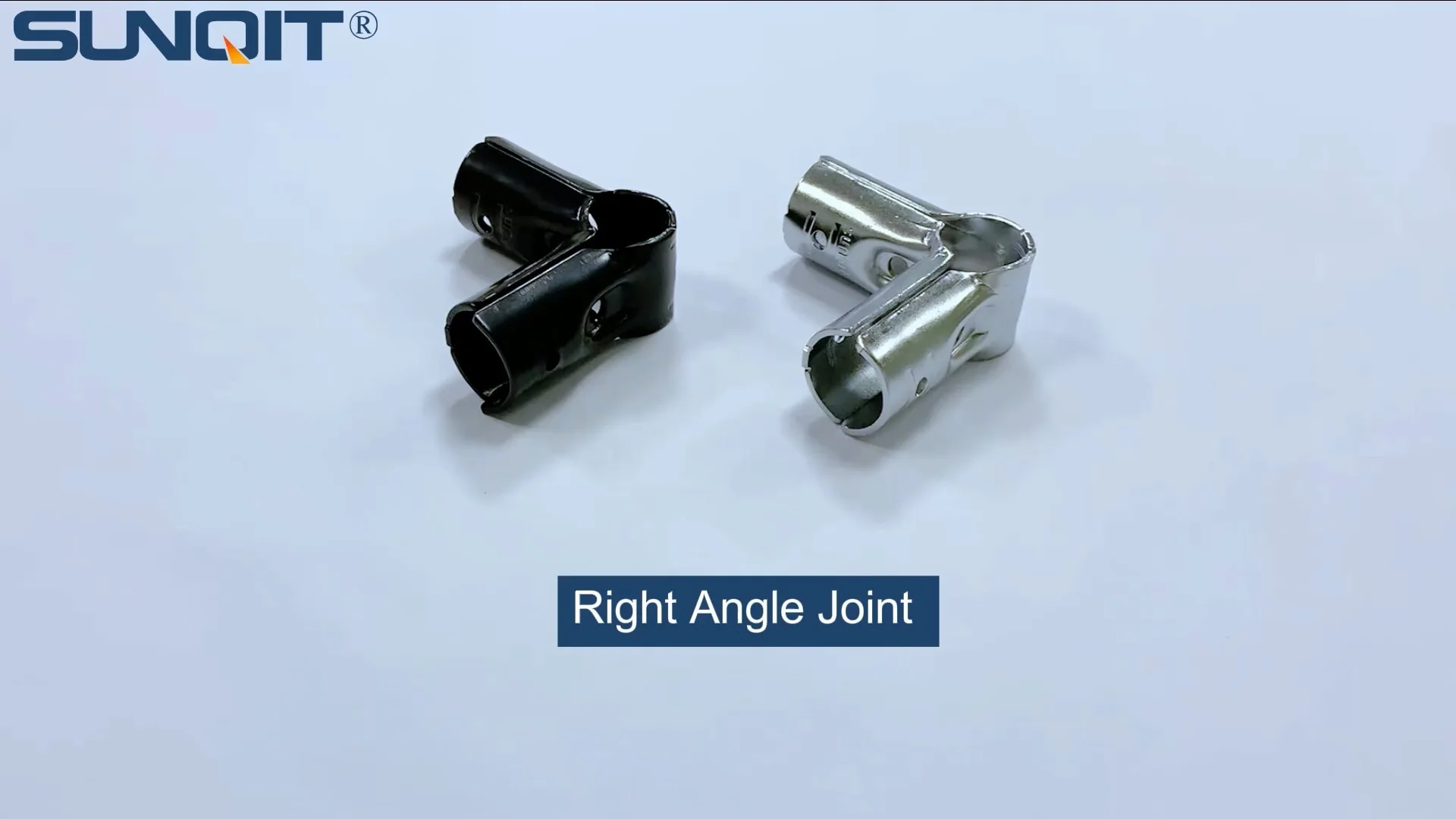
Three way lean pipe joint for 3 pcs 28MM lean pipe connection in straight angle, which used widely in workbench, flow rack, hand trolley frame connection.
In the hum of a busy factory, where conveyor belts whir and tools clink, there's an invisible clock ticking louder than any machine. Every minute spent fumbling with bolts, aligning pipes, or readjusting workbenches is a minute stolen from production. For assembly line workers like Maria, a third-shift supervisor at a mid-sized electronics plant, those minutes add up. "We used to spend half an hour just setting up a simple material rack," she recalls. "By the time we got it right, the morning rush was already breathing down our necks." But in recent months, something shifted. A small, shiny component started appearing on their work floors: the three way lean pipe joint chrome. Suddenly, that 30-minute setup? It dropped to 10. "Now my team spends less time wrestling with parts and more time making sure products are perfect," Maria says. "That's the difference between meeting a deadline and scrambling to catch up."
This isn't just a story about a single factory. Across manufacturing, assembly time has long been the silent efficiency killer. It's not just about the minutes on the clock—it's about worker frustration, delayed production runs, and the hidden cost of rigid, hard-to-assemble equipment. Enter lean systems: the philosophy of doing more with less, of building flexibility into every process. And at the heart of that flexibility? Tools like lean pipes, workbenches, and flow racks—all held together by joints that make or break efficiency. Today, we're diving into how one such joint, the three way lean pipe joint chrome, is redefining what "quick assembly" means for factories worldwide.
The Role of Lean Systems in Streamlining Production
Before we zoom in on the joint itself, let's take a step back. Lean systems aren't just a buzzword—they're a lifeline for modern manufacturing. Born from the Toyota Production System, lean is all about eliminating waste: waste of time, waste of materials, waste of effort. In a lean factory, nothing is static. Production lines adapt to new orders, workbenches reconfigure for different products, and material flow racks shift to keep pace with demand. This adaptability is what keeps factories competitive in a world where customer needs change overnight.
At the core of these adaptable systems are lean pipes—lightweight, durable tubes that form the skeleton of workbenches, flow racks, conveyor supports, and turnover trolleys. But a pipe is just a pipe without the right joints. Traditional joints, often made of plastic or uncoated metal, require tools, precise alignment, and patience. They're rigid, making reconfiguration a hassle, and prone to wear, which means frequent replacements. For lean systems to truly work, the joints holding them together need to be as flexible and efficient as the philosophy itself. That's where the three way lean pipe joint chrome comes in.
Meet the Three Way Lean Pipe Joint Chrome: A Small Part with a Big Impact
Walk into any factory using lean systems, and you'll see them: small, metallic, chrome-plated connectors where lean pipes intersect. The three way lean pipe joint chrome is unassuming at first glance—about the size of a fist, with three openings spaced evenly around its body. But looks can be deceiving. This little component is engineered to solve two of the biggest assembly headaches: time and flexibility.
Let's start with the basics. The "three way" design means it can connect three lean pipes at once, forming T-junctions or Y-shapes without the need for multiple single joints. That alone cuts down on the number of parts needed. Then there's the "chrome" plating. Unlike plastic joints that crack under stress or uncoated metal that rusts in humid factory environments, chrome adds a layer of durability. It resists corrosion, stands up to repeated adjustments, and keeps a smooth surface that makes sliding pipes into place effortless. But the real magic? How it connects.
Traditional joints often require screws, wrenches, or even welding. Picture Juan, an assembly line worker, kneeling on the floor, fumbling with a wrench to tighten a bolt on a plastic joint. His hands are greasy, the bolt is stripped, and the pipe still wobbles. Now imagine him picking up a three way lean pipe joint chrome, sliding three lean pipes into its openings, and twisting a built-in locking mechanism. Done. No tools, no sweat, no wasted effort. "It's like building with adult Legos," jokes Mike, a production lead at an automotive parts plant. "But instead of spending 20 minutes on one connection, I'm done in 20 seconds."

Key Features That Cut Assembly Time in Half
What makes the three way lean pipe joint chrome so much faster than its predecessors? Let's break down its standout features:
- Tool-Free Assembly: The most game-changing feature. Each joint has an internal cam lock or twist-to-tighten mechanism. Slide a lean pipe into the joint, twist the collar, and it locks in place. No wrenches, no screws, no drills. For workers, this means less time hunting for tools and more time building.
- Precision Engineering: The openings are machined to fit standard lean pipe diameters (often 28mm or 30mm) perfectly. No guesswork, no forcing pipes into misaligned holes. A snug fit on the first try means fewer do-overs.
- 360-Degree Rotation: Unlike fixed-angle joints, the three way lean pipe joint chrome lets pipes rotate freely before locking. Need to adjust the angle of a workbench shelf? Twist the joint, reposition, and lock. No disassembly required.
- Chrome-Plated Durability: Factories are tough environments—oils, coolants, and constant use take a toll. Chrome plating resists scratches, rust, and chemical damage, so joints last longer. Maria estimates her plant replaces joints 70% less often since switching to chrome.
- Compatibility: It works with standard lean pipes, aluminum lean pipes, and even some aluminum profile systems. This versatility means factories don't have to overhaul their entire setup to upgrade—they can swap in the joints and keep existing pipes.
Together, these features add up to a dramatic reduction in assembly time. A recent study by the Lean Manufacturing Institute found that factories using tool-free chrome joints cut pipe assembly time by an average of 58% compared to traditional bolted joints. For a facility assembling 50 workbenches a month, that's over 120 hours saved—time that can be redirected to training, quality checks, or ramping up production.

From the Factory Floor: How One Plant Transformed Its Assembly Line
Numbers tell part of the story, but real change happens in the daily lives of workers. Let's step into PrecisionWorks, a mid-sized manufacturer of medical devices, to see the three way lean pipe joint chrome in action.
Before 2023, PrecisionWorks relied on plastic lean pipe joints for their assembly workbenches and flow racks. "Setting up a single workbench took two people an hour," says Lisa, the plant manager. "We'd have to drill holes, tighten screws with Allen wrenches, and if a joint slipped, we'd start over. By the end of the day, my team was exhausted from the physical strain." The problems didn't stop there. The plastic joints warped in the summer heat, making workbenches wobbly. Reconfiguring a flow rack for a new product? That took half a day, delaying production starts.
In January 2023, Lisa's team switched to three way lean pipe joint chrome, sourced from a local lean pipe supplier. The results were immediate. "Our first test was assembling a material rack B (3 row and 3 floor)—something that used to take 45 minutes. With the new joints? 12 minutes. One person, no tools, no frustration," Lisa recalls. "The workers were skeptical at first, but by the end of the week, they were asking why we hadn't switched sooner."
Months later, the benefits multiplied. Worker absenteeism due to hand strain dropped by 30%. The plant could reconfigure assembly lines for small-batch orders in hours instead of days. And because the chrome joints held up better, they reduced replacement part costs by $12,000 in the first year. "It's not just about speed," Lisa emphasizes. "It's about dignity. When your tools work with you instead of against you, you take pride in your work. Our defect rates even went down because workers weren't rushing to finish setup—they had time to get it right."
Traditional Joints vs. Three Way Lean Pipe Joint Chrome: A Head-to-Head Comparison
| Feature | Traditional Plastic Joints | Standard Metal Bolted Joints | Three Way Lean Pipe Joint Chrome |
|---|---|---|---|
| Assembly Time per Joint | 8–10 minutes (with screws/wrench) | 10–15 minutes (with drilling/bolting) | 1–2 minutes (tool-free) |
| Reconfiguration Ease | Difficult (requires unscrewing; often damages joint) | Very difficult (may require cutting pipes) | Easy (twist to unlock, reposition, relock) |
| Durability (Average Lifespan) | 3–6 months (prone to cracking/warping) | 12–18 months (rusts without maintenance) | 36+ months (chrome resists corrosion/wear) |
| Tools Required | Allen wrench, screwdriver | Drill, wrench, pliers | None |
| Cost (Per Unit) | $2–$5 (low upfront, high replacement cost) | $8–$12 (high upfront, moderate replacement cost) | $10–$15 (higher upfront, minimal replacement cost) |
| Worker Fatigue (1–10 Scale, 10=Most Fatigue) | 7 (repetitive screwing/unscrewing) | 9 (heavy tools, tight spaces) | 2 (minimal physical effort) |
Building Better: How It Integrates with Lean Pipes, Workbenches, and Flow Racks
The three way lean pipe joint chrome isn't just a standalone product—it's the glue that holds lean systems together. Let's look at how it transforms common factory setups:
Workbenches: From Rigid to Rapidly Adjustable
A workbench is a worker's second home, and one size rarely fits all. With traditional joints, adjusting height or adding shelves meant disassembling and rebuilding. Now, using three way lean pipe joint chrome, a workbench can be reconfigured in minutes. Need to lower the surface for a shorter worker? Unlock the joints, slide the legs up, relock. Adding a side shelf for tools? Connect a few lean pipes with three way joints and lock them in place. "I have a team of 12 workers, each with different preferences," says Raj, a foreman at a consumer goods plant. "With these joints, everyone gets a workbench that fits them—no more one-size-fits-none."
Flow Racks: Smoother Material Movement, Faster Setup
Flow racks are the arteries of a factory, keeping materials moving to the assembly line. They rely on roller tracks and precisely angled shelves to let gravity do the work. Traditional flow racks often require custom-cut pipes and welded joints, making them hard to modify. With three way lean pipe joint chrome, workers can adjust shelf angles, add new rows, or extend racks in minutes. For example, when PrecisionWorks started producing a larger medical device, Lisa's team needed to widen their flow rack by 2 feet. "We grabbed a few extra lean pipes and three way joints, unlocked the existing connections, added the new section, and relocked. Total time: 25 minutes. Before, we would have had to order a custom rack and wait a week," she says.
Turnover Trolleys: Lightweight and Ready to Roll
Turnover trolleys carry parts between stations, and their design needs to match the load. Heavy-duty trolleys require sturdy frames, but traditional joints add weight and assembly time. The three way lean pipe joint chrome is lightweight but strong, making trolleys easier to build and maneuver. "Our old trolleys were like pushing a boulder," Maria laughs. "Now, with chrome joints and aluminum lean pipes, even our smallest team member can move a loaded trolley across the factory floor."
The Future of Lean Assembly: Why Small Innovations Matter Most
In an industry obsessed with high-tech automation—robots, AI, IoT sensors—it's easy to overlook the impact of "small" innovations like the three way lean pipe joint chrome. But as any factory worker will tell you, the tools they interact with daily have the biggest effect on their productivity and morale. A joint that saves 5 minutes per assembly might not make headlines, but multiplied by 100 workers across a year, it's thousands of hours reclaimed for more meaningful work.
Looking ahead, lean system suppliers are doubling down on user-centric design. We're already seeing joints with color-coded locking mechanisms for even faster identification, and models with built-in cable management for cleaner workbenches. But for now, the three way lean pipe joint chrome remains a gold standard—a reminder that efficiency doesn't always require reinventing the wheel. Sometimes, it's about making the wheel easier to put together.
Conclusion: The Joint That Unlocks a Smarter Factory
At the end of the day, manufacturing is about people. It's about workers who show up, day in and day out, to build the products that power our world. When we equip them with tools that respect their time and effort—tools like the three way lean pipe joint chrome—we don't just build better factories. We build better experiences. Less frustration, more pride, and a shared sense of purpose in making things right.
So the next time you walk through a factory, take a closer look at those shiny chrome joints. They might be small, but they're quietly revolutionizing how we make, build, and create. And for workers like Maria, Juan, and Lisa? They're not just parts. They're proof that in manufacturing, the best innovations are the ones that make life a little easier—one joint at a time.