- Company Articles
- Products and Technology
- Product knowledge
- How Three Way Lean Pipe Joint Chrome Supports Sustainable Lean Principles

How Three Way Lean Pipe Joint Chrome Supports Sustainable Lean Principles
Related Product
Three Way Lean Pipe Joint Chrome
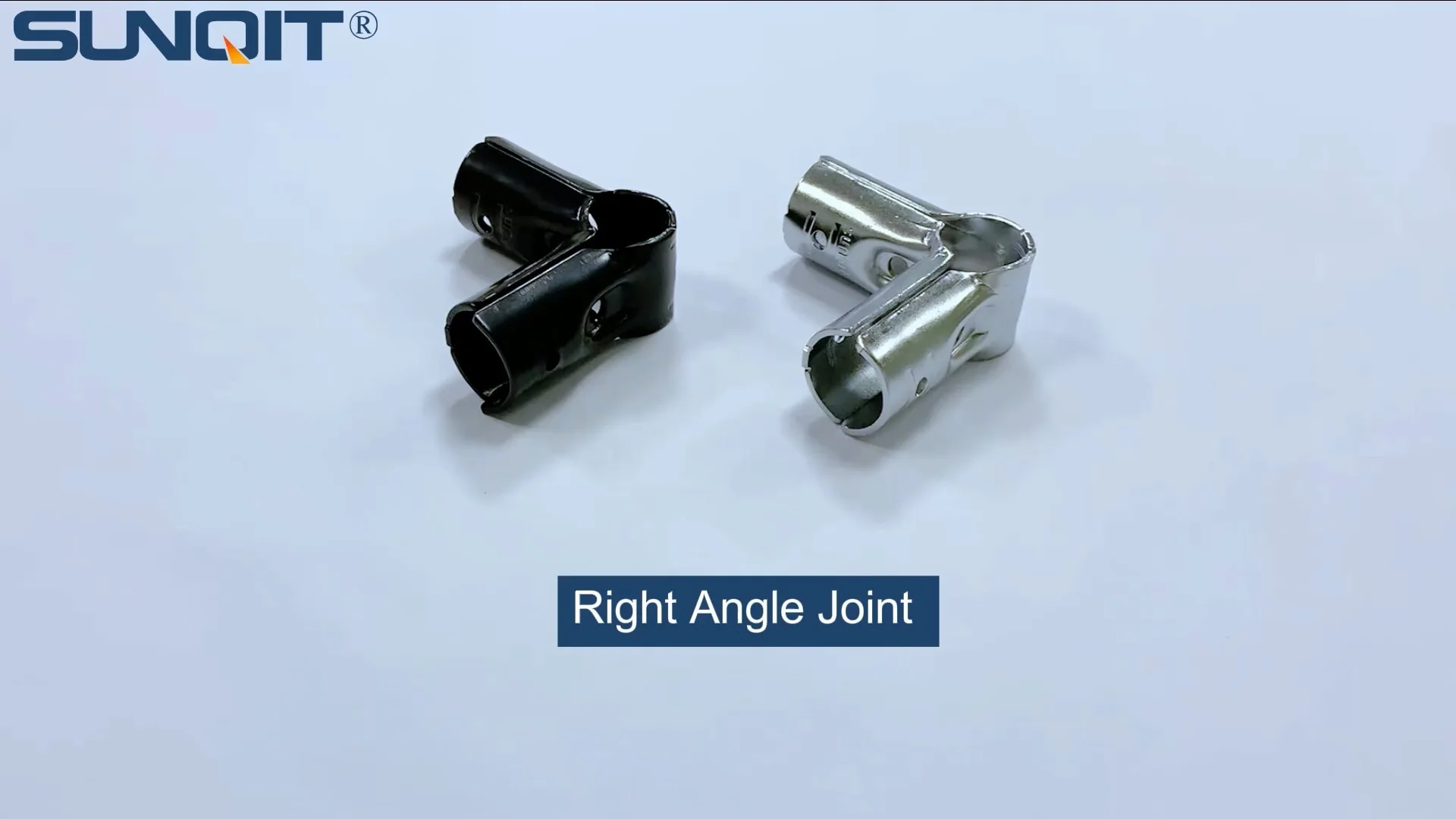
Three way lean pipe joint for 3 pcs 28MM lean pipe connection in straight angle, which used widely in workbench, flow rack, hand trolley frame connection.
Introduction: The Intersection of Lean and Sustainability in Modern Manufacturing
In today's fast-paced manufacturing landscape, two concepts have become indispensable: lean principles and sustainability. Lean, born from the Toyota Production System, focuses on eliminating waste, streamlining processes, and fostering continuous improvement. Sustainability, on the other hand, demands minimizing environmental impact through efficient resource use, reducing carbon footprints, and extending product lifespans. At first glance, these might seem like separate goals—one about operational efficiency, the other about planetary responsibility. But in reality, they're deeply intertwined. A truly lean operation is one that doesn't just cut costs but also cuts waste in materials, energy, and time—all of which directly contribute to sustainability.
At the heart of many lean operations lies the lean pipe system : a modular framework of pipes, joints, and accessories used to build workbenches, material racks, flow racks, and production lines. These systems are celebrated for their flexibility, allowing teams to adapt layouts quickly as needs change. But what makes a lean pipe system truly effective? It's the smallest components that often hold the biggest power—like the Three Way Lean Pipe Joint Chrome . This unassuming connector, with its chrome-plated finish and three-way design, is more than just a hardware piece. It's a bridge between lean efficiency and sustainable practice, enabling manufacturers to build, adapt, and reuse systems in ways that align with both operational and environmental goals. In this article, we'll explore how this single component plays a pivotal role in supporting sustainable lean principles, and why it has become a staple for forward-thinking lean pipe suppliers and manufacturers alike.
Understanding Lean Principles: Beyond Efficiency to Purposeful Resource Use
Before diving into the specifics of the Three Way Lean Pipe Joint Chrome, it's critical to ground ourselves in what lean principles truly entail. Lean isn't just about "doing more with less"—it's about doing more meaningfully with less. The core of lean thinking revolves around identifying and eliminating "muda," or waste, in all its forms: overproduction, excess inventory, unnecessary motion, defects, and underutilized talent, to name a few. But in the context of sustainability, lean takes on an added layer: waste isn't just a cost burden; it's a drain on finite resources, from raw materials to energy.
One of the most powerful lean principles is "continuous improvement," or kaizen . This mindset encourages teams to constantly evaluate and refine processes, ensuring that waste is not just eliminated once but prevented from reoccurring. For this to work, however, the physical tools and infrastructure supporting these processes must be equally adaptable. A rigid production line that can't be reconfigured when a new inefficiency is discovered becomes a barrier to kaizen. Similarly, a workstation built with fixed, non-reusable components forces teams to discard and rebuild rather than adapt—creating waste in both materials and labor.
Sustainability amplifies this need for adaptability. The United Nations' Sustainable Development Goals (SDGs) emphasize responsible consumption and production, urging industries to "do more and better with less." This means designing systems that prioritize longevity, reusability, and minimal environmental impact. Enter the lean pipe system: a solution built on the idea that modularity and flexibility can drive both efficiency and sustainability. And at the center of this modularity? Joints—the connectors that hold the system together. The right joint doesn't just connect pipes; it enables the entire system to evolve, making it a cornerstone of lean's commitment to continuous improvement and sustainability.

Lean Pipe Systems: The Backbone of Modular Manufacturing
Lean pipe systems, also known as "flexible pipe systems," have revolutionized manufacturing floor design since their inception. Traditional production setups often rely on fixed, custom-built structures: workbenches welded to the floor, material racks bolted into place, and conveyor systems that require major overhauls to reconfigure. These rigid setups are not only expensive to build but also impossible to adapt when processes change—leading to wasted resources and stalled innovation.
Lean pipe systems, by contrast, are built on simplicity and adaptability. They consist of lightweight yet durable pipes (often steel or aluminum) and a variety of joints, connectors, and accessories that allow users to assemble structures without welding, drilling, or specialized tools. Think of it as industrial-grade "building blocks" for manufacturing: pipes act as the beams, joints as the connectors, and accessories (like casters, shelves, or roller tracks) as the functional add-ons. This modularity means a single set of pipes and joints can be used to build a workbench one month, a flow rack the next, and a material trolley after that—all without cutting, welding, or discarding components.
The magic of lean pipe systems lies in their "low cost, high flexibility" proposition. For manufacturers, this translates to reduced capital expenditure (no need to buy new equipment for every process change) and lower operational waste (fewer materials sent to landfills). But for sustainability, the benefits run deeper. By prioritizing reusability, lean pipe systems align with the circular economy model, where products and components are designed to be reused, repaired, or repurposed rather than replaced. And within this system, joints are the unsung heroes. They are the points where flexibility is born—allowing pipes to be connected at different angles, lengths, and configurations. Among these joints, the Three Way Lean Pipe Joint Chrome stands out for its unique ability to enable multi-directional builds, making it a versatile tool for creating complex yet adaptable structures.

The Three Way Lean Pipe Joint Chrome: Design, Material, and Purpose
At first glance, the Three Way Lean Pipe Joint Chrome might seem like a simple piece of hardware: a small, metallic connector with three openings for pipes. But its design and material choice are deliberate, engineered to address the dual demands of lean efficiency and sustainability. Let's break down its key features:
Design: Three-Way Connectivity for Versatility
As the name suggests, the Three Way Lean Pipe Joint Chrome is designed to connect three lean pipes at once, typically at 90-degree angles (though some variants allow for adjustable angles). This three-way functionality is critical for building structures that require branching or multi-level support—think of a workbench with overhead shelving, a flow rack with multiple lanes, or a material trolley with side rails. Unlike two-way joints, which only connect two pipes in a straight line or L-shape, three-way joints add a third dimension of flexibility, enabling more complex, space-efficient designs.
The joint itself is usually made of die-cast metal (often zinc or aluminum alloy) for strength, with internal threading or clamping mechanisms to secure pipes in place. This "clamp-and-tighten" design means no welding or adhesives are needed; pipes are simply inserted into the joint and secured with a hex key or wrench. This not only speeds up assembly but also allows for easy disassembly—critical for reconfiguration and reuse.
Chrome Plating: Durability Meets Longevity
The "chrome" in the name refers to the joint's finishing process: a layer of chromium is electroplated onto the metal surface. This isn't just for aesthetics (though the shiny, corrosion-resistant finish is certainly a bonus). Chrome plating serves three key sustainability and lean-focused purposes:
1.
Corrosion Resistance:
Manufacturing environments are often harsh, with exposure to oils, coolants, and humidity. Chrome plating creates a barrier that prevents rust and degradation, extending the joint's lifespan. A joint that resists corrosion is less likely to fail or need replacement, reducing the need for new materials.
2.
Wear Resistance:
The chrome layer is hard and smooth, meaning it can withstand repeated assembly, disassembly, and adjustment without wearing down. This is crucial for lean systems, which are often reconfigured as processes evolve. A joint that maintains its grip and structural integrity over time ensures the entire system remains reliable, even with frequent changes.
3.
Easy Cleaning:
Chrome's smooth surface is easy to wipe clean, reducing the buildup of dirt, grease, or debris. In industries like food processing or electronics manufacturing, where cleanliness is critical, this minimizes downtime for maintenance and ensures compliance with hygiene standards—another form of waste reduction (time wasted on cleaning or rework due to contamination).
Compatibility: A Universal Connector in Lean Ecosystems
A key advantage of the Three Way Lean Pipe Joint Chrome is its compatibility with standard lean pipe sizes (typically 28mm or 30mm diameter). This means it can be used with most lean pipes, regardless of material (steel, aluminum, or even plastic-coated pipes). For manufacturers, this universality eliminates the need for proprietary components or custom parts, reducing dependency on single suppliers and lowering costs. For sustainability, it ensures that joints can be mixed and matched with existing pipe inventories, extending the life of older systems rather than requiring full replacements when upgrading.
Supporting Sustainable Lean Principles: The Three Way Joint's Impact in Action
Now that we understand the design and features of the Three Way Lean Pipe Joint Chrome, let's explore how it directly supports sustainable lean principles. From reducing waste to enabling continuous improvement, this small component punches far above its weight in driving both operational and environmental goals.
1. Minimizing Material Waste Through Modularity
One of the most significant ways the Three Way Lean Pipe Joint Chrome supports sustainability is by enabling modular design—and modularity is the enemy of waste. Traditional fixed structures, like welded workbenches or bolted racks, are built for a single purpose. When that purpose changes (e.g., a new product line, a redesigned workflow), the entire structure often becomes obsolete and is discarded. This leads to massive material waste: steel, plastic, and other resources are sent to landfills, and new materials are mined, processed, and manufactured to replace them—all with significant carbon footprints.
The Three Way Lean Pipe Joint Chrome flips this script. Its three-way connectivity allows manufacturers to build modular structures that can be easily reconfigured. For example, a flow rack used to store small electronic components might need to be repurposed for larger automotive parts. With three-way joints, the vertical supports can be adjusted, additional horizontal pipes can be added to widen shelves, and the entire rack can be extended or shortened—all without cutting or discarding a single pipe or joint. This "build once, reuse often" model drastically reduces material waste, as the same components are repurposed instead of replaced. In fact, lean pipe suppliers often report that clients using modular systems reduce material consumption by 30-40% compared to fixed infrastructure—a statistic that aligns with both lean's waste-reduction goals and sustainability's resource-preservation aims.
2. Extending System Lifespan Through Durability
Sustainability isn't just about reusing components—it's about ensuring those components last as long as possible. A joint that fails after a few uses isn't just a maintenance headache; it's a sustainability failure, as it requires replacement and contributes to the "take-make-dispose" cycle. The Three Way Lean Pipe Joint Chrome addresses this through its robust design and chrome plating, which collectively extend its lifespan far beyond non-plated or poorly constructed alternatives.
Consider a manufacturing facility that operates two shifts daily, with workstations and flow racks being adjusted or reconfigured weekly. A low-quality joint might loosen or corrode after six months of heavy use, requiring replacement. The Three Way Lean Pipe Joint Chrome, with its corrosion-resistant chrome finish and durable die-cast construction, can withstand years of such use. In real-world applications, these joints often remain functional for 5-7 years or more, even in high-traffic environments. This longevity reduces the frequency of replacements, lowering both the demand for new materials and the energy required to produce them. For lean pipe suppliers, this durability is a selling point: by offering a product that lasts, they help clients reduce long-term costs while meeting their sustainability commitments.
3. Enabling Continuous Improvement (Kaizen) Through Adaptability
At the heart of lean is the principle of kaizen, or continuous improvement. This requires that processes are not static; they must evolve as teams learn, technologies advance, and customer needs change. For kaizen to work, however, the physical workspace must be able to evolve with it. A production line that can't be adjusted to reduce operator motion, or a flow rack that can't be reorganized to minimize inventory, becomes a bottleneck to progress.
The Three Way Lean Pipe Joint Chrome empowers kaizen by making adaptation quick and low-cost. Let's take an example: a team notices that operators on a assembly line are walking an extra 10 steps per hour to retrieve tools from a distant shelf. With three-way joints, they can reconfigure the existing workbench to add a side shelf directly above the assembly station—no new materials needed, just repositioning pipes and joints. The entire process might take an hour, with zero waste and immediate benefits (reduced motion, time saved). Over time, these small, frequent adjustments add up to significant efficiency gains—and because they're done using existing components, they don't come with the environmental cost of building new infrastructure.
This adaptability also supports lean's focus on "just-in-time" production. As demand fluctuates, manufacturers can scale their workstations, flow racks, and material handling systems up or down using three-way joints. During peak seasons, additional lanes can be added to flow racks to accommodate more inventory; during lulls, those lanes can be disassembled and the pipes repurposed for other projects. This flexibility ensures that resources are never overcommitted—another form of waste reduction that aligns with both lean and sustainability.
Real-World Applications: How Manufacturers Are Leveraging Three Way Lean Pipe Joint Chrome
To truly appreciate the impact of the Three Way Lean Pipe Joint Chrome, let's look at how it's being used in real manufacturing settings. These examples highlight not just its operational benefits but also its role in driving sustainable practices.
Case Study 1: Automotive Component Manufacturer Reduces Waste by 35%
A mid-sized automotive parts manufacturer was struggling with frequent product changes. Each new component required a custom workbench and flow rack, leading to a backlog of unused, fixed infrastructure cluttering the shop floor. The company partnered with a lean pipe supplier to transition to modular systems, with a focus on Three Way Lean Pipe Joint Chrome for its flexibility. Within six months, the results were striking:
•
Reduced Material Waste:
Old fixed racks and workbenches were disassembled, and their pipes and joints were repurposed into new structures using three-way joints. This eliminated the need to purchase new steel for 80% of new projects, reducing material waste by 35%.
•
Faster Changeovers:
When switching production from brake components to suspension parts, the team reconfigured existing flow racks in 2 hours using three-way joints, compared to the 2 days required to build new fixed racks. This cut downtime by 90% and reduced labor costs.
•
Longer Lifespan:
After two years of heavy use, the chrome-plated joints showed no signs of corrosion or wear, even in the oily manufacturing environment. The company estimates that the modular system will last 10+ years, compared to 3-4 years for fixed infrastructure—extending the replacement cycle by over 150%.
Case Study 2: Electronics Assembly Plant Enhances Kaizen with Modular Workstations
An electronics manufacturer specializing in circuit boards needed to support continuous improvement (kaizen) events, where teams identified inefficiencies and tested new workflows. However, their fixed workstations made it difficult to implement changes—testing a new layout required days of downtime and new materials. The solution? Switching to lean pipe workstations built with Three Way Lean Pipe Joint Chrome. Now, during weekly kaizen meetings, teams can:
• Add overhead shelving to reduce tabletop clutter using three-way joints, improving operator access to tools.
• Adjust the height of work surfaces by repositioning vertical pipes in the joints, reducing operator fatigue.
• Integrate new components (like ESD mats or tool holders) by connecting additional pipes via three-way joints, without altering the core workstation.
The result? The plant saw a 25% reduction in operator motion (a key lean waste) and a 15% increase in productivity. More importantly, the ability to test and implement changes quickly meant waste was eliminated at the source, rather than becoming a long-term inefficiency. And because the same workstations were reused and adapted, the plant reduced its annual material purchases by $45,000—all while lowering its carbon footprint by reducing the need for new steel production.
Comparing Joints: Why Three Way Lean Pipe Joint Chrome Stands Out
Not all lean pipe joints are created equal. To understand why the Three Way Lean Pipe Joint Chrome is particularly valuable for sustainable lean, it helps to compare it to other common joint types. Below is a table contrasting two-way, three-way, and four-way joints across key metrics like flexibility, sustainability, and use cases:
| Joint Type | Connection Points | Primary Use Cases | Sustainability Features | Key Limitation |
|---|---|---|---|---|
| Two-Way Lean Pipe Joint | 2 (straight line or 90° angle) | Linear structures (conveyor rails, straight shelves, simple workbenches) | Basic reusability; low cost | Limited flexibility—cannot create branching or multi-level structures without additional joints |
| Three Way Lean Pipe Joint Chrome | 3 (typically 90° angles, some adjustable) | Multi-level workbenches, flow racks with side lanes, material trolleys with shelves | High reusability; chrome plating for longevity; enables complex, adaptable structures with minimal components | Slightly higher cost than two-way joints (offset by long-term savings) |
| Four-Way Lean Pipe Joint | 4 (often 90° in two planes) | Complex, 3D structures (cube racks, overhead gantries) | High flexibility for specialized builds | Bulky design; overkill for most common applications; higher weight may limit portability |
The table highlights why the Three Way Lean Pipe Joint Chrome is the "sweet spot" for most sustainable lean applications. It offers more flexibility than two-way joints, enabling the creation of multi-level, branching structures without the complexity or bulk of four-way joints. Its chrome plating ensures durability, and its universal design means it can be used across countless projects—making it the most resource-efficient choice for manufacturers looking to balance adaptability, cost, and sustainability.
Choosing the Right Lean Pipe Supplier: Ensuring Quality and Sustainability
While the Three Way Lean Pipe Joint Chrome offers significant benefits, its impact is only as strong as the quality of the product itself. A poorly made joint—with weak metal, shoddy plating, or imprecise threading—will fail prematurely, undermining both lean efficiency and sustainability goals. For this reason, choosing the right lean pipe supplier is critical. Here are key factors to consider:
1. Material and Plating Quality
Look for suppliers that use high-grade die-cast zinc or aluminum alloy for the joint body, and thick, even chrome plating (at least 5 microns) for corrosion resistance. Ask for test reports on wear and corrosion resistance—reputable suppliers will have data on how their joints perform in harsh environments.
2. Universal Compatibility
Ensure the joints are compatible with standard lean pipe sizes (28mm/30mm) to avoid being locked into proprietary systems. This ensures you can reuse pipes and joints from other suppliers, maximizing flexibility and minimizing waste.
3. Commitment to Sustainability
Ask suppliers about their own sustainability practices: Do they use recycled materials in production? Do they minimize packaging waste? Do they offer take-back programs for old joints? A supplier that aligns with your sustainability values is more likely to prioritize durable, reusable products like the Three Way Lean Pipe Joint Chrome.
Conclusion: Small Component, Big Impact—The Future of Sustainable Lean
The Three Way Lean Pipe Joint Chrome is a testament to the idea that sustainability and lean principles are not just complementary—they're inseparable. In a world where resource scarcity and environmental urgency demand more responsible manufacturing, this small, unassuming component embodies the ethos of "less waste, more value." Its three-way design enables modularity, reducing the need for new materials; its chrome plating ensures durability, extending system lifespans; and its compatibility with standard lean pipes makes it a versatile tool for continuous improvement.
For manufacturers, the message is clear: sustainable lean isn't about grand overhauls or expensive technology. It's about the choices we make in the smallest components—joints, pipes, and connectors—that collectively drive big change. As lean pipe suppliers continue to innovate, and as manufacturers increasingly prioritize both efficiency and environmental responsibility, the Three Way Lean Pipe Joint Chrome will remain a cornerstone of this movement. It's proof that even the most humble hardware can play a pivotal role in building a more sustainable, efficient, and resilient future for manufacturing.