- Company Articles
- Products and Technology
- Procurement Guidelines
- How to select 40 Steel Roller Track Black ESD Wheels: Load Capacity Guide

How to select 40 Steel Roller Track Black ESD Wheels: Load Capacity Guide
Related Product
40 Steel Roller Track Black ESD Wheel
The roller track can be installed with multiple accessories to create different slopes and configurations of flow racks.All steel conveyor 40 roller track accessories are engineered to perfectly fit the sliding rail.
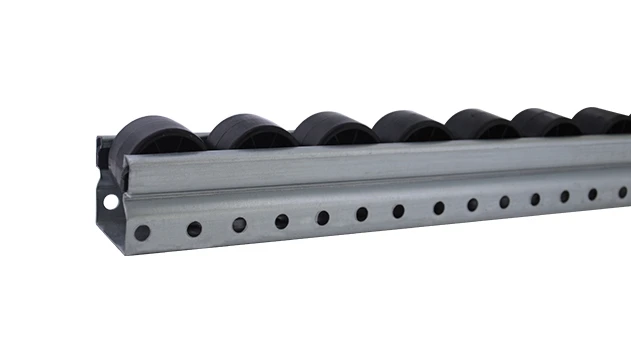
Imagine walking through a busy electronics manufacturing plant: conveyor belts hum softly, workers in move with purpose, and trays of microchips glide smoothly along metal tracks. Pause for a second and look closer at those tracks—the ones carrying sensitive circuit boards that power our phones, laptops, and medical devices. Chances are, you're looking at 40 Steel Roller Track Black ESD Wheels. These unassuming components are the unsung heroes of lean production lines, ensuring materials flow without friction, is safely dissipated, and every part arrives exactly where it needs to be. But here's the thing: not all roller tracks are created equal. When it comes to selecting the right 40 Steel Roller Track Black ESD Wheels, one factor stands above the rest: load capacity. Get this wrong, and you're not just risking jams or slowdowns—you could be putting your entire production process, and even your products, in jeopardy. Let's dive into how to choose the perfect set for your needs.
Why 40 Steel Roller Track Black ESD Wheels Matter in Modern Factories
Before we talk about load capacity, let's take a step back and understand why these specific wheels are so crucial. In today's high-speed manufacturing environments—especially in industries like 3C assembly (think smartphones and laptops), medical device production, and precision electronics—two things are non-negotiable: efficiency and protection. That's where 40 Steel Roller Track Black ESD Wheels shine.
First, the "40 Steel" part: these tracks are built with 40mm steel rails, a sweet spot between durability and flexibility. Steel brings the strength needed to handle daily wear and tear, while the 40mm width balances stability with the ability to integrate into tight production spaces. Then there's the "Black ESD Wheel" component. ESD, or Electrostatic Discharge, is the silent killer of sensitive electronics. A single static spark can fry a $100 chip or ruin a batch of medical sensors. The black wheels here are made with conductive materials that channel static electricity away from the products, grounding it safely—so your components stay intact from start to finish.
But their role goes beyond protection. In a lean system, every second counts. These roller tracks keep moving at just the right pace, reducing bottlenecks and cutting down on manual handling. Picture a lean workstation where a tray of circuit boards glides from one station to the next, stopping precisely when a worker needs it. That smooth flow? It's thanks to well-chosen roller wheels. And when you scale this across an entire production line, the impact on productivity is massive.
Load Capacity 101: What It Means and Why It's Non-Negotiable
Load capacity isn't just a number on a spec sheet—it's the promise that your roller track can handle the weight of your materials without bending, breaking, or slowing down. But here's the catch: load capacity isn't one-size-fits-all. There are two key types to consider: static load and dynamic load.
Static Load: This is the maximum weight the track can support when everything is stationary. Think of a fully loaded cart parked on the track during a shift change. The track needs to hold that weight without deforming over time.
Dynamic Load: This is the weight the track can handle when materials are moving—when trays are sliding, carts are rolling, or products are being transported. Dynamic load is often lower than static load because movement adds stress: vibrations, sudden starts/stops, and friction all play a role.
Pro Tip: Never assume dynamic load equals static load. If your spec sheet only lists one number, ask the supplier for both. A track that handles 500kg static might only support 300kg dynamically—and ignoring this could lead to catastrophic failures mid-production.
So, how do manufacturers determine these numbers? It starts with the materials. The steel rails of 40 Steel Roller Tracks are typically made from high-grade carbon steel, which offers excellent tensile strength. The wheels themselves are often a blend of conductive rubber or plastic with a steel core, balancing ESD protection with durability. The thickness of the steel rail, the diameter of the wheel axle, and even the spacing between rollers all affect how weight is distributed across the track.

Key Factors to Calculate Your Required Load Capacity
Now, let's get practical. How do you figure out exactly how much load capacity you need? Start by answering these four questions:
1. What Are You Actually Moving?
It sounds simple, but it's easy to overlook. Are you transporting small circuit boards (lightweight, but sensitive) or heavy metal components for automotive assembly? Let's break it down:
- Light Loads (Under 50kg): Common in 3C assembly, where trays might hold small chips or phone parts. Even here, don't skimp—remember, you might stack trays or add packaging weight.
- Medium Loads (50kg–200kg): Typical for medical device kits or larger electronic modules. Think of a tray with a full set of components for a pacemaker—valuable, and not lightweight.
- Heavy Loads (200kg+): Found in automotive or industrial machinery production, where metal parts or fully assembled sub-units need transport.
Pro tip: Weigh a fully loaded tray or cart with packaging —not just the bare products. That extra 5-10kg from boxes or protective foam can add up!
2. How Fast and How Often Will the Track Be Used?
A track that's used occasionally for light loads has different needs than one running 24/7 in a high-volume factory. If your production line operates in shifts (common in lean systems aiming for continuous flow), the track will be under constant stress. Faster speeds also increase dynamic load demands—imagine slamming on the brakes in a car versus stopping slowly; the force is higher. For high-speed lines (over 1m/s), you'll need a track with a dynamic load rating at least 20% higher than your calculated weight to account for momentum.
3. What's the Length and Layout of Your Track?
A short, straight track in a single workstation handles weight differently than a long, curved track spanning multiple assembly stations. On straight tracks, weight is distributed evenly across rollers. But curves? They concentrate stress on the inner rollers, which means you might need a higher load rating to compensate. Similarly, longer tracks (over 5 meters) can flex slightly under weight, so look for tracks with reinforced supports if your layout is extended.
4. What's the Environment Like?
Humidity, temperature, and even cleaning chemicals can affect load capacity. In a hot, humid factory (common in some Asian manufacturing hubs), metal can expand slightly, and wheel materials might soften. In cold storage or cleanrooms with harsh disinfectants, wheel rubber can harden or degrade over time. Always factor in your environment—if you're in a tough setting, opt for a track with a 10-15% buffer above your calculated load.

Matching Load Capacity to Your Industry: Real-World Examples
To make this concrete, let's look at how different industries approach 40 Steel Roller Track Black ESD Wheel selection. The table below breaks down common scenarios, required load capacities, and key considerations:
| Industry | Typical Load per Cart/Tray | Recommended Dynamic Load Rating | Key Concerns |
|---|---|---|---|
| 3C Assembly (Smartphones/Laptops) | 10–30kg (small component trays) | 50–80kg | ESD protection critical; high speed, frequent stops/starts |
| Medical Device Manufacturing | 30–80kg (sterile kits, tool sets) | 100–150kg | Cleanroom compatibility; smooth movement to avoid contamination |
| Automotive Electronics | 80–150kg (dashboard modules, wiring harnesses) | 200–250kg | Heavy loads + vibration from nearby machinery |
| Warehouse Logistics (Lean Storage) | 150–300kg (bulk component storage) | 300–400kg | Static load critical (long-term storage); corrosion resistance for warehouse environments |
Take the 3C assembly example: even though the trays are light, the track needs to handle constant use—sometimes 24 hours a day. A dynamic load rating of 50–80kg ensures that even with occasional overloading or sudden stops, the track won't fail. In contrast, warehouse logistics often involves leaving loaded carts on the track for hours, so static load (which is usually higher than dynamic) becomes the star here—but you still need to account for when those carts are moved during restocking.
Beyond Load Capacity: Other Features to Consider
Load capacity is king, but it's not the only player in the game. Here are a few other features to keep an eye on when selecting your 40 Steel Roller Track Black ESD Wheels:
ESD Performance
Not all ESD wheels are created equal. Look for wheels with a surface resistance between 10⁶Ω and 10⁹Ω—this range ensures static is dissipated slowly and safely, without creating a sudden discharge that could still damage components. Ask suppliers for ESD test reports—reputable lean pipe suppliers will have no problem sharing these.
Wheel Material and Tread
The black ESD wheels are usually made from conductive rubber, polyurethane, or phenolic resin. Rubber offers good grip and quiet operation (important for noise-sensitive environments like offices adjacent to factories), while polyurethane is more resistant to oil and chemicals (great for automotive shops). The tread pattern matters too—smooth treads are best for flat, even surfaces, while grooved treads can handle minor debris on the track.
Roller Spacing and Alignment
Rollers that are too far apart can cause lightweight trays to tip or get stuck. Most 40 Steel Tracks have rollers spaced 50–80mm apart, which works for most loads. For very small or irregularly shaped items, closer spacing (40–50mm) is better. Also, check that the rollers are perfectly aligned—even a 1mm misalignment can cause uneven wear and increase friction over time.
Compatibility with Your Existing Lean System
If you're upgrading an existing line, make sure the new roller tracks play nice with your current flow racks, conveyors, and workstations. For example, if your flow rack uses 40mm aluminum profiles, the steel track should bolt directly to those profiles without needing custom adapters. A good lean solution provider will offer compatibility checks to avoid costly rework.
Installation and Maintenance: Protecting Your Load Capacity Investment
You've picked the perfect track with the right load capacity—now, don't ruin it with poor installation or neglect. Here's how to keep your 40 Steel Roller Track Black ESD Wheels performing at their best:
Installation Tips
- Level the Track: Even a slight slope can cause carts to roll too fast (dynamic load spikes!) or get stuck. Use a spirit level to ensure the track is flat within 0.5mm per meter.
- Secure Mounting: Bolt the track firmly to the floor or workstation frame. Loose mounts lead to vibration, which weakens the steel over time and reduces load capacity.
- Test with Loaded Carts: Before full production, run loaded carts (at max weight) back and forth for an hour. Listen for squeaks (sign of misalignment) or hesitation (sign of friction issues).
Maintenance Routine
A little care goes a long way. Aim for these checks:
- Daily: Wipe down wheels and tracks to remove dust or debris (especially important in ESD environments, where dust can interfere with grounding).
- Weekly: Inspect axles for rust and lubricate with ESD-safe grease (avoid standard oils, which can degrade wheel materials).
- Monthly: Retighten bolts and check wheel tread depth—if the tread is worn down by 30%, it's time to replace the wheel (worn treads reduce ESD performance and increase rolling resistance).
Why Choosing the Right Supplier Matters for Load Capacity Reliability
Here's a truth manufacturers learn the hard way: not all 40 Steel Roller Track Black ESD Wheels are built to the same standards. A cheap, untested track might claim a 200kg load capacity, but fail at 150kg because corners were cut on steel thickness or wheel materials. That's why partnering with a trusted lean pipe supplier isn't just about getting a product—it's about getting peace of mind.
Reputable suppliers don't just sell tracks; they engineer solutions. They'll ask about your specific load, speed, and environment, then recommend a track that's been tested to meet (and exceed) your needs. For example, our own 40 Steel Roller Track Black ESD Wheels undergo rigorous dynamic load testing—we run loaded carts over them for 10,000 cycles to ensure they don't bend, crack, or lose ESD properties. We also offer custom solutions for unique layouts, like curved tracks or extra-long spans, because we know no two lean systems are identical.
Plus, a good supplier stands behind their products. If a wheel fails prematurely (and it happens, even with the best care), they'll replace it quickly to minimize downtime. That's the difference between a vendor and a partner.
Final Thoughts: Your Track, Your Production, Your Success
At the end of the day, 40 Steel Roller Track Black ESD Wheels might seem like small parts in a big production line. But small parts can have a huge impact. Choose the right ones—with the correct load capacity, ESD protection, and durability—and you'll keep materials flowing, workers happy, and products intact. Choose the wrong ones, and you'll be stuck with jams, broken components, and missed deadlines.
So, take the time to calculate your loads, test your options, and partner with a supplier who understands your world. Your production line (and your bottom line) will thank you.