- Company Articles
- Products and Technology
- Procurement Guidelines
- How to select 4040r EU Standard Aluminum Profile Suppliers: Key Criteria

How to select 4040r EU Standard Aluminum Profile Suppliers: Key Criteria
Related Product
4040R EU Standard Aluminum Profile
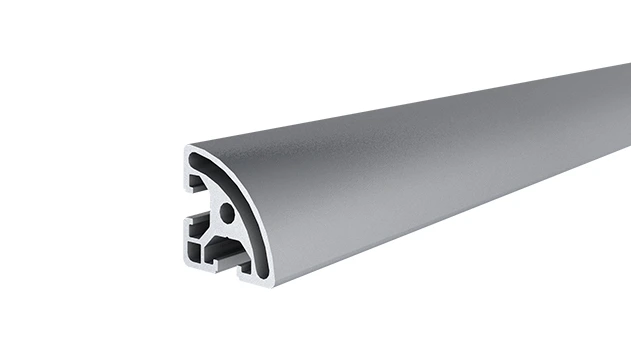
4040R is a 4.00x4.00 CM fractional 40 series square extrusion T-slot profile with two side open T-slots, each side with 4.00cm face,the other side is round face. The profile has align-a-grooves to assist in aligning connecting profiles.
In the world of industrial manufacturing, assembly lines, and lean production systems, the 4040r EU standard aluminum profile stands as a silent workhorse. Its versatility—supporting everything from workbenches and material racks to conveyor systems and machine guards—makes it a cornerstone of efficient operations. But here's the thing: not all aluminum profiles are created equal, and neither are the suppliers behind them. Choosing the right 4040r EU standard aluminum profile supplier can mean the difference between a smooth, cost-effective project and one plagued by delays, faulty parts, or unexpected costs. Whether you're a small workshop gearing up for a lean upgrade or a large manufacturer scaling production, this guide will walk you through the critical criteria to evaluate when selecting your supplier. Let's dive in.
1. Quality and Material Purity: The Foundation of Reliable Profiles
At the heart of any 4040r EU standard aluminum profile is its quality. These profiles are engineered to withstand heavy loads, resist corrosion, and maintain structural integrity over time—but only if the raw materials and manufacturing processes meet strict standards. Start by asking about the grade of aluminum used. Most high-quality 4040r profiles are made from 6063-T5 aluminum alloy, a material prized for its excellent extrudability, strength, and finish. Suppliers who cut corners might use lower-grade alloys or recycled aluminum with inconsistent purity, leading to profiles that bend under stress or degrade quickly in industrial environments.
Next, examine the extrusion precision. The 4040r designation refers to specific dimensional standards: a 40mm x 40mm cross-section with rounded edges (the "r" in 4040r). Even minor deviations—like a 1mm variance in width or uneven wall thickness—can throw off assembly, especially when using standardized aluminum profile accessories. Ask suppliers for tolerance reports or sample profiles to measure yourself. Run your hand along the surface: it should be smooth, free of dents, scratches, or rough spots, which indicate poor finishing or handling.
Don't forget to inquire about testing protocols. Reputable suppliers will conduct quality checks like tensile strength testing (to ensure the profile can handle expected loads), hardness testing (to verify durability), and corrosion resistance testing (especially important if your facility uses chemicals or has high humidity). A supplier that can't provide documentation of these tests is a red flag—you're essentially gambling with the reliability of your entire setup.
2. EU Compliance and Certifications: Avoid Legal and Safety Risks
If you're operating in the EU or exporting products to EU markets, compliance with EU standards isn't optional—it's a legal requirement. The 4040r profile, as the name suggests, is designed to meet EU specifications, but not all suppliers adhere to these rigorously. Start with the basics: does the supplier's 4040r profile carry the CE mark? This indicates compliance with essential health, safety, and environmental requirements under EU law. Without it, you could face fines, shipment delays, or even product recalls.
Dig deeper into specific regulations. REACH (Registration, Evaluation, Authorization, and Restriction of Chemicals) restricts the use of hazardous substances in materials—critical if your profiles will be used in consumer goods or medical devices. RoHS (Restriction of Hazardous Substances) similarly limits heavy metals like lead and mercury, which is non-negotiable for electronics manufacturing. Ask for a Declaration of Conformity (DoC), a legal document signed by the supplier confirming compliance with these standards.
ISO certifications are another mark of reliability. ISO 9001 (quality management) ensures the supplier has consistent processes for design, production, and service. ISO 14001 (environmental management) is a bonus, indicating a commitment to sustainability—more on that later. A supplier that invests in these certifications isn't just checking boxes; they're demonstrating a culture of accountability.

3. Product Range and Compatibility: Beyond Just Profiles
A great aluminum profile supplier isn't just selling you a length of metal—they're providing a complete solution. That means offering a wide range of compatible aluminum profile accessories to simplify your project. Imagine ordering 4040r profiles only to realize the supplier doesn't stock the brackets, end caps, or connectors you need. Suddenly, you're juggling multiple suppliers, risking compatibility issues, and wasting time coordinating shipments.
Look for suppliers that carry a full suite of accessories tailored to 4040r profiles: T-slot nuts, hex bolts, corner brackets, hinge joints, leveling feet, and panel mounts, to name a few. Even better if they offer complementary aluminum extrusion profile options—like 2020, 3030, or 4080 profiles—so you can mix and match for different load requirements. For example, if you're building a workbench with a 4040r frame and a lighter 2020 shelf, using the same supplier ensures all parts fit seamlessly.
Compatibility extends to finishes, too. If your project requires anodized profiles (for corrosion resistance) or powder coating (for color coding work zones), check that the supplier offers these services in-house. Third-party finishing can introduce delays and quality inconsistencies—better to have everything handled under one roof.
4. Customization Capabilities: Tailored to Your Needs
No two projects are identical. Maybe you need 4040r profiles cut to specific lengths (down to the millimeter) to minimize waste. Or perhaps you require custom holes, slots, or notches for mounting equipment. A one-size-fits-all supplier might force you to adapt your design to their standard offerings, but a top-tier aluminum profile supplier will adapt their products to your design.
Ask about customization options upfront. Can they cut profiles to length with precision (±0.5mm tolerance)? Do they offer CNC machining for custom holes or threads? What about specialized anodizing colors or custom packaging (like labeled bundles for easy assembly on-site)? Be clear about your requirements and request a sample of the customized work—this will reveal their attention to detail and ability to meet specs.
Keep in mind that customization shouldn't mean exorbitant costs or endless delays. A supplier with in-house machining and finishing capabilities will offer faster turnaround times and more competitive pricing than one that outsources these tasks.
5. Pricing and Value: It's About More Than the Bottom Line
Let's talk money. It's tempting to go with the supplier offering the lowest per-meter price for 4040r profiles, but this can backfire spectacularly. A $1 cheaper profile might have inconsistent dimensions, requiring extra time to file down edges. Or it might lack corrosion resistance, leading to premature replacement. Instead of focusing solely on upfront cost, calculate the total cost of ownership (TCO)—which includes quality, durability, customization, delivery, and support.
When comparing quotes, look for hidden fees: cutting charges, minimum order quantities (MOQs), delivery costs, or rush fees for customization. A supplier with transparent pricing (and a detailed breakdown of costs) is more trustworthy than one with vague "all-in" quotes. For example, Supplier A might quote $25/m for profiles but charge $5/m for cutting, while Supplier B quotes $28/m with free cutting—suddenly, Supplier B is the better deal.
Value also comes from reliability. A slightly higher price from a supplier with a 99% on-time delivery rate is better than a cheaper option that's late 20% of the time—delays can derail production schedules and cost far more than the initial savings.
6. Delivery Reliability: Keep Your Project on Track
In manufacturing, time is money. A delayed shipment of 4040r profiles can bring your assembly line to a standstill, leaving workers idle and deadlines missed. That's why delivery reliability is non-negotiable when choosing a supplier. Start by asking for their average lead time for standard orders (e.g., 3–5 business days) and custom orders (e.g., 7–10 days). Then, dig into their on-time delivery rate—reputable suppliers will track this and share it openly (aim for 95% or higher).
Logistics matter, too. Do they have local warehouses or partner with reliable carriers? If you're in a remote area, check if they offer expedited shipping options. Some suppliers even provide inventory management services—like consignment stock—where they store profiles at your facility and bill you as you use them, reducing your inventory holding costs.
Don't forget to ask about contingency plans. What happens if a shipment is delayed due to weather or transportation issues? A proactive supplier will have backup carriers or regional warehouses to minimize disruptions.
7. Technical Support and Expertise: More Than Just a Sales Team
Even if you're familiar with 4040r profiles, projects can hit snags. Maybe you're unsure if a 4040r frame can support the weight of your equipment, or you need help designing a modular system that can be reconfigured later. This is where technical support becomes invaluable. A supplier with in-house engineers or technical specialists can turn these challenges into solutions.
Ask about the support options available: phone/email consultation, CAD design assistance, load-calculation tools, or even on-site visits for complex projects. Some suppliers offer free design software or templates tailored to their profiles, making it easier to draft your project before ordering. For example, if you're building a material rack, their software might recommend the optimal bracket spacing for 4040r profiles to prevent sagging.
Training resources are another plus. Does the supplier offer guides, videos, or webinars on assembling with 4040r profiles and accessories? This can speed up onboarding for your team and reduce assembly errors.
8. Reputation and Track Record: Trust the Experience
Finally, take the time to research the supplier's reputation. How long have they been an aluminum profile supplier? Do they specialize in industrial profiles, or is this a side business? A supplier with 10+ years of experience in the EU market is more likely to understand local regulations, customer needs, and common pitfalls than a new entrant.
Check for client testimonials and case studies on their website. Look for reviews on platforms like Google, Trustpilot, or industry forums—pay attention to recurring themes (e.g., "always on time" or "poor quality control"). Don't hesitate to ask for references; a reputable supplier will happily connect you with past clients who can speak to their service.
Industry partnerships are another clue. Do they work with well-known manufacturers, automotive companies, or aerospace firms? These clients have strict quality standards, so their endorsement speaks volumes.
Key Evaluation Criteria: A Quick Reference Table
| Criterion | What to Check | Why It Matters |
|---|---|---|
| Quality | Material grade (6063-T5), dimensional tolerance, surface finish, testing reports | Poor quality leads to assembly issues, premature failure, and rework costs |
| EU Compliance | CE mark, REACH/RoHS compliance, ISO certifications | Avoids legal penalties, ensures safety, and enables market access in the EU |
| Product Range | Aluminum profile accessories, complementary extrusion profiles, in-house finishing | Simplifies sourcing, ensures compatibility, and reduces project delays |
| Customization | Cut-to-length, machining, custom finishes, MOQ flexibility | Adapts profiles to your project's unique needs, minimizing waste |
| Delivery | Lead times, on-time delivery rate, logistics network, contingency plans | Prevents production delays and keeps your project on schedule |
Conclusion: Your Supplier, Your Partner
Selecting a 4040r EU standard aluminum profile supplier isn't just a transaction—it's the start of a partnership. The right supplier will understand your goals, anticipate your needs, and stand behind their products long after the delivery truck leaves. By prioritizing quality, compliance, product range, customization, delivery reliability, technical support, and reputation, you'll find a supplier that doesn't just meet your expectations but exceeds them.
Remember, the 4040r profile is more than a component—it's the backbone of your operations. Invest the time to evaluate suppliers thoroughly, ask tough questions, and request samples. Your project's success depends on it.