- Company Articles
- Products and Technology
- Procurement Guidelines
- How to select 4080A EU Standard Aluminum Profile for Your Warehouse Racking Project

How to select 4080A EU Standard Aluminum Profile for Your Warehouse Racking Project
Related Product
4080A EU Standard Aluminum Profile
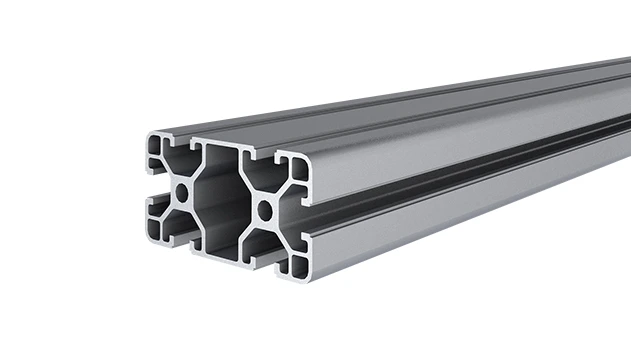
4080A is a 4.00x8.00 CM fractional 40 series square extrusion T-slot profile with two side open T-slots, each side with 4.00cm face, two side with 8.00cm face. The profile has align-a-grooves to assist in aligning connecting profiles.
Setting up a warehouse racking system is like building the backbone of your operation. It's not just about stacking shelves – it's about creating a space that's efficient, safe, and adaptable to your changing needs. In recent years, aluminum extrusion profiles have emerged as a top choice for warehouse managers, and for good reason: they're lightweight yet strong, resistant to corrosion, and infinitely customizable. Among the many profiles on the market, the 4080A EU Standard Aluminum Profile has become a favorite for heavy-duty racking projects. But with so many options and technical details to consider, how do you know if it's the right fit for your warehouse? Let's dive in.
What Even Is a 4080A EU Standard Aluminum Profile?
First things first: let's demystify the name. The "4080A" isn't just a random code – it tells you exactly what you're dealing with. The numbers refer to the profile's cross-sectional dimensions: 40mm wide and 80mm tall . The "A" denotes a specific series within EU standards, which sets guidelines for things like slot size, wall thickness, and material quality. Think of it as a guarantee that the profile meets strict European benchmarks for safety and performance.
But what makes this profile special? Let's break it down:
1. T-Slot Design: The Secret to Flexibility
If you've ever looked at an aluminum profile up close, you've probably noticed the grooves (called T-slots) running along its length. These slots are game-changers for racking. They let you attach accessories – like brackets, shelves, or even casters – without welding or drilling. Just slide a bolt or connector into the slot, tighten it, and you're good to go. For 4080A, the T-slots are typically 8mm wide, which means they work with a wide range of standard aluminum profile accessories. This flexibility is why it's so popular for custom racking setups.
2. Material: Strength Meets Lightweight
4080A profiles are usually made from 6063-T5 aluminum alloy. Don't let the "alloy" part intimidate you – this just means it's a mix of aluminum and small amounts of silicon and magnesium, which gives it extra strength. The "T5" refers to the heat treatment process, which hardens the metal for better durability. The result? A profile that's strong enough to hold heavy loads but light enough to move and assemble without heavy machinery. Compare that to steel, which is strong but and prone to rust, and you start to see why aluminum is a winner.
3. Compliance: Safety First
EU standards aren't just red tape – they're there to ensure your racking system won't collapse under pressure. 4080A profiles are tested for things like tensile strength (how much pull they can handle) and yield strength (how much they can bend before permanent damage). This compliance is crucial if you're storing expensive inventory or operating in a regulated industry (like food or pharmaceuticals). When you buy a certified 4080A profile, you're not just getting a piece of metal – you're getting peace of mind.
Key Factors to Consider Before Choosing 4080A for Racking
Now that you know what 4080A is, let's talk about how to decide if it's right for your project. It's not a one-size-fits-all solution, so you'll need to think about your specific needs. Here are the big questions to ask:
1. What Loads Will Your Racking Actually Handle?
This is the most critical question. If you underestimate how much weight your shelves will hold, you're asking for trouble – damaged goods, safety risks, or even collapsed racks. 4080A is a heavy-duty profile, but "heavy-duty" is relative. Let's put it in perspective: a typical 4080A profile with a 2.0mm wall thickness can handle around 800-1000 kg per linear meter when used as a horizontal beam (think shelf supports). But that number drops if you're using it vertically (as uprights) or if the load is dynamic (like items being slid on and off quickly).
So, how do you calculate your needs? Start by listing what you'll store: pallets of goods? Boxes of parts? Heavy machinery components? For each item, note its weight, then multiply by how many you'll stack per shelf. Add a 20-30% safety margin (because accidents happen – a shelf might get overloaded accidentally, or a forklift might bump it). If your total load per linear meter is under 800 kg, 4080A is probably overkill. If it's closer to 1000 kg, you're in the sweet spot.
2. What's Your Warehouse Environment Like?
Aluminum is naturally resistant to rust, but that doesn't mean it's invincible. If your warehouse is humid (like a food storage facility), dusty (think construction materials), or exposed to chemicals (such as cleaning agents in a pharmaceutical warehouse), you'll need to consider protective coatings. Most 4080A profiles come with an anodized finish – a thin layer of oxide that adds extra corrosion resistance. For extra protection, you can even get powder-coated profiles in colors like gray or yellow (which also helps with visibility in busy warehouses).
Temperature is another factor. Aluminum handles extreme temperatures better than plastic, but if your warehouse regularly hits below-freezing or scorching hot temps, make sure your accessories (like plastic connectors) can keep up. Most aluminum profile accessories are designed to match the profile's temperature tolerance, but it's worth double-checking.
3. Do You Need to Mix and Match Accessories?
Remember those T-slots we talked about? They're only useful if the accessories you need actually fit. 4080A's 8mm slots work with most standard EU accessories, but it's always smart to confirm. For example, if you're planning to use 90° aluminum profile connectors to build corner shelves, make sure they're rated for 8mm slots. The same goes for brackets, end caps, or even specialized parts like roller tracks (useful for sliding bins or pallets). A quick call to your supplier (or a check of their product specs) can save you from ordering incompatible parts.
4. Is This a One-Time Setup or Will You Expand Later?
Warehouses grow and change – today's small parts storage might become tomorrow's bulk pallet area. 4080A's strength and flexibility make it easy to expand or reconfigure your racking later. Want to add a second level to your material rack? Just bolt on new profiles. Need to move a shelf to a different aisle? Disassemble the connectors and reassemble elsewhere. This adaptability is a big reason businesses choose aluminum over fixed steel racks – it grows with you.

How Does 4080A Stack Up Against Other Profiles?
You might be wondering: why 4080A and not another EU standard profile? Let's compare it to two common alternatives to see when it makes sense to choose 4080A.
| Profile Code | Dimensions (WxH) | Typical Wall Thickness | Approx. Max Static Load (kg/m) | Best For |
|---|---|---|---|---|
| 4080A | 40mm x 80mm | 2.0mm | 800-1000 kg | Heavy-duty material racks, multi-level shelving, large pallets |
| 4040A | 40mm x 40mm | 1.5mm | 500-600 kg | Light to medium shelving, workbenches, small parts storage |
| 3060 | 30mm x 60mm | 1.5mm | 400-500 kg | Medium-duty racks, mobile trolleys, narrow aisle storage |
As you can see, 4080A is the heavyweight here. If you're storing large, heavy items (like automotive parts or industrial machinery), it's the clear choice. But if you're just organizing small boxes or tools, a 4040A might be more cost-effective. The key is matching the profile to your load – no need to pay for extra strength you don't need.
Step-by-Step: How to Actually select 4080A for Your Racking
Let's turn all this theory into action. Here's a simple checklist to guide you through the selection process:
1. Map Out Your Racking Needs
Grab a notebook (or a whiteboard) and sketch your ideal racking setup. How many shelves? How tall? What will each shelf hold? Note the weight of the heaviest item per shelf, and how many you'll stack. For example: "Shelf 1: 5 boxes of circuit boards, 20kg each = 100kg total." Do this for every shelf, then add the safety margin (20-30%). This gives you your target load per linear meter.
2. Check 4080A's Load Capacity
Now, compare your target load to 4080A's specs. Most suppliers list max static load (weight when items are stationary) and dynamic load (weight when items are moving, like being slid on/off). If your total load is under 800kg per linear meter, you're golden. If it's higher, you might need to reinforce with extra profiles or choose a thicker-walled 4080A variant (some suppliers offer 2.5mm walls for even more strength).
3. List Your Must-Have Accessories
Do you need shelves? Use aluminum honeycomb panels or plywood cut to size, attached with shelf brackets. Need to slide items easily? Add roller tracks (look for plastic or steel options that fit 8mm T-slots). Casters? Make sure they're heavy-duty enough for your load (and check if they fit the profile's base). Write down every accessory, then confirm with your supplier that they're compatible with 4080A.
4. Get Samples (Yes, Really)
If you're ordering a large quantity, ask for a sample profile and a few accessories. This lets you test-fit everything and get a feel for the quality. Bend a bracket – does it feel sturdy? Slide a connector into the T-slot – is it easy to tighten? A small upfront cost for samples can save you from a huge headache later.
5. Choose a Reputable Supplier
Not all 4080A profiles are created equal. EU standards are strict, but some suppliers cut corners. Look for suppliers who provide certification documents (like CE marking) and have good reviews for quality. A reliable supplier will also help you troubleshoot – if you're unsure about load capacity or accessory compatibility, they should be able to guide you. Bonus points if they specialize in lean system solutions – they'll understand how to optimize your racking for efficiency, too.
Common Mistakes to Avoid
Even with careful planning, it's easy to slip up. Here are a few pitfalls to watch for:
- Underestimating the load: It's tempting to round down, but a shelf that sags under weight is a safety risk. Always add that safety margin!
- Ignoring accessory quality: Cheap connectors might save money upfront, but they'll bend or break under load. Invest in high-quality aluminum profile accessories – they're worth it.
- Forgetting about assembly time: T-slots make assembly easy, but large racking projects still take time. Factor in setup time when planning your timeline.
- Overlooking vertical vs. horizontal loads: A profile used as a vertical upright (holding up the rack) can handle less weight than one used as a horizontal beam (holding the shelf). Check specs for both orientations.
Real-World Example: When 4080A Shines
Let's wrap up with a quick story. A local automotive parts warehouse recently switched to 4080A for their material rack B – a 3-row, 3-floor setup storing heavy engine components. Before, they used steel racks that were hard to reconfigure and started rusting in their humid warehouse. With 4080A, they built custom shelves with roller tracks (for easy sliding of heavy boxes) and anodized profiles to resist corrosion. The T-slots let them add dividers to separate different parts, and the lightweight design meant their team could assemble the entire rack in a day (no forklift needed). Six months later, they expanded the rack by adding two more floors – all without replacing the original profiles. That's the power of 4080A.
Final Thoughts: Is 4080A Right for You?
At the end of the day, 4080A EU Standard Aluminum Profile is a fantastic choice if you need a strong, flexible, and durable racking system. It's ideal for heavy loads, custom setups, and warehouses that might expand later. Just remember to calculate your loads, check accessory compatibility, and choose a reputable supplier. With a little planning, you'll end up with a racking system that keeps your inventory safe, your team efficient, and your operation running smoothly for years to come.
So, are you ready to start your 4080A project? Grab your measuring tape, list your loads, and reach out to a supplier – your warehouse (and your bottom line) will thank you.