- Company Articles
- Products and Technology
- Product knowledge
- How to select Aluminum Side Guards for Heavy-Duty vs Lightweight Applications

How to select Aluminum Side Guards for Heavy-Duty vs Lightweight Applications
Related Product
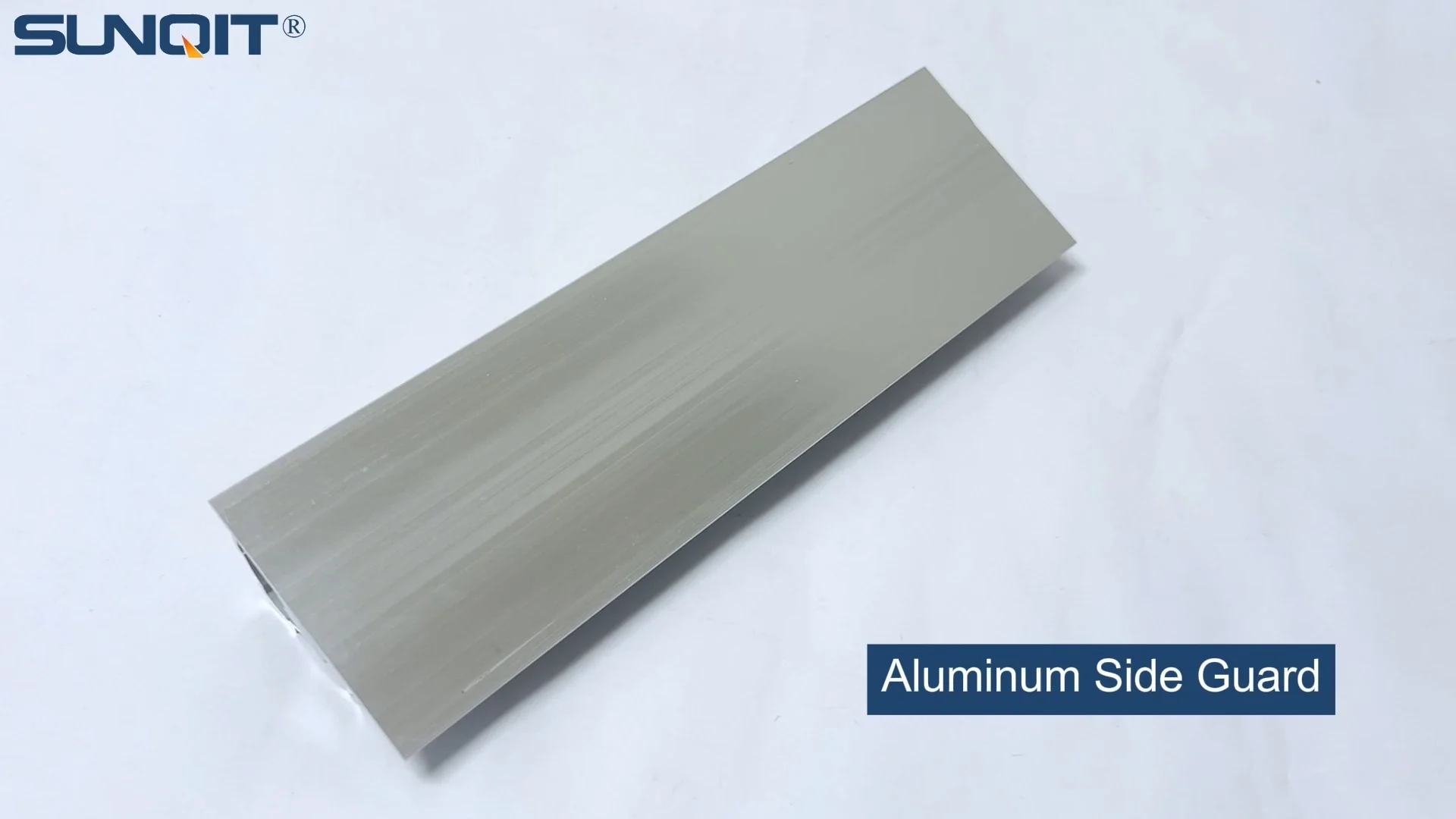
Aluminum Side Guard
Aluminum side guard, it works with a aluminum pipe or a roller track as side guard to prevent material drop,or move to wrong direction.
Walk into any busy factory, warehouse, or assembly line, and you'll notice hundreds of moving parts—conveyors humming, workers maneuvering carts, machines shaping materials. Amidst this organized chaos, there's one component that often flies under the radar but plays a critical role in keeping everything running smoothly: aluminum side guards. These unassuming barriers might seem simple, but choosing the right ones—whether for heavy-duty industrial environments or lightweight, flexible workspaces—can mean the difference between seamless operations and costly delays, or worse, safety hazards.
If you've ever stood in front of a catalog or a supplier's website, staring at options labeled "heavy-duty" and "lightweight," wondering which fits your needs, you're not alone. The choice isn't just about picking something strong or something light; it's about aligning the guard's design, material, and functionality with the unique demands of your workspace. In this guide, we'll break down the key factors to consider, demystify the jargon (looking at you, "aluminum extrusion profile"), and help you make a decision that balances safety, efficiency, and cost. Let's dive in.
What Are Aluminum Side Guards, Anyway?
First, let's get clear on what we're talking about. Aluminum side guards are protective or guiding structures typically made from aluminum profiles, tubes, or sheets, designed to line the edges of equipment, workbenches, conveyors, or material racks. Their dual role? To protect —preventing materials from slipping off conveyors, shielding workers from sharp edges, or absorbing impact from moving carts—and to guide —ensuring items move along a specific path, or keeping tools and components neatly contained on a workbench.
Why aluminum? Unlike steel, aluminum is lightweight yet surprisingly strong, resistant to corrosion (especially when treated), and highly customizable. Its malleability makes it ideal for extrusion—a process where aluminum is forced through a die to create specific cross-sectional shapes (hello, aluminum extrusion profile). This means side guards can be tailored to fit unique spaces, whether you need a sleek, low-profile edge for a electronics assembly workbench or a beefy, reinforced barrier for a heavy-load conveyor in an automotive plant.
Quick Example: Think of a packaging line where boxes zip along a roller conveyor. Without side guards, a misaligned box could slide off, crashing to the floor and damaging contents. With the right aluminum side guards—maybe using a combination of aluminum guide rails and plastic roller track guide rails—boxes stay on track, workers avoid bending to pick up spills, and the line keeps moving.
Heavy-Duty vs. Lightweight: Defining the Divide
Before we jump into selection criteria, let's clarify what "heavy-duty" and "lightweight" actually mean in practice. It's not just about weight—it's about intensity of use , load requirements , and environmental stress .
Heavy-Duty Applications: When "Tough" Is Non-Negotiable
Heavy-duty environments are the workhorses of industry—places where equipment operates 24/7, loads are measured in tons, and impacts are frequent. Think automotive manufacturing plants, steel mills, or large-scale distribution centers handling palletized goods. In these settings, side guards need to withstand:
- High Impact: Forklifts, pallet jacks, or heavy carts bumping into guards multiple times a day.
- Heavy Loads: Materials weighing 500+ pounds sliding or resting against the guards.
- Abrasion and Wear: Constant friction from moving parts (like metal containers rubbing against guards).
- Harsh Conditions: Exposure to chemicals, moisture, or extreme temperatures.
For example, in an automotive assembly line, the conveyor carrying engine blocks (each weighing 300+ pounds) needs side guards that won't bend or dent if a block shifts. Here, "heavy-duty" translates to thick-walled aluminum extrusion profiles, reinforced edges, and maybe even steel inserts for extra strength.
Lightweight Applications: When Flexibility and Precision Matter More
Lightweight applications, on the other hand, prioritize agility, precision, and adaptability. These are spaces where operations are smaller-scale, loads are lighter, and reconfiguration is common—think electronics assembly workbenches, pharmaceutical labs, or small warehouses handling delicate components. In these cases, side guards need to be:
- Lightweight: Easy to install, adjust, or move when workflows change.
- Low-Profile: Not adding unnecessary bulk to workbenches or tables where space is tight.
- Non-Marring: Gentle on delicate materials (like circuit boards or glassware) to avoid scratches.
- Cost-Effective: Budget-friendly for smaller operations or temporary setups.
Imagine a workbench in a smartphone repair shop. The technician needs side guards to keep tiny screws, tools, and screen components from rolling off the edge—but the guards can't be so heavy that they make the workbench hard to move, or so thick that they crowd the limited workspace. Here, a slim aluminum guide rail A or a lightweight aluminum profile with plastic edging would be perfect.

Key Factors to Consider When Choosing Aluminum Side Guards
Now that we've defined the two categories, let's break down the critical factors to evaluate. Whether you're leaning toward heavy-duty or lightweight, these considerations will guide your choice.
1. Load Capacity and Impact Resistance: How Much "Abuse" Can They Take?
This is the foundation of your decision. Start by asking: What's the maximum weight of the materials that will come into contact with the guard? and How often will the guard be bumped, scraped, or hit?
For heavy-duty applications, look for side guards made from high-strength aluminum extrusion profiles with a wall thickness of 2mm or more. Alloys like 6061-T6 are ideal here—T6 tempering strengthens the aluminum through heat treatment, making it resistant to bending under pressure. Some heavy-duty guards even integrate steel or reinforced plastic inserts at impact points (like corners) to absorb shocks.
Lightweight applications, by contrast, can get away with thinner walls (1-1.5mm) and softer alloys like 6063-T5, which offers a good balance of strength and flexibility. If impacts are rare (e.g., a workbench where tools are gently placed), you might even opt for guards with a plastic coating or rubber edges to reduce weight and add a cushioning effect.
2. Material and Finish: Aluminum Extrusion Profile 101
Not all aluminum is created equal, and the type of aluminum extrusion profile you choose will directly impact performance. Let's decode the basics:
- Alloy Type: 6061 and 6063 are the most common. 6061 is stronger (better for heavy-duty), while 6063 is more malleable (easier to extrude into complex shapes, ideal for lightweight, custom designs).
- Temper: T5 (air-cooled after extrusion) vs. T6 (heat-treated). T6 is harder and stronger, making it a staple in heavy-duty guards. T5 is softer but more cost-effective for lightweight uses.
- Finish: Unfinished aluminum can corrode in humid or chemical-rich environments, so look for treatments like anodizing (a protective oxide layer), powder coating (for color and extra durability), or even stainless steel cladding for extreme conditions.
For example, a food processing plant using side guards near washdown areas would benefit from anodized aluminum extrusion profiles—resistant to water and cleaning chemicals—while a dry electronics lab might opt for standard, uncoated aluminum to keep costs low.
3. Design and Structure: To Brace or Not to Brace?
The design of the side guard—its shape, height, and support structure—depends on its purpose. Heavy-duty guards often feature:
- Reinforced Braces: Cross-members or angle brackets that connect the guard to the equipment, preventing flexing.
- Flanged Edges: A lip or flange along the top or bottom to "catch" materials and prevent them from sliding over.
- Thick Base Plates: Wider mounting surfaces to distribute weight and secure the guard firmly to the floor or conveyor frame.
Lightweight guards, by contrast, prioritize simplicity and adaptability. They might be:
- Modular: Built from interlocking aluminum pipe accessories (like connectors or clips) that allow quick assembly or reconfiguration.
- Low-Profile: Slim, flat edges that don't obstruct visibility or access to the workspace.
- Tool-Free Installation: Designed to snap or clamp onto workbenches or conveyors without drilling, making it easy to adjust as needs change.
4. Environmental Conditions: Where Will the Guards Live?
A guard that works perfectly in a dry, indoor warehouse might fail miserably in a coastal factory with salt air. Consider the environment:
- Humidity/Corrosion: In damp areas (like a marine parts facility), choose anodized or powder-coated aluminum to prevent rust. For extreme cases, stainless steel accents (like stainless steel swivel roller balls) can add extra protection.
- Temperature Extremes: Aluminum handles heat well, but in very cold environments, some alloys can become brittle. Check the manufacturer's specs for temperature limits.
- Cleanliness Requirements: In labs or pharmaceutical settings, smooth, non-porous finishes (like polished aluminum extrusion profiles) are easier to sanitize than textured ones.
5. Installation and Flexibility: Can You Adapt as Needs Change?
Heavy-duty guards are often permanent fixtures—bolted to the floor or welded to equipment. This makes sense if your workflow rarely changes. But if you run a small business where layouts shift (e.g., seasonal product lines, new machinery), flexibility is key. Lightweight guards, with their aluminum pipe accessories (think quick-connect joints, clamps, or magnetic mounts), can be disassembled and reassembled in minutes, saving time and avoiding the need for new equipment.
For example, a startup that makes custom furniture might reconfigure their assembly workbench monthly. Using lightweight aluminum side guards with snap-on brackets means they can adjust the guard height or length without calling in a contractor.

Heavy-Duty vs. Lightweight: A Side-by-Side Comparison
To make the choice clearer, let's put the key factors into a table. This will help you map your needs directly to the right type of guard:
| Factor | Heavy-Duty Aluminum Side Guards | Lightweight Aluminum Side Guards |
|---|---|---|
| Best For | Automotive plants, heavy-load conveyors, warehouses with forklift traffic | Electronics assembly workbenches, small-scale logistics, labs, retail stockrooms |
| Aluminum Extrusion Profile | 6061-T6 alloy, thick walls (2mm+), reinforced edges | 6063-T5 alloy, thin walls (1-1.5mm), simple or custom shapes |
| Load Capacity | 500+ lbs (static or sliding loads) | Up to 200 lbs (light, occasional loads) |
| Impact Resistance | High (absorbs frequent, heavy impacts) | Low to moderate (gentle use, rare impacts) |
| Installation | Permanent (bolted/welded), requires tools | Modular (clamps, snaps, or magnetic mounts), tool-free |
| Cost | Higher upfront (but longer lifespan) | Lower upfront (may need replacement sooner under heavy use) |
| Key Accessories | Steel brackets, reinforced joints, stainless steel fasteners | Aluminum pipe accessories (quick-connect joints, plastic end caps) |
Real-World Scenarios: Putting It All Together
Let's walk through two hypothetical (but realistic) examples to see how these factors play out in practice.
Scenario 1: Heavy-Duty Conveyor in a Beverage Bottling Plant
The Challenge: A conveyor belt moves cases of soda (each weighing ~30 lbs) at high speed. Cases occasionally shift, and forklifts pass nearby, risking collisions. The plant is in a humid coastal area, so corrosion is a concern.
The Solution: Heavy-duty aluminum side guards made from 6061-T6 aluminum extrusion profiles with 2.5mm walls. The profiles have a flanged top edge to catch shifting cases and are anodized to resist salt air. To absorb forklift impacts, the guards are mounted on steel-reinforced brackets and spaced every 12 inches for extra stability. For added durability, plastic roller track guide rails (grey, to blend with the conveyor) are attached to the guard's inner edge, reducing friction as cases slide by.
Scenario 2: Lightweight Workbench in a Tech Startup
The Challenge: A small team assembles smart home devices on a mobile workbench. They need side guards to keep small components (screws, circuit boards) from falling off, but the bench is moved weekly for team huddles. Budget is tight, and the workspace is bright, so aesthetics matter.
The Solution: Lightweight aluminum side guards using 6063-T5 aluminum extrusion profiles (1mm walls) with a powder-coated white finish (to match the workbench). The guards are mounted with quick-connect aluminum pipe accessories—snap-on brackets that attach to the bench's edge without drilling. To add a soft touch (and avoid scratching components), the top edge has a rubber strip. When the bench moves, the guards are easily removed and reattached in seconds.
Common Mistakes to Avoid
Even with the best intentions, it's easy to misjudge your needs. Here are three pitfalls to steer clear of:
- Overbuying Heavy-Duty: If you rarely have heavy loads or impacts, a thick, reinforced guard will just add unnecessary weight and cost. A lightweight guard with a few strategic reinforcements (like plastic bumpers) might be all you need.
- Underestimating Wear and Tear: Conversely, skimping on a lightweight guard for a high-traffic area can lead to frequent replacements. For example, using a thin aluminum profile on a conveyor that runs 16 hours a day will likely result in bending or cracking within months.
- Ignoring the Environment: A standard aluminum guard might rust in a wet workshop, even if it's "lightweight." Always factor in corrosion, temperature, and cleanliness needs when choosing finishes or alloys.
Final Thoughts: It's About Balance
Choosing between heavy-duty and lightweight aluminum side guards isn't about picking "better" or "worse"—it's about matching the guard to your space's unique rhythm. Heavy-duty guards are the reliable workhorses, built to withstand the toughest conditions, while lightweight guards are the adaptable problem-solvers, perfect for dynamic, ever-changing environments.
Remember, the best guard is one that you barely notice—because it's doing its job: keeping your team safe, your materials secure, and your operations moving forward. So take a step back, assess your workflow, and let your needs guide you. And when in doubt, talk to a supplier who specializes in aluminum extrusion profiles and aluminum pipe accessories—they can help you customize a solution that fits like a glove.
After all, in the world of manufacturing and logistics, the smallest details (like a well-chosen side guard) often make the biggest difference.