- Company Articles
- Products and Technology
- Procurement Guidelines
- How to Buy Multi-Angle Fixed Aluminum Joints: Supplier Reliability Tips

How to Buy Multi-Angle Fixed Aluminum Joints: Supplier Reliability Tips
Related Product
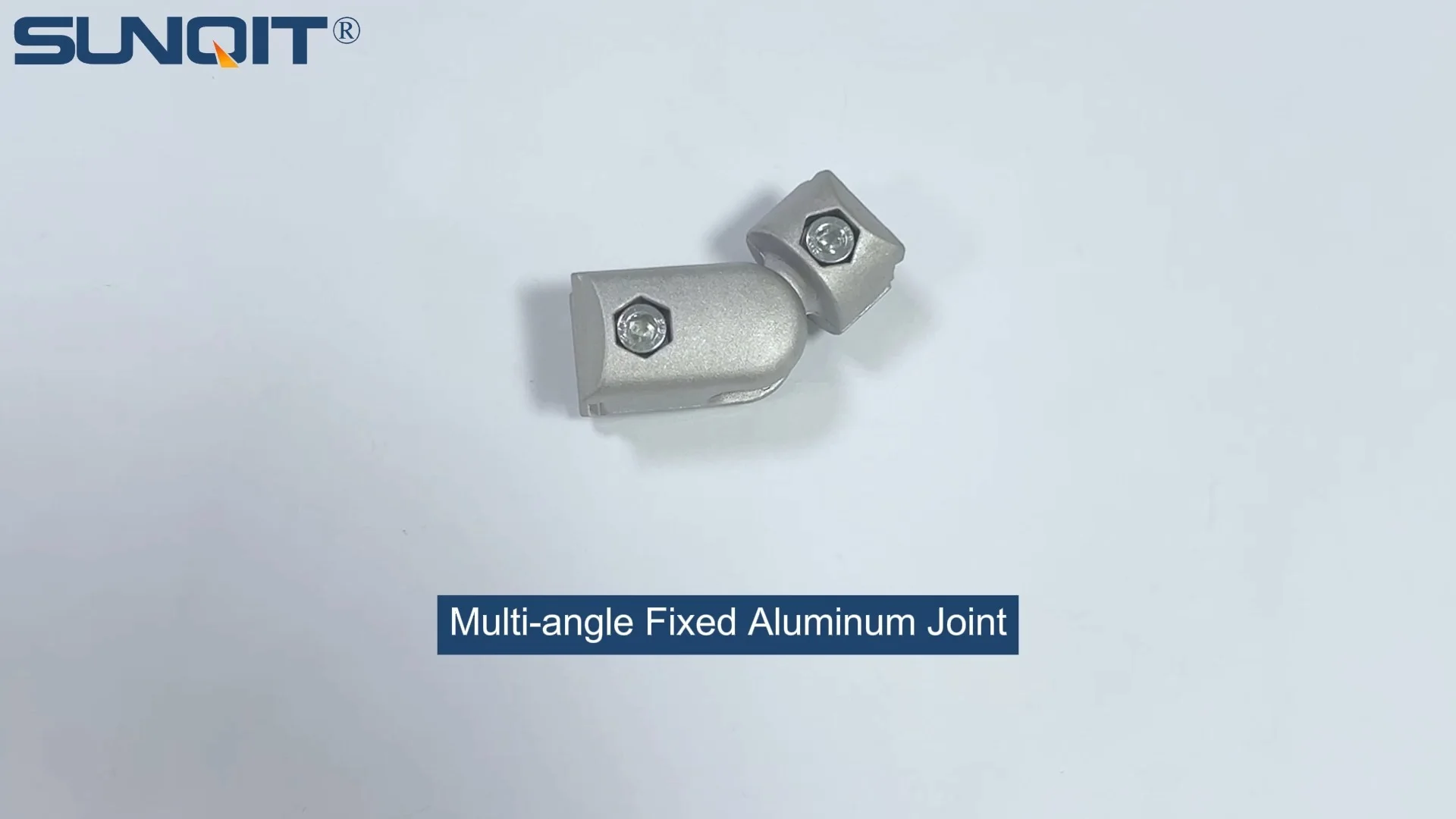
Multi-angle Fixed Aluminum Joint
Aluminum joint pipe connection for two pipe connection and work in mutiple angle.
Introduction: The Unsung Hero of Modular Systems
Walk into any modern manufacturing facility, warehouse, or workshop, and you'll likely spot a maze of sleek, adaptable structures: workbenches that adjust to different tasks, material racks that organize parts with military precision, conveyors that glide components from one station to the next. What holds these modular systems together? Often, it's a small but mighty component called the multi-angle fixed aluminum joint. These unassuming pieces are the backbone of modular setups, allowing you to connect aluminum pipes, profiles, and accessories at various angles—30°, 45°, 90°, you name it—with stability and precision.
But here's the thing: not all multi-angle fixed aluminum joints are created equal. And even the best joint design is useless if it comes from an unreliable supplier. Whether you're building a custom workbench for your assembly line or outfitting an entire warehouse with lean manufacturing systems, the quality of these joints (and the supplier behind them) can make or break your operations. A loose joint might lead to a wobbly workbench, causing errors in production. A delayed shipment could throw your timeline off track, costing you time and money. That's why knowing how to evaluate both the product and the supplier is critical.
In this guide, we'll break down what you need to know about multi-angle fixed aluminum joints—from their key features to how they fit into broader aluminum profile accessories ecosystems—and share actionable tips to find a supplier you can trust. Let's dive in.
Understanding Multi-Angle Fixed Aluminum Joints: More Than Just a "Connector"
First, let's get clear on what a multi-angle fixed aluminum joint actually is. At its core, it's a hardware component designed to connect two or more aluminum pipes or profiles at specific angles, locking them securely in place. Unlike flexible joints, which allow rotation, "fixed" here means once installed, the angle stays put—no unexpected shifting, even under heavy loads. This stability is why they're indispensable in applications where precision matters, like assembly workbenches, material racks, or automated conveyor systems.
These joints are typically made from high-grade aluminum alloys, chosen for their strength-to-weight ratio and resistance to corrosion. Some might have coatings or finishes to enhance durability, especially in environments with moisture or chemicals. But their real value lies in their design: a good joint should align perfectly with standard aluminum profiles (think 2020, 3030, or 4040 series) and aluminum pipes, ensuring a snug fit without gaps. This precision isn't just about aesthetics—it prevents rattling, reduces wear and tear, and ensures the entire structure can bear the intended load, whether that's holding boxes of components or supporting a heavy tool.
You'll often find multi-angle fixed aluminum joints grouped under "aluminum profile accessories," alongside items like aluminum pipe clamps, end caps, and hinges. This categorization is telling: they're part of a larger ecosystem. A joint that doesn't play well with other accessories—say, an aluminum pipe clamp that's too loose or a profile that's slightly off-spec—can derail your entire project. That's why when shopping for joints, you can't look at them in isolation; you need to consider how they fit into your existing or planned system.

Key Features to Look for in Multi-Angle Fixed Aluminum Joints
Before you start vetting suppliers, you need to know what makes a high-quality multi-angle fixed aluminum joint. Here are the non-negotiables:
- Material Quality: Opt for joints made from 6061 or 6063 aluminum alloy—these are industry standards for strength and corrosion resistance. Avoid cheaper alloys that bend or crack under stress. Ask suppliers for material certificates to verify the grade.
- Precision Machining: The joint's holes, grooves, and contact surfaces should be machined to tight tolerances. A misaligned hole or rough edge can make installation a nightmare and weaken the connection. When possible, request a sample and test-fit it with your aluminum profile—if it's hard to slide on or leaves gaps, keep looking.
- Load Capacity: Check the supplier's specs for maximum load (in kg or lbs). If you're building a material rack to hold heavy parts, a joint rated for 50kg won't cut it if you need 100kg. Remember: the joint's load capacity is only as good as its weakest point, so ensure the locking mechanism (often a bolt or set screw) is also robust.
- Corrosion Resistance: If your facility is humid, dusty, or uses chemicals, look for joints with anodized or powder-coated finishes. These treatments add a protective layer that prevents rust and wear, extending the joint's lifespan.
- Compatibility: Ensure the joint works with your existing aluminum pipes or profiles. Most suppliers list compatible profile sizes (e.g., "fits 3030 aluminum profiles" or "works with 28mm diameter aluminum pipes"). If you're unsure, share your profile specs with the supplier and ask for confirmation.
Now, let's shift to the bigger question: how do you find a supplier that consistently delivers joints with these features?

Why Supplier Reliability Matters More Than You Think
Imagine this: You've designed a custom workbench for your production line, and the multi-angle fixed aluminum joints are set to arrive on Monday. Tuesday, your team is supposed to start assembling. But Monday comes, and the shipment is delayed—no explanation, just a vague "next week." By Wednesday, your production schedule is in tatters, and your team is twiddling their thumbs. Sound familiar? This is the reality when you partner with an unreliable supplier.
Supplier reliability isn't just about on-time delivery. It's about consistency in quality, transparency in communication, and accountability when things go wrong. A reliable supplier acts as a partner, invested in your success. An unreliable one sees you as a transaction, cutting corners to save costs or meet quotas. The stakes are high: poor-quality joints can lead to equipment failure, workplace accidents, or costly rework. And in lean manufacturing environments, where efficiency is king, even small delays can have a ripple effect on your entire operation.
So, how do you separate the trustworthy suppliers from the rest? Let's break down the key tips.

7 Supplier Reliability Tips for Multi-Angle Fixed Aluminum Joints
1. Dig Into Their Manufacturing Capabilities
Start by asking: Do they actually make the joints themselves, or are they a middleman? Suppliers with in-house manufacturing have more control over quality and lead times. If they outsource production, ask for details about their partner factories—where are they located? What quality control processes do they have in place? A reputable supplier will be happy to share this information; if they're evasive, that's a red flag.
Also, check for certifications. ISO 9001 is a good baseline—it indicates the supplier follows international quality management standards. For industries with strict requirements (like aerospace or medical device manufacturing), look for additional certifications like ISO 13485. These aren't just pieces of paper; they're proof that the supplier takes quality seriously.
2. Evaluate Their Product Range (Beyond Just Joints)
Multi-angle fixed aluminum joints rarely work alone—they're part of a system. A supplier that offers a full line of aluminum profile accessories (aluminum pipe clamps, profiles, end caps, etc.) is more likely to ensure compatibility across components. For example, if you buy joints, pipes, and clamps from the same supplier, you can be confident they're designed to work together, reducing the risk of mismatched parts.
Take a look at their website or catalog: Do they offer a variety of joint angles (30°, 45°, 90°, 135°)? What about different sizes to fit various profile widths? A diverse product range suggests they understand the needs of different industries and have the expertise to support complex projects.
3. Check Their Track Record (And Talk to Their Customers)
A supplier's reputation is built on their past performance. Start by searching for customer reviews on platforms like Google, Alibaba, or industry forums. Look for patterns: Do multiple reviews mention late deliveries? Or consistent praise for product quality? Keep in mind that no supplier is perfect, but red flags like repeated complaints about defective parts or unresponsive customer service should give you pause.
Don't stop at online reviews—ask the supplier for references. A good supplier will provide contact information for current or past clients in your industry. Reach out and ask: Were the joints delivered on time? Did they meet the load capacity specs? How did the supplier handle issues, if any? Real-world feedback is invaluable here.
Bonus tip: If the supplier also positions themselves as a "lean pipe supplier," that's a plus. Lean pipe systems (used in lean manufacturing) require similar precision and reliability, so experience in that space often translates to better quality in aluminum joints.
4. Scrutinize Lead Times and Logistics
Even the best joints are useless if they arrive after your project deadline. Ask the supplier for detailed lead times: How long does it take to produce a standard order? What about custom orders (e.g., a joint with a specific coating)? Be wary of suppliers who promise unrealistically short lead times—they might be cutting corners or overpromising to win the sale.
Also, talk logistics. Do they have experience shipping to your location? Can they handle bulk orders, or do they specialize in small batches? For international orders, ask about customs documentation, shipping insurance, and how they handle delays due to weather or port issues. A supplier with a robust logistics network will have contingency plans in place, keeping your project on track.
5. Assess Technical Support and After-Sales Service
Buying multi-angle fixed aluminum joints isn't a one-and-done transaction. What if you have questions during installation? Or a joint fails unexpectedly? A reliable supplier offers strong technical support—think engineers who can help you choose the right joint for your load requirements, or a customer service team that responds to emails within 24 hours.
Ask about their warranty policy: Do they offer a guarantee against defects? What's the process for returns or replacements? A supplier that stands behind their products will have clear, fair policies. Avoid those who make vague promises like "we'll handle it" without putting details in writing.
6. Check Their Financial Stability
This might sound unrelated, but a supplier's financial health directly impacts their ability to deliver. A company teetering on bankruptcy might cut costs by using cheaper materials, or worse, go out of business mid-order, leaving you stranded. While you don't need to see their balance sheet, you can get clues from their business history: How long have they been in operation? Are they expanding, or have they downsized recently? Tools like Dun & Bradstreet reports can also give you insights into their creditworthiness.
7. Request Samples (And Test Them Rigorously)
Finally, never commit to a large order without testing samples first. Most suppliers will send free or low-cost samples—if they refuse, walk away. Once you have the samples, put them through their paces:
- Fit Test: Attach the joint to your aluminum profile and pipe. Does it slide on easily but stay tight? Are there gaps between the joint and the profile?
- Load Test: Apply gradually increasing weight to the connected structure. Does the joint hold firm, or does it start to bend or loosen?
- Durability Test: If possible, simulate wear and tear—attach and detach the joint multiple times, or expose it to water/chemicals to check corrosion resistance.
The samples should match the supplier's specs. If they don't, that's a clear sign to keep looking.
Comparing Suppliers: A Practical Checklist
To make your evaluation easier, we've created a comparison table. Use this to score potential suppliers on the key factors above (scale: 1=poor, 5=excellent). The supplier with the highest total is likely your best bet.
| Criteria | Supplier A | Supplier B | Supplier C |
|---|---|---|---|
| In-house manufacturing | 5 (Owns 2 factories) | 3 (Outsources to verified partners) | 2 (No info on manufacturing) |
| ISO certification | 5 (ISO 9001:2015 certified) | 5 (ISO 9001:2015 certified) | 1 (No certifications) |
| Aluminum profile accessories range | 5 (Joints, clamps, profiles, etc.) | 4 (Joints + basic accessories) | 2 (Only joints) |
| Customer reviews (avg. rating) | 4.8/5 (100+ reviews) | 4.2/5 (50+ reviews) | 2.5/5 (10 reviews) |
| Lead time (standard order) | 5 (7-10 business days) | 4 (10-14 business days) | 3 (14-21 business days) |
| Technical support response time | 5 (24-hour email, phone support) | 4 (48-hour email response) | 1 (No dedicated support) |
| Warranty | 5 (2-year warranty on defects) | 3 (1-year warranty) | 1 (No warranty) |
| Total Score | 34 | 27 | 12 |
Common Pitfalls to Avoid
Even with these tips, it's easy to make mistakes. Here are the most common pitfalls to watch out for:
- Choosing based solely on price: The cheapest joint might save you money upfront, but if it fails, the cost of rework or downtime will far exceed the savings. Prioritize value (quality + service) over rock-bottom prices.
- Ignoring compatibility: Don't assume all "standard" aluminum profiles are the same. Measure your pipes/profiles and confirm dimensions with the supplier before ordering.
- Overlooking communication: If a supplier takes days to respond to your initial inquiry, they'll likely be just as slow when you have a problem. Responsiveness is a key indicator of reliability.
- Skipping sample testing: "Trust me, our joints are great" isn't enough. Always test samples—you'll thank yourself later.
Conclusion: Your Joints, Your Success
Multi-angle fixed aluminum joints might be small, but their impact on your operations is huge. They're the glue that holds your modular systems together, and choosing the right ones starts with choosing the right supplier. By focusing on manufacturing capabilities, product range, track record, and support, you can find a partner that delivers quality, consistency, and peace of mind.
Remember: this isn't just about buying a part—it's about building a relationship. A reliable supplier will grow with you, adapting to your needs as your business expands. So take the time to research, test, and compare. Your assembly line, your team, and your bottom line will thank you.