- Company Articles
- Products and Technology
- Product knowledge
- How to Calculate Load Capacity for 60 Steel Roller Track White Systems

How to Calculate Load Capacity for 60 Steel Roller Track White Systems
Related Product
60 Steel Roller Track White
The roller track can be installed with multiple accessories to create different slopes and configurations of flow racks.All steel conveyor 60 roller track accessories are engineered to perfectly fit the sliding rail.It is enable the movement of SLC boxes.
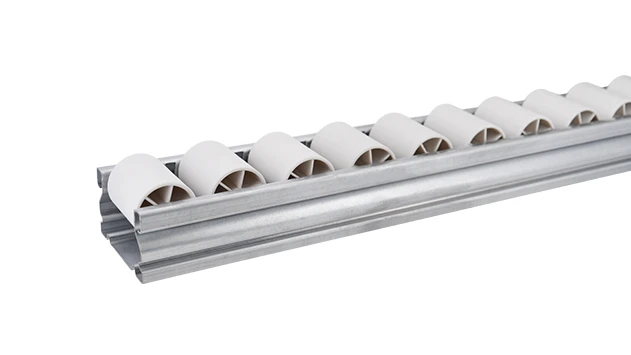
In the fast-paced world of manufacturing and material handling, roller tracks are the unsung heroes that keep operations moving smoothly. Among the various options available, the 60 steel roller track white stands out for its robustness, clean aesthetic, and versatility. Whether you're setting up a flow rack in a warehouse, integrating it into a conveyor system, or building a custom lean solution for your production line, understanding how to calculate its load capacity is critical to ensuring safety, efficiency, and long-term reliability.
Why Calculating Load Capacity Matters
Overlooking load capacity can lead to a host of problems. A scenario where a heavily loaded cart on your roller track collapses mid-transport risks damage to valuable materials and poses a significant safety hazard to your team. Beyond safety, overloading causes premature wear and tear on rollers and tracks, leading to unexpected downtime and increased maintenance costs. For businesses relying on lean systems to minimize waste and maximize productivity, every minute of downtime translates to lost revenue. That's why getting the load capacity right is non-negotiable.
Key Factors Influencing Load Capacity
Several factors play a role in determining how much weight a 60 steel roller track white system can handle. Let's break them down:
- Material and Construction: 60 steel is known for its high tensile strength, making it ideal for heavy-duty applications. The thickness of the steel track frame and the quality of the rollers also contribute to overall load capacity.
- Roller Diameter and Spacing: Larger rollers distribute weight more evenly, while closer roller spacing reduces stress on individual rollers. For example, a roller track with 25mm diameter rollers spaced 100mm apart supports more weight than one with smaller rollers spaced further apart.
- Track Length and Support Structure: Longer tracks require additional support points to prevent sagging. The type of support (e.g., metal brackets, lean pipe frames) affects how much weight the track can bear.
- Load Distribution: A uniformly distributed load (like a flat box) is easier on the track than a concentrated load (like a single heavy item placed in one spot). Always aim for even weight distribution whenever possible.
- Dynamic vs. Static Loads: Static loads (items sitting still on the track) are less demanding than dynamic loads (items moving on a conveyor). If your roller track is part of a conveyor system, account for additional forces from movement.
- Environmental Conditions: Exposure to moisture, chemicals, or extreme temperatures weakens steel over time. Regular maintenance and corrosion-resistant coatings (like the white finish on 60 steel roller track white) help mitigate this, but it's still a factor to consider.

Step-by-Step Guide to Calculating Load Capacity
Calculating load capacity doesn't have to be complicated. Follow these steps to get an accurate estimate:
Step 1: Gather Essential Specifications
First, collect all necessary data about your 60 steel roller track white system. This includes:
- Roller diameter (e.g., 25mm)
- Roller spacing (distance between centers of adjacent rollers, e.g., 100mm)
- Track length (e.g., 2000mm)
- Manufacturer's single roller load rating (maximum weight one roller can support, usually provided in product specs)
- Load dimensions (length, width, height of items you'll be moving)
Step 2: Calculate the Number of Rollers Supporting the Load
To find out how many rollers will be under the load at any given time, use this formula:
Number of Rollers = (Load Length / Roller Spacing) + 1
For example, if your load is 500mm long and rollers are spaced 100mm apart:
Number of Rollers = (500 / 100) + 1 = 6 rollers
Step 3: Apply Safety Factors
Safety factors account for unexpected stresses and wear. A typical safety factor for roller tracks is between 1.5 and 2.0. Multiply the total load by this factor to get the safe working load.
Safe Working Load = (Total Load) × Safety Factor
Step 4: Adjust for Dynamic Loads
If your roller track is part of a conveyor system, add a dynamic load factor (usually 1.2 to 1.5) to account for movement. This factor depends on conveyor speed and frequency of starts/stops.
Dynamic Load Capacity = Safe Working Load × Dynamic Factor
Step 5: Cross-Check with Manufacturer Data
Always verify calculations against the manufacturer's maximum load rating for the entire track system. This ensures you're not exceeding design limits of the track frame and supports.

Example Calculation
Let's put this into practice with a real-world example. Suppose we have a 60 steel roller track white system with the following specs:
| Parameter | Value | Notes |
|---|---|---|
| Roller Diameter | 25mm | Standard for 60 steel roller track white |
| Roller Spacing | 100mm | Center-to-center distance |
| Single Roller Load Rating | 100kg | From manufacturer specs |
| Load Length | 600mm | Box of parts |
| Total Load Weight | 300kg | Weight of box and contents |
| Safety Factor | 1.5 | Standard for heavy-duty use |
| Dynamic Factor | 1.2 | For moderate-speed conveyor |
Calculations:
- Number of Rollers = (600 / 100) + 1 = 7 rollers
- Maximum Static Load Capacity = 7 rollers × 100kg/roller = 700kg
- Safe Working Load = 300kg × 1.5 = 450kg
- Dynamic Load Capacity = 450kg × 1.2 = 540kg
Since 540kg is less than the maximum static load capacity of 700kg, this system is safe for the intended use.
Practical Tips for Maximizing Load Capacity and Safety
Here are additional tips to ensure your 60 steel roller track white system performs optimally:
- Regular Inspections: Check rollers for wear, track frames for sagging, and supports for loose bolts. replace worn parts promptly.
- Proper Installation: Follow manufacturer's installation guidelines. Ensure supports are placed at recommended intervals.
- Even Load Distribution: Avoid placing heavy items in one spot. Use pallets or containers spreading weight evenly across the track.
- Use Appropriate Supports: For heavy loads, use sturdy supports like lean pipe frames or metal brackets. Avoid flimsy supports bending under pressure.
- Avoid Impact Loads: Don't drop items onto the roller track. Use ramps or gentle loading methods to minimize stress.
Integration with Lean Systems and Applications
The 60 steel roller track white is a versatile component in lean manufacturing. It's commonly used in:
- Flow Racks: Enable first-in-first-out (FIFO) inventory management, reducing waste and improving order fulfillment.
- Conveyor Systems: Automate material transfer between workstations, streamlining production lines.
- Custom Lean Solutions: Pair with lean pipe workbenches and accessories to create flexible workstations adapting to changing production needs.
In industries like 3C assembly, medical device manufacturing, and warehouse logistics, these roller tracks play a key role in maintaining efficient, lean operations. Their durability and reusability align with the "sustainable improvement" of lean management, making them a cost-effective choice for businesses optimizing processes.
Conclusion
Calculating load capacity for 60 steel roller track white systems is a straightforward process requiring attention to detail and understanding key factors. By following the steps outlined, you ensure your roller track system is safe, efficient, and built to last. Whether setting up a new flow rack or integrating a conveyor into your production line, getting load capacity right is the first step toward smooth-running operations. Remember to cross-check calculations with manufacturer data and prioritize regular maintenance to keep your system in top shape.