- Company Articles
- Products and Technology
- Product knowledge
- How to Calculate Load Capacity for Flat Swivel Castor Wheels: Formula & Example

How to Calculate Load Capacity for Flat Swivel Castor Wheels: Formula & Example
Related Product
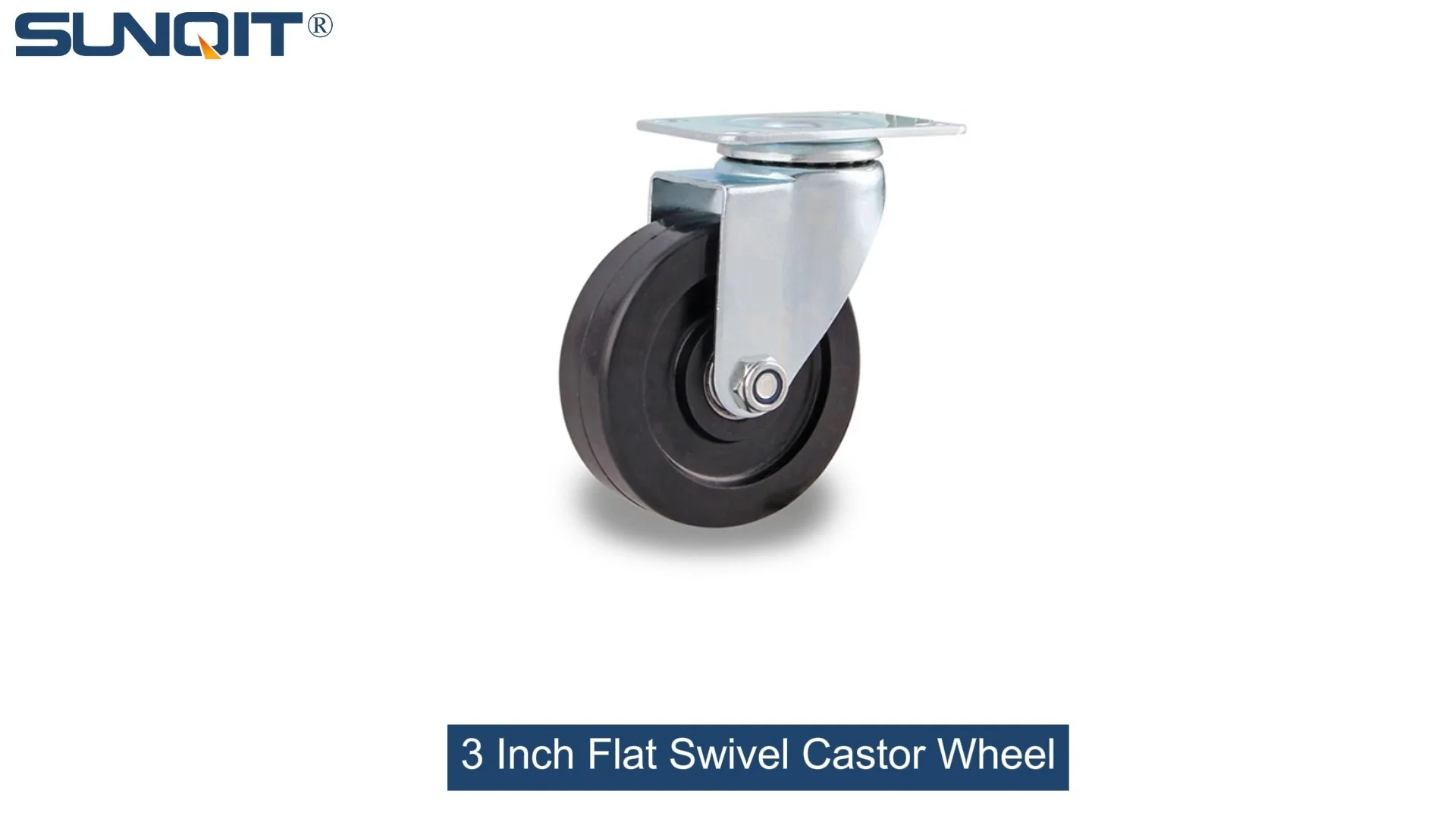
Flat Swivel Castor Wheel
Chair Casters Ball Bearing Wheels Rubber Base. Resistant to abrasion, impact and corrosion. Heavy payload can hold 70-90Kgs per pcs,which can make it works at a stable and smooth status.
Walk into any busy warehouse, manufacturing plant, or even a small workshop, and you'll likely spot them: carts gliding smoothly across floors, workbenches that shift with a gentle push, and material racks that reposition effortlessly. Behind that seamless movement often lies a humble but critical component: the flat swivel castor wheel. These unassuming wheels are the unsung heroes of efficiency, enabling everything from daily inventory transports to precision assembly line operations. But here's the thing: if you've ever seen a castor fail—wheels bending, mounts cracking, or a cart suddenly tipping—you know the consequences can range from minor delays to costly downtime, or worse, safety hazards. The root cause? More often than not, miscalculating load capacity. In this guide, we'll break down exactly how to determine the right load capacity for flat swivel castor wheels, ensuring your equipment runs reliably, safely, and efficiently.
What Are Flat Swivel Castor Wheels, Anyway?
Before diving into calculations, let's make sure we're on the same page about what flat swivel castor wheels are. Unlike fixed castors that only roll forward and backward, swivel castors have a rotating mount (usually 360 degrees) that allows the wheel to turn independently of the equipment it's attached to. This makes maneuvering tight corners, navigating crowded spaces, and repositioning heavy loads infinitely easier—think of a hospital bed or a shopping cart, both relying on swivel castors for agility.
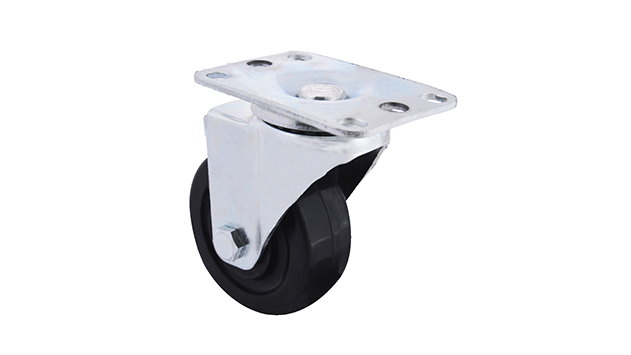
The "flat" in their name refers to the mounting plate: a flat, typically rectangular metal plate that attaches to the bottom of equipment (like a workbench, turnover trolley, or material rack). This plate distributes the load evenly across the castor's components, from the wheel itself to the swivel bearings and mounting hardware. Flat swivel castor wheels come in various sizes, materials (rubber, polyurethane, steel, etc.), and designs, but their core purpose remains the same: to support weight while enabling smooth, multidirectional movement.
Why Load Capacity Isn't Just a "Nice-to-Know"—It's Critical
You might be thinking, "Can't I just pick a castor that looks strong enough?" Unfortunately, guessing often leads to trouble. Load capacity—the maximum weight a castor can safely support over time—isn't a suggestion; it's a safety and performance benchmark. Here's why getting it right matters:
- Safety first: Overloading a castor can cause it to fail suddenly, leading to equipment tipping, loads falling, or workers tripping. In industrial settings, this could result in injuries or damaged goods.
- Durability and cost: Even if a castor doesn't fail immediately, consistent overloading wears down components faster. Bearings degrade, wheels crack, and mounts bend, forcing you to replace castors (and possibly damaged equipment) long before their expected lifespan. This adds up to unnecessary expenses and downtime.
- Performance reliability: A castor operating beyond its load capacity won't roll smoothly. It may stick, swivel unevenly, or create extra friction, making equipment harder to move. This slows down workflows and increases worker fatigue.
In short, miscalculating load capacity isn't just a hassle—it's a risk. Let's avoid that by learning how to calculate it properly.
The Basics: Static vs. Dynamic Load Capacity
Before we jump into the formula, there's an important distinction to clarify: static vs. dynamic load capacity. These terms refer to two different scenarios, and both matter depending on how you use your castors.
Static load capacity: This is the maximum weight a castor can support when it's not moving . Think of a workbench loaded with tools that sits in one spot for hours. The castors here are under static load—they just need to hold the weight without deforming.
Dynamic load capacity: This is the maximum weight a castor can support when it's in motion . When you push a loaded trolley across a warehouse floor, the castors experience dynamic load. This includes additional forces from acceleration, braking, uneven floors, and swiveling, all of which put extra stress on the wheel and its components.
For most applications (like moving trolleys or adjustable workbenches), dynamic load capacity is the key number to focus on. Manufacturers typically list both, so always check which one applies to your use case. When in doubt, prioritize dynamic load capacity—it's the more demanding scenario.

Factors That Affect Load Capacity: What You Need to Consider
Load capacity isn't determined by the wheel alone. Several factors influence how much weight a flat swivel castor can handle. Let's break them down in the table below, as understanding these will make your calculations far more accurate:
| Factor | Description | Impact on Load Capacity |
|---|---|---|
| Number of Castors | The total number of castors supporting the equipment (e.g., 4 castors on a trolley). | More castors mean weight is distributed across more points, reducing the load per castor. |
| Wheel Material | The material the wheel is made of (e.g., rubber, polyurethane, steel). | Harder materials (steel) often handle heavier loads but may damage floors; softer materials (rubber) offer better grip but have lower load limits. |
| Bearing Type | The bearings inside the wheel (e.g., ball bearings, roller bearings, plain bearings). | High-quality bearings (like precision ball bearings) reduce friction and distribute load evenly, increasing capacity. |
| Mounting Method | How the castor attaches to equipment (e.g., bolt-on flat plate, stem mount). | A secure, rigid mount (like a thick steel plate) ensures the load transfers evenly to the castor; weak mounts can bend, reducing effective capacity. |
| Environmental Conditions | Floor type (smooth concrete vs. gravel), temperature, and exposure to chemicals or moisture. | Rough floors increase friction and stress; extreme temperatures can weaken wheel materials (e.g., rubber softens in heat), lowering capacity. |
| Caster Accessories | Add-ons like brakes, locks, or shock absorbers. | Accessories like brakes can add stress when engaged; heavy-duty accessories (e.g., steel brake pedals) are better for high-load applications. |

The Load Capacity Formula: Breaking It Down
Now, let's get to the math. Calculating the required load capacity for each flat swivel castor wheel involves three key numbers: the total weight of the equipment plus its load, the number of castors, and a safety factor. Here's the formula:
Required Load Capacity per Castor = (Total Weight ÷ Number of Castors) × Safety Factor
Let's define each component to make sure you plug in the right numbers:
- Total Weight: The combined weight of the equipment (e.g., a workbench or trolley) and the maximum load it will carry (tools, materials, products, etc.). Measure this in kilograms (kg) or pounds (lbs)—just be consistent with units.
- Number of Castors: How many castors are attached to the equipment. Most equipment uses 4 castors (one at each corner), but some may use 2, 6, or more.
- Safety Factor: A buffer to account for real-world variables (uneven loading, dynamic forces, wear and tear). Think of it as "insurance" against unexpected stress. For most industrial applications, a safety factor of 1.5 is standard (meaning you multiply the calculated load by 1.5). For critical applications (heavy machinery, medical equipment), use 2.0 or higher.
Why the safety factor? Even if you calculate the "average" load per castor, real life is messy. Loads might shift during movement, floors aren't perfectly flat, and over time, components wear. The safety factor ensures the castor can handle these surprises without failing.
Step-by-Step Example: Calculating for a Workbench
Let's put the formula into practice with a real-world example. Imagine you're setting up a workshop and need to install flat swivel castor wheels on a steel workbench. Here's how to calculate the required load capacity:
Scenario
Workbench details:
• Workbench weight (empty): 120 kg
• Maximum load it will hold: 280 kg (tools, parts, and materials)
• Number of castors: 4 (one at each corner)
• Application: The workbench will be moved daily to clean the floor and reposition for different tasks (so we'll use dynamic load capacity).
• Safety factor: 1.5 (standard for workshop equipment)
Step 1: Calculate Total Weight
Add the weight of the empty workbench to the maximum load it will carry:
Total Weight = Workbench Weight + Maximum Load
Total Weight = 120 kg + 280 kg = 400 kg
Total Weight = 120 kg + 280 kg = 400 kg
Step 2: Divide by Number of Castors
Assume the weight is evenly distributed across all 4 castors (we'll cover uneven loads later):
Load per Castor (without safety factor) = Total Weight ÷ Number of Castors
Load per Castor = 400 kg ÷ 4 = 100 kg
Load per Castor = 400 kg ÷ 4 = 100 kg
Step 3: Multiply by Safety Factor
Apply the safety factor (1.5) to account for movement, uneven floors, and wear:
Required Load Capacity per Castor = 100 kg × 1.5 = 150 kg
So, each flat swivel castor wheel for this workbench needs a dynamic load capacity of at least 150 kg. When shopping, look for castors rated for 150 kg or higher—don't round down! A castor rated for 140 kg might seem close, but over time, that 10 kg gap could lead to failure.
What If the Load Isn't Evenly Distributed?
The example above assumes weight is evenly spread across all castors, but that's not always the case. If your equipment has a heavy component on one side (e.g., a tool chest mounted to the end of a workbench) or if loads tend to shift toward the front during movement, some castors will bear more weight than others. In these situations, you can't rely on a simple "total weight ÷ number of castors" calculation.
A good rule of thumb: If the load is uneven, assume the two most heavily loaded castors will bear 60% of the total weight. For example, with 4 castors and uneven loading:
Load on Heaviest Castors = (Total Weight × 0.6) ÷ 2
Then multiply by safety factor as before.
Then multiply by safety factor as before.
In our workbench example, if the load is uneven:
Load on Heaviest Castors = (400 kg × 0.6) ÷ 2 = 120 kg
Required Load Capacity per Castor = 120 kg × 1.5 = 180 kg
Required Load Capacity per Castor = 120 kg × 1.5 = 180 kg
This ensures the most stressed castors can handle the extra weight. When in doubt, consult the equipment's manual or a structural engineer to estimate weight distribution.
Common Mistakes to Avoid
Even with the formula, it's easy to slip up. Here are the most common mistakes to watch for:
- Forgetting the safety factor: Skipping this step is like driving without a seatbelt. Always include it—1.5 is the minimum for non-critical applications.
- Using static load capacity for dynamic applications: If your equipment moves, use dynamic load capacity. Static ratings are higher, but they don't account for movement stress.
- Ignoring caster accessories: Brakes, locks, or heavy-duty mounts add weight and stress. If your castor has accessories, factor their weight into the "total weight" calculation.
- Assuming all castors are identical: Mixing castors with different load ratings on the same equipment is risky. The weakest castor will fail first, even if others are rated higher.
- Overlooking floor conditions: Rough or uneven floors increase friction and impact. If your workspace has cracked concrete or gravel, bump up the safety factor to 1.8 or 2.0.
Tips for Choosing the Right Flat Swivel Castor Wheel
Once you've calculated the required load capacity, you're ready to pick a castor. Here are a few extra tips to ensure you get the best fit:
- Check manufacturer specs: Don't just trust the label—look for detailed specs that list dynamic and static load capacities, wheel material, bearing type, and recommended applications. Reputable suppliers (like caster and accessories specialists) will provide this information upfront.
- Test under real conditions: If possible, test the castors with a typical load before full installation. Roll the equipment across your actual floor, swivel it, and apply brakes to see how it performs.
- Think long-term: Consider future needs. Will the load increase over time? If so, size up your castors to avoid replacing them later.
- Invest in quality: A slightly more expensive castor with higher load capacity and durable components (like steel bearings and reinforced mounts) will save you money in replacements and repairs down the line.
Final Thoughts: Load Capacity = Peace of Mind
Calculating load capacity for flat swivel castor wheels might seem like extra work, but it's one of those small steps that prevents big problems. By taking the time to measure total weight, account for movement and uneven loads, and add a safety buffer, you ensure your equipment runs smoothly, workers stay safe, and your budget stays intact.
Remember: The goal isn't just to "get by"—it's to build a reliable, efficient workspace where your tools and equipment support you, not the other way around. So grab a scale, count your castors, and use the formula. Your future self (and your bottom line) will thank you.