- Company Articles
- Products and Technology
- Product knowledge
- How to Calculate Load Limits for Two Way Lean Pipe Joint Chrome Structures

How to Calculate Load Limits for Two Way Lean Pipe Joint Chrome Structures
Related Product
Two Way Lean Pipe Joint Chrome
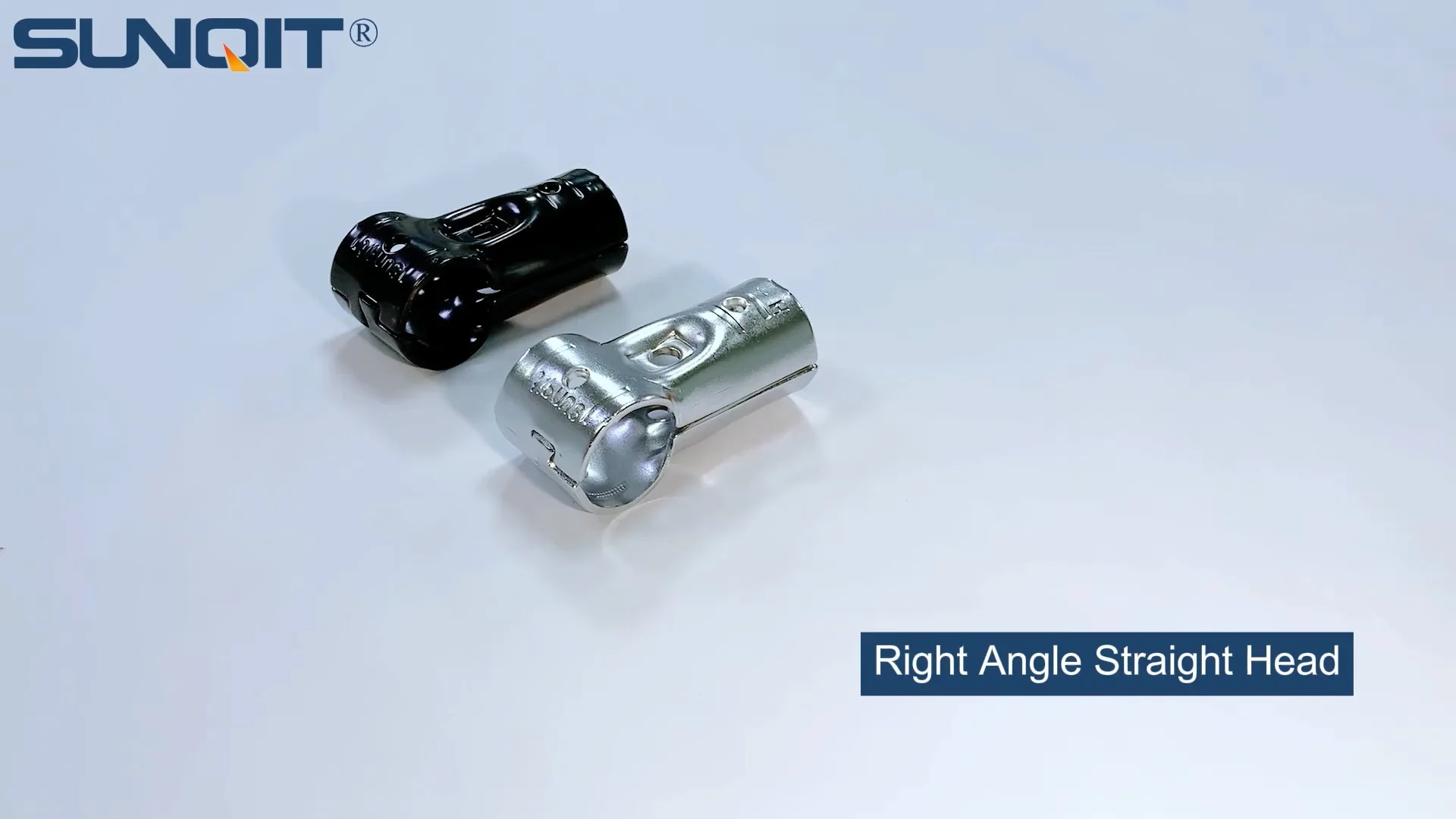
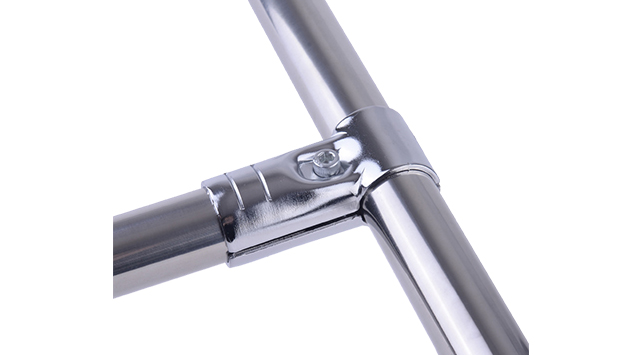
Two way lean pipe joint for 2 pcs 28MM lean pipe connection in straight angle, which used widely in workbench, flow rack, hand trolley frame connection.
In the fast-paced world of manufacturing and assembly, efficiency and safety walk hand in hand. Lean pipe systems have become the backbone of modern production lines, offering flexibility, modularity, and cost-effectiveness. At the heart of these systems lie components like the two way lean pipe joint chrome —small but critical connectors that hold everything together. But here's the thing: even the sturdiest lean pipe setup is only as reliable as its load capacity. Miscalculating how much weight your structure can handle isn't just a productivity killer; it's a safety risk. Whether you're building a lean pipe workbench for assembly tasks or a material rack for inventory storage, understanding how to calculate load limits for two way lean pipe joint chrome structures is non-negotiable. Let's dive into the details, from the basics of lean pipe components to step-by-step calculations and real-world applications.
Understanding the Basics: Lean Pipe Systems and Their Core Components
Before we crunch numbers, let's get familiar with the stars of the show: lean pipe, two way lean pipe joint chrome, and how they work together.
What is Lean Pipe?
Lean pipe—also called "flexible pipe" or "kitchen pipe" in some industries—is a hollow tube typically made from steel, aluminum, or stainless steel, often coated with plastic (PE) or chrome for durability. Its claim to fame? It's lightweight, easy to cut, and pairs with modular joints to create everything from workbenches to flow racks. The most common materials are:
- Steel Lean Pipe: Budget-friendly and strong, often PE-coated for corrosion resistance.
- Aluminum Lean Pipe: Lighter than steel, ideal for applications where weight matters (e.g., mobile trolleys).
- Chrome-Plated Steel Pipe: Sleek, rust-resistant, and commonly used in cleanroom environments.
The diameter and thickness of the pipe play a huge role in load capacity. For example, a 28mm diameter steel pipe with 1.5mm wall thickness will handle more weight than a 20mm pipe with 1.0mm thickness—something we'll circle back to later.
The Role of Two Way Lean Pipe Joint Chrome
Joints are the "glue" of lean pipe systems, and the two way lean pipe joint chrome is a workhorse. As the name suggests, it connects two lean pipes at a 90-degree angle (though some designs allow for slight adjustments). What makes chrome-plated joints special? Chrome adds a layer of corrosion resistance, making them suitable for humid or messy environments (think automotive shops or food processing plants). But their real value is in strength: a well-designed two way joint distributes weight evenly between connected pipes, preventing stress concentration at the connection point.
Not all joints are created equal, though. A cheap plastic joint might snap under heavy loads, while a chrome-plated steel two way joint can withstand significant shear and tensile forces. When calculating load limits, never overlook the joint's material and design—they're just as critical as the pipe itself.
Beyond Pipes and Joints: Supporting Components
While our focus is on two way joints, other components like aluminum profile workbenches or caster wheels can influence load limits. For example, an aluminum profile worktop adds rigidity to a lean pipe structure, but only if it's properly secured to the pipe frame using compatible brackets. Similarly, adding caster wheels (even heavy-duty ones) introduces dynamic load variables—we'll touch on that later when discussing static vs. dynamic loads.
Key Factors That Influence Load Limits
Calculating load limits isn't a one-size-fits-all equation. Several factors interact to determine how much weight a two way lean pipe joint chrome structure can safely bear. Let's break them down:
1. Material and Dimensions of Lean Pipe
The pipe's material and size are the foundation of load capacity. Steel pipes, for instance, have a higher tensile strength (around 400-500 MPa) compared to aluminum (around 200-300 MPa). This means a steel pipe of the same diameter and thickness as an aluminum one will handle more weight. Wall thickness matters too: a pipe with a 2.0mm wall is stiffer and less prone to bending than a 1.0mm wall pipe of the same diameter.
2. Design and Material of Two Way Lean Pipe Joint Chrome
Chrome-plated steel joints are stronger than plastic or uncoated steel joints because chrome enhances hardness and resistance to wear. The joint's design also plays a role: a two way joint with a larger contact area (where the pipe inserts into the joint) distributes stress better than a smaller, flimsier design. For example, a joint with a 30mm socket depth (where the pipe fits in) will grip the pipe more securely than one with a 15mm depth, reducing the risk of the pipe slipping out under load.
3. Installation Quality: Tightness and Alignment
Even the best components fail if installed poorly. A two way joint that's not tightened properly acts like a loose hinge—load is unevenly distributed, and the structure wobbles. Over time, this can bend pipes or crack joints. Similarly, misaligned pipes (e.g., one pipe slightly higher than the other at the joint) create "bending moments" that reduce overall load capacity. Always use a torque wrench to tighten joint bolts to the manufacturer's specs—this isn't a "hand-tight" job.
4. Static vs. Dynamic Loads
Loads come in two flavors: static and dynamic. Static loads are stationary (e.g., a stack of boxes sitting on a workbench). Dynamic loads involve movement (e.g., a trolley being pushed across the floor, or parts sliding down a flow rack). Dynamic loads are harder on structures because they add impact and vibration. As a rule of thumb, dynamic load limits are typically 50-70% of static limits for the same structure. For example, if your workbench can hold 500kg statically, don't exceed 250-350kg when loading/unloading heavy items quickly.
5. Environmental Factors
Extreme temperatures, humidity, or chemical exposure can weaken materials over time. Chrome plating resists rust, but in a hot, humid factory, even chrome joints may degrade faster if not maintained. Similarly, aluminum pipes can become brittle in freezing temperatures, reducing their load capacity. Always factor in your workspace environment when calculating long-term load limits.
Step-by-Step: Calculating Load Limits for Two Way Lean Pipe Joint Chrome Structures
Now, let's get practical. Calculating load limits involves combining material properties, structural design, and safety factors. We'll focus on static load limits first (dynamic loads will get their own section later). Here's how to do it:
Step 1: Gather Key Data
Start by collecting specs for your components. You'll need:
- Pipe diameter (D): Typically 28mm, 30mm, or 40mm for standard lean pipe.
- Pipe wall thickness (t): Measured in mm (e.g., 1.2mm, 1.5mm, 2.0mm).
- Pipe material: Steel, aluminum, or chrome-plated steel (note its yield strength, usually provided by the manufacturer).
- Two way joint material and design: Chrome-plated steel joints usually have a shear strength rating (e.g., 5000N per joint).
- Structure span (L): The distance between supports (e.g., the length of a workbench between two vertical legs).
If you don't have manufacturer data, use industry standards: for steel lean pipe, yield strength is around 235 MPa; for chrome-plated steel joints, shear strength is often 4000-6000N.
Step 2: Calculate Pipe Bending Capacity
Most lean pipe structures fail not because the joint breaks, but because the pipe bends under load. To find the maximum static load a horizontal pipe can handle between two supports (like the top of a workbench between two legs), use the bending stress formula:
σ = (M * y) / I
Where:
- σ = Bending stress (must be ≤ pipe yield strength)
- M = Maximum bending moment (N·mm)
- y = Distance from pipe neutral axis to outer edge (D/2, in mm)
- I = Moment of inertia of the pipe (mm⁴)
For a simply supported pipe with a uniform load (like a workbench top), the bending moment M = (w * L²) / 8, where w is the load per unit length (N/mm), and L is the span (mm). Rearranging to solve for w:
w = (8 * σ * I) / (L² * y)
Then, total load (W) = w * L (convert to kg by dividing by 9.81 m/s²).
Let's simplify with an example: a 28mm diameter steel pipe (D=28mm, t=1.5mm), span L=1000mm (1m), yield strength σ=235 MPa (235 N/mm²).
First, calculate I (moment of inertia for a hollow pipe): I = (π/64) * (D⁴ - (D-2t)⁴). For D=28mm, t=1.5mm:
I = (π/64) * (28⁴ - (28-3)⁴) = (π/64) * (614656 - 390625) ≈ (π/64)*224031 ≈ 11000 mm⁴
y = D/2 = 14mm. Plugging into the formula:
w = (8 * 235 * 11000) / (1000² * 14) ≈ (20680000) / 14,000,000 ≈ 1.477 N/mm
Total load W = w * L = 1.477 N/mm * 1000mm = 1477 N ≈ 150 kg (since 1 kg ≈ 9.81 N).
So, a 1m span of 28mm steel pipe (1.5mm thick) can handle ~150kg before bending—assuming the joints holding it are strong enough.
Step 3: Check Joint Shear Strength
Now, ensure the two way lean pipe joint chrome can handle the shear force from the load. Shear force (V) for a simply supported pipe with uniform load is V = W/2 (half the total load at each support).
Using our example: W=150kg ≈ 1470N, so V=735N per joint. If the joint's shear strength is 5000N (typical for chrome-plated steel), 735N is well within limits. But if you have a longer span or heavier load, the shear force increases. For example, a 2m span with 200kg load: V= (200*9.81)/2 = 981N—still under 5000N, but worth checking.
Step 4: Apply a Safety Factor
Never design to the "maximum" calculated load. Add a safety factor (SF) to account for installation errors, material variations, and dynamic loads. For static loads, use SF=2-3; for dynamic loads, SF=3-4. In our example, pipe bending capacity was 150kg—with SF=2, the safe static load is 150/2=75kg. That's the number you should use in practice.
Quick Reference: Load Capacity Table for Steel Lean Pipe with Two Way Chrome Joints
Not a math whiz? Use this table to estimate static load limits (with SF=2) for common steel lean pipe sizes and spans, using two way lean pipe joint chrome:
| Pipe Diameter (mm) | Wall Thickness (mm) | Span Between Supports (m) | Estimated Safe Static Load (kg) |
|---|---|---|---|
| 28mm | 1.2mm | 0.5m | 120kg |
| 28mm | 1.2mm | 1.0m | 60kg |
| 28mm | 1.5mm | 0.5m | 180kg |
| 28mm | 1.5mm | 1.0m | 75kg |
| 30mm | 2.0mm | 1.0m | 110kg |
| 30mm | 2.0mm | 1.5m | 50kg |
Note: Values assume steel pipe (yield strength 235MPa), two way chrome-plated steel joints (shear strength 5000N), and even load distribution. For aluminum pipe, reduce loads by 30-40%.

Real-World Application: Calculating Load Limits for a Lean Pipe Workbench
Let's put this into practice with a common scenario: building a
lean pipe workbench
using two way lean pipe joint chrome. Here's the setup:
Workbench Specifications
- Top frame: 28mm steel lean pipe (1.5mm thickness), 1.2m long (span between vertical legs).
- Vertical legs: 4 legs (2 on each end), made of same 28mm steel pipe.
- Joints: Two way lean pipe joint chrome (shear strength 5000N) at all connections.
- Worktop: 18mm plywood (supported by 4 horizontal cross-bars under the top frame).
Step 1: Calculate Pipe Bending for the Top Frame
Top frame span (L) = 1.2m = 1200mm. Using the earlier formula for pipe bending:
I (for 28mm pipe, 1.5mm thick) ≈ 11000 mm⁴ (as calculated before).
σ (steel yield strength) = 235 MPa = 235 N/mm².
w = (8 * σ * I) / (L² * y) = (8 * 235 * 11000) / (1200² * 14) ≈ (20680000) / (20160000) ≈ 1.026 N/mm.
Total pipe load capacity = w * L = 1.026 * 1200 ≈ 1231 N ≈ 125 kg (before safety factor).
Step 2: Account for Multiple Supports (Cross-Bars)
The workbench has 4 cross-bars under the top frame, dividing the 1.2m span into smaller sections (0.3m each). Shorter spans mean higher load capacity. For a 0.3m span, the pipe bending capacity increases to ~400kg (using the same formula). With 4 cross-bars, the total top load capacity becomes ~400kg (before safety factor).
Step 3: Check Joint Shear and Apply Safety Factor
Each vertical leg uses two two way joints (top and bottom). With 4 legs, that's 8 joints total. Total load on joints = 400kg (pipe capacity) + 50kg (plywood weight) = 450kg. Shear per joint = (450*9.81)/8 ≈ 552N—well under the joint's 5000N shear strength.
Apply safety factor (SF=2): Safe static load = 450kg / 2 = 225kg. That's the maximum weight the workbench can safely hold.
Pro tip: If you add a shelf halfway up the legs, the vertical legs will share the load, increasing total capacity. Always factor in additional supports!
Dynamic Loads: Adjusting for Movement and Impact
So far, we've focused on static loads, but what about when loads move? If your
lean pipe workbench
is used for assembling heavy parts (e.g., car engines), or if you're building a flow rack with sliding components (using
roller track
), dynamic loads come into play. Here's how to adjust:
Dynamic Load Formula
Dynamic load capacity = Static load capacity / Dynamic safety factor (SF_dynamic). For most applications, SF_dynamic = 3-4 (higher than static SF). Using our workbench example with safe static load 225kg:
Dynamic load capacity = 225kg / 3 = 75kg. That means if workers are placing 50kg parts on the bench quickly, you're safe—but stacking 100kg parts dynamically could bend the pipes over time.
Flow Racks and Roller Track: A Special Case
Flow racks use gravity to slide materials along roller track , creating dynamic impact as items hit the end stop. For these, use SF_dynamic=4-5. For example, a flow rack with 28mm steel pipe (1.5mm thickness) and 1m span: static load capacity is 75kg (with SF=2). Dynamic load (for sliding boxes) = 75kg / 4 = 18.75kg per linear meter. Limit each box to 15kg to be safe.
Common Mistakes to Avoid
Even with the right formulas, errors happen. Here are pitfalls to watch for:
- Ignoring joint quality: Using cheap, unbranded two way joints? They may have lower shear strength than advertised. Stick to reputable suppliers.
- Overlooking cross-bracing: A wobbly structure can't handle as much load. Add diagonal cross-braces to reduce sway.
- Assuming "more joints = more strength": Too many joints create weak points. Keep spans as short as possible, but don't overcrowd the structure.
- Forgetting the worktop: Plywood or aluminum profile worktops add weight—include them in your total load calculation.
Final Thoughts: Safety First, Efficiency Second
Calculating load limits for two way lean pipe joint chrome structures isn't just about numbers—it's about protecting your team and keeping production running smoothly. By understanding pipe bending, joint shear strength, and safety factors, you can design lean pipe systems that are both flexible and reliable. Whether you're building a simple workbench or a complex material handling system, start with the basics: know your components, measure twice, and always prioritize safety over squeezing out extra capacity. After all, a lean system that fails isn't lean at all—it's a liability.
So, grab your calculator, check those joint specs, and build something that lasts. Your assembly line (and your team) will thank you.