- Company Articles
- Products and Technology
- Product knowledge
- How to Calculate Load Requirements for 60 Aluminum Roller Track White

How to Calculate Load Requirements for 60 Aluminum Roller Track White
Related Product
60 Aluminum Roller Track White
Modular system roller tracks aluminum gravity roller tracks are an excellent solution for transporting materials within industrial environments, warehouses and distribution centres.
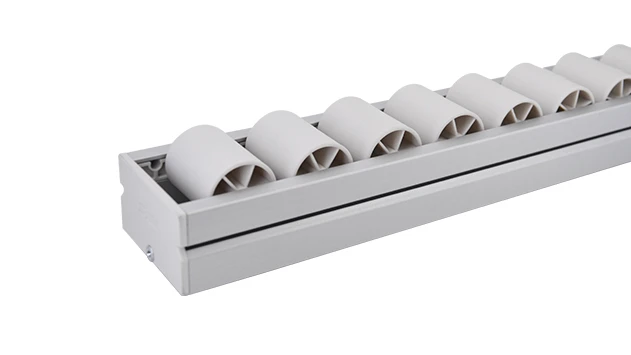
When setting up a flow rack or conveyor system, one of the most critical steps is figuring out how much weight your 60 aluminum roller track white can handle. Get this wrong, and you risk equipment damage, safety hazards, or inefficient operations. Let's break down the process in simple terms so you can make informed decisions for your lean system setup.
What Is 60 Aluminum Roller Track White?
This track is a staple in many lean production lines and setups. Made from high-quality aluminum extrusion profile, it features smooth white rollers that allow materials to glide easily—perfect for flow racks, conveyors, or even custom workstations. Its lightweight yet sturdy design makes it a go-to choice for industries like 3C assembly, medical equipment manufacturing, and more. The white finish not only looks clean but also resists scratches and wear, ensuring long-term use.
Why Load Calculation Is Non-Negotiable
Ignoring load requirements can lead to costly mistakes. For example, if you overload a track, rollers might bend, the aluminum frame could warp, or products might get stuck mid-flow. On the flip side, undercalculating means you're not using the track's full potential, wasting space and resources. Proper load planning ensures your system runs smoothly, safely, and efficiently, aligning with lean manufacturing principles of minimizing waste and maximizing value.

Key Factors to Consider Before Calculating
Before crunching numbers, let's look at the variables that affect how much weight your track can support:
- Track Material & Construction: 60 aluminum roller track white is made from precision-engineered aluminum extrusion profile, which has specific tensile strength and load-bearing properties. The thickness of the aluminum walls and the design of the track frame (like reinforced edges) play a big role in its capacity.
- Roller Specifications: Each roller's diameter, material (plastic or metal), and spacing along the track impact load capacity. Closer spacing distributes weight better across more rollers, while larger rollers can handle heavier items without deforming.
- Load Distribution: Is the weight spread evenly across the track (like a pallet of small boxes) or concentrated in one spot (a single heavy tool)? Even distribution reduces stress on individual rollers and the track frame.
- Dynamic vs. Static Load: Are items sitting still (static) or moving (dynamic, like on a conveyor)? Moving loads add extra force due to acceleration and friction, so you need to account for that with a safety factor.
- Accessories & Support: How is the track supported? Using the right aluminum profile accessories (like aluminum foot base or lean pipe workbench supports) can boost load capacity by providing stable anchoring points.

Step-by-Step Load Calculation Guide
Let's walk through the process with clear, actionable steps:
1. Determine Total Load Weight
First, find out the total weight of the items you'll place on the track. For example, if you're using the track in a flow rack for automotive parts, calculate the weight of each bin plus its contents, then multiply by the number of bins that will be on the track at any given time. Don't forget to include the weight of any pallets or containers.
2. Calculate Load Per Linear Meter (LPLM)
Divide the total load by the length of the track. This gives you the load per linear meter, which is a key metric for comparing against the track's rated capacity. For instance, if your total load is 600 kg over a 3-meter track, LPLM is 600 / 3 = 200 kg/m.
3. Check Roller Capacity
Each roller in the 60 aluminum track has a maximum weight it can support. Let's say each roller can handle 60 kg. If rollers are spaced 15 cm apart (about 6.67 rollers per meter), then per meter, the roller capacity is 6.67 * 60 ≈ 400 kg/m. Compare this to your LPLM—if your LPLM is 200 kg/m, that's well within the roller limit.
4. Account for Dynamic Forces
If the track is part of a conveyor (moving items), add a safety factor to account for dynamic forces. Dynamic loads usually require multiplying the static load by 1.2 to 1.5, depending on the speed of movement. So if your static LPLM is 200 kg/m, dynamic would be 200 * 1.3 = 260 kg/m. Ensure this adjusted load is still under the roller and track capacity.
5. Verify Track Frame Strength
The aluminum track frame itself has a load limit specified by the manufacturer. For 60 aluminum roller track white, this is typically around 350-450 kg/m. If your dynamic load is 260 kg/m, you're well within the safe range. Always check the manufacturer's datasheet for exact figures.
6. Add a Safety Margin
Even if all calculations check out, it's wise to add an extra 10-15% safety margin to account for unexpected weight or wear over time. This ensures your system remains safe and reliable even under slightly higher loads than planned.
Practical Example: Flow Rack Setup for Medical Equipment
Let's put this into practice with a real-world scenario. Suppose you're building a flow rack for medical device components using 60 aluminum roller track white:
| Component | Details | Calculation |
|---|---|---|
| Total Load | 12 bins, each 25 kg (22 kg components + 3 kg bin) | 12 * 25 = 300 kg |
| Track Length | 2 meters | — |
| Static LPLM | Total load / track length | 300 / 2 = 150 kg/m |
| Roller Spacing | 12 cm apart (≈8.33 rollers per meter) | — |
| Roller Capacity per Meter | Each roller = 50 kg | 8.33 * 50 ≈ 416 kg/m |
| Dynamic Factor | 1.2 (slow-moving flow rack) | 150 * 1.2 = 180 kg/m |
| Track Frame Capacity | Manufacturer's rating: 350 kg/m | 180 kg/m < 350 kg/m → OK |
| Safety Margin | 10% extra | 180 * 1.1 = 198 kg/m → Still safe |
In this case, the setup is safe and efficient. The dynamic load with safety margin (198 kg/m) is well below both the roller capacity (416 kg/m) and the track frame capacity (350 kg/m).
Tips for Optimal Use of 60 Aluminum Roller Track White
To get the most out of your track and ensure long-lasting performance, keep these tips in mind:
- Choose Compatible Accessories: Use aluminum profile accessories like end caps, connectors, or aluminum pipe clamps to reinforce the track. For mobile setups, add caster wheels with brakes to ensure stability when loading/unloading.
- Maintain Regularly: Clean rollers and track surfaces to remove dust and debris that can cause friction. Lubricate moving parts if needed (check manufacturer guidelines) to keep items gliding smoothly.
- Test Before Full Deployment: Always do a test run with the maximum expected load to ensure everything holds up. This is especially important for critical applications like medical equipment or automotive assembly lines.
- Consider Custom Solutions: If your load requirements are unique (e.g., very heavy items or irregular shapes), opt for a custom lean solution. A professional supplier can adjust track length, roller spacing, or support structures to fit your needs.
- Monitor Wear Over Time: Inspect rollers and track frames periodically for signs of wear (like bent rollers or warped aluminum). replace worn components promptly to maintain load capacity and safety.
Conclusion
Calculating load requirements for 60 aluminum roller track white doesn't have to be complicated. By following these steps and considering all variables—from roller spacing to dynamic forces—you can build a safe, efficient system that meets your production needs. Whether you're setting up a flow rack for, a conveyor for 3C assembly, or a custom workstation for medical equipment, the right components and careful planning make all the difference.
If you're unsure about any step or need a custom solution tailored to your industry, look for a reliable supplier that offers a wide range of lean pipe and accessories, including 60 aluminum roller track white. They can help you design a system that's both functional and cost-effective, ensuring your operations run smoothly for years to come. From initial load calculations to final installation, expert guidance ensures you get the most out of your lean system investment.