- Company Articles
- Products and Technology
- Product knowledge
- How to Calculate the Number of 60 Steel Roller Track Small Wheels Needed for a Flow Rack

How to Calculate the Number of 60 Steel Roller Track Small Wheels Needed for a Flow Rack
Related Product
60 Steel Roller Track Small Wheel
Modular system roller tracks aluminum gravity roller tracks are an excellent solution for transporting materials within industrial environments, warehouses and distribution centres.
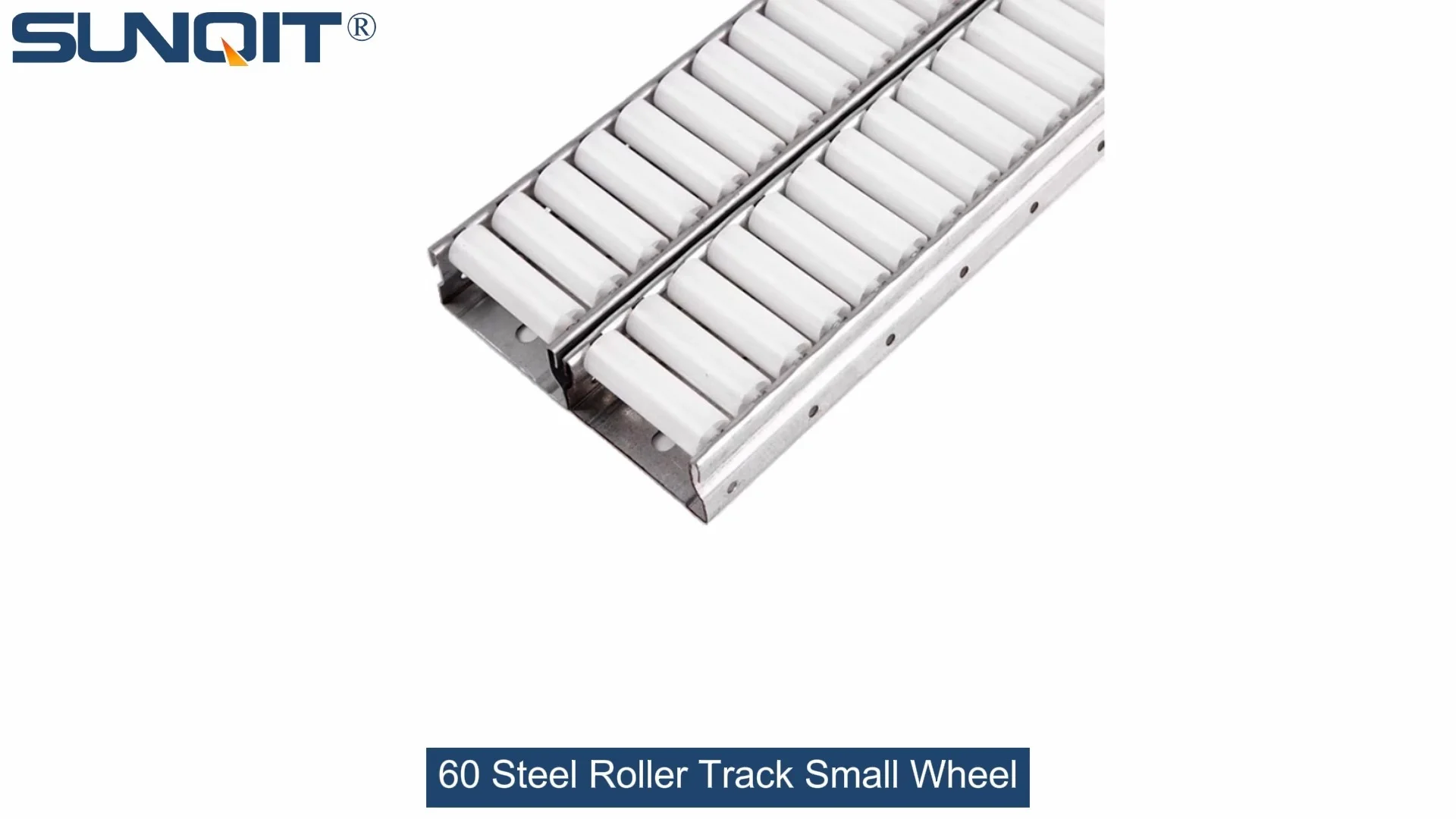
How to Calculate the Number of 60 Steel Roller Track Small Wheels Needed for a Flow Rack
Flow racks are the unsung heroes of lean production lines and warehouses—especially in industries like production assemble, where smooth, efficient material handling can make or break daily operations. The tiny 60 steel roller track small wheels at the core of these racks are what keep parts sliding seamlessly from storage to assembly stations. But how do you know exactly how many of these wheels you need? Buy too few, and your rack won't function; buy too many, and you're wasting money. This guide will walk you through every step of the calculation process, with practical examples and tips to ensure you get it right the first time.
1. Basics You Need to Know First
What Is a Flow Rack?
A flow rack is a gravity-fed storage system used in lean systems to move products from the loading end to the picking end without manual effort. It's a staple in industries like 3C assembly, where small parts need to be easily accessible to workers. Flow racks reduce waste by minimizing movement and ensuring parts are always in the right place at the right time—aligning perfectly with lean manufacturing principles.
What Are 60 Steel Roller Track Small Wheels?
These compact, durable wheels are designed for roller tracks in flow racks. The "60" typically refers to their diameter (60mm), making them ideal for light to medium loads like small electronic components or medical device parts. They're made of steel for strength, and many variants are available—including ESD-compliant options for static-sensitive products (a must for ESD workbench environments).
Key Terms to Understand
- Rack Length per Level: The horizontal distance from the back (loading end) to the front (picking end) of one rack level.
- Number of Levels: The number of horizontal tiers in your flow rack.
- Tracks per Level: The number of parallel roller tracks on each level (depends on rack width and product size).
- Wheel Pitch: The distance between the centers of two adjacent wheels on a single track.
- End Gap: The empty space at the start and end of each track (prevents products from falling off and allows easy loading).
- Load Capacity per Wheel: The maximum weight one wheel can support safely (provided by the supplier).
- Safety Factor: A multiplier (usually 0.8) to account for unexpected overloads—never skip this step!
2. Step-by-Step Calculation Guide
Step 1: Define Your Flow Rack's Dimensions & Structure
Start by mapping out your flow rack's specs. For example, if you're building a rack for production assemble of 3C parts:
- Measure the length of each level (how far products need to slide).
- Determine the width of each level (to decide how many tracks fit—each track should have enough space for your products).
- Count the number of levels (balance storage space with accessibility).
Pro tip: If your rack is for ESD-sensitive products (like circuit boards), make sure to choose ESD-compliant 60 steel roller track small wheels to prevent static damage.
Step 2: Calculate Wheels per Track
Use this formula to find the number of wheels per track:
Wheels per Track = [(Track Length - (End Gap × 2)) / Wheel Pitch] + 1
Why add 1? Because you need a wheel at both the start and end of the track. For example, if your track is 200cm long with a 5cm end gap and 10cm pitch: [(200 - (5×2))/10] + 1 = (190/10)+1=20 wheels per track.
Step3: Check Load Capacity & Safety Factor
Never overload your wheels! Calculate the total safe load per level using:
Total Safe Load per Level = (Wheels per Level × Load Capacity per Wheel) × Safety Factor
If your total load exceeds this number, you need more wheels or tracks. For example, if each wheel holds 15kg and you have 40 wheels per level: (40×15)×0.8=480kg safe load.
Step4: Adjust for Special Requirements
Consider your industry's needs: For ESD workbench environments, use ESD-compliant wheels. For heavy parts, add more tracks or reduce wheel pitch. For high-volume lines, choose durable steel wheels that can handle constant use.
Step5: Sum Up Total Wheels
Multiply wheels per track by tracks per level, then by number of levels: Total Wheels = Wheels per Track × Tracks per Level × Number of Levels.
3. Practical Example for Production Assemble
Let's apply these steps to a real-world scenario: A flow rack for 3C production assemble parts (like mobile phone components).
| Flow Rack Specs | Details |
|---|---|
| Level Length | 240cm |
| Level Width | 90cm (3 tracks per level) |
| Number of Levels | 4 |
| Wheel Pitch | 12cm |
| End Gap | 6cm per track end |
| Load per Level | 150kg |
| Wheel Load Capacity | 20kg (ESD-compliant) |
Calculation:
- Wheels per Track: [(240 - (6×2))/12] + 1 = (228/12)+1=20 wheels
- Tracks per Level:3 → Wheels per Level:20×3=60 wheels
- Safe Load Check: (60×20)×0.8=960kg (way more than the 150kg per level)
- Total Wheels:60×4=240 wheels
This rack is perfect for ESD-sensitive parts and meets production assemble needs. A reliable flow rack supplier can confirm these specs and provide the right wheels.
4. Common Mistakes to Avoid
- Skipping Safety Factor: Overloading wheels leads to breakage and product damage.
- Ignoring End Gaps: Products can fall off or get stuck without proper gaps.
- Wrong Pitch: Too wide pitch causes small parts to get caught; too narrow wastes money.
- Non-ESD Wheels for Sensitive Parts: Static discharge can ruin 3C components.
- Not Checking Compatibility: Ensure wheels fit your roller track (a flow rack supplier can help).
5. Maintenance Tips for Longevity
Even the best-calculated rack needs care:
- Clean wheels weekly to remove dust and small parts (critical for production assemble lines).
- Lubricate axles every 3 months with light oil for smooth sliding.
- Tighten loose axles monthly to prevent wheel wobble.
- replace worn wheels immediately—cracked or stuck wheels cause jams.
6. Why Choose a Reliable Flow Rack Supplier?
Calculating wheels is just the start. A trusted flow rack supplier can provide:
- Accurate wheel specs (load capacity, ESD compliance).
- Custom lean solutions tailored to your industry (like 3C assembly or medical device storage).
- Bulk pricing for wholesale needs (if you're scaling your production line).
- Expert advice on rack design and maintenance.
For example, suppliers specializing in lean systems can help you optimize your flow rack for maximum efficiency, ensuring every wheel counts.
Conclusion
Calculating the number of 60 steel roller track small wheels for your flow rack doesn't have to be complicated. By following these steps, you'll avoid waste, ensure safety, and build a rack that supports your production assemble goals. Remember, a good flow rack supplier and proper maintenance will keep your rack running smoothly for years. Whether you need ESD-compliant wheels or a custom lean solution, partnering with experts ensures you get the right parts for the job.