- Company Articles
- Products and Technology
- Product knowledge
- How to Calculate the Right Length of 38 Aluminum Roller Track Black for Your Line

How to Calculate the Right Length of 38 Aluminum Roller Track Black for Your Line
Related Product
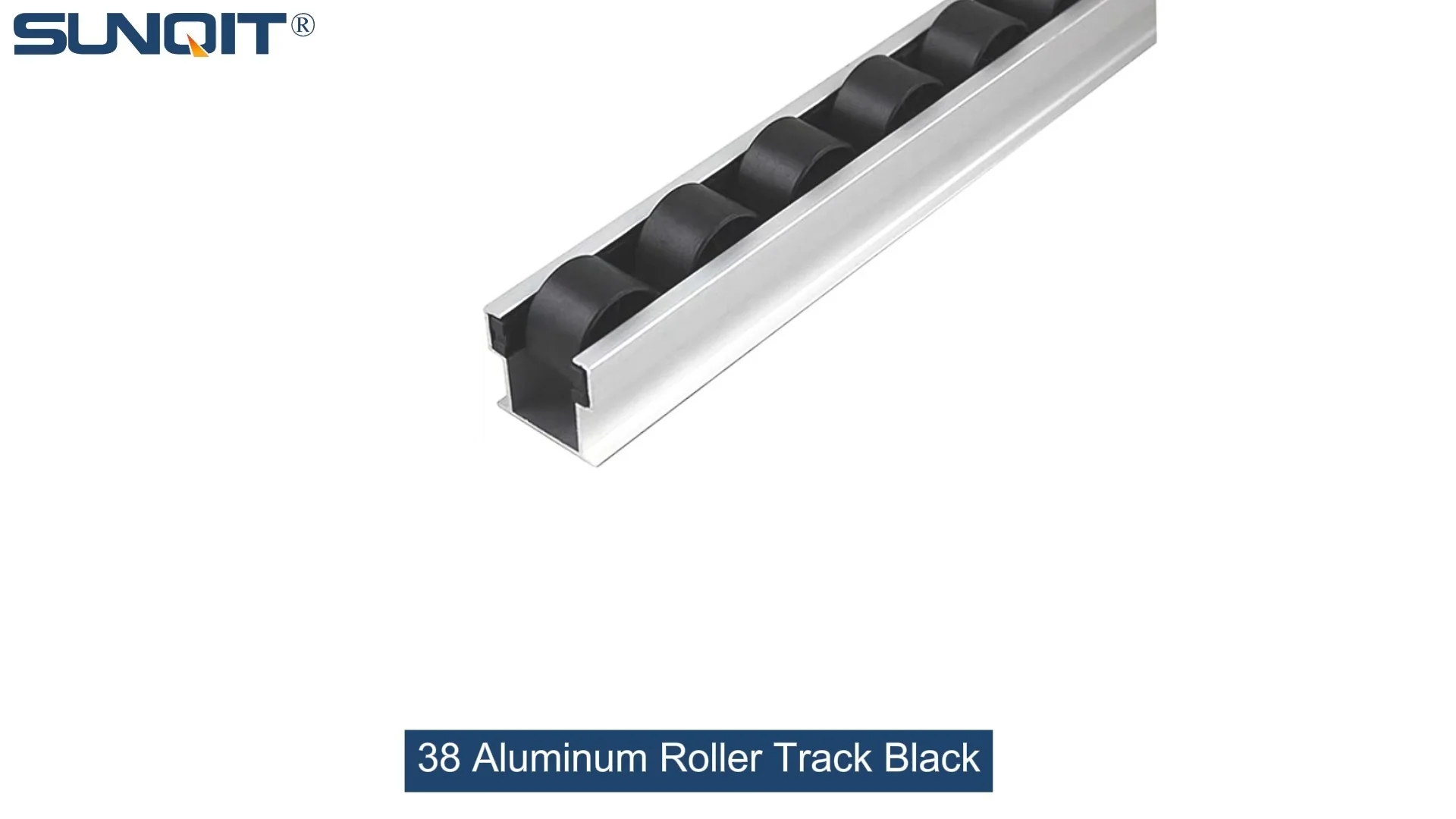
38 Aluminum Roller Track Black
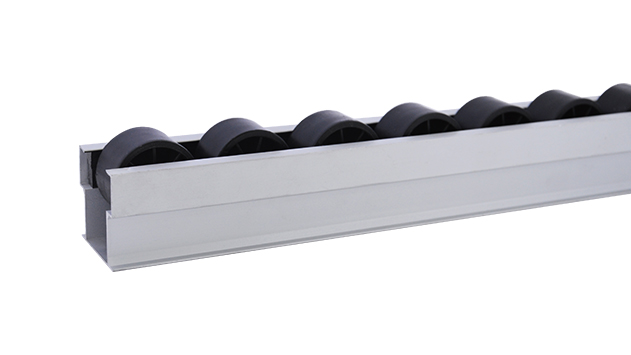
Durable and smooth-running modular roller rails. The system is fully assembled. The roller rail profile contains plastic rollers mounted on steel axles. Aluminum frame with plastic wheel make it anti corrosion,and material convey more smooth.
If you're running a production line—whether it's for 3C assembly, medical device manufacturing, or any industrial setup—you know how every small detail impacts efficiency. One often-overlooked detail is the length of your 38 Aluminum Roller Track Black. Get it too short, and parts might jam or fail to reach their destination; too long, and you're wasting space and resources. Since we're talking about lean systems, every inch counts when it comes to cutting waste and optimizing flow.
This guide will walk you through the step-by-step process of calculating the perfect length for your roller track, ensuring it works seamlessly with your flow rack, lean pipe workbench, and other equipment. Let's dive in.
Step 1: Map Your Workflow to Identify Key Paths
Before grabbing a tape measure, take time to visualize your entire production flow. Where do parts start their journey? Maybe from a flow rack stocked with components. Where do they end up? Probably a lean pipe workbench where your team assembles them into finished products. The path between these two points is where your roller track will live—but it's not just a straight line.
Ask these questions to refine your path:
- How fast do parts need to move along the track? Faster speeds might require longer tracks to prevent bottlenecks.
- Are there any stops or turns in the path? Turns add extra length to your calculation (you'll need to account for the radius of curves).
- What size and weight are the items being transported? Larger items need more spacing between them, which affects the total length needed.
For example, in a 3C assembly line, small components like phone screens might move from a flow rack to a lean pipe workbench with minimal spacing. In contrast, larger medical devices would need more room between units to avoid damage.
Step 2: Measure Critical Dimensions Accurately
Now it's time to get precise with measurements. Always measure twice to avoid costly mistakes. Here are the key dimensions to note:
- Straight-line distance: The direct path from your starting point (e.g., end of the flow rack) to your ending point (e.g., start of the lean pipe workbench).
- Overlaps with adjacent equipment: If your roller track connects to a conveyor or another track, you'll need a small overlap (5-10 cm) to ensure smooth transitions.
- Space for accessories: End stops, guide rails, and connectors attach to the track and reduce usable length. For example, end stops might take up 10 cm on each end.
Let's put this into practice: Suppose your flow rack is 4 meters away from your workbench. There's a conveyor that requires a 0.5m overlap, and end stops take up 0.2m total. Your initial calculation would be 4 + 0.5 - 0.2 = 4.3 meters. Add a 0.3m buffer for flexibility, and you get 4.6 meters.
| Scenario | Key Measurements | Recommended Buffer |
|---|---|---|
| Straight line between flow rack and workbench | Endpoint distance + conveyor overlap - accessory space | 0.1-0.3m |
| Track with 90° turn | Sum of straight segments + curve radius (15-20cm per turn) | 0.2-0.4m |
| Heavy-duty medical device transport | Endpoint distance + extra spacing between items | 0.3-0.5m |
Step 3: Plan for Flexibility (A Lean System Core Value)
Lean systems thrive on adaptability. Your production line might change as your business grows—you could add new workstations or switch product lines. So, always include a buffer in your length calculation.
38 Aluminum Roller Track Black is modular, meaning you can connect sections or add extensions later. But planning for flexibility now saves time and money. For example, if you think you might extend the line by 1m next year, add that to your calculation upfront.

Step 4: Choose the Right Standard Length
Roller tracks come in standard lengths (1m, 2m, 3m, 5m). Round up your calculation to the nearest standard size. If your calculation is 4.6 meters, the nearest standard length is 5 meters. The extra 0.4 meters can be used as additional buffer or cut down (check with your supplier before cutting to avoid warranty issues).
Pro tip: If no standard length fits your needs, ask your supplier for a custom solution. Many providers offer made-to-order lengths for unique setups.

Step 5: Verify Compatibility with Accessories
Your roller track won't function alone—accessories like plastic guide rails (yellow or grey) and roller track connectors are essential. Ensure these accessories are compatible with 38 Aluminum Roller Track Black. Using mismatched parts can lead to instability or jams.
For example, plastic roller track guide rails are designed to fit this track type, keeping items aligned without reducing flow speed. Always check compatibility with your supplier before purchasing.
Common Mistakes to Avoid
- Skimping on measurements: A 10cm error can lead to a track that's too short or too long.
- Ignoring flexibility: Lean systems require continuous improvement—don't buy an exact-length track that can't adapt.
- Forgetting accessories: End stops and guide rails take up space—never omit them from calculations.
- Choosing the wrong standard length: If your calculation is 4.6m, go with 5m instead of forcing 4m to work.
Installation Tips for Optimal Performance
Once you have the right length, follow these tips for a smooth installation:
- Level the track: Use adjustable leveling feet to prevent jams. Uneven tracks cause parts to slow down or get stuck.
- Secure with connectors: Use roller track placon mounts to attach the track to frames or floors, ensuring stability during operation.
- Test the flow: Run sample parts through the track to check for smooth movement. Adjust levels or spacing if needed.
Case Study: 3C Assembly Line Success
A 3C assembly company needed to install 38 Aluminum Roller Track Black between their flow rack and lean pipe workbench. Here's how they did it:
1. Workflow mapping: Parts moved from flow rack → roller track → workbench → conveyor. The straight-line distance was 6 meters.
2. Measurements: 6m endpoint distance + 0.6m conveyor overlap - 0.3m end stops = 6.3m. Add 0.4m buffer → 6.7m.
3. Standard length choice: They chose a 7m track (nearest standard size).
Result: The extra 0.3m allowed them to add a small storage bin later, improving efficiency. The track worked seamlessly with their flow rack and workbench, reducing bottlenecks by 20%.
Final Thoughts
Calculating the right length of 38 Aluminum Roller Track Black is a small but critical step in building an efficient lean system. By mapping your workflow, measuring accurately, planning for flexibility, and choosing compatible accessories, you'll create a smooth flow between your flow rack, lean pipe workbench, and other equipment.
Remember, lean manufacturing is about continuous improvement. Even if you get the length right now, modular accessories let you adjust later. If you're unsure, reach out to your supplier for a custom solution—they can help design the perfect track for your needs.