- Company Articles
- Products and Technology
- Product knowledge
- How to Choose 40 Steel Roller Track White Wheel: Size & Load Capacity Guide

How to Choose 40 Steel Roller Track White Wheel: Size & Load Capacity Guide
Related Product
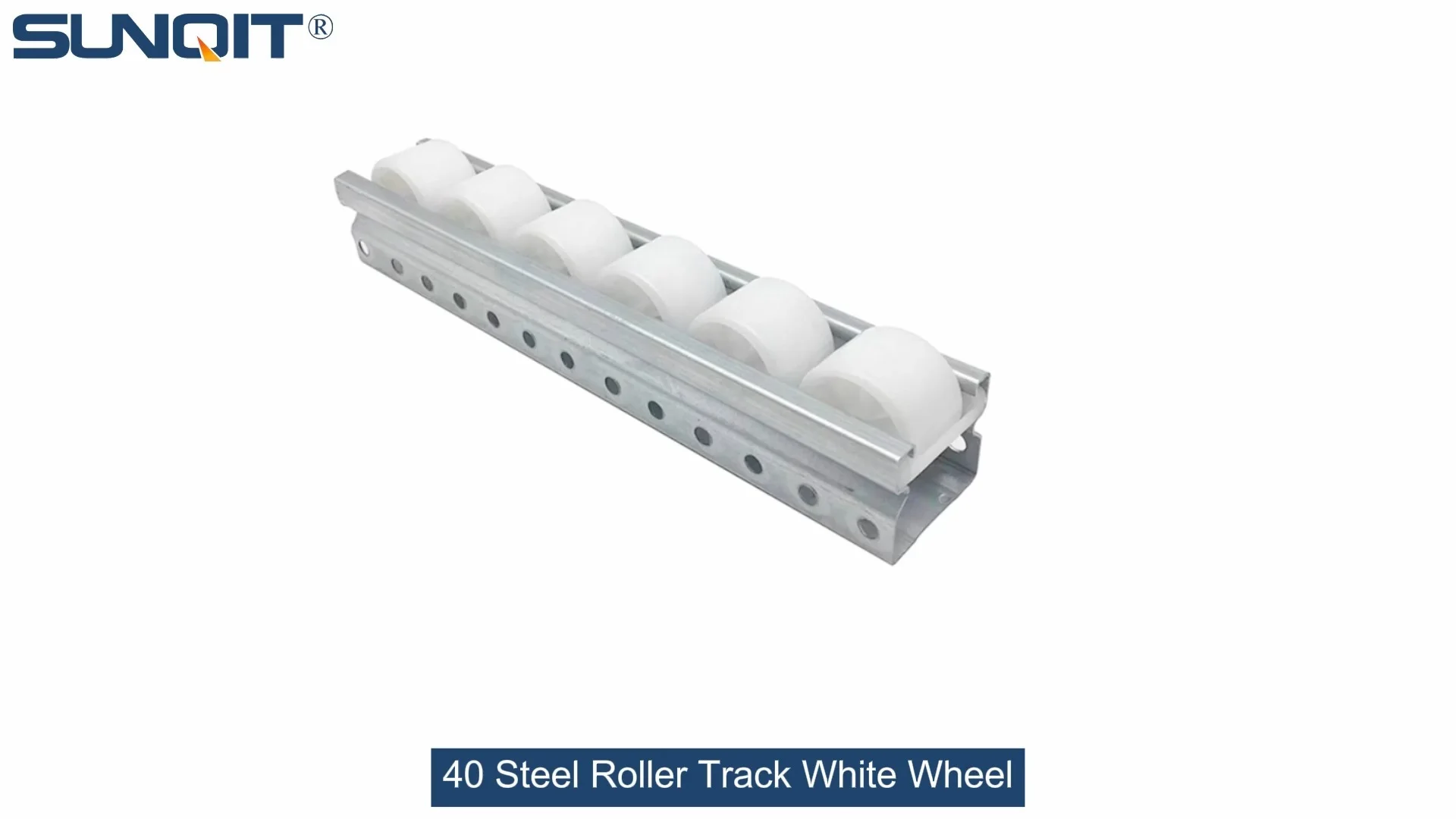
40 Steel Roller Track White Wheel
The roller track can be installed with multiple accessories to create different slopes and configurations of flow racks.All steel conveyor 40 roller track accessories are engineered to perfectly fit the sliding rail.
If you've ever walked through a busy manufacturing plant or a bustling warehouse, you've probably noticed the unsung heroes keeping everything moving smoothly: roller tracks. These simple yet crucial components are the backbone of efficient material flow, whether it's on an assembly line, a picking station, or a packaging area. But not all roller tracks are created equal. Today, we're zeroing in on a specific workhorse: the 40 Steel Roller Track White Wheel. If you're in the market for one, you might be asking: "How do I pick the right size? What load capacity do I really need? And why does the 'white wheel' part even matter?" Let's dive in and answer these questions—because choosing the right roller track isn't just about buying a part; it's about keeping your operations running like a well-oiled machine.
First Things First: What Even Is a 40 Steel Roller Track White Wheel?
Before we get into the nitty-gritty of choosing one, let's make sure we're all on the same page. The "40" here refers to the track width—typically 40mm, a standard size widely used in lean manufacturing setups. "Steel" tells us the track itself is made of steel, known for its durability and strength. Then there's the "White Wheel": these are the small rollers attached to the track, usually made of materials like polyurethane or nylon, colored white for specific reasons we'll unpack later. Together, this combo creates a track system designed to let products, parts, or containers glide along with minimal friction—perfect for streamlining workflows in everything from 3C assembly lines to warehouse picking zones.
Think of it this way: If your production line is a symphony, the 40 steel roller track white wheel is the rhythm section. Get it right, and everything flows in harmony. Get it wrong, and you're looking at jams, slowdowns, and even damaged goods. So let's make sure your rhythm stays steady.
Size Matters: Getting the Dimensions Right
When it comes to roller tracks, size isn't just a number—it's about fit. A track that's too narrow might cramp your materials, while one that's too wide could waste space and money. Let's break down the key size factors you need to consider.
1. Wheel Diameter: Small vs. Large Rollers
The diameter of the white wheels is a big deal (pun intended). Most 40 steel roller tracks come with wheel diameters ranging from 0.5 inches to 2 inches, but the 1-inch and 1.5-inch options are the most common for general use. Here's how to decide:
- Smaller wheels (0.5–1 inch): Great for lightweight, small parts—think 3C components like phone casings or small electronic parts. They're ideal for tight spaces where precision is key, like on a workbench where operators need to slide parts back and forth quickly.
- Larger wheels (1.5–2 inches): Better for heavier loads or larger items, such as automotive parts or bulk packaging. The bigger surface area distributes weight more evenly, reducing friction and making it easier to move heavier objects with less force.
Pro tip: If your operation handles a mix of small and medium parts, 1-inch wheels are a safe bet—they balance versatility and performance.
2. Track Width: The 40mm Standard (and When to Adjust)
We mentioned the "40" in 40 steel roller track refers to width, but that 40mm isn't set in stone for every situation. While 40mm is the standard for most lean system setups, you might need to tweak it based on what you're moving:
- Standard 40mm width: Perfect for boxes, bins, or trays with a base width of 35–45mm. It's the go-to for general manufacturing and warehousing, where consistency across lines is important.
- Wider tracks (50mm+): If you're moving larger containers or irregularly shaped items, a wider track adds stability. Just keep in mind: wider tracks take up more space, so measure your workspace first!
- Narrower tracks (30mm): Rare, but useful for ultra-small parts or custom workbenches where space is at a premium. Use this only if your materials are consistently tiny—otherwise, you risk parts slipping off.
3. Track Length: Plan for Your Workflow
Length is all about how far your materials need to travel. 40 steel roller tracks are often sold in standard lengths (1m, 2m, 3m), but many suppliers offer custom cuts. Here's what to ask yourself:
- Will the track be a straight line, or does it need to curve? (Curved tracks may require shorter segments or specialized connectors.)
- Do you need to connect multiple tracks end-to-end? (Look for tracks with easy-to-use joint connectors to avoid gaps that cause jams.)
- Is there space for expansion? If your production volume grows, can you add more track later without a complete overhaul?
| Wheel Diameter | Track Width | Typical Length | Best For |
|---|---|---|---|
| 0.5 inch | 40mm | 1–2m | Tiny 3C parts, precision workbenches |
| 1 inch | 40mm | 2–3m | Mixed small/medium parts, general assembly lines |
| 1.5 inch | 40mm (or 50mm) | 3–5m | Heavier components, warehouse picking zones |

Load Capacity: Don't Cut Corners Here
Imagine this: You've picked the perfect size track, installed it, and on day one, a heavy bin of parts is placed on it—only for the wheels to crack or the track to bend. Nightmare, right? That's why load capacity is non-negotiable. Let's break down how to calculate what you need and why overestimating is smarter than underestimating.
Understanding Load Ratings: Static vs. Dynamic
Load capacity isn't just one number. You'll see two terms thrown around: static load (weight when the track is stationary) and dynamic load (weight when materials are moving). For most manufacturing setups, dynamic load is the critical one—since your track will rarely be "just sitting there."
40 steel roller tracks with white wheels typically have dynamic load capacities ranging from 50kg to 300kg per meter, depending on the wheel material, steel thickness, and design. Here's a rough guide:
- Light duty (50–100kg/m): Ideal for small parts, electronics, or lightweight packaging. Think 3C assembly lines where workers handle circuit boards or phone screens.
- Medium duty (100–200kg/m): The sweet spot for most general manufacturing—automotive components, household appliances, or medium-sized bins in warehouses.
- Heavy duty (200–300kg/m): For bulk items, metal parts, or industrial machinery components. These tracks usually have thicker steel rails and reinforced wheel brackets.
How to Calculate Your Needs
Don't guess—do the math. Start by asking:
- What's the maximum weight of the items you'll put on the track? (Include the weight of the bin or container, too!)
- How many wheels will support that weight at once? (A good rule: At least 4–6 wheels should be in contact with the load at any time.)
- Will you ever need to double stack items or push multiple bins at once? (Add 20–30% to your max weight for safety.)
Example: If your heaviest bin is 80kg, and it sits on 6 wheels, each wheel needs to handle ~13kg. But if you might stack two bins (160kg total), each wheel now needs to handle ~27kg. A medium-duty track (100kg/m) would easily cover this, but a light-duty one might struggle over time.
| Track Type | Dynamic Load Capacity (per meter) | Wheel Material | Suitable For |
|---|---|---|---|
| Light Duty | 50–100kg | Nylon white wheel | 3C parts, small electronics, light bins |
| Medium Duty | 100–200kg | Polyurethane white wheel | Automotive parts, household appliances, warehouse picking |
| Heavy Duty | 200–300kg | Reinforced polyurethane + steel core | Bulk metal parts, industrial machinery components |

Why Steel? Why White Wheels? The Material Breakdown
You might be thinking, "Steel track, white wheels—why not plastic track or black wheels?" Great question. The materials here are chosen for specific, practical reasons that directly impact performance and longevity.
Steel Track: Strength You Can Count On
Steel is the backbone of these tracks for a reason. Unlike aluminum or plastic, steel offers:
- Durability: It stands up to daily wear and tear, even in high-traffic areas. Dropped tools, heavy impacts—steel takes it all in stride.
- Stability: Steel's rigidity means less flexing under load, so your track stays level and materials glide straight (no wobbly paths here).
- Longevity: A well-maintained steel track can last 5–10 years, even in harsh manufacturing environments. Plastic might crack, aluminum might dent—steel just keeps going.
That said, not all steel is the same. Look for tracks made from cold-rolled steel (stronger and smoother) with a protective coating (like zinc plating) to resist rust, especially if your facility is humid (we're looking at you, coastal warehouses).
White Wheels: More Than Just a Color
Now, the white wheels. At first glance, color might seem like a style choice, but in manufacturing, it's almost always functional. White wheels—usually made of nylon or polyurethane—offer two key benefits:
- Cleanliness & Visibility: White shows dirt, dust, or debris easily. In clean environments like medical device assembly or 3C manufacturing (where tiny particles can ruin electronics), this is a lifesaver. A quick glance tells you if the track needs cleaning, preventing contaminants from transferring to products.
- Non-Marking: Unlike black rubber or gray plastic wheels, white polyurethane/nylon won't leave scuff marks on sensitive surfaces. If you're moving painted parts, glossy bins, or finished goods, this keeps everything looking professional (and avoids costly rework).
Bonus: Some white wheels are also ESD (electrostatic discharge) safe, though this depends on the material. If you work with electronics, ask your supplier if the white wheels have ESD properties—they'll conduct static away from sensitive components, preventing damage.

Where Does It Fit Best? Application Scenarios
40 steel roller track white wheels aren't one-size-fits-all—they shine brightest in specific environments. Let's match them to real-world scenarios, so you can see if they're the right fit for your operation.
1. 3C Assembly Lines: Precision in Motion
In 3C manufacturing (computers, communications, consumer electronics), every second counts. Tiny parts like microchips, connectors, and screens need to move quickly and gently between workstations. The 40 steel roller track white wheel is perfect here because:
- Small (1-inch) white wheels glide smoothly, reducing the risk of damaging delicate components.
- Steel tracks hold up to the constant sliding of trays and bins, even during long production runs.
- White wheels make it easy to spot dust or debris that could scratch screens or interfere with part alignment.
Example: A smartphone assembly line uses 40mm tracks with 1-inch white wheels to slide component trays from the soldering station to the testing station. The smooth motion cuts down on manual handling, and the white wheels ensure no marks transfer to the trays holding the phones.
2. Warehouse Picking & Packing: Speed Without the Sweat
Warehouses live and die by order fulfillment speed. Picking stations, packing lines, and shipping zones all rely on quick, easy movement of goods. Here's why 40 steel roller tracks work:
- Medium-duty tracks (100–200kg/m) handle bins of apparel, small appliances, or e-commerce packages with ease.
- White wheels mean no scuffs on customer-facing packaging (important for brand reputation!)
- Straight or curved track designs can be customized to fit tight warehouse spaces, maximizing storage and workflow.
Pro tip: Pair 40 steel roller tracks with a lean system setup—like flow racks or conveyor integration—to create a "goods-to-person" picking system that cuts down on walking time for staff.
3. Automotive & Heavy Manufacturing: Built to Handle the Weight
Automotive plants deal with heavier parts—think engine components, door panels, or brake systems. A heavy-duty 40 steel roller track (200–300kg/m) with 1.5-inch white wheels is the way to go here because:
- Steel tracks resist bending under the weight of metal parts.
- Larger wheels distribute weight evenly, making it easier for workers to push or pull heavy bins without strain (hello, ergonomics!).
- Zinc-plated steel stands up to oil, grease, and coolant spills common in automotive environments.
Installation & Maintenance: Keep It Rolling Smoothly
Even the best roller track won't perform well if it's installed poorly or neglected. Let's walk through the basics of getting it right from day one—and keeping it that way.
Installation Tips: Start Strong
- Level it out: A uneven track is a recipe for jams. Use a spirit level to ensure the track is perfectly horizontal—even a 1-degree slope can cause items to slide too fast or get stuck.
- Secure the brackets: Don't skimp on screws! Use heavy-duty brackets (preferably steel) and anchor them to a solid surface (plywood, metal frames, or concrete). Loose brackets lead to wobbly tracks, which wear out wheels faster.
- Leave space for expansion: Steel expands and contracts with temperature changes. If installing multiple track sections, leave a 1–2mm gap between them to avoid warping in hot or cold environments.
- Test before full deployment: Run a few test loads across the track before putting it into full use. Check for rough spots, stuck wheels, or uneven movement—fix issues now, not when production is in full swing.
Maintenance: Simple Steps for Long Life
Roller tracks are low-maintenance, but a little care goes a long way. Add these to your weekly checklist:
- Clean the wheels: Wipe white wheels with a damp cloth to remove dust, grease, or debris. For stubborn grime, use mild soap—avoid harsh chemicals that can damage the wheel material.
- Lubricate moving parts: A drop of lightweight machine oil on wheel axles every 2–3 months keeps them spinning smoothly. Avoid over-lubricating, though—excess oil attracts dirt.
- Check for wear: Inspect wheels for cracks, flat spots, or excessive wear. If a wheel is damaged, replace it immediately—one bad wheel can throw off the entire track.
- Tighten brackets: Vibrations from daily use can loosen screws. Give brackets a quick once-over to make sure everything's secure.
With proper care, your 40 steel roller track white wheel should stay in top shape for years—saving you from costly replacements and downtime.
Choosing a Supplier: What to Look For
You've nailed the specs—now it's time to pick a supplier. This isn't just about price; it's about reliability, quality, and support. Here's what to ask before you buy:
- Can they customize? Maybe you need a non-standard length, ESD-safe wheels, or a specific bracket design. A good supplier will work with you to tweak the track to your needs—not just sell you off-the-shelf parts.
- What's their quality control like? Ask about material certifications (e.g., steel grade, wheel hardness tests) and if they test load capacity in-house. A supplier who skips quality checks is a risk to your operation.
- Do they offer after-sales support? If a wheel breaks or the track warps, will they help? Look for suppliers with a clear warranty (at least 1 year) and responsive customer service—preferably with local support if you're in a region like China, Southeast Asia, or Europe.
- Can they handle bulk orders? If you're outfitting an entire plant, you need a supplier who can deliver consistent quality across hundreds of meters of track. Ask about lead times for large orders, too—delays here can throw off your production timeline.
Remember: The cheapest option isn't always the best. A slightly higher price for better materials and support will save you money in the long run, thanks to fewer replacements and less downtime.
Common Mistakes to Avoid
Even with the best intentions, it's easy to slip up. Here are the top mistakes to steer clear of:
- Underestimating load capacity: "It'll probably be fine" is never a good mindset. Always overestimate by 20–30% to account for unexpected loads.
- Ignoring the environment: A track that works in a dry warehouse might rust in a humid coastal plant. Factor in temperature, moisture, and chemicals when choosing materials.
- Skipping installation prep: Rushing to install without leveling the track or securing brackets properly leads to problems down the line. Take the time to do it right the first time.
- Overlooking wheel material: Nylon wheels are great for light loads, but polyurethane is better for heavy duty. Match the wheel material to your needs—don't just pick based on color.
Final Thoughts: Your Turn to Roll
Choosing a 40 steel roller track white wheel might seem like a small decision, but it's one that impacts your entire operation—from worker efficiency to product quality to your bottom line. By focusing on size, load capacity, material, and application, you'll find a track that doesn't just "work"—it makes your workflow smoother, faster, and more reliable.
So take the time to measure your needs, test your options, and pick a supplier you trust. Your assembly line (and your team) will thank you. Now go out there and keep things moving!