- Company Articles
- Products and Technology
- Product knowledge
- How to Choose 4040B EU Standard Aluminum Profile: Key Factors for Medical Device Frames

How to Choose 4040B EU Standard Aluminum Profile: Key Factors for Medical Device Frames
Related Product
4040B EU Standard Aluminum Profile
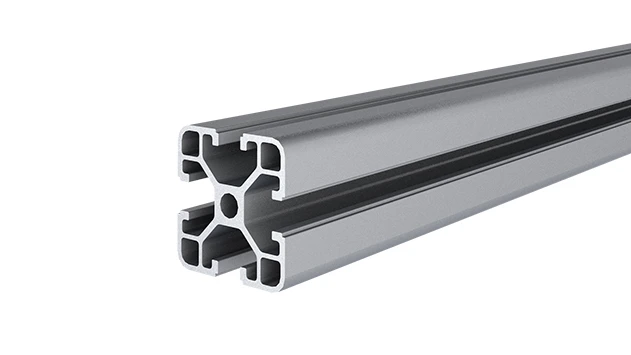
4040B is a 4.00x4.00 CM fractional 40 series square extrusion T-slot profile with four open T-slots, each side with 4.00cm face. The profile has align-a-grooves to assist in aligning connecting profiles.
In the world of medical device manufacturing, every component matters—but few are as foundational as the frame. Whether it's a mobile surgical cart, a diagnostic equipment housing, or a laboratory workbench, the frame is the silent backbone that ensures stability, precision, and safety. And when it comes to building frames that meet the rigorous demands of healthcare settings, one material stands out: aluminum. More specifically, the 4040B EU standard aluminum profile has emerged as a go-to choice for engineers and manufacturers. But with so many profiles on the market, how do you know if it's the right fit for your medical device? Let's dive into the key factors that should guide your decision.
Understanding the Basics: What Is 4040B EU Standard Aluminum Profile?
Before we jump into selection criteria, let's clarify what makes the 4040B profile unique. At its core, it's a type of aluminum extrusion profile —a product of forcing heated aluminum alloy through a die to create a consistent cross-sectional shape. The "4040" refers to its dimensions: 40mm in width and 40mm in height, making it a square profile ideal for balanced weight distribution. The "B" denotes a specific variant within the EU standard lineup, often distinguished by its groove design, wall thickness, or load-bearing capacity compared to other 40x40 profiles like 4040A or 4040C.
EU standards ensure that this profile meets strict benchmarks for quality, durability, and safety—critical in medical environments where failure is not an option. From the extrusion process to post-treatment finishes, every step adheres to regulations that prioritize reliability. But what exactly should you look for when evaluating 4040B profiles for your medical device frame? Let's break it down.
Key Factor 1: Material Quality—Alloy and Strength
The first thing to examine is the aluminum alloy itself. Not all aluminum is created equal, and in medical devices, the alloy's composition directly impacts performance. Most 4040B profiles are made from 6063-T5 aluminum alloy, a popular choice for extrusions due to its excellent combination of strength, corrosion resistance, and machinability. T5 tempering (artificial aging) further enhances its hardness, making it sturdy enough to support medical equipment without flexing under load.
Why does this matter for medical devices? Consider a mobile IV cart that needs to hold fluid bags, pumps, and monitors. A low-quality alloy might bend over time, compromising stability and risking equipment damage—or worse, patient safety. 6063-T5, however, offers a tensile strength of around 180 MPa and yield strength of 110 MPa, providing the structural integrity needed for daily use in busy hospitals and clinics.
Ask your supplier for material certificates to verify alloy composition and tempering. Reputable suppliers will happily provide test reports confirming compliance with EU standards for aluminum quality. Avoid profiles with unknown alloys; cutting corners here could lead to premature frame failure.

Key Factor 2: Dimensional Accuracy—Tight Tolerances for Seamless Integration
Medical devices are assemblies of countless components, and the frame must serve as a precise foundation for each part. A 4040B profile with poor dimensional accuracy—even a deviation of 0.1mm—can throw off the alignment of brackets, panels, or moving parts. For example, if the profile's width is slightly off, a mounted monitor arm might wobble, or a drawer slide might jam. In worst-case scenarios, misalignment could affect the device's functionality, such as a diagnostic machine's ability to position sensors correctly.
EU standards for 4040B profiles enforce tight tolerances: typically ±0.2mm for width/height and ±0.1mm for straightness per meter. This ensures that every section of the profile is consistent, whether you're assembling a single cart or a production line of 100 units. To check this, request a dimensional inspection report from your supplier, including measurements of key parameters like groove depth, wall thickness, and squareness.
Another aspect of accuracy is the extrusion's surface uniformity. Uneven walls or warped sections can weaken the profile and make it difficult to attach accessories. Run your hand along the profile—any bumps, dents, or irregularities are red flags. A high-quality 4040B profile should feel smooth and consistent from end to end.
Key Factor 3: Compatibility with Aluminum Profile Accessories —Modularity for Design Flexibility
Modern medical device design thrives on modularity. Frames need to be adaptable: maybe a workbench starts as a single station but later needs shelves added, or a cart requires a new bracket for a upgraded monitor. This is where aluminum profile accessories come into play—and 4040B's compatibility with these accessories is a game-changer.
EU standard profiles feature T-slots (grooves along the length) that accept a wide range of accessories: connectors, end caps, hinges, handles, and panel mounts. For 4040B, common accessories include 90° aluminum profile connectors (to join perpendicular profiles), 4040 aluminum profile end caps (to cover sharp edges and prevent dust buildup), and aluminum hinges (for foldable components like cart doors).
Imagine designing a surgical instrument workbench. With 4040B and compatible accessories, you can easily add a tool rail using T-slot nuts and bolts, mount a light fixture with angle brackets, or attach a waste bin holder—all without welding. This modularity speeds up prototyping and allows for quick adjustments during production, reducing time-to-market for new devices.
Not all 40x40 profiles have the same T-slot design, though. 4040B typically features a 8mm slot width (common in EU standards), which aligns with most standard accessories. Double-check slot dimensions with your accessory supplier to ensure a snug fit. Loose connections can lead to rattling components or unstable assemblies—both unacceptable in medical settings.
Key Factor 4: Compliance—Meeting Medical Industry Standards
Medical devices are heavily regulated, and their frames are no exception. A 4040B profile must comply with strict standards to be used in healthcare applications. The most critical are ISO 13485 (quality management for medical devices) and CE marking (indicating conformity with EU health, safety, and environmental requirements). These certifications ensure that the profile is manufactured in a controlled environment, with traceable materials and consistent quality checks.
Beyond general manufacturing standards, consider biocompatibility. If the frame comes into direct contact with patients (e.g., a hospital bed rail) or bodily fluids (e.g., a surgical cart), the aluminum surface must be non-toxic and non-irritating. Anodized finishes (a common treatment for 4040B profiles) create a protective oxide layer that is inert and biocompatible, meeting ISO 10993 standards for biological evaluation of medical devices.
Cleanability is another compliance concern. Medical environments require frequent disinfection with harsh chemicals like bleach or alcohol. A poor surface finish might degrade under repeated cleaning, harboring bacteria in cracks or pores. 4040B profiles with a smooth, anodized finish (class 10 or higher) resist chemical damage and are easy to wipe down, reducing the risk of cross-contamination.
Ask your supplier for compliance documentation, including ISO 13485 certificates and CE declarations of conformity. Reputable lean system supplier s specializing in medical-grade aluminum profiles will have these readily available. Avoid suppliers who cannot provide proof of compliance—using non-certified profiles could result in regulatory penalties or product recalls.
Key Factor 5: Load Capacity—Matching the Profile to Device Requirements
Not all medical device frames carry the same weight. A lightweight tablet cart might need to support 10kg, while a heavy-duty imaging machine frame could require 200kg or more. 4040B profiles have a specific load capacity, and it's crucial to match this to your device's needs.
Load capacity depends on several factors: wall thickness, alloy strength, and profile length. A standard 4040B profile has a wall thickness of 1.5mm to 2mm (varies by manufacturer), which provides a good balance of weight and strength. For example, a 1-meter length of 4040B (2mm wall) can typically support around 50kg when used as a vertical upright, or 30kg when used horizontally as a shelf brace.
To calculate the required load capacity, list all components the frame will support, including their weights and distribution. If your device has moving parts (e.g., a sliding drawer), factor in dynamic loads—sudden movements can increase stress on the frame. Work with a structural engineer if needed to ensure the profile can handle both static and dynamic forces.
Don't overestimate load capacity to save costs. Using an undersized profile is risky, but oversized profiles add unnecessary weight, making devices harder to maneuver. 4040B strikes a sweet spot for many mid-weight medical devices, but if your needs exceed its limits, consider larger profiles like 5050 or reinforced 4040 variants.
Comparing 4040B to Other Profiles: Why It Stands Out
To better understand 4040B's advantages, let's compare it to two common alternatives: 3030 EU standard profiles (30x30mm) and 4040A EU standard profiles. This will help you see why 4040B is often the top choice for medical device frames.
| Feature | 4040B EU Standard | 3030 EU Standard | 4040A EU Standard |
|---|---|---|---|
| Dimensions | 40x40mm, 2mm wall thickness | 30x30mm, 1.5mm wall thickness | 40x40mm, 1.5mm wall thickness |
| Max Load Capacity (1m length, vertical) | 50-60kg | 25-30kg | 35-40kg |
| Accessory Compatibility | 8mm T-slot, wide range of EU standard accessories | 6mm T-slot, limited to smaller accessories | 8mm T-slot, compatible with most 4040 accessories |
| Common Medical Uses | Surgical workbenches, mobile equipment carts, imaging machine frames | Lightweight tool holders, small instrument trays | Mid-weight carts, simple workstations |
| Weight (per meter) | ~1.2kg | ~0.7kg | ~0.9kg |
As the table shows, 4040B outperforms 3030 in load capacity and accessory compatibility, making it better suited for larger medical devices. Compared to 4040A, it offers higher load capacity thanks to its thicker walls, though it is slightly heavier. For most mid-to-heavy medical device frames, 4040B's extra strength is worth the minimal weight increase.
Real-World Application: Building a Workbench for Laboratory Testing
To put these factors into context, let's walk through a real example: designing a laboratory workbench for medical sample testing. The workbench needs to support microscopes, centrifuges, pipette racks, and storage shelves—total load around 80kg. It also must be easy to clean, modular (to add accessories later), and compliant with ISO 13485.
Here's how 4040B checks all the boxes:
- Material Quality: 6063-T5 alloy provides the strength to hold 80kg without sagging, even when the workbench is fully loaded.
- Dimensional Accuracy: Tight tolerances ensure the frame is square, so shelves and equipment mount flush and level.
- Accessory Compatibility: Using aluminum profile accessories like 90° connectors and shelf brackets, we can add a second tier for storage and a tool rail along the back—no welding required.
- Compliance: Anodized finish meets ISO 10993 for biocompatibility, and the supplier provides ISO 13485 certification for the manufacturing process.
- Load Capacity: With 4040B uprights and cross-braces, the workbench easily supports the 80kg load, even with dynamic stress from opening/closing drawers.
Without 4040B, the design would suffer: 3030 profiles would lack strength, while non-compliant aluminum might fail regulatory checks. 4040B's balance of features makes it the ideal choice.
Choosing a Supplier: What to Look For
Even the best profile design falls flat if your supplier is unreliable. When selecting a 4040B supplier, prioritize those with experience in medical device manufacturing. Look for:
- Certifications: ISO 13485, CE marking, and material certificates (e.g., EN 755 for aluminum extrusions).
- Quality Control: In-house testing for dimensional accuracy, material strength, and surface finish.
- Accessory Range: A wide selection of compatible aluminum profile accessories to simplify sourcing.
- Technical Support: Engineers who can help with profile selection and load capacity calculations.
- Lead Times: Consistent delivery schedules to avoid production delays.
Avoid suppliers who offer "too good to be true" prices—this often indicates subpar materials or lax quality control. A reliable supplier may cost more upfront, but they'll save you money in the long run by reducing rework and warranty claims.
Conclusion: 4040B—The Backbone of Reliable Medical Device Frames
Choosing the right aluminum profile for your medical device frame is a decision that impacts safety, performance, and compliance. The 4040B EU standard aluminum profile stands out as a versatile, reliable option, thanks to its high-quality alloy, tight tolerances, accessory compatibility, and adherence to medical standards. By prioritizing material quality, dimensional accuracy, compatibility, compliance, and load capacity, you can select a profile that forms the foundation of a durable, safe, and efficient medical device.
Remember, the frame is more than just a structure—it's a commitment to patient safety and device reliability. Invest the time to evaluate suppliers, verify certifications, and test samples. With 4040B, you're not just building a frame; you're building trust in your medical device.