- Company Articles
- Products and Technology
- Procurement Guidelines
- How to Choose 4040C EU Standard Aluminum Profile: A Buyer's Guide for Manufacturers

How to Choose 4040C EU Standard Aluminum Profile: A Buyer's Guide for Manufacturers
Related Product
4040C EU Standard Aluminum Profile
4040C is a 4.00x4.00 CM fractional 40 series square extrusion T-slot profile with four open T-slots, each side with 4.00cm face. The profile has align-a-grooves to assist in aligning connecting profiles.
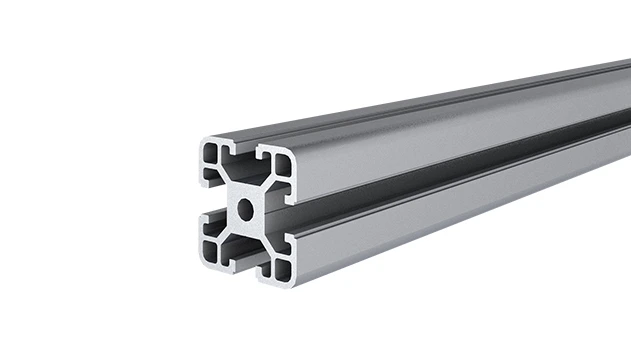
For manufacturers, the backbone of efficient production often lies in the tools and infrastructure that keep operations running smoothly. From assembly lines to workbenches, every component plays a role in minimizing downtime, reducing waste, and ensuring consistency. Among these components, aluminum profiles have emerged as a cornerstone—lightweight, durable, and infinitely adaptable. And when it comes to versatility and reliability, few profiles stand out like the 4040C EU standard aluminum profile . But with so many options on the market, how do you ensure you're choosing the right one for your facility? This guide breaks down everything manufacturers need to know, from key features to supplier selection, to make an informed decision.
Why the 4040C EU Standard Aluminum Profile Matters for Manufacturers
Before diving into the details, let's start with the basics: What makes the 4040C profile a go-to choice? At its core, the "4040" refers to its dimensions—40mm in width and 40mm in height—making it a medium-sized profile ideal for a range of applications. The "EU standard" tag ensures it adheres to strict European manufacturing norms for quality, tolerance, and safety, while the "C" designation often denotes specific design features, such as T-slot configurations or wall thickness, that enhance compatibility with accessories and assembly flexibility.
For manufacturers, this translates to a profile that balances strength and adaptability. Whether you're building a custom workbench, a material rack, or a modular conveyor system, the 4040C provides a stable framework that can be easily reconfigured as production needs change. Unlike rigid steel structures, aluminum profiles allow for quick adjustments—no welding or heavy tools required. This agility is especially valuable in today's fast-paced manufacturing environments, where product lines evolve, and space constraints demand flexible solutions.
Pro Tip: The 4040C's popularity stems from its "just-right" size. It's sturdy enough to support heavy loads (think: machinery or bulk materials) but lightweight enough for manual assembly, reducing labor costs during setup and reconfiguration.
Key Features to Evaluate When Selecting 4040C Profiles
Not all 4040C profiles are created equal. To ensure you're getting a product that meets your facility's needs, pay close attention to these critical features:
1. Material Quality: The Foundation of Durability
Aluminum profiles are typically made from alloys, with 6063-T5 being the industry standard for structural applications. This alloy offers an excellent balance of strength, corrosion resistance, and machinability—key for withstanding the wear and tear of daily manufacturing use. When evaluating a 4040C profile, ask suppliers about the alloy grade and temper (e.g., T5, which indicates artificial aging for increased hardness). A lower-grade alloy might save money upfront but could bend under heavy loads or corrode faster in humid or chemical-exposed environments.
Surface treatment is another indicator of quality. Most 4040C profiles undergo anodizing—a process that creates a protective oxide layer—or powder coating for added durability. Anodized finishes are particularly valuable for resistance to scratches and corrosion, making them ideal for cleanrooms or facilities with strict hygiene standards. Powder coating, on the other hand, offers more color options and can be customized to match brand aesthetics or safety protocols (e.g., high-visibility yellow for hazard zones).
2. Tolerance and Precision: The Hidden Cost of Poor Fit
In manufacturing, even a millimeter of error can throw off an entire assembly. That's why tolerance—the allowable deviation from the specified dimension—is non-negotiable for 4040C profiles. EU standards typically require tight tolerances (e.g., ±0.2mm for width/height), ensuring that profiles and accessories fit together seamlessly. A profile with loose tolerances might result in wobbly connections, misaligned T-slots, or difficulty attaching brackets—all of which slow down assembly and compromise structural integrity.
How can you check tolerance? Reputable suppliers will provide technical data sheets with tolerance specs, but it's also wise to request samples. A quick test: slide a standard T-slot nut into the profile's groove. It should fit snugly without excessive play. If it's too loose or too tight, the tolerance is likely off, and you'll face headaches during installation.
3. T-Slot Design: The Key to Versatility
The T-slots running along the length of the 4040C profile are what make it so adaptable. These slots allow for easy attachment of accessories like brackets, panels, and connectors, turning a simple extrusion into a fully functional structure. But not all T-slots are the same. Pay attention to the slot width and depth—common sizes include 8mm or 10mm—which determine compatibility with aluminum profile accessories (e.g., T-bolts, angle codes, or end caps). Mismatched slot sizes can render expensive accessories useless, so always confirm slot dimensions with your supplier.
Some 4040C profiles also feature additional slots (e.g., on all four sides) or rounded edges for safer handling. For manufacturers prioritizing ergonomics, rounded edges reduce the risk of cuts or scrapes during assembly, while multi-sided slots offer more mounting options for complex setups.

Material Quality: Beyond the Basics
While alloy grade and surface treatment are critical, there's more to material quality than meets the eye. Let's break down two often-overlooked factors that impact long-term performance:
Wall Thickness: Balancing Weight and Strength
The 4040C's wall thickness directly affects its load-bearing capacity. Standard options range from 1.5mm to 3mm, with thicker walls offering higher strength but adding weight. For most manufacturing applications—like workbenches or light-duty material racks—a 2mm wall thickness is sufficient. However, if you're supporting heavy machinery or stacking materials vertically (e.g., in a material rack B (3 row and 3 floor) setup), opt for 2.5mm or 3mm to prevent bending under stress.
Keep in mind: Thicker walls also mean higher costs and heavier profiles, which can increase shipping fees and assembly effort. It's a balancing act—assess your maximum load requirements first, then choose the thinnest wall that meets those needs to avoid overspending.
Certifications: Ensuring Compliance and Safety
EU standards are strict, but not all suppliers adhere to them rigorously. Look for profiles certified by organizations like ISO (e.g., ISO 9001 for quality management) or CE marking, which indicates compliance with European health, safety, and environmental requirements. Certifications aren't just paperwork—they're proof that the supplier follows consistent manufacturing processes, from raw material sourcing to final inspection. For manufacturers operating in regulated industries (e.g., automotive or medical device production), non-compliant profiles could lead to regulatory issues or product recalls.
Sizing and Compatibility: Avoiding Costly Mistakes
Even the highest-quality 4040C profile won't perform well if it doesn't fit your existing setup. Compatibility is key, and it starts with understanding how the profile integrates with your current infrastructure and aluminum extrusion profile ecosystem.
Length Options: Standard vs. Custom
4040C profiles are typically sold in standard lengths (e.g., 2m, 3m, or 6m), but many suppliers offer custom cutting to your exact specifications. While standard lengths are cheaper and readily available, custom cutting reduces waste—no more sawing off excess material or struggling to fit overlong profiles into tight spaces. If your project requires precise dimensions (e.g., a workbench with a specific height), factor in custom cutting costs when budgeting.
Pro tip: If you need multiple profiles of the same length, bulk custom cutting often comes with discounts. Ask your supplier about volume pricing to save on larger orders.
Mixing and Matching: Compatibility with Other Profiles
Most manufacturing facilities use a mix of profile sizes—2020 for light-duty frames, 3030 for medium loads, and 4040C for heavier applications. To ensure these profiles work together seamlessly, check that their T-slot designs and accessory systems are compatible. For example, a 4040C profile with an 8mm T-slot should pair with 8mm accessories, even if they're used with a 3030 profile of the same slot size. Mismatched systems (e.g., 10mm slots on 4040C and 8mm on 3030) will require adapters, adding complexity and cost.
If you're unsure about compatibility, ask your supplier for a compatibility chart or sample kit. Many suppliers offer starter packs with a small 4040C profile, a few accessories, and cross-size connectors to test fit before placing a large order.
Essential Aluminum Profile Accessories for 4040C
A 4040C profile is only as good as the accessories that bring it to life. From connectors to end caps, the right aluminum profile accessories can turn a basic extrusion into a fully functional system. Here are the must-have accessories to consider:
| Accessory Type | Function | Why It Matters |
|---|---|---|
| 4040 Aluminum Angle Codes | Connect profiles at 90° angles (e.g., for workbench frames) | Ensures rigid, wobble-free joints without welding |
| T-Slot Nuts and Bolts | Secure accessories (e.g., panels, shelves) to T-slots | Allows for tool-free adjustments and repositioning |
| End Caps | Cover exposed ends of profiles | Prevents dust buildup in T-slots and reduces sharp edges |
| Panel Mounts | Attach plywood, metal, or plastic panels to profiles | Turns profiles into work surfaces or enclosure walls |
| Roller Track Connectors | Integrate roller tracks for material flow (e.g., conveyor systems) | Enables smooth movement of parts between workstations |
When selecting accessories, prioritize durability and ease of use. Cheap plastic connectors may crack under stress, while low-quality bolts can strip T-slots. Look for accessories made from the same alloy as the profile (e.g., aluminum or steel) for consistent performance. Also, consider compatibility with your tools—some accessories require hex keys, while others use standard screwdrivers. Standardizing on a single tool type simplifies assembly and reduces the need for multiple wrenches or drivers.
Choosing a Reliable Lean System Supplier
Even the best profile specs mean little if your supplier can't deliver consistent quality, on-time shipments, or post-purchase support. When vetting a lean system supplier , ask these critical questions to separate the reliable partners from the rest:
1. What's Your Quality Control Process?
A trustworthy supplier will have strict quality control (QC) measures in place, from inspecting raw materials to testing finished profiles. Ask about their QC checks—do they test for tolerance, straightness, or surface defects? Can they provide batch-specific test reports? Avoid suppliers who vague on details; transparency is a red flag for poor quality.
2. What's Your Lead Time for Custom Orders?
Manufacturing schedules wait for no one, so lead times matter. Standard profiles may ship in 1–3 days, but custom cuts or large orders could take weeks. Discuss your timeline upfront and ensure the supplier can meet it without compromising quality. If your project is time-sensitive, ask about expedited shipping options (and associated costs) to avoid delays.
3. Do You Offer Technical Support?
Even experienced manufacturers run into questions: Will this accessory work with my profile? What's the maximum load for a 3m span? A good supplier should have a technical team to help troubleshoot and optimize your design. Look for suppliers who provide CAD drawings, assembly guides, or even on-site consultations for complex projects. This support can save hours of trial and error and ensure your system performs as expected.
4. What's Your Return Policy?
Mistakes happen—maybe the profile length is wrong, or the T-slot size doesn't match your accessories. A supplier with a fair return policy (e.g., 30 days for unused, uncut profiles) shows confidence in their products and respect for your business. Avoid suppliers with strict "no returns" policies, as they may be unwilling to stand behind defective or misrepresented products.
Real-World Applications: How Manufacturers Use 4040C Profiles
To put this guide into context, let's look at common applications where the 4040C profile shines:
Workbenches: The Heart of Assembly Lines
A sturdy, customizable workbench is essential for assembly tasks, and the 4040C profile is perfect for the job. By combining 4040C frames with plywood or aluminum honeycomb panels, manufacturers can build workbenches tailored to their needs—whether it's a workbench E (single deck-without caster) for fixed assembly stations or a mobile version with casters for flexibility. T-slots allow for easy attachment of tool holders, LED lights, or ESD mats (critical for electronics manufacturing), while adjustable height options accommodate ergonomic requirements.
Material Racks: Organizing Inventory Efficiently
From raw materials to finished products, storage space is always at a premium. 4040C profiles excel at building modular material racks, like the material rack B (3 row and 3 floor) , which maximizes vertical space without sacrificing accessibility. By adding roller tracks or swivel roller balls (e.g., stainless steel swivel roller balls 1 inch ), manufacturers can create gravity-fed racks that automatically advance materials to the front, reducing time spent retrieving parts.
Conveyor Systems: Streamlining Material Flow
For moving parts between workstations, 4040C profiles serve as the frame for lightweight conveyor systems. Paired with roller tracks (e.g., plastic roller track guide rail yellow for visibility) and motorized components, these conveyors can be customized to fit tight spaces or adapt to varying product sizes. The modular design also makes repairs easy—if a roller track wears out, simply replace the affected section instead of the entire system.
Common Mistakes to Avoid When Buying 4040C Profiles
Even with careful planning, manufacturers can fall into traps when purchasing aluminum profiles. Here are the most common mistakes and how to steer clear of them:
Mistake #1: Prioritizing Price Over Quality
It's tempting to opt for the cheapest profile, but low-cost options often cut corners on material quality or tolerance. A slightly more expensive profile from a reputable supplier will last longer, require fewer replacements, and perform better—saving money in the long run. Think of it as an investment: A $50 profile that lasts 5 years is better than a $30 profile that fails in 18 months.
Mistake #2: Ignoring Compatibility with Existing Systems
If you're adding 4040C profiles to an existing setup, always check compatibility with your current accessories and profiles. Mixing EU standard and non-standard profiles, for example, can lead to misaligned T-slots or incompatible connectors. When in doubt, bring a sample of your current profile or accessory to the supplier for testing.
Mistake #3: Underestimating Load Requirements
Guessing load capacity is a recipe for disaster. A profile that works for a light shelf may buckle under the weight of heavy machinery. Always calculate maximum loads (including dynamic loads, like parts being placed or removed) and consult the supplier's load charts. When in doubt, overengineer slightly—better to have extra capacity than risk a collapse.
Final Thoughts: Investing in Long-Term Efficiency
Choosing the right 4040C EU standard aluminum profile is more than just a purchase—it's a decision that impacts your facility's efficiency, safety, and bottom line. By focusing on material quality, compatibility, and supplier reliability, you can select a profile that grows with your business, adapts to changing needs, and stands the test of time. Remember: The best profile isn't just the one that meets your current requirements, but the one that helps you build a more agile, productive manufacturing operation for years to come.
So, whether you're upgrading your workbenches, building a new material rack, or designing a custom conveyor system, take the time to evaluate your options, ask the right questions, and partner with a supplier who understands your industry. With the right 4040C profile and accessories, you'll be well on your way to a smoother, more efficient production line.