- Company Articles
- Products and Technology
- Product knowledge
- How to Choose 4040F EU Standard Aluminum Profile: Factors to Consider for Medical Equipment

How to Choose 4040F EU Standard Aluminum Profile: Factors to Consider for Medical Equipment
Related Product
4040F EU Standard Aluminum Profile
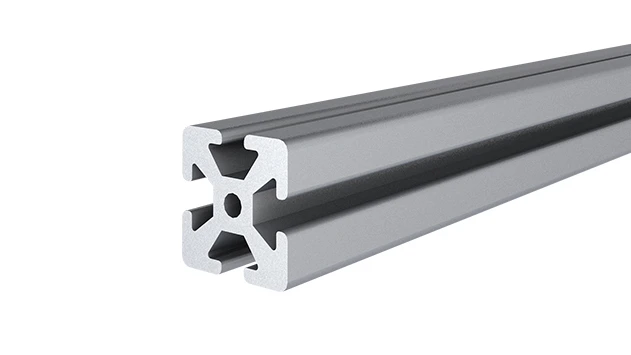
4040F is a 4.00x4.00 CM fractional 40 series square extrusion T-slot profile with four side open T-slots, each side with 4.00cm face. The profile has align-a-grooves to assist in aligning connecting profiles.
When it comes to medical equipment, every detail matters. From the precision of surgical tools to the stability of workbenches where life-saving devices are assembled, the materials used can make or break operational efficiency, safety, and compliance. In recent years, aluminum profiles have emerged as a go-to choice for medical facilities and equipment manufacturers—and for good reason. Lightweight yet durable, customizable, and easy to sanitize, they check all the boxes for the rigorous demands of healthcare settings. Among the various options, the 4040F EU standard aluminum profile stands out as a versatile workhorse. But how do you know if it's the right fit for your medical equipment needs? Let's dive in.
What Exactly Is a 4040F EU Standard Aluminum Profile?
First things first: let's demystify the term. The "4040F" in its name refers to its dimensions—40mm in width and 40mm in height, with "F" indicating a specific flange design that enhances structural stability. As an EU standard profile, it adheres to strict European guidelines for quality, safety, and performance, ensuring it meets benchmarks set by organizations like the European Committee for Standardization (CEN). This isn't just a marketing label; compliance with EU standards means rigorous testing for factors like material purity, extrusion precision, and resistance to corrosion—all critical for medical environments where reliability is non-negotiable.
Unlike generic aluminum bars, 4040F is an aluminum extrusion profile, meaning it's formed by pushing heated aluminum alloy through a die to create a consistent cross-sectional shape. This process ensures uniformity in wall thickness, straightness, and strength—qualities that matter when building everything from surgical instrument racks to modular workbenches. Think of it as the backbone of your medical setup: it needs to be strong enough to support heavy equipment, yet flexible enough to adapt as your needs change.
Why Aluminum Extrusion Profiles Are a Game-Changer for Medical Equipment
Before we get into the nitty-gritty of choosing 4040F specifically, let's step back and ask: why aluminum, and why extrusion profiles? Medical equipment operates in environments where cleanliness, durability, and efficiency are paramount. Aluminum checks all these boxes, and extrusion takes it a step further.
Aluminum is naturally corrosion-resistant, thanks to a thin oxide layer that forms on its surface—perfect for spaces where frequent cleaning with harsh disinfectants is the norm. Unlike steel, it won't rust, which means less maintenance and a longer lifespan. It's also lightweight, making it easier to move equipment like mobile workbenches or material carts without sacrificing stability. And because extrusion allows for complex, custom shapes, aluminum profiles can be tailored to fit the exact needs of your equipment—whether that's a hollow core for wiring management or a T-slot design for attaching accessories.
For medical settings, where workflows are often built around lean system principles—minimizing waste, streamlining processes, and maximizing efficiency—modularity is key. Aluminum extrusion profiles, with their T-slot design, let you add, remove, or reconfigure components (like shelves, hooks, or lighting) on the fly using aluminum profile accessories. This flexibility means your setup can evolve as patient needs change or new equipment is introduced, without the cost of a complete overhaul.

Key Factors to Consider When Choosing 4040F EU Standard Aluminum Profile
Now, let's get practical. Not all 4040F profiles are created equal, and choosing the right one requires looking beyond the label. Here are the critical factors to evaluate:
1. Material Quality: It Starts with the Alloy
The foundation of any reliable aluminum profile is the alloy used. Most 4040F profiles are made from 6063-T5 aluminum, a common choice for extrusions due to its excellent balance of strength, workability, and corrosion resistance. But not all 6063-T5 is the same. Look for profiles made from high-purity aluminum (99%+ pure) with controlled levels of magnesium and silicon—the alloying elements that give 6063 its strength. A reputable supplier will provide material certificates (like mill test reports) to verify alloy composition and mechanical properties, such as tensile strength and yield strength.
Why does this matter for medical equipment? Imagine a workbench holding a sensitive diagnostic machine. If the aluminum alloy is impure or improperly heat-treated (the "T5" in 6063-T5 refers to the tempering process), it might bend or warp under load, putting equipment—and patients—at risk. Don't skimp here: prioritize suppliers who are transparent about their material sources and testing processes.
2. Dimensional Accuracy: Precision Matters
Medical equipment often requires tight tolerances. A difference of 0.5mm in profile width could mean the difference between a snug fit with aluminum profile accessories and a wobbly, insecure setup. 4040F EU standard profiles are designed to meet strict dimensional guidelines, typically with a tolerance of ±0.1mm for width and height, and ±0.2mm for straightness per meter. But how do you verify this?
Ask your supplier for a dimensional inspection report. Reputable manufacturers use CNC measuring tools to check each batch for consistency. Pay special attention to wall thickness—areas like the flange (the "F" in 4040F) should have uniform thickness to ensure even load distribution. Uneven walls can create weak points, which is a big no-no when building structures that need to last.
3. Surface Finish: Cleanliness Is Non-Negotiable
In medical environments, surfaces must be easy to sanitize and resistant to bacteria growth. The surface finish of your 4040F profile plays a huge role here. Most medical-grade profiles come with an anodized finish—a process that thickens the natural oxide layer on aluminum, making it harder, more scratch-resistant, and easier to clean. Look for an anodizing thickness of at least 10µm (Class 1 according to ISO 7599) for optimal durability.
What should you avoid? Rough or porous finishes, which can trap dirt and germs. A high-quality anodized surface will feel smooth to the touch, with no visible pits or blemishes. Some suppliers also offer powder coating for added color options, but ensure the coating is medical-grade (free of lead or other toxins) and compatible with disinfectants like isopropyl alcohol or hydrogen peroxide.
4. Load Capacity: Know Your Limits
Whether you're building a workbench for assembling IV pumps or a rack for storing surgical instruments, your 4040F profile needs to support the weight of its intended load—safely. Load capacity depends on several factors: alloy type, wall thickness, and the length of the profile (longer spans will sag more under the same weight).
As a general rule, 4040F profiles with a 1.5mm wall thickness can support around 200-300kg per linear meter when used horizontally (like a workbench surface). For vertical applications, such as shelving uprights, capacity increases significantly. Always check the supplier's load charts, and when in doubt, overengineer slightly—medical equipment is too important to cut corners on support.
5. Compatibility with Aluminum Profile Accessories
One of the biggest advantages of 4040F is its compatibility with a wide range of aluminum profile accessories—think connectors, end caps, hinges, and leveling feet. But not all accessories are created equal, and mismatched parts can lead to instability or reduced functionality.
Stick to accessories designed for EU standard T-slot profiles. For example, 90° aluminum profile connectors should have a tongue width that fits snugly into the T-slot of your 4040F profile (typically 8mm or 10mm for EU standards). End caps, which seal the ends of the profile to prevent dust buildup and sharp edges, should snap or screw into place without gaps. If you're unsure, ask your supplier for a sample kit of both the profile and accessories to test the fit before placing a large order.
6. Compliance with EU Medical Standards
Last but certainly not least: compliance. Medical equipment and its components must adhere to strict regulations to ensure patient safety. For EU markets, this means CE marking, which indicates conformity with health, safety, and environmental protection standards. Additionally, look for profiles that comply with ISO 13485, the international standard for quality management systems in medical device manufacturing.
Don't just take the supplier's word for it—ask for documentation. A CE certificate should include the profile's intended use (e.g., "component for medical device workbenches") and reference the specific directives it complies with (like the Medical Device Regulation (MDR) 2017/746). ISO 13485 certification, meanwhile, ensures the supplier follows consistent quality control processes from raw material sourcing to final inspection.
| Factor | Why It Matters for Medical Equipment | What to Look For |
|---|---|---|
| Material Quality | Ensures strength and corrosion resistance for long-term use in harsh cleaning environments. | 6063-T5 alloy with mill test reports; high-purity aluminum (99%+). |
| Dimensional Accuracy | Tight tolerances prevent wobbling and ensure compatibility with accessories. | ±0.1mm width/height tolerance; CNC inspection reports. |
| Surface Finish | Easy sanitization and resistance to bacteria growth. | Anodized finish (≥10µm); smooth, non-porous surface. |
| Load Capacity | Safe support for heavy medical equipment and supplies. | 200-300kg/m load rating (1.5mm wall thickness); supplier load charts. |
| Accessory Compatibility | Modular flexibility for adapting to changing workflow needs. | EU standard T-slot accessories (8mm/10mm tongue width); sample fit testing. |
| EU Compliance | Legal and safety requirements for medical device components. | CE marking (MDR 2017/746); ISO 13485 certification. |
Integrating 4040F into Your Lean System: A Practical Example
Let's put this all together with a real-world scenario. Suppose you're setting up a new assembly line for portable ultrasound machines. The goal is to create a lean system where each workstation is optimized for efficiency, with tools and components within easy reach, and minimal movement waste.
You'd start with 4040F profiles as the frame for your workbench. Why 4040F? Its 40x40mm size offers a good balance of strength and compactness, fitting neatly into the limited floor space of a medical manufacturing facility. Using aluminum profile accessories like internal rotatary joints, you can add adjustable shelves to hold components at eye level, reducing strain on workers. T-slot rubber seal covers would seal the T-slots to prevent dust and debris from collecting, making daily sanitization a breeze.
For material transport, you might build a turnover trolley using 4040F profiles and caster wheels (another key accessory). The trolley's frame, made from 4040F, would support the weight of ultrasound probes and cables, while the casters allow workers to move materials between stations without lifting. Because the profile is lightweight, the trolley is easy to maneuver, even in tight spaces—aligning with lean principles of reducing unnecessary movement.
Over time, if you need to expand production, you could add more workbenches or reconfigure the layout by simply disconnecting and reconnecting the aluminum profile accessories. No welding, no cutting—just modular flexibility that keeps your lean system running smoothly.
Common Pitfalls to Avoid
Even with the right factors in mind, it's easy to make missteps. Here are a few to watch out for:
- Choosing based solely on price: A cheaper profile might save you money upfront, but if it's made from low-quality alloy or fails compliance checks, you'll end up paying more in replacements or fines down the line.
- Ignoring surface finish details: A "matte" finish might sound appealing, but if it's porous, it could harbor bacteria. Always ask for samples to test with common disinfectants.
- Overlooking accessory compatibility: Mixing EU and non-EU standard accessories is a recipe for loose fits and instability. Stick to a single system.
- Skipping load testing: Don't assume the profile can handle your equipment's weight. Ask the supplier for load test data, or conduct your own with a sample.
Final Thoughts: Invest in Quality, Reap the Rewards
Choosing the right 4040F EU standard aluminum profile for your medical equipment isn't just about picking a piece of metal—it's about investing in the safety of patients, the efficiency of your team, and the longevity of your setup. By prioritizing material quality, dimensional accuracy, surface finish, accessory compatibility, and compliance, you'll ensure your aluminum extrusion profiles serve as a reliable foundation for years to come.
Remember, the best supplier isn't just a vendor—they're a partner who understands the unique demands of medical environments and can guide you toward the right solution. So take your time, ask questions, and don't settle for anything less than excellence. Your equipment, your team, and your patients deserve it.