- Company Articles
- Products and Technology
- Procurement Guidelines
- How to Choose a Flat Swivel Castor Wheel with Brake: 5 Critical Factors to Consider

How to Choose a Flat Swivel Castor Wheel with Brake: 5 Critical Factors to Consider
Related Product
Flat Swivel Castor Wheel With Brake
Chair Casters Ball Bearing Wheels Rubber Base with brake design. Resistant to abrasion, impact and corrosion. Heavy payload can hold 70Kgs per pcs,which can make it works at a stable and smooth status.
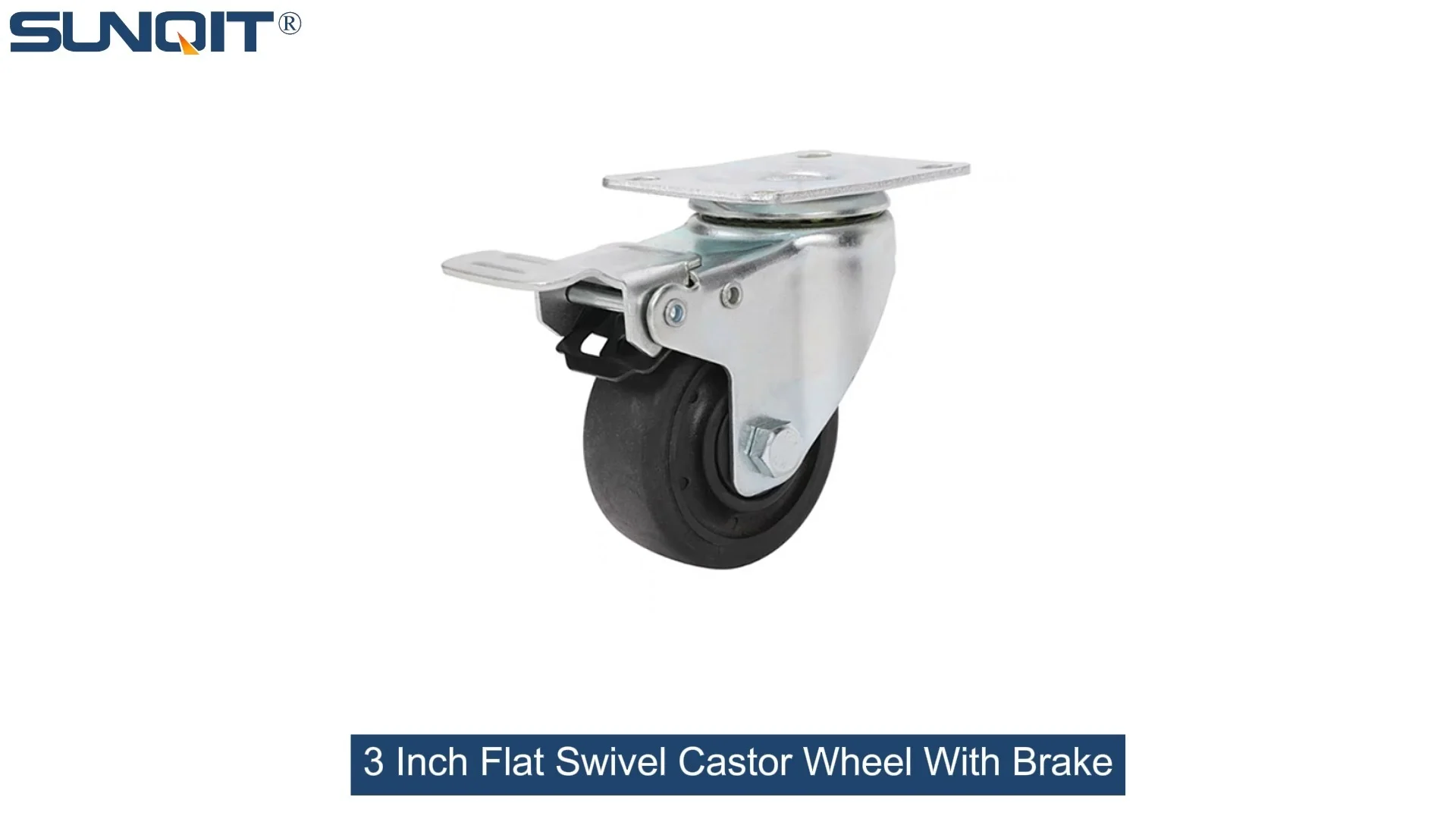
In the bustling world of workshops, factories, and warehouses, there's an unsung hero keeping operations moving smoothly: the castor wheel. From heavy-duty workbenches to nimble turnover trolleys, these small but mighty components bear the weight of efficiency, safety, and productivity. Among the many types of castors available, the flat swivel castor wheel with brake stands out for its versatility—offering 360-degree movement for easy maneuvering and a reliable brake to lock position when stability is key. But with so many options on the market, how do you choose the right one for your needs? Selecting the wrong castor can lead to frustrating jams, premature wear, or even safety hazards, which is why we're breaking down the five critical factors you need to consider. Whether you're outfitting a new production line, upgrading a material rack, or building a custom workbench, this guide will help you navigate the choices and find a castor that works as hard as your team does.
1. Load Capacity: Don't Cut Corners on Weight Limits
At the top of any castor shopping list should be load capacity —the maximum weight a single castor can safely support. This isn't just a number on a spec sheet; it's the foundation of safety and durability. Imagine a scenario where a workbench loaded with tools and materials suddenly collapses because the castors couldn't handle the weight. Not only could this damage equipment, but it could also injure someone nearby. To avoid this, start by calculating the total weight your setup will bear, then divide that by the number of castors you plan to use. Always add a 20-30% safety margin to account for uneven loading or unexpected bumps during movement.
For example, if you're building a workbench that will hold 400 lbs of tools and materials, and you're using four castors, each castor should ideally support at least 100 lbs (400 lbs ÷ 4). But with a 25% safety margin, you'd need castors rated for 125 lbs each. This ensures that even if one corner takes more weight during movement, the castors won't fail. When shopping, look for load capacity ratings clearly marked by the manufacturer—reputable suppliers (like many lean pipe supplier or caster supplier options) will provide both static load (weight when stationary) and dynamic load (weight when moving) specifications. Dynamic load is often lower, so prioritize that if your setup will be moved frequently.
Another key consideration is the type of load. Are you transporting evenly distributed weights (like boxes on a turnover trolley) or uneven, shifting loads (like machinery parts on a workbench)? Uneven loads put extra stress on individual castors, so err on the side of higher capacity in these cases. Remember: a castor that's overloaded will wear out faster, its brake may fail, and its wheel may crack or deform. Investing in a castor with the right load capacity upfront saves time, money, and headaches down the line.
2. Brake Type: Locking In Safety and Control
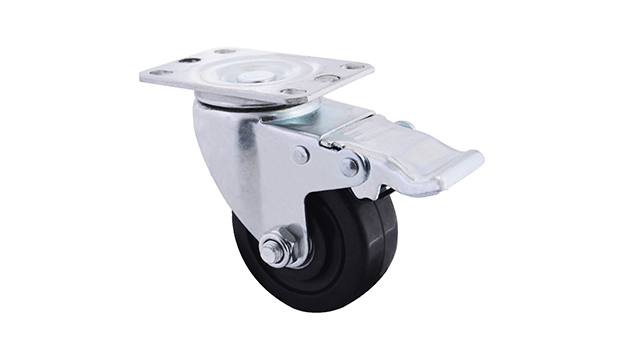
The "with brake" in "flat swivel castor wheel with brake" is non-negotiable for many applications—but not all brakes are created equal. The type of brake you choose directly impacts how easy the castor is to use and how secure your setup remains when stationary. Let's break down the most common brake types and when to use them:
| Brake Type | How It Works | Best For | Pros | Cons |
|---|---|---|---|---|
| Total Lock Brake | Locks both the wheel rotation and the swivel plate, preventing movement in all directions. | Heavy machinery, workbenches where stability is critical. | Maximum security; prevents accidental rolling or swiveling. | Requires more force to engage/disengage; bulkier design. |
| Wheel Lock Brake | Only locks the wheel rotation, allowing the swivel plate to move freely. | Light-duty trolleys, carts that need to stay in place but may be adjusted slightly. | Compact; easier to engage with a foot pedal. | Less stable—swivel plate can still turn, leading to shifting. |
| Side Lock Brake | A lever on the side of the castor presses against the wheel to stop rotation. | Low-profile setups, tight spaces where foot access is limited. | Space-saving design; works well in narrow aisles. | Harder to engage with feet; may require hand operation. |
For most industrial or workshop settings, a total lock brake is the gold standard. It's the safest option for workbenches where employees stand for hours, or for material racks loaded with heavy items. Wheel lock brakes are better suited for lighter loads or temporary stops, like a cart that's unloaded and reloaded frequently. Side lock brakes, while less common, are useful in tight spaces where a foot pedal might get in the way, such as under a low-slung conveyor.
When testing brakes, pay attention to how easily they engage and disengage. A good brake should require minimal force (a light foot tap) and should "click" firmly into place. Avoid brakes that feel loose or require excessive pressure—these are prone to slipping. Also, consider the brake's durability: if your castors will be used in dirty or dusty environments (like a factory floor), look for brakes with sealed components to prevent debris from jamming the mechanism. Many caster accessories kits include replacement brake pads or springs, so check if these are available from your supplier for easy maintenance.
3. Wheel Material: Matching the Wheel to the Floor and Environment
The wheel is the part of the castor that touches the ground, and its material determines everything from how smoothly it rolls to how long it lasts. Choosing the right wheel material depends on two main factors: the type of floor surface in your workspace and the environmental conditions (temperature, moisture, chemicals, etc.). Let's explore the most popular options:
Rubber Wheels
Rubber wheels are a go-to for indoor spaces with smooth floors (like warehouse concrete or office tile). They're quiet, shock-absorbent, and won't scratch delicate surfaces—making them ideal for workbenches in electronics assembly areas or turnover trolleys in retail settings. However, rubber is prone to wear in high-temperature environments (over 180°F) and can degrade when exposed to oils, solvents, or chemicals. If your workspace uses cleaning agents or has spill risks, opt for oil-resistant rubber or a synthetic alternative.
Polyurethane Wheels
Polyurethane (PU) wheels are a versatile middle ground: they combine the durability of plastic with the grip and quietness of rubber. PU wheels roll smoothly over rough or uneven floors (like cracked concrete in a workshop) and handle moderate chemical exposure better than rubber. They're also more resistant to abrasion, making them a good choice for high-traffic areas. One downside? They can leave marks on very smooth floors (like polished marble), so test them in a small area first if this is a concern.
Nylon Wheels
Nylon wheels are the workhorses of heavy-duty applications. They're incredibly strong, heat-resistant (up to 250°F), and unaffected by most chemicals, oils, and solvents—perfect for factories, garages, or outdoor use. Nylon wheels roll easily over rough surfaces and can handle higher load capacities than rubber or PU. The tradeoff? They're noisy on hard floors and can damage delicate surfaces (like wood or vinyl). Use them for material racks loaded with metal parts or industrial trolleys that stay in rugged environments.
Steel Wheels
Steel wheels are the toughest option, designed for extreme loads (think thousands of pounds) and harsh conditions. They're resistant to heat, chemicals, and impact, making them suitable for foundries, construction sites, or outdoor storage yards. However, steel wheels are loud, heavy, and will scratch or dent most indoor floors—so they're rarely used in standard workshops or assembly lines unless absolutely necessary.
When choosing a wheel material, also consider the wheel diameter. Larger wheels (5-6 inches) roll more easily over obstacles like cracks or thresholds, while smaller wheels (2-3 inches) are better for tight spaces. For example, a flat swivel castor wheel with brake on a low-profile workbench might use 3-inch PU wheels, while a heavy-duty turnover trolley could benefit from 5-inch nylon wheels. Always match the wheel material to your floor type and environment—ignoring this factor will lead to frequent replacements and poor performance.

4. Mounting Type: Securing the Castor to Your Setup
Even the best caster wheel is useless if it's not mounted correctly. The mounting type refers to how the castor attaches to your equipment (workbench, trolley, rack, etc.), and it directly affects stability, load distribution, and ease of installation. The two most common mounting types for flat swivel castors are plate mount and stem mount—let's compare them:
Plate Mount Castors
Plate mount castors have a flat metal plate (usually steel or aluminum) with pre-drilled holes, which bolts directly to the bottom of your equipment. This is the most popular mounting type for flat swivel castors because it offers superior stability: the plate distributes the load evenly across the equipment's frame, reducing stress on individual bolts. Plate mount castors are ideal for heavy loads, workbenches, and large trolleys where a secure, wobble-free connection is critical.
When choosing plate mount castors, pay attention to the plate size and hole pattern. The plate should be large enough to cover the equipment's base without overhanging (which can catch on obstacles), and the holes should align with the frame's existing mounting points. If your equipment doesn't have pre-drilled holes, you'll need to drill them—use a drill bit slightly smaller than the bolt diameter to ensure a tight fit. Most caster accessories kits include bolts, washers, and nuts, but always check the manufacturer's recommendations for bolt grade (e.g., Grade 5 or Grade 8) to handle the load.
Stem Mount Castors
Stem mount castors have a metal stem (threaded, smooth, or expanding) that inserts into a hole or socket on the equipment's base. They're compact and lightweight, making them a good choice for small trolleys, toolboxes, or equipment with limited mounting space. Threaded stems are the most common—they screw into a threaded hole, while expanding stems use a wedge or set screw to lock into an unthreaded socket. However, stem mount castors have lower load capacities than plate mount ones (due to the smaller contact area) and are more prone to wobbling if the stem is not properly secured.
For most industrial applications, plate mount is the way to go—especially for flat swivel castor wheel with brake setups where stability is key. If you're unsure which mounting type to choose, ask yourself: How heavy is the load? Will the equipment be moved frequently? Is there space for a mounting plate? When in doubt, consult your caster supplier —they can recommend the best option based on your specific equipment and usage.

5. Environmental Conditions: Adapting to Your Workspace
Finally, don't overlook the unique conditions of your workspace—factors like moisture, temperature, debris, and even static electricity can make or break a castor's performance. Let's break down how to adapt your choice to common environmental challenges:
Moisture and Corrosion
In damp environments (like food processing plants, car washes, or outdoor storage), rust is the enemy. Standard steel castors will corrode quickly, leading to seized swivel plates or stuck brakes. Instead, opt for castors with stainless steel frames or zinc-plated components, which resist rust and oxidation. For extreme moisture (like daily hosing or exposure to saltwater), look for sealed bearings and plastic or nylon wheels—these materials won't rust or degrade.
Dust and Debris
Workshops, woodshops, or construction sites are full of dust, sawdust, or gravel, which can clog castor bearings and jam swivel plates. To combat this, choose castors with shielded or sealed bearings (marked "double-sealed" or "TS" for "tapered shield"). These keep debris out while still allowing smooth rotation. Additionally, avoid deep-grooved wheels—they trap dirt and require frequent cleaning. Instead, opt for smooth or shallow-tread wheels that shed debris easily.
Static Electricity
In electronics manufacturing or explosive environments (like paint booths), static electricity can damage sensitive components or ignite fumes. ESD (electrostatic discharge) castors are designed to dissipate static charges safely to the ground, protecting both equipment and workers. Look for ESD-rated wheels (often made with conductive rubber or PU) and ensure the castor frame is metal (to conduct static) rather than plastic. Some esd workstation setups come pre-equipped with ESD castors, but if you're upgrading, confirm the castor's ESD rating meets industry standards (typically ≤10^9 ohms).
Temperature Extremes
Extreme heat (foundries, bakeries) or cold (freezers, outdoor winter use) can warp wheels, crack bearings, or make brakes stiff. For high temperatures, choose heat-resistant materials like nylon or steel wheels and silicone-based lubricants (which withstand up to 500°F). For cold environments, avoid rubber wheels (they become brittle below 32°F) and opt for polyurethane or cold-resistant rubber instead. Also, check that the brake mechanism is designed for low temperatures—some plastic brake components can crack in the cold.
By tailoring your castor choice to your environment, you'll ensure it lasts longer, performs better, and avoids costly downtime. Remember: a castor that works perfectly in a dry, climate-controlled workshop may fail miserably in a damp, dusty factory—so always consider your workspace's unique challenges.
Conclusion: Investing in the Right Castor for Long-Term Success
Choosing a flat swivel castor wheel with brake might seem like a small decision, but it has a big impact on your workspace's efficiency, safety, and productivity. By prioritizing load capacity, brake type, wheel material, mounting type, and environmental conditions, you'll select a castor that not only meets your needs today but stands the test of time tomorrow. Remember to buy from reputable suppliers—look for those who offer detailed specifications, warranty coverage, and caster accessories for easy maintenance (like replacement wheels or brake pads). And don't hesitate to ask for samples or test castors in your workspace before committing to a large order—this small step can save you from costly mistakes.
At the end of the day, the right castor is one that fades into the background—quietly supporting your team, streamlining your processes, and keeping your operations moving forward. So take the time to evaluate your needs, weigh your options, and invest in a castor that's as reliable as the work you do. Your back (and your bottom line) will thank you.