- Company Articles
- Products and Technology
- Procurement Guidelines
- How to Choose Aluminum Workbench B: A Buyer's Guide for Manufacturing Facilities

How to Choose Aluminum Workbench B: A Buyer's Guide for Manufacturing Facilities
Related Product
Aluminum Workbench B
Aluminum tube workbench is more flexible and durable, compared with traditional PE/ABS coated steel tube. It is easy to assemble, anti corrosion, rust protection, and recycle use after disassemble.
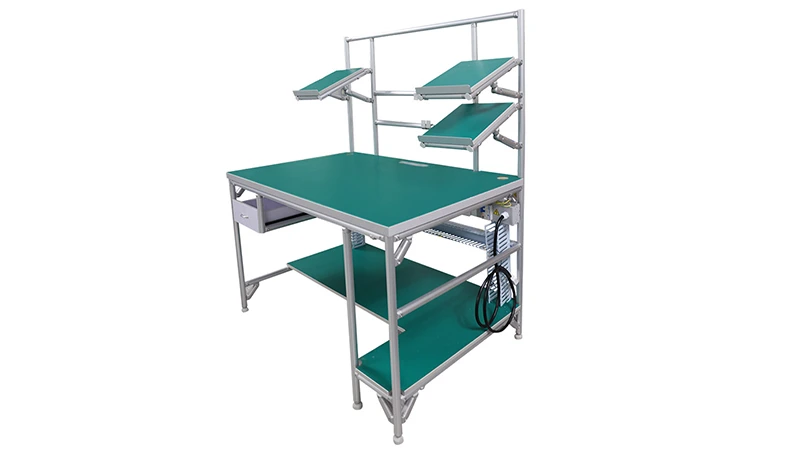
If you're running a manufacturing facility—whether it's for 3C assembly, medical device production, or automotive parts—you know how critical the right workbench is to daily operations. A good workbench doesn't just hold tools and parts; it boosts productivity, keeps your team comfortable, and adapts to changing production needs. Today, we're diving deep into Aluminum Workbench B , a popular choice among manufacturers, and how to pick the perfect version for your facility. We'll cover everything from core needs assessment to key features, industry-specific considerations, and common mistakes to avoid. Let's get started.
1. Start with Your Facility's Core Needs (Don't Skip This Step)
Before you even look at Workbench B's specs, you need to answer a few key questions about how the workbench will be used. This step saves you from buying a workbench that looks great on paper but fails to meet your team's daily needs.
1.1 What Tasks Will It Handle?
Are your team members using the workbench for precision assembly (like 3C products), heavy-duty part fitting (automotive), or packaging? For example, if you're in the 3C industry, you'll likely need a ESD workbench surface to prevent static electricity from damaging sensitive components. If it's for heavy parts, you'll need a higher load capacity. Think about the tools that will be on the bench—drills, screwdrivers, testing equipment—and how much space they take up.
1.2 Ergonomic Requirements: Keep Your Team Comfortable
Ergonomics isn't just a buzzword; it's about reducing fatigue and injury risk. Ask: What's the average height of your team members? Does the workbench need adjustable height? For standing workstations, the ideal height is usually around elbow level (80-90 cm for most adults). For sitting stations, it's lower (60-70 cm). Workbench B often comes with adjustable feet, so you can fine-tune the height to fit your team. Don't overlook this—uncomfortable workstations lead to slower work and more absences.
1.3 Load Capacity: How Much Weight Will It Hold?
Every workbench has a maximum load capacity, and exceeding it can lead to damage or safety issues. Let's break this down: If your team is placing light parts (like small 3C components) and tools, a 100-200 kg capacity might be enough. But if you're working with heavy machinery parts (automotive engines, medical equipment), you'll need 500 kg or more. Workbench B uses high-quality aluminum profile which is lightweight but strong—so it can handle heavy loads without being too hard to move (if you add casters).
1.4 Do You Need Mobility or Stability?
Will the workbench stay in one place forever, or do you need to move it between production lines? If it's permanent, fixed feet are better for stability. If you need mobility, look for Workbench B models with casters (and don't forget caster accessories like brakes to keep it steady when in use). For example, in a flexible production line, moving the workbench to a new location can help you adapt to changing order volumes quickly.
2. Key Features of Aluminum Workbench B to Evaluate
Now that you know your needs, let's look at the features of Workbench B that matter most. These features will help you narrow down your options and find the perfect fit.
2.1 Material Quality: Aluminum Profile Matters
Workbench B is made from aluminum profile, which is a great choice for manufacturing facilities. Why? Aluminum is corrosion-resistant (so it lasts longer in dusty or wet environments), lightweight (easy to move if needed), and recyclable (aligns with lean manufacturing's sustainable goals). When evaluating Workbench B, check the thickness of the aluminum profile—thicker profiles mean higher load capacity. For example, a 2.0mm thick profile can handle more weight than a 1.2mm one. Also, look for profiles with smooth edges to prevent cuts and scratches.
2.2 Work Surface Options: Pick the Right One for Your Tasks
The surface of the workbench is where all the action happens. Workbench B offers several options:
- ESD Surface: Essential for ESD workbench needs—like 3C assembly or medical device production. It dissipates static electricity to protect sensitive components from damage.
- Anti-Slip Surface: Good for heavy parts that might slide off. Useful in automotive or mechanical manufacturing.
- Heat-Resistant Surface: If your team uses hot tools (like soldering irons), this surface prevents damage to the bench.
- Standard Surface: A basic option for general tasks like packaging or sorting.
Pro tip: If you're unsure, go for an ESD surface—it's versatile and can be used in most industries where static is a risk.
2.3 Modularity & Flexibility: Adapt to Changing Needs
Lean manufacturing is all about continuous improvement, and Workbench B is designed with this in mind. It's modular, meaning you can add or remove accessories as your needs change. Common lean pipe accessories you can add to Workbench B include:
- Shelves: For storing tools or parts above the work surface.
- Drawers: To keep small parts organized and easy to access.
- Material Racks: Like Material Rack B (from the product list) to hold bins of components.
- Flow Racks: Flow rack attachments let you slide parts directly to the workbench, reducing time spent reaching for items.
This modularity means Workbench B isn't a one-time purchase—it's an investment that grows with your facility. For example, if you start with a basic Workbench B, you can later add shelves and a flow rack as your production volume increases.
2.4 Mobility & Stability: Balance Both
As we mentioned earlier, mobility is important for flexible lines. Workbench B comes in two main variants: fixed and mobile. The mobile variant uses casters (with or without brakes). Here's a quick comparison:
| Variant | Best For | Key Benefits |
|---|---|---|
| Fixed Workbench B | Permanent stations (e.g., testing lines) | Maximum stability; ideal for heavy loads |
| Mobile Workbench B (with casters) | Flexible lines (e.g., 3C assembly) | Easy to move; adapts to changing production layouts |
| Mobile Workbench B (with brake casters) | Mixed use (fixed + occasional movement) | Stable when locked; mobile when needed |
2.5 Storage Integration: Keep Everything Within Reach
A cluttered workbench slows down production. Workbench B integrates well with storage solutions to keep your space organized. For example:
- Add a Material Rack B (3 rows, 3 floors) next to the workbench to hold parts bins.
- Use a flow rack attachment to slide parts directly to the bench—this reduces the time your team spends walking to get parts.
- Install drawers under the workbench for tools and small components.
The goal is to have everything your team needs within arm's reach. This not only speeds up work but also reduces fatigue.

3. Match Workbench B to Your Industry Use Case
Workbench B is versatile, but different industries have unique needs. Let's look at how to choose Workbench B for some key industries:
3.1 3C Assembly Industry
3C assembly (computers, communication, consumer electronics) requires precision and static protection. For this industry:
- Choose an ESD workbench surface to prevent static damage to chips and components.
- Opt for a modular Workbench B with lean pipe accessories like small shelves and drawers to hold tiny parts.
- Mobile variants are great—since 3C product lines change often, you can move the workbench to new locations quickly.
Example: A 3C factory producing smartphones might use Workbench B with an ESD surface, a flow rack for parts, and casters to adapt to new model launches.
3.2 Medical Device Manufacturing
Medical device manufacturing needs sterile, easy-to-clean workstations. For this industry:
- Choose a Workbench B with a smooth, non-porous surface (like stainless steel or ESD plastic) that's easy to wipe down.
- Fixed variants are better—since medical lines are often permanent and require stability.
- Add shelves to hold sterile tools and components.
Example: A medical device factory producing syringes might use Workbench B with a stainless steel surface and fixed feet to ensure sterility and stability.
3.3 Automotive Parts Assembly
Automotive parts are heavy, so load capacity is key. For this industry:
- Choose a Workbench B with a thick aluminum profile (2.0mm or more) for high load capacity.
- Anti-slip surface to prevent heavy parts from sliding.
- Fixed variants are ideal—since automotive lines are usually permanent and need maximum stability.
Example: An automotive factory producing engine parts might use Workbench B with a 500 kg load capacity and an anti-slip surface.
3.4 Warehousing & Logistics
In warehousing, workbenches are used for sorting and packaging. For this industry:
- Mobile Workbench B with casters—since you need to move the bench to different sorting areas.
- Add a flow rack attachment to slide boxes directly to the bench.
- High load capacity to hold heavy boxes.
Example: A warehouse sorting e-commerce packages might use Workbench B with casters and a flow rack to speed up sorting.

4. Step-by-Step Buying Process for Workbench B
Now that you know what to look for, let's walk through the buying process to ensure you get the right Workbench B.
4.1 Step 1: Gather Input from Your Team
Your team uses the workbench every day—so ask them what they need. Talk to operators, supervisors, and maintenance staff. For example: Operators might say they need more storage space; supervisors might want a mobile bench for flexibility; maintenance staff might care about easy-to-replace parts.
4.2 Step 2: Choose a Reliable Supplier
A good lean pipe supplier is key to getting a high-quality Workbench B. Look for suppliers that:
- Offer custom solutions (since every facility is different).
- Have experience in your industry (e.g., 3C or medical).
- Provide after-sales support (like replacement parts or maintenance tips).
Pro tip: Ask for references from other manufacturers in your industry. A supplier with positive reviews from your peers is more likely to deliver quality products.
4.3 Step3: Request a Custom Quote
Most suppliers offer custom Workbench B configurations. When requesting a quote, provide:
- Your industry and use case.
- Load capacity needs.
- Surface type (ESD, anti-slip, etc.).
- Accessories needed (shelves, flow rack, casters).
The supplier will then provide a quote for the custom Workbench B. Don't forget to ask about lead times—you don't want to wait weeks for your workbench.
4.4 Step4: Test the Workbench (If Possible)
If the supplier is local, ask to test a sample Workbench B. This lets you see the quality firsthand and ensure it meets your needs. For example, you can test the load capacity by placing heavy parts on it, or check the ergonomics by having a team member use it for a few minutes.
4.5 Step5: Finalize the Purchase & Install
Once you're happy with the quote and sample, finalize the purchase. The supplier will deliver the Workbench B to your facility. Make sure to install it correctly—follow the supplier's instructions or ask for professional installation. After installation, train your team on how to use the workbench and its accessories (like adjusting the feet or locking the casters).
5. Common Mistakes to Avoid When Buying Workbench B
Even with the best intentions, it's easy to make mistakes when buying a workbench. Here are the top ones to avoid:
5.1 Ignoring Ergonomics
Many buyers focus on load capacity and forget about ergonomics. But an uncomfortable workbench leads to slower work and more injuries. Always consider the height and surface area of the workbench to fit your team.
5.2 Overlooking ESD Needs
If your industry uses sensitive components (like 3C or medical), an ESD workbench is a must. Skipping this can lead to static damage, which costs time and money. Don't assume a standard surface will work—always ask about ESD options.
5.3 Choosing the Wrong Load Capacity
Buying a workbench with a lower load capacity than you need is a big mistake. It can lead to damage or safety issues. Always calculate the maximum weight your team will place on the bench (tools + parts + equipment) and choose a workbench with a higher capacity.
5.4 Neglecting Modularity
Lean manufacturing requires continuous improvement. If you buy a non-modular workbench, you'll have to replace it when your needs change. Workbench B is modular—take advantage of that by choosing a version that can be upgraded later.
5.5 Forgetting After-Sales Support
What if a caster breaks or a shelf needs replacement? A good supplier will provide after-sales support (like replacement parts or maintenance). Don't choose a supplier that doesn't offer this—you'll regret it later.
6. Maintenance Tips to Extend Workbench B's Lifespan
A well-maintained Workbench B can last for years. Here are some tips to keep it in top shape:
6.1 Clean It Regularly
Wipe down the work surface every day to remove dust and dirt. For ESD surfaces, use a static-free cleaner to maintain their effectiveness. For stainless steel surfaces, use a mild detergent to avoid scratches.
6.2 Check for Loose Parts
Every month, check the bolts and joints of the workbench. Tighten any loose parts to ensure stability. This is especially important for mobile workbenches—loose casters can lead to accidents.
6.3 replace Worn Accessories
If a caster breaks or a shelf becomes wobbly, replace it immediately. A good lean pipe supplier will provide replacement parts for Workbench B. Don't wait until the problem gets worse—fix it right away.
6.4 Store It Properly (If Not In Use)
If you're not using the workbench for a long time, store it in a dry, clean area. Cover it with a cloth to prevent dust from accumulating. This will keep it in good shape for when you need it again.
Conclusion: Workbench B Is an Investment in Your Facility's Future
Choosing the right Aluminum Workbench B isn't just about buying a piece of equipment—it's about investing in your facility's productivity, ergonomics, and flexibility. By following this guide, you'll be able to pick a Workbench B that meets your needs today and adapts to your future goals. Remember to start with your core needs, evaluate key features (like material quality and modularity), match it to your industry, and avoid common mistakes. And don't forget to choose a reliable lean pipe supplier that offers custom solutions and after-sales support. With the right Workbench B, your team will work faster, safer, and more efficiently—helping your facility grow and succeed.