- Company Articles
- Products and Technology
- Procurement Guidelines
- How to Choose Between Aluminum Workbench A and Custom-Built Workbenches

How to Choose Between Aluminum Workbench A and Custom-Built Workbenches
Related Product
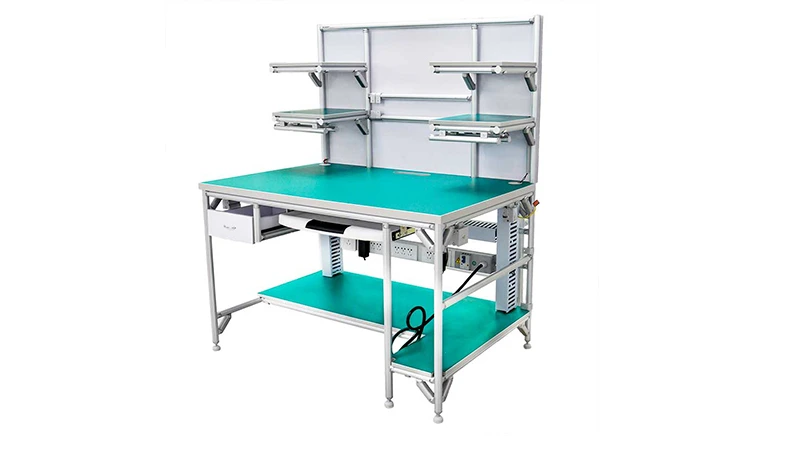
Aluminum Workbench A
Aluminum tube workbench is more flexible and durable, compared with traditional PE/ABS coated steel tube. It is easy to assemble, anti corrosion, rust protection, and recycle use after disassemble.
Let's start with a simple truth: your workbench isn't just a table. It's the command center of your daily operations—the place where parts get assembled, experiments get conducted, tools get organized, and deadlines get met. Whether you're running a small electronics shop, a bustling manufacturing floor, a research lab, or even a home garage turned workshop, the right workbench can mean the difference between smooth, efficient days and frustrating, disjointed ones. But with so many options out there, how do you decide? Today, we're diving deep into two popular choices: the tried-and-true Aluminum Workbench A and the tailor-made custom-built workbench. By the end, you'll have a clear roadmap to pick the one that fits your needs like a glove.
First Up: What Exactly Is Aluminum Workbench A?
If you've ever shopped for workbenches, you've probably come across pre-engineered, "off-the-shelf" models. Aluminum Workbench A is one of those—designed as a standardized solution by suppliers who specialize in lean manufacturing and industrial furniture. Think of it as the "ready-to-wear" of workbenches: built to meet common needs, mass-produced for consistency, and ready to ship (or assemble) in days, not weeks. But don't let "standardized" fool you—this workbench has a lot to offer, especially if your needs align with its strengths.
Breaking Down Its Key Features
Let's start with the basics: what makes Aluminum Workbench A tick? At its core, it's built around aluminum profile —that sleek, lightweight, and surprisingly sturdy material you've seen in everything from office furniture to industrial frames. The frame is constructed from extruded aluminum profiles, which are not only corrosion-resistant (great for humid or messy environments) but also easy to clean. The top deck? Typically a solid surface, often made of plywood, MDF, or even ESD (Electrostatic Discharge) laminate for industries like electronics assembly. And yes, if you need ESD protection, many suppliers offer this as an add-on—more on that later.
Dimension-wise, Aluminum Workbench A follows standard sizing. Most models come in widths like 1200mm or 1500mm, depths around 600mm or 800mm, and heights set to ergonomic standards (usually 750mm, though some are adjustable). It's a "single deck" design, meaning no shelves or drawers built-in—just a flat workspace on top. Oh, and unlike some mobile workbenches, it doesn't come with casters by default (though you can often buy them separately and attach them if needed). This simplicity is part of its charm: it's a blank canvas, ready to be paired with tools, bins, or shelves based on what you need that day.
What Makes It Stand Out? The Pros of Aluminum Workbench A
So, why would someone choose Aluminum Workbench A over other options? Let's break down the benefits:
1. It's Ready When You Are
Time is money, right? If you need a workbench yesterday —maybe your old one broke, or you're setting up a new workspace on a tight timeline—Aluminum Workbench A is a lifesaver. Since it's pre-designed and mass-produced, suppliers keep it in stock. Order today, and it could be at your door in a week (or even faster if you're local). No waiting for custom designs, material sourcing, or production delays.
2. Budget-Friendly (Without Cutting Corners)
Custom anything tends to cost more, and workbenches are no exception. Aluminum Workbench A, being a standardized product, skips the design fees, custom tooling, and small-batch production costs that drive up prices. This makes it ideal for small businesses, startups, or hobbyists who need quality without breaking the bank. And don't mistake "affordable" for "flimsy"—the aluminum profile frame can easily support 200-300kg, depending on the model, which is more than enough for most daily tasks (think power tools, heavy parts bins, or lab equipment).
3. Easy to Assemble (No Expertise Required)
Ever tried putting together furniture that came with a 50-page manual and 100 tiny screws? Not fun. Aluminum Workbench A, though, is designed for simplicity. Most models use aluminum pipe accessories like T-slot nuts, bolts, and brackets that slide into the aluminum profile's grooves. You'll need a hex key (Allen wrench) and maybe a rubber mallet, but that's it. No welding, no drilling, no calling in a handyman. Even if you're not "handy," you can have it up and running in an hour or two.
4. Consistent Quality, Every Time
When you buy a custom workbench, the final product depends a lot on the supplier's craftsmanship that day. With Aluminum Workbench A, you're getting a product that's been tested, refined, and produced to strict standards. Suppliers like to brag about their quality control—since they make hundreds (or thousands) of these, they've ironed out the kinks. That means fewer wobbles, fewer loose parts, and a workbench that behaves exactly as you'd expect.
But It's Not Perfect: The Cons to Consider
Of course, no product is one-size-fits-all. Aluminum Workbench A has its limitations:
1. Limited Customization
Standardized means… well, standard. If you need a workbench that's extra-wide, extra-tall, or has weird angles to fit into a tight corner, Aluminum Workbench A might not cut it. Want built-in drawers, a split-level top, or a specialized clamp system? You'll either have to add those as aftermarket accessories (which can get pricey) or look elsewhere.
2. Material Lock-In
Aluminum is great, but what if you need something heavier-duty, like stainless steel, for a food processing or medical environment? Or maybe wood for a workshop that needs that classic, sturdy feel? Aluminum Workbench A is, as the name suggests, aluminum-only. No swapping materials here.
3. Less Ergonomic Flexibility
While the standard height works for most people, if your team has members with specific ergonomic needs (e.g., taller or shorter than average), a fixed-height workbench might lead to discomfort over time. Some models offer height adjustability, but it's often limited compared to custom options.
Who Should Choose Aluminum Workbench A?
Aluminum Workbench A shines in scenarios where speed, budget, and simplicity are priorities. Think:
- Small businesses or startups that need to set up a workspace quickly without a big upfront investment.
- Workshops with standard tasks (e.g., basic assembly, tool storage, packaging) where a flat, sturdy surface is all you need.
- Teams that value consistency —if you need 5 identical workbenches for a production line, Aluminum Workbench A ensures everyone has the same setup.
- Environments where corrosion resistance matters (e.g., garages, labs, or coastal areas) thanks to the aluminum frame.
On the Flip Side: Custom-Built Workbenches
Now, let's talk about the other end of the spectrum: custom-built workbenches. These are the "bespoke suits" of the workbench world—designed from the ground up to fit your exact needs, no compromises. Instead of picking a pre-made model, you work with a supplier (often a lean system supplier or industrial furniture manufacturer) to design something that checks every box on your list. It's more involved, but for the right situation, it's worth every penny.
What Goes Into a Custom Workbench? The Design Process
Custom doesn't just mean "bigger" or "fancier"—it means tailored to your workflow. Let's walk through how it typically works. First, you'll sit down with the supplier to talk about your needs: What tasks will the workbench be used for? How much weight does it need to hold? Are there space constraints (e.g., a narrow aisle, low ceilings)? Do you need special features like ESD protection, tool rails, or integrated lighting? Even details like the color (to match your brand!) or the type of edge (rounded for safety, square for clamping) get discussed.
From there, the supplier will create CAD drawings or 3D models for you to review. You'll tweak the design—maybe add a shelf here, adjust the height there—until it's just right. Then, they'll source materials (aluminum, steel, wood, ESD composites, etc.), build it, and deliver it. Depending on complexity, this can take 4-8 weeks, but the result is a workbench that feels like it was made for you .
The Pros: Why Go Custom?
Custom-built workbenches solve problems that off-the-shelf models can't. Here's why they're worth considering:
1. It's Built for Your Exact Workflow
Imagine you run a small electronics assembly line. You need a workbench with a lower shelf for bins of components, a raised back rail for tools, and an ESD top to protect sensitive circuit boards. A custom workbench can integrate all of that—no jury-rigging with aftermarket parts. Or maybe you're a woodworker who needs a bench with a built-in vice, a tool tray, and a height that matches your standing desk. Custom lets you design around how you work , not the other way around.
2. Material Freedom
Unlike Aluminum Workbench A, custom workbenches let you pick materials based on your environment. Need stainless steel for a lab that uses harsh chemicals? No problem. Prefer solid oak for a workshop that values durability and aesthetics? Done. Even mixed materials—like an aluminum frame with a wooden top—are on the table.
3. Ergonomics That Keep Your Team Happy
Discomfort leads to fatigue, which leads to mistakes. Custom workbenches can be built to your team's exact measurements: adjustable height (manual or electric), angled tops to reduce wrist strain, or even split-level surfaces for multi-step tasks. This isn't just about comfort—it's about productivity and reducing injuries.
4. Future-Proofing Your Space
Maybe today you need a simple workbench, but next year you're adding a conveyor system or expanding your team. Custom designs can account for growth—adding T-slots for future accessories, reinforcing the frame for heavier loads, or making it modular so you can add sections later. It's an investment in your workspace's long-term flexibility.
The Cons: When Custom Might Not Be Right
Custom sounds great, but it's not for everyone. Here's what to watch out for:
1. Higher Cost (and Longer Lead Time)
Designing, prototyping, and building a custom workbench takes time and labor—both of which add up. You'll pay more upfront, and you'll wait longer (sometimes months) to get it. If you need a workbench ASAP, custom might not be feasible.
2. Risk of Miscommunication
Even with the best CAD drawings, there's room for misunderstanding. Maybe you thought "heavy-duty" meant 500kg capacity, but the supplier thought 300kg. Or the color isn't quite what you imagined. Fixing these issues can delay delivery and add costs.
3. Over-Engineering Temptation
It's easy to get carried away with features: "While we're at it, let's add a built-in USB charger, a whiteboard, and a mini-fridge!" But every extra feature adds cost and complexity. You might end up with a workbench that's more than you need (and more than you can afford).
Who Should Choose a Custom Workbench?
Custom is ideal when your needs are specific and non-negotiable. Think:
- Specialized industries (electronics, medical, aerospace) that need ESD protection, cleanroom compatibility, or strict material standards.
- Workflows with unique demands (e.g., heavy machinery repair, custom fabrication) where a standard workbench would slow you down.
- Teams with ergonomic requirements (e.g., tall workers, people with disabilities) where comfort and safety are top priorities.
- Businesses planning for growth that want a workbench that can adapt to future needs.

Aluminum Workbench A vs. Custom-Built: A Side-by-Side Breakdown
Still on the fence? Let's put them head-to-head. The table below compares key factors to help you decide:
| Factor | Aluminum Workbench A | Custom-Built Workbench |
|---|---|---|
| Cost | Lower upfront cost ($200–$800, depending on size) | Higher upfront cost ($800–$3,000+) |
| Lead Time | Fast (1–2 weeks) | Slow (4–8 weeks, sometimes longer) |
| Customization | Limited (standard size, minimal features) | Unlimited (size, materials, features, ergonomics) |
| Material Options | Aluminum only | Aluminum, steel, wood, ESD composites, etc. |
| Assembly Difficulty | Easy (DIY, 1–2 hours) | Professional installation (supplier handles it) |
| ESD Compatibility | Optional (add-on top deck) | Fully integrated (custom ESD materials, grounding) |
| Lean System Fit | Good (standardized, easy to integrate into existing setups) | Excellent (designed to optimize your specific workflow) |
| Pros | Fast, affordable, consistent, easy to replace | Tailored to your needs, ergonomic, adaptable, high-quality |
| Cons | Limited features, fixed size/materials, less ergonomic flexibility | Expensive, time-consuming, risk of over-engineering |

How to Decide: 5 Questions to Ask Yourself
Still not sure which is right for you? Let's narrow it down with these key questions:
1. What's My Timeline?
If you need a workbench in the next two weeks, Aluminum Workbench A is your best bet. If you can wait 4-8 weeks (and have the budget), custom is an option. Pro tip: Even with custom, build in extra time for revisions—delays happen!
2. What's My Budget?
Set a hard number before you start shopping. If you're working with $500 or less, Aluminum Workbench A is the way to go. If you can spend $1,000 or more, custom becomes feasible. Remember: custom might save you money in the long run if it prevents workflow inefficiencies.
3. What Features Can't I Live Without?
Make a list of "must-haves" vs. "nice-to-haves." Must-haves might include ESD protection, a weight capacity of 500kg, or a specific height. Nice-to-haves could be a tool rail or extra shelves. If your must-haves can't be met by Aluminum Workbench A, custom is the answer.
4. How Will This Workbench Fit Into My Workflow?
Watch your team work for a day. Do they struggle with limited space? Are they bending or reaching awkwardly? Do they waste time searching for tools? If the answer is "yes," a custom workbench designed around their habits could boost productivity. If they're already efficient with a basic setup, Aluminum Workbench A might be enough.
5. What's My Long-Term Plan?
Are you expanding your team next year? Adding new equipment? Moving to a bigger space? Custom workbenches can grow with you, while Aluminum Workbench A is easier to replace if your needs change. Think about whether this workbench is a temporary fix or a long-term investment.
Real-World Stories: How Others Chose
Sometimes, hearing from others helps. Let's look at two businesses that faced this decision—and how it worked out.
Case Study 1: Small Electronics Shop Chooses Aluminum Workbench A
Maria runs a small electronics repair shop with 3 employees. She needed workbenches quickly—her old ones were wobbly, and she was expanding from 2 to 3 workstations. Her budget was tight ($1,500 total), and her needs were simple: a flat surface, enough space for laptops and tools, and something easy to clean. She considered custom but didn't want to wait 6 weeks or pay $800+ per bench.
She went with Aluminum Workbench A. For $600 per bench, she got sturdy aluminum frames, ESD laminate tops (to protect sensitive components), and easy assembly. "They were up in an hour, and my team loves them," she says. "We added aftermarket tool rails and bins, and they work perfectly. If we grow again, I can just buy another one—no hassle."
Case Study 2: Medical Device Manufacturer Chooses Custom
Jake's company makes custom medical devices—small, precise tools used in surgeries. His team needed workbenches that could hold heavy microscopes, had built-in drawers for tiny parts, and were ESD-safe (to avoid damaging delicate electronics). They also needed to fit into a narrow lab space with limited aisle room.
Aluminum Workbench A was too wide, and the standard height was too low for the microscopes. Jake worked with a custom supplier to design benches that were 20% narrower, 10cm taller, and had drawers with dividers sized for their parts. They added ESD grounding straps and integrated lighting. It cost $2,500 per bench (3 benches total), and took 5 weeks, but Jake says it was worth it. "The workflow is so much smoother now. We're faster, and we've had zero ESD-related damage since we switched."
Final Thoughts: It's About What Works for You
At the end of the day, there's no "better" option—only the better option for your needs. Aluminum Workbench A is a reliable, affordable workhorse for standard setups and tight timelines. Custom-built workbenches are a premium choice for specialized workflows, ergonomic needs, or long-term growth.
Remember: your workbench is the foundation of your daily operations. Take the time to assess your needs, budget, and timeline. Talk to suppliers—most will offer free consultations to help you decide. And don't be afraid to mix and match: maybe start with one custom workbench for your most critical workflow and Aluminum Workbench A for the rest. Whatever you choose, make sure it's something that makes your team's day easier, safer, and more productive. After all, a happy team is a productive team—and a great workbench is the first step.