- Company Articles
- Products and Technology
- Product knowledge
- How to Choose Castor Installation Base Load Capacity for Heavy-Duty Material Racks

How to Choose Castor Installation Base Load Capacity for Heavy-Duty Material Racks
Related Product
Castor Installation Base
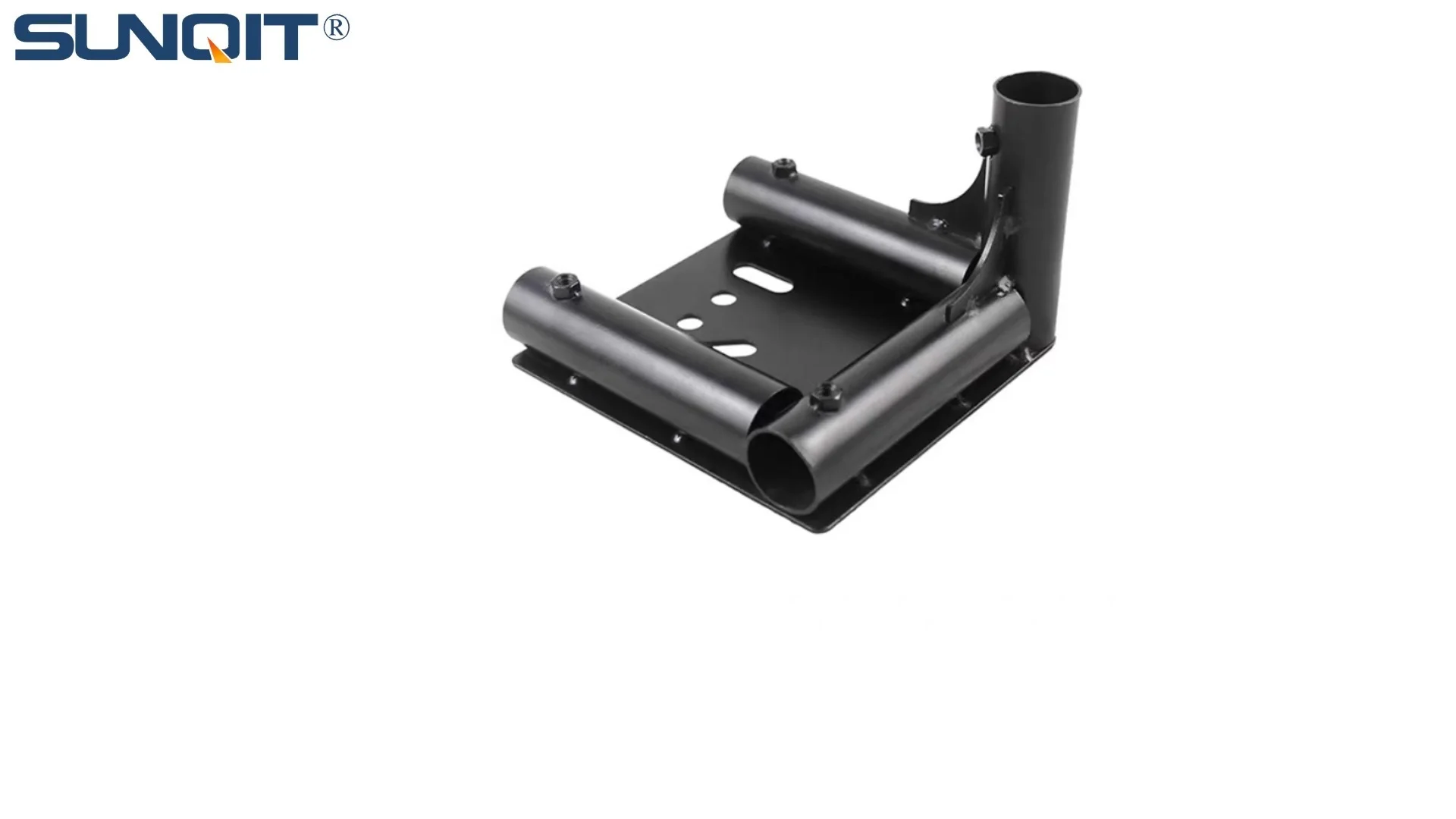
Pipe fitting castor installation base,Well made, precise and strong. Made of high quality of steel,black painting surface treatment for greater resistance to corrosion. It is used for castor or foot lever connection with lean pipe.
In the bustling world of warehouses, manufacturing plants, and distribution centers, heavy-duty material racks are the unsung heroes that keep operations running smoothly. These sturdy structures hold everything from raw materials to finished products, ensuring easy access and efficient storage. But what makes these racks truly versatile? Often, it's their mobility—and that mobility hinges on one critical component: the castor installation base. This unassuming part connects the rack to its casters, bearing the brunt of the weight and ensuring safe, stable movement across factory floors. Choosing the right load capacity for your castor installation base isn't just a matter of checking a box on a; it's a decision that impacts workplace safety, operational efficiency, and even long-term cost savings. In this guide, we'll walk through everything you need to know to make that choice with confidence, from understanding load ratings to avoiding common pitfalls.
What Is a Castor Installation Base, and Why Does It Matter?
Before diving into load capacity, let's clarify what a castor installation base actually is. Think of it as the bridge between your material rack and its casters. Typically made from robust materials like steel or aluminum, this base is bolted or welded to the bottom of the rack, providing a stable platform to attach casters (the wheels that allow movement). Without a reliable base, even the highest-quality casters won't perform—imagine trying to drive a car with a cracked axle. The base distributes the rack's weight evenly across the casters, prevents bending or warping under heavy loads, and ensures that the rack moves smoothly without tipping or wobbling.
But why focus so much on load capacity specifically? Because every material rack has a maximum weight it's designed to hold, and the castor installation base must match or exceed that weight to keep the entire system safe. A base with insufficient load capacity can bend, crack, or even snap under pressure, leading to collapsed racks, damaged inventory, and worst of all, workplace injuries. On the flip side, overestimating load capacity might mean spending more than necessary on an overly heavy-duty base, increasing costs and adding unnecessary weight to the rack (which can make movement harder). Striking the right balance is key.
Understanding Load Capacity Ratings: Static vs. Dynamic
When shopping for a castor installation base, you'll often see two types of load ratings: static and dynamic. Let's break them down:
- Static Load Capacity: This refers to the maximum weight the base can support when the rack is stationary. Think of a fully loaded material rack sitting in one spot overnight—this is the static load. Manufacturers test this by applying weight gradually and measuring how much the base deforms; a good base should show minimal bending under its rated static load.
- Dynamic Load Capacity: This is the maximum weight the base can handle when the rack is in motion. Moving a loaded rack introduces additional forces: starting and stopping (which create inertia), uneven floors (which cause), and turns (which shift weight to one side). Dynamic load capacity is always lower than static load capacity because these forces put extra stress on the base. For example, a base rated for 1,000 kg static load might only handle 750 kg dynamically.
It's critical to prioritize dynamic load capacity for mobile racks, as most heavy-duty material racks spend at least part of their day being moved. Even if your rack sits still most of the time, factor in occasional movement—like when reorganizing the warehouse or transporting materials to the production line.

Key Factors That Influence Load Capacity Needs
Calculating the right load capacity isn't a one-size-fits-all process. It depends on several variables specific to your operation. Let's walk through the most important ones:
1. The Weight of the Material Rack Itself
Start with the basics: how much does your empty rack weigh? This includes the frame, shelves, and any built-in features like side rails or dividers. For example, a steel "material rack b (3 row and 3 floor)"—a common heavy-duty model with three rows and three shelves—might weigh 150 kg empty. Don't skip this step! Even an empty rack can strain a base if it's unusually heavy.
2. The Weight of the Materials You'll Store
Next, estimate the maximum weight of the materials you'll put on the rack. This is where things get tricky, because loads can vary day to day. To be safe, calculate for the heaviest possible scenario . If you're storing automotive parts, for instance, and each shelf holds 10 boxes weighing 25 kg each, a 3-shelf rack would carry 750 kg of materials. Add that to the rack's empty weight (150 kg), and you're already at 900 kg total. Remember: it's better to overestimate here than to risk undercapacity.
3. The Number of Casters on the Rack
The more casters your rack has, the more the load is distributed—and the lower the load per caster (and thus per base). Most mobile racks use 4 casters (one at each corner), but larger racks might have 6 or 8 for extra stability. For a 4-caster rack, the total load (rack + materials) is divided by 4 to get the load per caster. Using our earlier example: 900 kg total ÷ 4 casters = 225 kg per caster. Your castor installation base must be rated to handle at least this per-caster load, plus a safety margin.
4. Floor Conditions and Movement Frequency
Smooth concrete floors are easier on casters and bases than uneven or cracked surfaces. If your facility has rough terrain, you'll need a higher dynamic load capacity to account for the extra stress of. Similarly, if the rack is moved frequently (multiple times per day), the base will endure more wear and tear than one that's moved once a week. In high-traffic areas, opt for a base with a dynamic load rating 20-30% higher than your calculated needs.
5. Environmental Factors
Extreme temperatures, moisture, or chemicals can weaken materials over time. For example, a steel base used in a humid warehouse might rust if not coated, reducing its load-bearing capacity. If your facility has harsh conditions, choose a base made from corrosion-resistant materials (like stainless steel) or treated with protective coatings. This ensures the base maintains its strength for years.

Types of Castor Installation Bases and Their Load Capacities
Castor installation bases come in several designs, each suited to different load ranges and applications. Below is a breakdown of the most common types, their typical load capacities, and when to use them:
| Base Type | Material | Max Static Load (kg) | Max Dynamic Load (kg) | Best For | Key Features |
|---|---|---|---|---|---|
| Fixed Plate Base | Carbon Steel | 500-1,500 | 300-1,000 | Light to medium-duty racks, smooth floors | Flat steel plate with pre-drilled holes for easy caster attachment; budget-friendly |
| Heavy Duty Split Foot Seat | High-Grade Steel | 1,500-3,000 | 1,000-2,000 | Heavy-duty racks like "material rack b", uneven floors | Split design distributes weight across two points; reinforced with gussets to prevent bending |
| Welded Steel Base | Stainless Steel | 2,000-5,000 | 1,500-3,500 | Ultra-heavy loads (e.g., industrial machinery parts) | Welded construction for maximum strength; resistant to corrosion |
| Aluminum Alloy Base | Aluminum | 300-800 | 200-500 | Lightweight racks, cleanrooms, or food processing facilities | Lightweight yet durable; resistant to rust and easy to clean |
For most heavy-duty applications—especially those involving "material rack b (3 row and 3 floor)" or similar models—the "heavy duty split foot seat" is a top choice. Its split design and reinforced steel construction make it ideal for uneven loads and rough floors, common in manufacturing settings.

Step-by-Step: Calculating Your Exact Load Requirement
Now that you understand the factors at play, let's put it all together with a step-by-step calculation. We'll use a "material rack b (3 row and 3 floor)" as an example to make it concrete:
- Weigh the empty rack: Let's say our "material rack b" weighs 150 kg empty.
- Estimate maximum material weight: Each of the 3 shelves holds 8 boxes of metal components, with each box weighing 30 kg. Total material weight = 3 shelves × 8 boxes × 30 kg = 720 kg.
- Add empty rack weight to material weight: 150 kg (rack) + 720 kg (materials) = 870 kg (total loaded weight).
- Divide by the number of casters: The rack has 4 casters, so 870 kg ÷ 4 = 217.5 kg per caster.
- Add a safety margin: To account for dynamic forces (movement, uneven floors), multiply by 1.3 (a 30% buffer). 217.5 kg × 1.3 = 282.75 kg per caster.
Result: You need a castor installation base with a dynamic load capacity of at least 283 kg per caster. Looking back at our table, a "heavy duty split foot seat" with a dynamic load of 1,000 kg (for 4 casters, that's 250 kg per caster) might be close, but to hit 283 kg per caster, you'd need a base rated for 1,132 kg total dynamic load (283 kg × 4). In this case, opt for a heavy duty split foot seat with a 1,200 kg dynamic load rating to be safe.
Common Mistakes to Avoid
Even with careful calculations, it's easy to slip up. Here are the most common mistakes we see—and how to steer clear of them:
Mistake 1: Underestimating the "Worst-Case" Load
Many teams calculate for their average load instead of the maximum. But if you occasionally store heavier items (e.g., during peak seasons), your base could fail when you need it most. Always plan for the heaviest possible scenario.
Mistake 2: Ignoring "Caster Accessories"
Caster accessories like brakes, locks, or swivel locks add extra weight to the base. A brake mechanism, for example, might weigh 2 kg per caster. For 4 casters, that's 8 kg added to the total load. It's a small number, but over time, it can contribute to wear and tear.
Mistake 3: Choosing Based on Price Alone
It's tempting to go with the cheapest base, but low-cost models often cut corners on material thickness or welding quality. A $50 base might save money upfront, but replacing it after a year (or paying for damages from a collapse) will cost far more.
Mistake 4: Forgetting to Check Floor Ratings
Even the strongest base can't compensate for weak floors. If your warehouse has a floor load limit (e.g., 500 kg per square meter), ensure your rack's total weight (including the base and casters) doesn't exceed it. Otherwise, you risk damaging the floor itself.
Case Study: How One Manufacturer Fixed Their Load Capacity Issues
Let's look at a real-world example (with details changed for privacy) of how choosing the right castor installation base transformed an operation. A mid-sized automotive parts manufacturer was using "material rack b (3 row and 3 floor)" units with standard fixed plate bases rated for 500 kg dynamic load. They stored heavy engine components, with each rack holding roughly 800 kg of materials. After a few months, workers noticed the racks wobbled when moved, and one base even cracked, causing a shelf to tilt and spill parts.
An inspection revealed the problem: the fixed plate bases were undersized. The total loaded weight (150 kg rack + 800 kg materials = 950 kg) divided by 4 casters came to 237.5 kg per caster—far exceeding the base's 125 kg per caster dynamic rating (500 kg total ÷ 4). The solution? Switching to "heavy duty split foot seat" bases with a 1,200 kg dynamic load rating (300 kg per caster). After the upgrade, the racks moved smoothly, no more wobbling, and there were zero incidents in the following year. The manufacturer also reported fewer worker complaints about strain, as the sturdier bases made pushing the racks easier—an unexpected bonus for ergonomics.
Maintenance Tips to Keep Your Castor Installation Base Performing
Choosing the right base is just the first step. To ensure it lasts, follow these maintenance tips:
- Inspect monthly: Check for cracks, bent plates, or loose bolts. Tighten any bolts that have come loose—vibration from movement can loosen them over time.
- Clean regularly: Wipe away dirt, oil, or debris that could corrode the base. For steel bases, apply a rust-resistant spray if you work in a humid environment.
- replace worn "caster accessories": If brakes or locks start to stick, replace them promptly. A stuck brake can put uneven stress on the base.
- Lubricate moving parts: Casters need lubrication to roll smoothly, but don't forget the base's connection points. A little grease on bolts or welded joints prevents rust and keeps the base flexible.
Conclusion: Invest in Safety and Efficiency
Choosing the right castor installation base load capacity for your heavy-duty material racks isn't just about avoiding accidents—it's about building a more efficient, reliable operation. By taking the time to calculate your needs, understand load ratings, and select a high-quality base (like the "heavy duty split foot seat" for demanding applications), you'll ensure your racks move safely, last longer, and support your team's productivity for years to come. Remember: when it comes to material handling, the base might be out of sight, but it should never be out of mind.