- Company Articles
- Products and Technology
- Product knowledge
- How to Choose Fasteners for 4040A EU Standard Aluminum Profile Assemblies

How to Choose Fasteners for 4040A EU Standard Aluminum Profile Assemblies
Related Product
4040A EU Standard Aluminum Profile
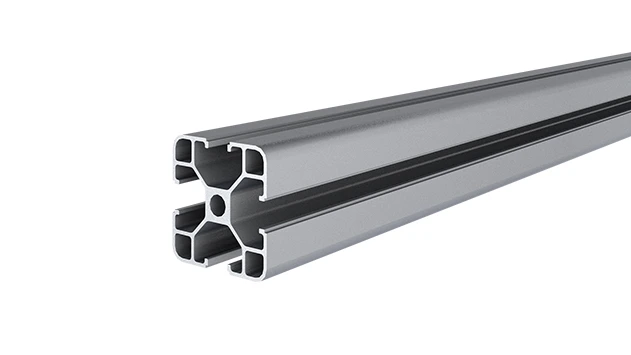
4040A is a 4.00x4.00 CM fractional 40 series square extrusion T-slot profile with four open T-slots, each side with 4.00cm face.
Walk into any modern manufacturing facility, warehouse, or workshop, and you'll likely spot them: sleek, modular structures made from silver or black aluminum profiles. These aren't just metal bars—they're the backbone of everything from workbenches and material racks to conveyor systems and production lines. Among the most popular profiles in industrial settings is the 4040A EU standard aluminum profile, prized for its versatility, strength, and compatibility with a wide range of accessories. But here's the thing: even the sturdiest 4040A profile is only as reliable as the fasteners holding it together. Choose the wrong ones, and you could end up with wobbly workbenches, unstable racks, or worse—safety hazards that grind operations to a halt. So, how do you pick the right fasteners for your 4040A assemblies? Let's break it down, step by step.
Why Fasteners Matter More Than You Think
Before diving into the specifics, let's talk about why fasteners deserve your attention. Aluminum profiles like the 4040A are designed to be modular—meaning you can configure them into almost any shape or structure by connecting lengths, adding panels, or attaching accessories. Fasteners are the glue that makes this modularity possible. They're not just about "holding parts together"; they determine how much weight your structure can bear, how easy it is to assemble (and reconfigure), and how well it stands up to daily wear and tear.
Think about a typical scenario: A small electronics manufacturer uses 4040A profiles to build a workbench for assembling circuit boards. If the fasteners connecting the profile legs to the tabletop are too weak, the bench might sag under the weight of tools and components. If the end caps are flimsy, sharp edges could scratch workers or damage sensitive parts. Even something as small as a T-slot rubber seal cover—often overlooked—plays a role: it keeps dust and debris out of the profile's T-slots, ensuring that future adjustments (like adding a shelf or tool holder) don't get jammed up.
In short, fasteners are the unsung heroes of aluminum profile assemblies. Choosing them wisely isn't just about avoiding frustration—it's about building structures that are safe, efficient, and built to last.
Understanding the 4040A EU Standard Aluminum Profile
To choose the right fasteners, you first need to understand the profile they'll be securing. The 4040A is part of the EU standard aluminum extrusion profile family, named for its dimensions: 40mm in width and 40mm in height. What makes it unique is its T-slot design—longitudinal grooves (or "slots") running along its length that allow accessories like fasteners, brackets, and panels to be attached without drilling or welding. The "A" in 4040A refers to the slot configuration: typically, it has two T-slots on each side, spaced evenly, which provides flexibility for mounting accessories at different points.
The T-slots are the key here. They're not just indentations; they're precision-engineered channels with specific dimensions (usually 8mm or 10mm wide, depending on the profile series) that accommodate matching fasteners. This means that any fastener you choose for a 4040A profile must be compatible with these T-slots. Ignore this, and you'll end up with fasteners that either slip, strip the slots, or can't even be inserted in the first place.
Real-World Example: A furniture manufacturer once tried using generic hex bolts with washers to attach a wooden top to a 4040A workbench frame. The bolts didn't fit the T-slots properly, so they drilled holes through the profiles to secure them. Not only did this weaken the profiles, but when they later wanted to reposition the top, they were stuck with permanent holes. Moral of the story: Always use fasteners designed for the 4040A's T-slot system.

Types of Fasteners for 4040A Profiles: A Closer Look
Now, let's get into the nitty-gritty: the fasteners themselves. There's no one-size-fits-all here—different projects call for different types. Below are the most common fasteners you'll encounter, along with when and why to use them.
1. T-Slot Nuts and Bolts: The Workhorses
If there's a "default" fastener for aluminum profiles, it's the T-slot nut and bolt combo. T-slot nuts are designed to slide into the T-slots of the 4040A profile, where they lock into place once a bolt is tightened. They come in various styles: square nuts (which stay put once inserted), floating nuts (which can slide along the slot for precise positioning), and ball-lock nuts (which lock automatically when the bolt is tightened, ideal for quick assembly).
Pair these nuts with bolts—usually hex bolts, socket head cap screws, or button head screws—and you've got a secure connection for everything from attaching panels to mounting shelves. The key here is matching the nut size to the T-slot width of your 4040A profile. Most 4040A profiles have 8mm T-slots, so aim for M5 or M6 T-slot nuts (the "M" stands for metric, followed by the diameter in millimeters). Using a nut that's too wide will damage the slot; too narrow, and it'll wobble.
2. Aluminum Profile Connectors: For Angled Joints
When you need to connect two 4040A profiles at an angle—say, building the corner of a workbench or a right-angled rack—aluminum profile connectors are your best bet. These are pre-made, often L-shaped or T-shaped pieces that fit into the ends or sides of profiles, creating strong, rigid joints without the need for drilling. The 90° aluminum profile connector is the most common, used for joining profiles at a right angle, but you'll also find 45°, 135°, and even 180° connectors for straight-line extensions.
What makes these connectors reliable is their design: they're usually made from die-cast aluminum or steel, with pre-drilled holes that align with the T-slots of the 4040A profile. insert a T-slot nut into the profile, line up the connector, and tighten a bolt through the connector's hole into the nut—that's it. Unlike generic angle brackets, these connectors are engineered specifically for aluminum profiles, so they distribute weight evenly and reduce stress on the T-slots.
3. End Caps: Finishing Touches with a Purpose
At first glance, end caps might seem like purely cosmetic—they cover the open ends of 4040A profiles, giving structures a clean, professional look. But they're far more functional than that. Uncapped profile ends are sharp, which can scratch workers or snag clothing. They also collect dust, dirt, and debris, which can gum up T-slots over time, making it hard to insert or adjust fasteners later.
The 4040 aluminum profile end cap is designed to snap or press-fit into the end of a 4040A profile, creating a smooth, safe finish. Look for end caps made from durable plastic (like polypropylene) or rubber; plastic is lightweight and cost-effective for indoor use, while rubber offers extra grip if you're using the profile as a handle or edge guard. Some end caps even have built-in holes for mounting small accessories, adding an extra layer of utility.
4. T-Slot Rubber Seal Covers: Protecting Your Investment
If end caps protect the ends of your profiles, T-slot rubber seal covers protect the T-slots themselves. These flexible, strip-like covers slide into the open T-slots of your 4040A profile, sealing them against dust, moisture, and small debris. They're especially useful in environments where sawdust, metal shavings, or liquids are present—think woodworking shops, automotive garages, or food processing facilities.
Seal covers also add a safety benefit: they eliminate the small gaps in T-slots where fingers or tools might get caught. And let's not forget aesthetics—they give your structure a polished, finished look by hiding the slots when they're not in use. Most come in neutral colors like black or gray, but you can find them in bright hues if you want to color-code zones in your workspace.
5. Specialized Fasteners: For Unique Needs
Beyond the basics, there are specialized fasteners for specific scenarios. For example, if you need to connect profiles without protruding bolts (say, for a clean, flush surface), use countersunk screws with matching T-slot nuts. If you're building a structure that needs to be taken apart and reassembled frequently (like a trade show display), quick-release fasteners or cam locks can save time. And for heavy-duty applications—like racks holding hundreds of pounds—reinforced bolts or double-nut setups add extra security.
5 Key Factors to Consider When Choosing Fasteners
Now that you know the types of fasteners available, how do you narrow it down? Here are five critical factors to guide your decision:
1. Load Capacity: How Much Weight Will It Bear?
Start with the basics: What's your structure going to hold? A light-duty shelf for office supplies will need different fasteners than a workbench supporting a 500-pound CNC machine. Check the load rating of both the fasteners and the 4040A profile itself (most 4040A profiles can handle 100-200 kg per linear meter, but this varies by wall thickness). T-slot nuts and bolts rated for higher tensile strength (like 8.8-grade steel) are better for heavy loads, while plastic fasteners are fine for light applications.
2. Material Compatibility: Avoid Galvanic Corrosion
Aluminum is a reactive metal, and when it comes into contact with certain other metals (like steel) in the presence of moisture, it can cause galvanic corrosion—a process where the aluminum starts to degrade. To prevent this, match your fastener material to your environment. For indoor, dry settings, zinc-plated steel fasteners are affordable and work well. For humid or outdoor environments, use stainless steel or aluminum fasteners (which are corrosion-resistant). If you must use steel fasteners with aluminum profiles, add a dielectric washer (a non-conductive plastic washer) between the two metals to block corrosion.
3. Assembly and Disassembly Needs: Permanent or Temporary?
Will your structure be a permanent fixture, or do you plan to reconfigure it later? If it's permanent, you can use thread-locking adhesives (like Loctite) on bolts to prevent them from loosening over time. If you need to take it apart, opt for fasteners that are easy to remove, like socket head cap screws (which can be tightened/loosened with a hex key) or quick-connect aluminum profile connectors. Avoid over-tightening, too—this can strip T-slots or warp the profile, making disassembly a nightmare.
4. Environmental Conditions: Heat, Cold, Moisture, and Chemicals
Think about where your structure will live. A 4040A assembly in a food processing plant might be exposed to water, cleaning chemicals, or high temperatures—so stainless steel fasteners and chemical-resistant end caps are a must. In a cold storage facility, plastic fasteners could become brittle, so metal options are better. Even something as simple as direct sunlight can fade plastic end caps over time, so UV-resistant materials might be worth the extra cost.
5. Cost vs. Quality: Don't Skimp on the Essentials
It's tempting to cut costs with generic or off-brand fasteners, but this is one area where quality matters. Cheap T-slot nuts might have rough edges that damage T-slots; low-grade aluminum profile connectors could crack under stress; flimsy end caps might pop off after a few months. Invest in reputable brands or suppliers who specialize in aluminum profile accessories—they'll have fasteners tested to work with 4040A profiles, and many offer warranties. Remember: A few extra dollars per fastener now can save you hundreds in repairs or replacements later.
Case Study: A automotive parts distributor recently built a series of 4040A profile racks to store heavy engine components. They used budget steel T-slot nuts to save money, not realizing the nuts were prone to rust in their humid warehouse. Within six months, the nuts began corroding, causing the racks to loosen. They had to shut down operations for two days to replace all the fasteners with stainless steel alternatives—costing far more than the initial "savings."
Fastener Comparison Table: Which One Should You Use?
| Fastener Type | Primary Use Case | Pros | Cons | Best For |
|---|---|---|---|---|
| T-Slot Nut & Bolt | General connections (panels, shelves, accessories) | Strong, versatile, easy to adjust | Requires tools for assembly; bolts may protrude | Most 4040A assemblies (workbenches, racks, frames) |
| 90° Aluminum Profile Connector | Right-angle joints (corners of structures) | Pre-aligned, no drilling needed, rigid | Adds bulk; limited to 90° angles (unless using specialty connectors) | Workbench corners, rack frames, square enclosures |
| 4040 Aluminum Profile End Cap | Covering open profile ends | Prevents sharp edges, blocks debris, low cost | May pop off under heavy impact; not load-bearing | Any exposed profile end (safety, aesthetics) |
| T-Slot Rubber Seal Cover | Sealing unused T-slots | Blocks dust/debris, improves safety, clean look | Not needed for slots in use; can be tricky to install on long profiles | Dusty environments, high-traffic areas, finished structures |
| Quick-Release Fasteners | Frequently disassembled structures | Tool-free assembly, fast adjustments | Lower load capacity; more expensive than standard bolts | Trade show displays, temporary workstations, prototype setups |
Common Mistakes to Avoid
Even with the right knowledge, it's easy to slip up. Here are four common mistakes to watch out for:
Mistake #1: Using the Wrong Size Fastener
This is the most frequent error. A T-slot nut that's too small will spin inside the slot; one that's too large will scratch or deform the aluminum. Always check the T-slot width of your 4040A profile (usually 8mm) and match it to the nut size (M5/M6 for 8mm slots). When in doubt, ask your supplier—they should have specs for both the profile and the fasteners.
Mistake #2: Over-Tightening Bolts
It's tempting to crank bolts as tight as possible to "make sure" they're secure, but this can strip T-slots, warp profiles, or even snap bolts. Aluminum is softer than steel, so it doesn't take much force to damage. Use a torque wrench if you're unsure, and follow the manufacturer's recommended torque settings (usually 2-5 Nm for M5 bolts in aluminum).
Mistake #3: Ignoring Environmental Factors
Assuming "all fasteners are the same" is a recipe for disaster. If your structure is outdoors or in a wet area, steel fasteners will rust unless they're stainless steel or coated. In high-heat settings, plastic end caps might melt or warp. Take 5 minutes to assess your environment before ordering—your future self will thank you.
Mistake #4: Skipping End Caps and Seal Covers
These "small" accessories are often the first to get cut from a budget, but they're critical for safety and longevity. Sharp, uncovered profile ends can cause injuries, and debris in T-slots can make reconfiguring your structure a headache. Spend the extra few dollars—they're worth it.
Final Thoughts: Invest in the Right Fasteners for Peace of Mind
Choosing fasteners for 4040A EU standard aluminum profile assemblies might seem like a small detail, but it's one that has a big impact on the safety, efficiency, and durability of your structures. By understanding the types of fasteners available, considering factors like load capacity and environment, and avoiding common mistakes, you can build assemblies that not only look professional but stand up to the demands of daily use.
Remember: The best fastener is the one that fits your specific needs. Whether you're building a simple workbench or a complex production line, take the time to match the fastener to the job. And don't hesitate to reach out to a reputable aluminum profile supplier—they can help you select the right aluminum profile accessories, from T-slot nuts to end caps, ensuring your 4040A assemblies are built to last.
At the end of the day, fasteners are the unsung heroes of modular aluminum structures. Treat them with the care they deserve, and your 4040A profiles will reward you with years of reliable service.