- Company Articles
- Products and Technology
- Product knowledge
- How to Choose Flat Swivel Castor Wheels for Medical Device Mobility

How to Choose Flat Swivel Castor Wheels for Medical Device Mobility
Related Product
Flat Swivel Castor Wheel
Chair Casters Ball Bearing Wheels Rubber Base. Resistant to abrasion, impact and corrosion. Heavy payload can hold 70-90Kgs per pcs,which can make it works at a stable and smooth status.
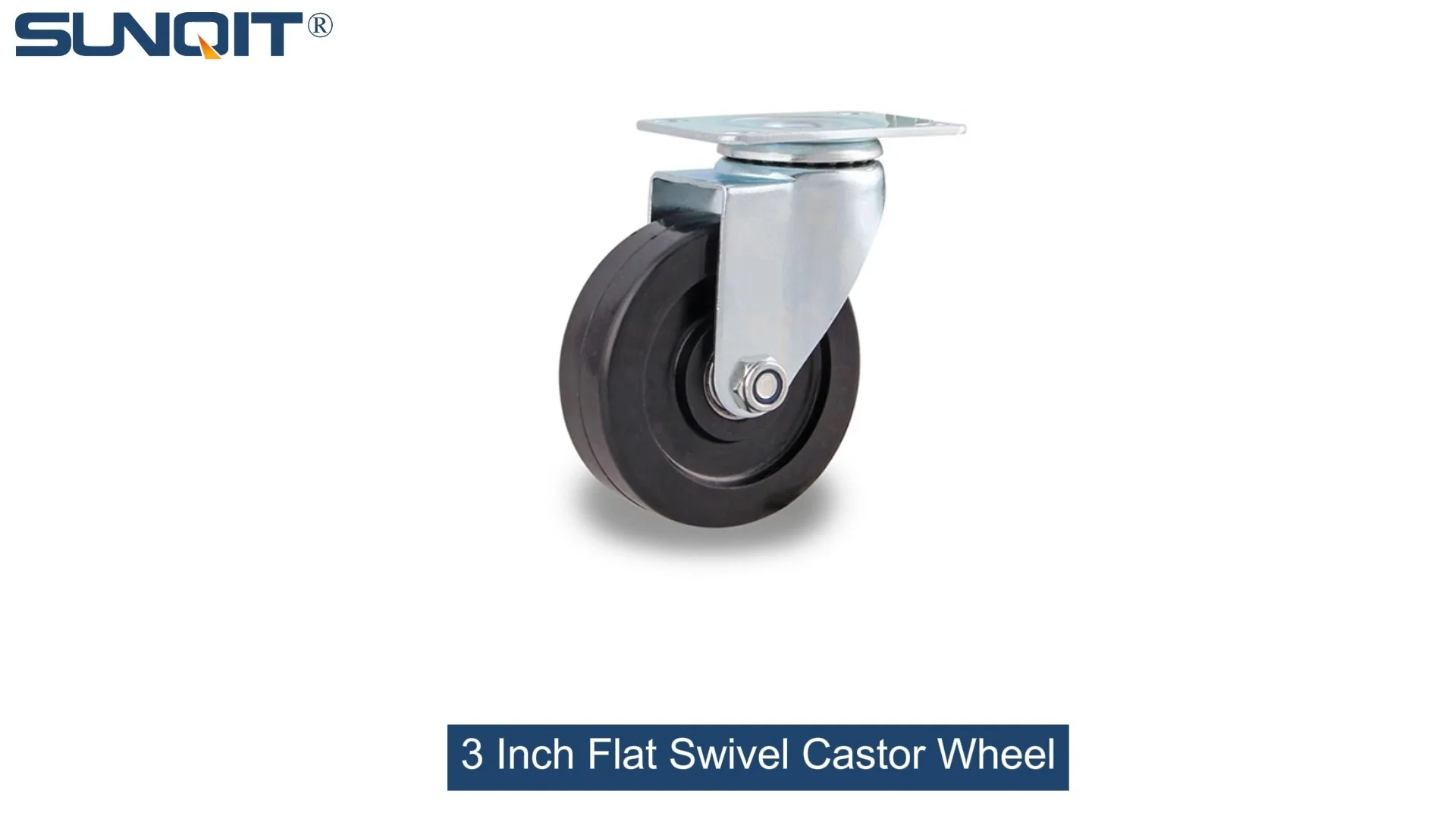
In the fast-paced environment of healthcare facilities, every piece of equipment plays a critical role in patient care—from the hospital bed that ensures a patient's comfort to the IV cart that delivers life-saving medications, and the surgical instrument trolley that keeps tools sterile and within reach. What often goes unnoticed, yet is indispensable to their functionality, is the humble flat swivel castor wheel . These small but mighty components are the unsung heroes of medical mobility, enabling smooth, precise movement that directly impacts staff efficiency, patient safety, and the longevity of expensive equipment.
Choosing the right caster wheel for medical devices isn't a decision to be taken lightly. A poorly selected castor can lead to noisy, jerky movement that disrupts patient rest, damage to hospital floors, or even equipment instability—risks that no healthcare setting can afford. On the flip side, a well-chosen flat swivel castor wheel enhances workflow, reduces physical strain on caregivers, and ensures that sensitive equipment (like MRI machines or portable ultrasound units) moves with the precision it demands. In this guide, we'll walk you through the key factors to consider when selecting flat swivel castor wheels for medical devices, demystifying the process and helping you make choices that align with the unique needs of healthcare environments.
Why Medical Environments Demand Specialized Castor Wheels
Medical facilities are unlike any other workplace. They require strict adherence to hygiene standards, prioritize patient comfort, and operate around the clock with minimal room for error. These realities place unique demands on flat swivel castor wheels and their accompanying caster accessories . Let's break down why "one-size-fits-all" castors simply won't cut it here:
- Hygiene and Infection Control: Hospitals and clinics are breeding grounds for bacteria and pathogens. Castors must resist moisture, chemicals, and frequent cleaning with disinfectants (like bleach or alcohol) without degrading. Porous materials or hard-to-reach crevices in castor design can trap dirt, becoming a hidden source of infection.
- Patient-Centric Design: Imagine a patient recovering from surgery being jostled by a noisy, unevenly rolling hospital bed. Castors must operate quietly to avoid disturbing patients and smoothly to prevent discomfort. For equipment like neonatal incubators, even the smallest vibration from a poorly designed castor could have serious consequences.
- Heavy and Varied Loads: Medical devices range from lightweight IV poles to heavy-duty surgical tables weighing hundreds of pounds. Castors must support these loads reliably, even during sudden movements or when navigating uneven floor transitions (like from a hallway to an elevator).
- Floor Protection: Hospital floors—often made of vinyl, linoleum, or polished concrete—are expensive to repair. Castors must distribute weight evenly and avoid leaving marks or scratches, even under constant use.
With these challenges in mind, let's dive into the step-by-step process of selecting the perfect flat swivel castor wheel for your medical equipment.
Key Factor 1: Load Capacity—Calculating What You Need
The first and most critical consideration when choosing a flat swivel castor wheel is load capacity. A castor that's underrated for the weight it carries will wear out quickly, wobble, or even fail—putting patients and staff at risk. To avoid this, you need to calculate the total load each castor will bear, then add a safety margin.
How to Calculate Load Per Castor
Start by determining the total weight of the equipment, including any maximum payload it might carry. For example:
- A standard hospital bed weighs ~500 lbs empty. With a patient (average 150–300 lbs), linens, and medical devices (like monitors), the total load could reach 900 lbs.
- An IV cart might weigh 50 lbs empty but carry 30 lbs of fluids and supplies, totaling 80 lbs.
Most medical devices use 4 castors (one at each corner), so divide the total load by 4 to get the load per castor. For the hospital bed example: 900 lbs ÷ 4 castors = 225 lbs per castor. But here's the catch: you should always add a 25–50% safety margin to account for dynamic forces—like when the bed is pushed over a threshold or suddenly stopped. So, 225 lbs + 50% = 337.5 lbs. This means each castor should have a load rating of at least 350 lbs to be safe.
Static vs. Dynamic Load Capacity
Castor manufacturers list two load ratings: static and dynamic. Static load is the weight a castor can support when stationary (e.g., a bed parked in a room). Dynamic load is the weight it can handle while moving (e.g., pushing the bed to surgery). For medical devices, dynamic load capacity is often the more critical number, as equipment is rarely stationary for long.
| Equipment Type | Total Load (lbs) | Load Per Castor (4 castors) | Recommended Castor Load Rating (with 50% safety margin, lbs) |
|---|---|---|---|
| IV Cart | 80 | 20 | 30 |
| Surgical Instrument Trolley | 300 | 75 | 112.5 |
| Hospital Bed (with patient) | 900 | 225 | 337.5 |
| Mobile MRI Machine | 5,000 | 1,250 | 1,875 |
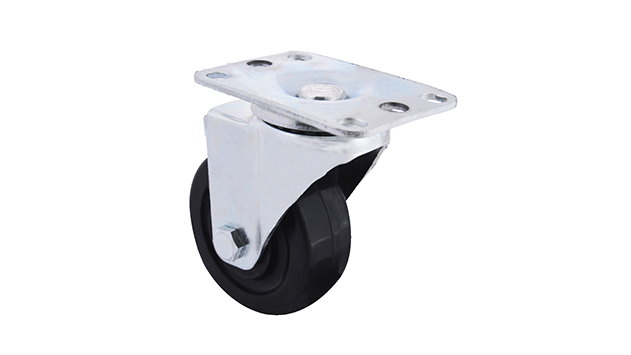
Key Factor 2: Wheel Material—Balancing Traction, Noise, and Durability
The material of the caster wheel itself has a profound impact on performance. In medical settings, three materials stand out: rubber, polyurethane, and nylon. Each has its strengths and weaknesses, and the right choice depends on your specific needs.
Rubber Wheels: The Quiet Comfort Choice
Natural or synthetic rubber wheels are prized for their shock absorption and quiet operation—two must-haves for patient care areas. They grip floors well, even on smooth surfaces like vinyl, reducing the risk of equipment slipping. Rubber is also gentle on floors, making it ideal for older hospitals with polished hardwood or tile.
However, rubber has limitations. It's less resistant to chemicals than other materials, so prolonged exposure to strong disinfectants (like hydrogen peroxide) can cause cracking or hardening over time. It also has a lower load capacity—typically maxing out around 300 lbs per castor—making it better suited for lightweight equipment like IV carts or medication trolleys.
Polyurethane Wheels: The All-Rounder
Polyurethane (PU) wheels—often made by bonding a layer of polyurethane to a hard core (like aluminum or nylon)—are a popular choice for medical devices. They combine the best of rubber and nylon: they're quiet, non-marking, and highly resistant to chemicals and abrasion. PU wheels also handle heavier loads (up to 1,000 lbs per castor) and maintain their elasticity in both hot and cold environments, making them versatile for everything from hospital beds to mobile X-ray machines.
One minor downside? PU wheels can be slightly more expensive than rubber, but their longevity and low maintenance often offset the cost. For example, a PU wheel might last 3–5 years in a busy hospital, while a rubber wheel might need replacement after 1–2 years.
Nylon Wheels: The Heavy-Duty Performer
Nylon wheels are the workhorses of the castor world, designed for maximum durability and load capacity (up to 2,000 lbs per castor). They're resistant to oils, chemicals, and extreme temperatures, making them ideal for heavy equipment like surgical tables or mobile CT scanners. Nylon also rolls easily over rough surfaces, which is useful in areas like loading docks or maintenance rooms.
The tradeoff? Nylon wheels are harder than rubber or PU, so they're noisier and can damage soft floors (like vinyl) if not used carefully. They also provide less traction, which can be a hazard on wet floors. For this reason, nylon is best reserved for heavy, infrequently moved equipment in non-patient areas.
| Wheel Material | Best For | Noise Level | Floor Protection | Max Load (per castor) |
|---|---|---|---|---|
| Rubber | Lightweight, patient areas (IV carts, medication trolleys) | Low (quiet) | Excellent (gentle on soft floors) | Up to 300 lbs |
| Polyurethane (PU) | Most medical devices (hospital beds, surgical trolleys) | Low to medium | Very good (non-marking) | Up to 1,000 lbs |
| Nylon | Heavy equipment, non-patient areas (CT scanners, loading docks) | Medium to high (can be noisy) | Fair (may scratch soft floors) | Up to 2,000 lbs |

Key Factor 3: Swivel Mechanism—Smooth Movement and Maneuverability
A flat swivel castor wheel gets its name from its ability to rotate 360 degrees, allowing equipment to move in any direction. But not all swivel mechanisms are created equal. The quality of the swivel joint directly affects how easily the castor turns, how much noise it makes, and how long it lasts.
Ball Bearings vs. Plain Bearings
Most swivel castors use either ball bearings or plain (bush) bearings in the swivel joint. Ball bearings—small metal balls housed in a raceway—reduce friction, allowing the castor to swivel smoothly with minimal effort. They're ideal for equipment that needs frequent, precise movement, like surgical instrument trolleys that must be positioned exactly next to an operating table. Ball bearings also tend to be quieter and more durable, though they're slightly more expensive.
Plain bearings, on the other hand, use a solid bushing (often made of plastic or brass) to reduce friction. They're simpler and cheaper but require more force to swivel, especially under heavy loads. Over time, plain bearings can wear down, leading to "sticky" swivel action or increased noise. For lightweight, rarely moved equipment, plain bearings might be sufficient, but for busy medical settings, ball bearings are worth the investment.
Swivel Lock: When Stability Matters Most
Some medical procedures require equipment to stay perfectly aligned—for example, a surgical light positioned over an operating table or a mobile ultrasound machine that needs to remain stationary during a scan. In these cases, a swivel lock (a type of caster accessory ) is essential. Swivel locks prevent the castor from rotating, effectively turning a swivel castor into a fixed castor. They're typically foot-operated, allowing staff to lock or unlock the swivel with a quick tap, even while wearing gloves.
When choosing a swivel lock, look for one that engages firmly and releases smoothly. A poorly designed lock might slip under heavy loads or be difficult to operate, defeating its purpose. Some advanced models even combine swivel locks with wheel locks (see below) for maximum stability.

Key Factor 4: Brake Systems—Ensuring Safety at a Moment's Notice
Imagine a nurse rushing to respond to a patient's call, only to have an unattended medication trolley roll across the room. Or a surgeon adjusting a surgical table mid-operation, only for it to shift unexpectedly. Brakes are non-negotiable for medical castors, and choosing the right type can mean the difference between a smooth procedure and a dangerous accident.
Total Lock Brakes: Maximum Security
Total lock (or "dual lock") brakes are the gold standard for medical equipment. They lock both the wheel (preventing rotation) and the swivel joint (preventing turning), immobilizing the castor completely. This is critical for heavy equipment like hospital beds, where even a small movement could endanger a patient. Total lock brakes are usually activated by pressing a foot pedal, which pushes a brake pad against the wheel and a separate mechanism to lock the swivel.
When evaluating total lock brakes, test how much force is required to engage them. In a busy hospital, staff might need to lock/unlock brakes dozens of times a day—brakes that are too stiff can lead to hand or foot strain over time. Look for models with ergonomic pedals that require minimal effort to operate.
Directional Lock Brakes: For Controlled Movement
Directional lock brakes (also called "steering locks") allow the wheel to rotate but lock the swivel joint, forcing the castor to face forward. This is useful for equipment that needs to move in a straight line—like a stretcher being wheeled down a hallway—preventing it from veering off course. Directional locks are often used in combination with wheel locks for added control.
For example, an emergency room stretcher might use directional locks when moving a patient from the ambulance to the trauma bay, ensuring the stretcher stays on a straight path even over uneven floors. Once in the bay, total lock brakes can be engaged to keep it stationary during treatment.
Key Factor 5: Hygiene and Maintenance—Easy to Clean, Built to Last
Infection control is a top priority in healthcare, and flat swivel castor wheels are no exception. A castor that's hard to clean or prone to harboring bacteria can compromise patient safety, no matter how well it rolls. Here's what to look for in a hygienic castor design:
Non-Porous, Sealed Designs
Castors with open seams, hollow cores, or exposed fasteners are magnets for dirt, dust, and bodily fluids. Instead, opt for castors with sealed swivel joints and non-porous wheel materials (like polyurethane or nylon). Some manufacturers even offer "hygienic design" castors with smooth, rounded edges that eliminate crevices, making them easy to wipe down with disinfectant wipes or spray.
For example, a castor with a sealed ball bearing unit prevents lubricant from leaking out (which could attract dirt) and keeps contaminants from getting in, extending the bearing's life and reducing the risk of infection.
Resistance to Disinfectants
Medical facilities use a variety of harsh chemicals to kill pathogens, from quaternary ammonium compounds (quats) to bleach. Castor materials must withstand these chemicals without degrading. For instance, rubber wheels can break down when exposed to bleach over time, while polyurethane wheels are often rated to resist most hospital-grade disinfectants for years.
When in doubt, ask the manufacturer for a chemical resistance chart. Reputable suppliers will provide data on how their castors hold up to common disinfectants, helping you avoid costly replacements or safety risks.
Low-Maintenance Requirements
Hospital staff have enough on their plates without adding "castor maintenance" to their to-do lists. Look for castors that require minimal upkeep—preferably ones that come pre-lubricated with sealed bearings (so you don't have to oil them) and wheels that resist flat spots (even when equipment is parked for long periods).
For example, a castor with a maintenance-free swivel joint might only need a quick visual inspection every 6 months, while a castor with open bearings might require monthly lubrication to prevent rust and ensure smooth movement.
Putting It All Together: A Final Checklist
Choosing the right flat swivel castor wheel for medical devices is a balancing act of load capacity, material, maneuverability, safety, and hygiene. To simplify the process, here's a quick checklist to guide your decision:
- Calculate the total load: Include the equipment weight, maximum payload, and a 25–50% safety margin. Divide by the number of castors to get the load per castor.
- Choose the wheel material: Rubber for lightweight, quiet equipment; polyurethane for versatility and durability; nylon for heavy, non-patient areas.
- Opt for ball bearings: They reduce friction, noise, and effort, making movement smoother for staff.
- select a brake type: Total lock brakes for heavy or patient-critical equipment; directional locks for straight-line movement.
- Prioritize hygiene: Look for sealed, non-porous designs and chemical resistance to disinfectants.
- Test for ergonomics: Brakes and swivel locks should be easy to operate with minimal force, even with gloves.
- Check floor compatibility: Ensure the wheel material won't scratch or mark your facility's floors.
By following these steps, you'll not only enhance the functionality of your medical equipment but also contribute to a safer, more efficient healthcare environment—where patients can rest comfortably, staff can work without unnecessary strain, and every piece of equipment moves exactly when and where it's needed.
Remember, the best caster wheel isn't just a component; it's a partner in patient care. Invest the time to choose wisely, and you'll reap the benefits for years to come.