- Company Articles
- Products and Technology
- Product knowledge
- How to Choose Lean Pipe Clamps for Heavy-Duty Loads

How to Choose Lean Pipe Clamps for Heavy-Duty Loads
Related Product
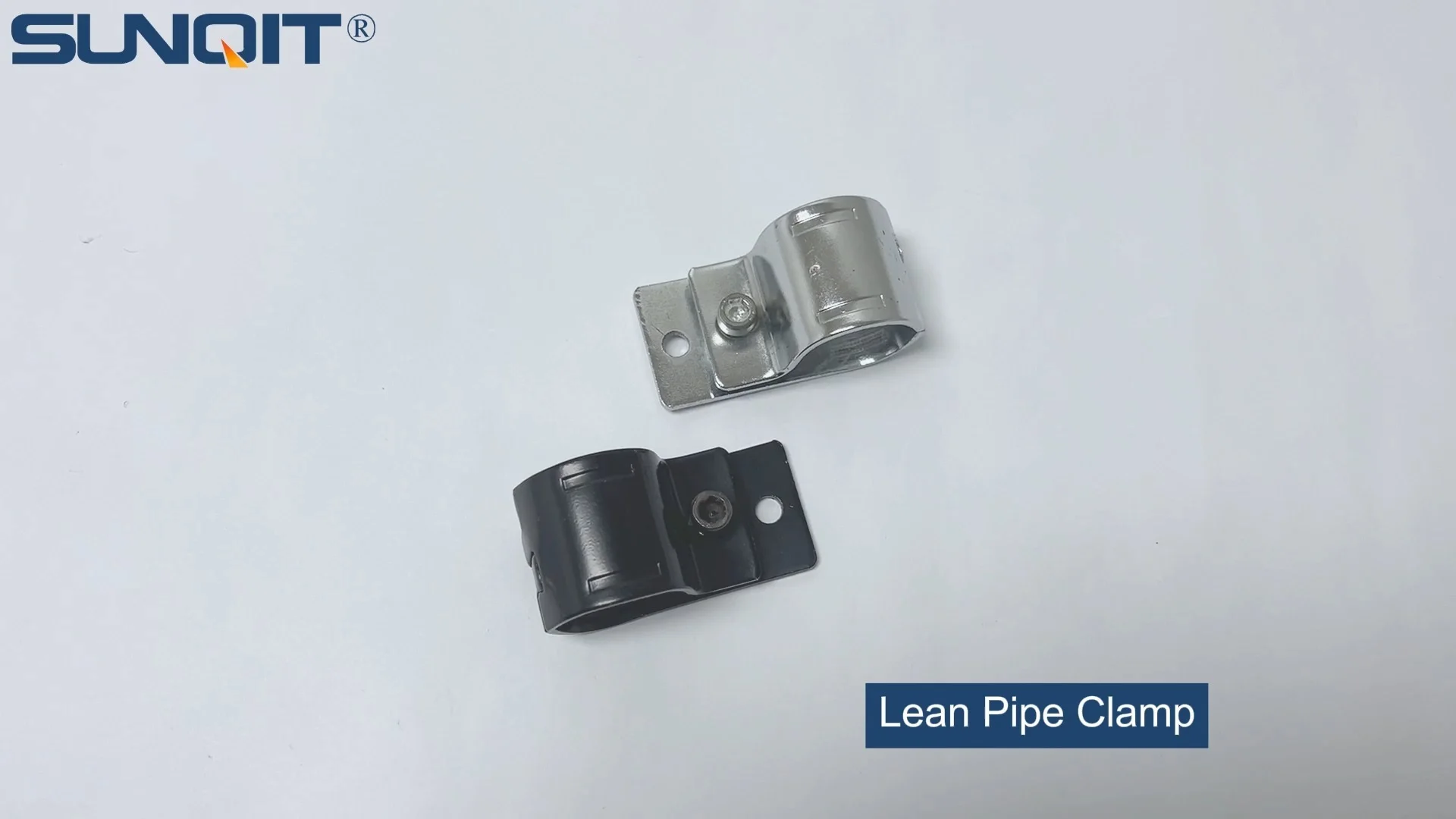
Lean Pipe Clamp
Lean pipe clamp is used for rack system hang monitor or other panel for workbenck, flowrack in production daily use.
Walk into any well-run production facility, and you'll notice something subtle but powerful: the lean system holding everything together. From workbenches to material racks, from conveyor lines to turnover trolleys, these setups rely on a network of pipes, joints, and—most importantly—clamps. Lean pipe clamps might not get the same attention as flashy machinery or high-tech software, but they're the unsung heroes ensuring your production line stays stable, efficient, and safe. And when it comes to heavy-duty loads? Choosing the right clamp isn't just a matter of convenience—it's a decision that impacts everything from workflow speed to workplace safety.
If you've ever struggled with a wobbly workbench, dealt with a collapsed material rack, or watched a conveyor jam because a connection gave way, you know exactly what's at stake. Heavy loads amplify every weakness in your setup. A clamp that works fine for lightweight tools might buckle under the weight of raw materials or finished products, leading to downtime, damaged goods, or even injuries. So, how do you sift through the endless options and pick a clamp that can handle the pressure? Let's break it down—step by step, with real-world insights to guide you.
Understanding the Role of Lean Pipe Clamps in Heavy-Duty Systems
First, let's make sure we're on the same page: What is a lean pipe clamp, anyway? At its core, it's a small but critical component that connects two or more lean pipes (think aluminum lean pipe or stainless steel pipe series) to form stable structures. Whether you're building a workbench, a flow rack, or a turnover trolley, clamps are the glue that turns individual pipes into a cohesive, load-bearing system. They come in all shapes and sizes—fixed, swivel, parallel, 90-degree—and are designed to distribute weight evenly across joints, preventing stress points that could lead to failure.
But here's the thing: Not all clamps are created equal. A standard clamp might work for a lightweight assembly station, but when you're dealing with heavy-duty loads—say, a material rack stacked with metal components or a workbench supporting industrial machinery—you need something beefier. Heavy-duty clamps are engineered with thicker materials, reinforced joints, and tighter tolerances to handle static loads (like a stationary rack) and dynamic loads (like a trolley on caster and accessories, moving materials around the shop floor).
To put it simply: The right clamp ensures your structure doesn't just look stable—it is stable. It's the difference between a system that lasts for years and one that needs constant repairs. So, let's dive into the key factors you need to consider before making a purchase.
Key Factor #1: Load Capacity—Know Your Numbers
Load capacity is the single most important factor when choosing a lean pipe clamp for heavy-duty use. It's the maximum weight a clamp can safely support without deforming or failing. But here's where things get tricky: Load capacity isn't just a single number on a product spec sheet. You need to consider both static and dynamic loads, and always factor in a safety margin.
Static vs. Dynamic Loads: What's the Difference?
Static load refers to weight that's stationary—think of a material rack loaded with boxes that rarely moves. Dynamic load, on the other hand, is weight in motion. If you're using a trolley with caster and accessories to transport heavy parts, the clamps holding that trolley together will experience dynamic loads as the trolley starts, stops, and turns. Dynamic loads are harder on clamps because they introduce sudden forces (like inertia) that can stress connections more than a steady, static weight.
So, how do you calculate the load your clamps need to handle? Let's walk through an example. Suppose you're building a material rack (let's say Material Rack B, 3 rows and 3 floors, from the keyword list) to hold automotive parts. Each shelf will hold 500 lbs, and there are 3 shelves. The total static load on the rack is 1,500 lbs. Now, the rack is supported by 8 clamps (4 at the bottom, 4 at the top). To find the load per clamp, divide the total load by the number of clamps: 1,500 lbs ÷ 8 clamps = 187.5 lbs per clamp. But wait—you should always add a safety factor (typically 1.5x to 2x) to account for unexpected stress, like someone leaning on the rack or a shelf being overloaded. So, 187.5 lbs x 1.5 = 281.25 lbs. That means each clamp needs a static load capacity of at least 281 lbs.
For dynamic loads, the math gets a bit more complex. If the same rack is mounted on caster and accessories to become a mobile trolley, the dynamic load could be 2x the static load (due to movement). So, 1,500 lbs x 2 = 3,000 lbs total dynamic load. Divided by 8 clamps, that's 375 lbs per clamp—before adding the safety factor. Suddenly, a clamp that seemed sufficient for static use might not cut it for dynamic use. Moral of the story: Always calculate for the worst-case scenario.
Don't Trust the Label Blindly—Test if You Can
Manufacturers list load capacities for their clamps, but these numbers are often tested under ideal conditions (controlled environments, perfectly aligned pipes, minimal vibration). In the real world, pipes might be slightly bent, joints might be misaligned, or environmental factors (like humidity or temperature) could weaken materials. If possible, test a small sample of clamps with your actual load before committing to a full order. Mount a few pipes with the clamps, load them to your calculated weight (plus safety factor), and let them sit for a week. Check for signs of deformation—bending, cracks, or loosening. If they hold, you're good to go.

Key Factor #2: Material Matters—Aluminum, Steel, or Stainless Steel?
The material of your lean pipe clamp plays a huge role in its strength, durability, and compatibility with your pipes. Most clamps are made from steel, stainless steel (part of the stainless steel pipe series), or aluminum. Each has its pros and cons, and the right choice depends on your environment and load requirements.
Steel Clamps: The Workhorses
Steel clamps are the go-to for heavy-duty applications. They're strong, affordable, and widely available. Most steel clamps are zinc-plated or powder-coated to resist rust, making them suitable for dry, indoor environments. If you're working with carbon steel pipes or aluminum lean pipe (which is lightweight but strong enough for many loads), steel clamps provide excellent grip and load-bearing capacity. A standard steel clamp can handle static loads up to 500 lbs or more, depending on the design.
But steel has a downside: weight. Steel clamps add extra heft to your structure, which can be a problem if you're building a mobile trolley (remember those caster and accessories? More weight means more strain on casters). They're also prone to corrosion in humid or wet environments, so avoid them in food processing plants, outdoor settings, or areas with frequent water exposure.
Stainless Steel Clamps: Corrosion Resistance for Harsh Environments
If you need clamps that can stand up to moisture, chemicals, or extreme temperatures, stainless steel is the way to go. Stainless steel pipe series clamps are made from alloys like 304 or 316 stainless, which contain chromium and nickel to resist rust and corrosion. They're ideal for pharmaceutical labs, food processing facilities, or marine environments where standard steel would degrade quickly.
Stainless steel clamps are slightly more expensive than steel, but they offer better longevity in harsh conditions. They also have similar load capacities to steel clamps—some heavy-duty stainless models can handle up to 600 lbs static load. The tradeoff? They're even heavier than steel, so again, keep that in mind for mobile structures.
Aluminum Clamps: Lightweight and Versatile
Aluminum clamps are a popular choice for lightweight to medium-heavy loads, especially when paired with aluminum lean pipe. They're corrosion-resistant (though not as much as stainless steel), lightweight, and easy to work with. Aluminum clamps are great for applications where weight is a concern—like mobile workstations or overhead racks where excess weight could stress ceiling mounts.
But here's the catch: Aluminum isn't as strong as steel or stainless steel. A standard aluminum clamp might only handle 200-300 lbs static load, which is fine for most assembly stations but not enough for heavy material racks. If you need aluminum for its weight benefits but require higher load capacity, look for reinforced aluminum clamps (with steel inserts or thicker walls) that can handle up to 400 lbs. Just be prepared to pay a premium for these specialized designs.

Key Factor #3: Compatibility with Pipes and Joints
You could have the strongest, most expensive clamp on the market, but if it doesn't fit your pipes or lean pipe joints, it's useless. Compatibility is critical—mismatched clamps and pipes can lead to loose connections, uneven weight distribution, and even structural failure. Here's what to check:
Pipe Diameter: Measure Twice, Buy Once
Lean pipes come in standard diameters: 28mm (most common), 30mm, and 40mm. Clamps are designed to fit specific diameters, so measure your pipes before ordering. A clamp for 28mm pipe won't fit a 30mm pipe, and vice versa. If your pipes are from a specific supplier (like a lean pipe supplier or aluminum profile supplier), check if they offer clamps designed to work with their products—OEM clamps are often the most reliable for compatibility.
Pipe Material: Aluminum vs. Steel vs. Stainless Steel
Aluminum lean pipe is softer than steel or stainless steel, so using a steel clamp with aluminum pipe could crush or deform the pipe over time (especially under heavy loads). Look for clamps with rubber or plastic inserts if you're using aluminum pipe—these protect the pipe from scratches and distribute pressure more evenly. Conversely, stainless steel pipe series pipes are harder, so steel or stainless steel clamps work best (aluminum clamps might not grip as tightly, leading to slippage).
Lean Pipe Joint Design: Fixed vs. Swivel
Clamps and lean pipe joints work hand in hand. Fixed joints (like 90-degree or 45-degree fixed lean pipe joints) require clamps that lock into place, preventing rotation. Swivel joints (like 180-degree swivel lean pipe joints) need clamps that allow for movement while maintaining stability. Mixing fixed clamps with swivel joints will restrict movement, while using swivel clamps with fixed joints could lead to instability. Always match the clamp type to the joint type for optimal performance.

Key Factor #4: Environmental Conditions—Prepare for the Worst
Your shop floor isn't a lab—and environmental conditions can take a toll on clamps. Here are the most common factors to consider:
Moisture and Corrosion
If your facility is humid (like a warehouse in a coastal area) or uses water (like a cleaning station), corrosion is a major risk. Steel clamps will rust, weakening their grip and load capacity over time. In these cases, stainless steel pipe series clamps or aluminum clamps with corrosion-resistant coatings are a must. You might also consider plastic-coated clamps, which add an extra layer of protection against moisture.
Temperature Extremes
High temperatures (like near ovens or welding stations) can soften plastics or weaken metal alloys. Low temperatures (like in cold storage facilities) can make metals brittle. Check the manufacturer's temperature ratings for clamps—most steel and stainless steel clamps can handle temperatures from -40°F to 250°F, but extreme conditions might require specialized materials (like heat-resistant alloys).
Vibration and Shock
If your structure is near heavy machinery (like presses or lathes), constant vibration can loosen clamps over time. Look for clamps with locking mechanisms (like set screws or lock nuts) to prevent slippage. You might also use thread-locking adhesive (like Loctite) on clamp bolts to keep them tight. For shock loads (like a trolley slamming into a wall), reinforced clamps with thicker walls or gussets will absorb impact better than standard designs.
Comparing Clamp Types: Which One is Right for You?
Now that you know what to look for in terms of load capacity, material, compatibility, and environment, let's compare the most common types of heavy-duty lean pipe clamps. Use the table below to find the best fit for your needs:
| Clamp Type | Material | Max Static Load (lbs) | Best For | Compatibility | Pros | Cons |
|---|---|---|---|---|---|---|
| Heavy-Duty Fixed Steel Clamp | Zinc-plated steel | 500-800 | Static structures (material racks, workbenches) | Steel/stainless steel pipe series, aluminum lean pipe (with inserts) | High load capacity, affordable, widely available | Heavy, prone to corrosion in wet environments |
| Stainless Steel Swivel Clamp | 304 Stainless Steel | 400-600 | Dynamic structures (mobile trolleys with caster and accessories) | Stainless steel pipe series, steel pipes | Corrosion-resistant, allows limited movement | Expensive, heavier than aluminum |
| Reinforced Aluminum Clamp | Aluminum alloy with steel inserts | 300-450 | Lightweight mobile structures (lean pipe workbenches on casters) | Aluminum lean pipe, steel pipes (light loads) | Lightweight, corrosion-resistant, easy to install | Lower load capacity than steel/stainless steel |
| Parallel Heavy-Duty Clamp | Powder-coated steel | 600-1000 | Long spans (flow racks, conveyor supports) | Steel/stainless steel pipe series | Distributes weight evenly across parallel pipes | Bulky, requires precise pipe alignment |
Installation Tips: Even the Best Clamp Fails with Poor Installation
You've chosen the perfect clamp—now you need to install it correctly. Even the strongest clamp will fail if it's not mounted properly. Here are some pro tips:
Align Pipes Precisely
Misaligned pipes create stress points on clamps. Use a level to ensure pipes are straight and perpendicular before tightening clamps. If pipes are bent or warped, replace them—don't try to force them into alignment with clamps. For long spans (like conveyor supports), use a string line to ensure pipes are parallel.
Torque Bolts to Specification
Over-tightening bolts can strip threads or deform pipes; under-tightening can lead to loosening. Use a torque wrench to tighten clamp bolts to the manufacturer's recommended torque (usually 15-25 ft-lbs for steel clamps). If no specification is listed, tighten until the clamp grips the pipe firmly, then give it a 1/4-turn more—this ensures a secure fit without overdoing it.
Use Lock Washers or Thread Locker
Vibration can loosen bolts over time. Add lock washers (split or star washers) between the bolt head and clamp to prevent slippage. For high-vibration environments, apply thread-locking adhesive (like medium-strength Loctite) to bolt threads—this keeps bolts tight without making them impossible to remove later.
Inspect Regularly
Clamps don't last forever. Check them monthly for signs of wear: cracks, bending, rust, or loose bolts. Tighten any loose bolts and replace damaged clamps immediately. A small investment in maintenance now prevents costly failures later.
Common Mistakes to Avoid
Even seasoned professionals make mistakes when choosing lean pipe clamps. Here are the most common ones—and how to steer clear:
Mistake #1: Underestimating Load
This is the biggest culprit. Many people calculate for the average load but forget to account for peak loads (like a shelf being overstocked) or dynamic forces (like movement from caster and accessories). Always add a 50-100% safety factor to your load calculations.
Mistake #2: Mixing Brands
It's tempting to buy the cheapest clamps from different suppliers, but brands often have slight variations in dimensions or tolerances. Mixing brands can lead to loose fits or uneven weight distribution. Stick to one supplier (preferably the same one that provided your pipes or lean pipe joints) for consistency.
Mistake #3: Ignoring Environmental Factors
A steel clamp might seem like a good deal, but if your facility is humid, it will rust in months. Spend the extra money on stainless steel pipe series clamps or aluminum clamps if you need corrosion resistance—you'll save money on replacements in the long run.
Mistake #4: Overlooking Joint Strength
Clamps are only as strong as the joints they connect. A heavy-duty clamp won't help if the lean pipe joint is weak or poorly designed. Always pair high-quality clamps with high-quality joints—invest in both, or neither will perform.
Final Thoughts: Invest in Quality, Reap the Rewards
Choosing the right lean pipe clamp for heavy-duty loads isn't glamorous work, but it's foundational to a safe, efficient production line. By focusing on load capacity (static and dynamic), material, compatibility, environment, and proper installation, you'll build structures that stand the test of time. Remember: A cheap clamp might save you money today, but a failed clamp could cost you downtime, repairs, or even injuries tomorrow.
So, take the time to calculate your loads, test samples, and choose clamps that are built to handle your specific needs. Whether you're using aluminum lean pipe, stainless steel pipe series, or standard steel, the right clamp will turn your pipes into a system you can rely on—day in, day out. And when you're done? Sit back and watch your efficient, stable setup boost productivity and peace of mind. After all, that's what lean manufacturing is all about.