- Company Articles
- Products and Technology
- Product knowledge
- How to Choose Parallel Fixation Aluminum Pipe Joints: Size, Load & Application Guide

How to Choose Parallel Fixation Aluminum Pipe Joints: Size, Load & Application Guide
Related Product
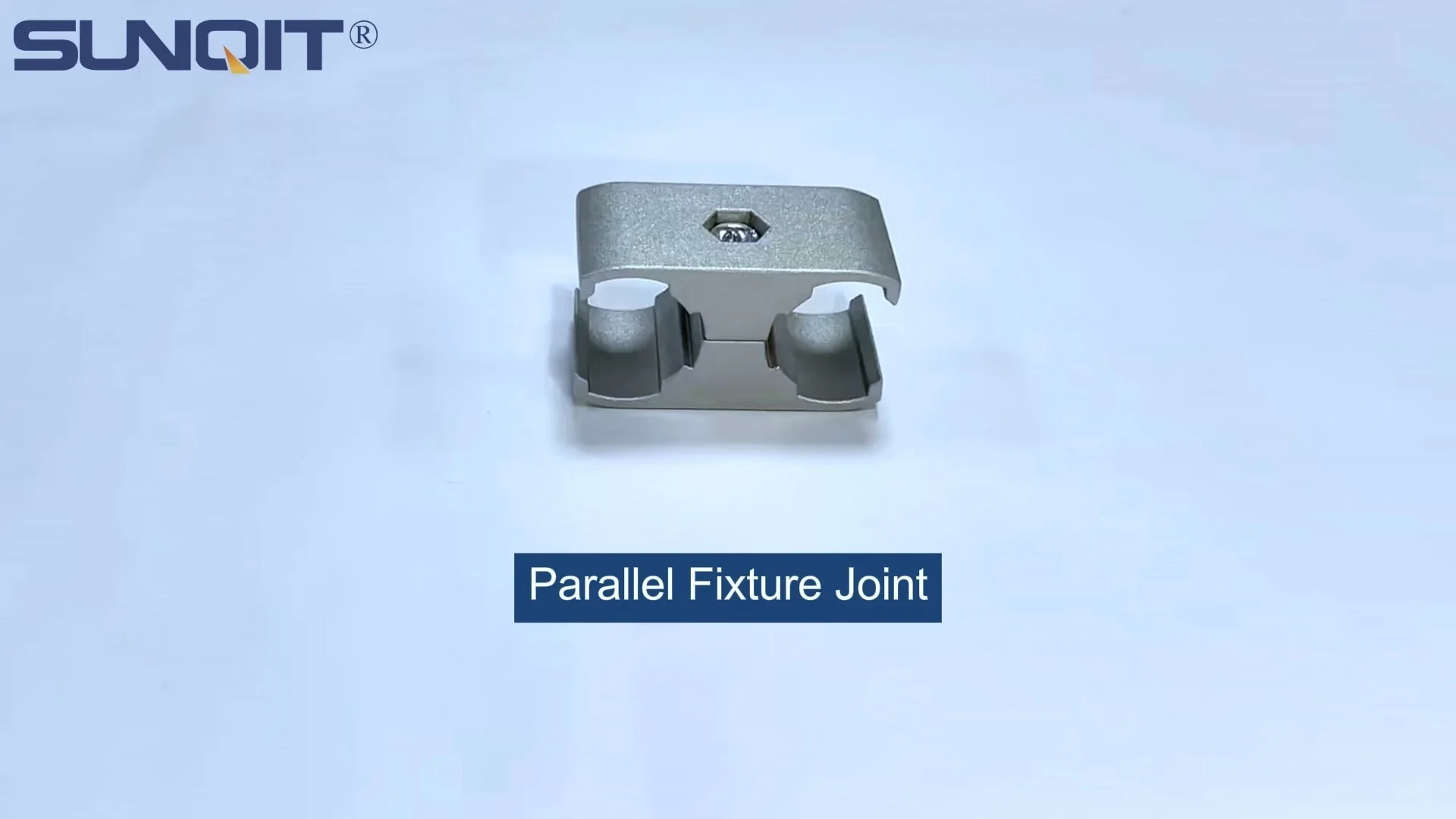
Parallel Fixation Aluminum Pipe Joint
Aluminum parallel joint for two pcs 28mm aluminum pipe connected by parallel direction.
Ever walked through a busy factory floor and wondered how those sleek aluminum workbenches, material racks, and conveyor systems stay so sturdy? It's not just luck—or even just strong aluminum pipes. The unsung heroes holding it all together are the joints. And when it comes to creating stable, parallel structures—like the shelves of a material rack or the rails of a roller track—parallel fixation aluminum pipe joints are the backbone. Choose the wrong one, and you're looking at wobbly workbenches, sagging material racks, or worse, production delays when a joint fails mid-shift. But get it right, and your lean system runs like a well-oiled machine, keeping your team productive and your operations efficient. In this guide, we'll break down everything you need to know to pick the perfect parallel fixation aluminum pipe joints for your needs—from size and load capacity to real-world applications and even how to spot a reliable supplier.
What Are Parallel Fixation Aluminum Pipe Joints, Anyway?
Let's start with the basics. Parallel fixation aluminum pipe joints are specialized connectors designed to secure two or more aluminum pipes in a parallel arrangement. Think of them as the "glue" that holds parallel structures together—whether it's the vertical supports of a workbench, the horizontal rails of a material rack, or the side guides of a roller track. Unlike some flexible joints that allow rotation, these are all about stability: they lock pipes into place, preventing lateral movement and ensuring alignment, which is critical for safety and efficiency in lean manufacturing setups.
Most are made from high-grade aluminum alloy (often 6063, known for its strength and corrosion resistance) or sometimes steel with an aluminum coating for extra durability. Their design typically includes clamping mechanisms—like set screws, bolts, or friction-fit collars—that grip the outer surface of the aluminum pipes, creating a tight bond without damaging the pipe itself. Some even come with rubberized or textured inner surfaces to grip, which is especially useful in high-vibration environments like near heavy machinery.
But why aluminum? For starters, aluminum is lightweight, which makes assembly and reconfiguration easier (a big plus for lean systems that need to adapt to changing production needs). It's also naturally resistant to rust, so it holds up well in humid factories or even outdoor storage areas. And when paired with aluminum profile—the modular, T-slot extruded aluminum beams you see in everything from workbenches to machine guards—these joints create a system that's both strong and infinitely customizable. That's why they're a staple in lean system setups: they let you build, modify, and expand structures without welding or heavy tools, saving time and money.
Key Factors to Consider Before You Buy
Choosing a parallel fixation aluminum pipe joint isn't as simple as grabbing the first one off the shelf. Several factors will determine whether a joint works for your project—or becomes a costly mistake. Let's break down the big ones:
1. Size: It's All About the Pipe Fit
First up: size. If the joint is too small for your pipe, it won't grip properly; too large, and the pipe will wobble inside. To get this right, you need to match the joint's inner diameter to your aluminum pipe's outer diameter (OD). Most aluminum pipes used in lean systems come in standard sizes, often corresponding to the aluminum profile series they pair with—like 2020, 3030, or 4040 profiles. For example, a 2020 aluminum profile typically uses pipes with a 20mm outer diameter, so you'd need a joint designed for 20mm OD pipes.
But size isn't just about diameter. You also need to consider the joint's length. A longer joint will distribute pressure over more of the pipe's surface, which can improve stability—especially for heavier loads. For instance, a joint that's 50mm long might be fine for light-duty applications like a small parts bin, but a material rack holding heavy components might need an 80mm or 100mm joint to ensure the pipes don't twist under weight.
| Joint Inner Diameter (mm) | Compatible Aluminum Pipe OD (mm) | Common Aluminum Profile Series | Typical Applications |
|---|---|---|---|
| 20mm | 20mm | 2020, 2040 | Small workbenches, lightweight shelving, electronics assembly stations |
| 30mm | 30mm | 3030, 3060 | Medium-duty material racks, conveyor side rails, tool storage |
| 40mm | 40mm | 4040, 4080 | Heavy-duty workbenches, 3-row/3-floor material racks (like Material Rack B), roller track supports |
| 50mm | 50mm | 5050, 50100 | Industrial storage racks, large assembly tables, outdoor storage systems |
Pro tip: Always measure your pipe's OD with a caliper before buying—don't just rely on the profile series name. Some manufacturers might have slight variations, especially with custom or non-standard pipes. And if you're using aluminum pipe accessories like end caps or plastic sleeves, make sure the joint's inner diameter accounts for their thickness. A pipe with a 20mm OD plus a 1mm plastic sleeve will need a joint with a 22mm inner diameter, for example.
2. Load Capacity: How Much Weight Can It Really Handle?
Next, load capacity—or how much weight the joint can support without bending, slipping, or breaking. This is where things get tricky, because load capacity isn't just about the joint itself; it depends on the joint's design, the material it's made from, and even how it's installed. Let's break it down:
Static vs. dynamic load: Static load is the weight of objects that don't move—like boxes sitting on a material rack. Dynamic load is when the weight is in motion, like parts sliding down a roller track or a trolley being pushed into a shelf. Dynamic loads are harder on joints because they add impact and vibration. A joint rated for 200kg static load might only handle 150kg dynamically, so always check both ratings.
Material thickness: Thicker joint walls mean more strength. A joint with a 2mm wall thickness might handle 100kg, while a 3mm wall could take 150kg—even if they're the same size and material. Look for joints with reinforced stress points, like thicker metal around the clamping screws, as these are designed to withstand higher loads.
Clamping mechanism: Joints with multiple clamping points (e.g., two set screws instead of one) distribute pressure more evenly, reducing the risk of the pipe slipping. Friction-fit joints (which rely on tight tolerances) are great for lightweight applications, but for heavy loads, mechanical clamps (like bolts or levers) are more reliable.
Real-World Scenario: Material Rack B (3 Row, 3 Floor)
Let's say you're setting up a Material Rack B—a 3-row, 3-floor structure meant to hold automotive components. Each shelf needs to support 50kg of parts, and there are 3 shelves per row, 3 rows total. That's 50kg x 3 x 3 = 450kg of static load, plus the weight of the aluminum pipes and shelves themselves (another 50kg, maybe). So the total static load on the vertical support pipes (and their joints) is around 500kg. If you're using 40mm pipes with 2mm wall joints, you'd need joints rated for at least 125kg per vertical support (since there are 4 supports). But if the parts are often slid onto the shelves (dynamic load), bumping the total to 600kg, you'd need joints rated for 150kg+ to be safe. Cutting corners here could lead to sagging shelves or even a collapsed rack—costing you damaged parts and lost production time.
3. Material Compatibility: Aluminum Pipes, Profiles, and Accessories
Not all aluminum pipes are created equal, and neither are joints. You need to make sure your joint is compatible with the type of aluminum pipe you're using. For example, anodized aluminum pipes have a harder surface than plain aluminum, so a joint with soft set screws might not grip as well—you'd need screws with sharper threads or a friction-fit design instead. Similarly, if you're using aluminum profile accessories like T-slot nuts or end caps, the joint should leave enough space on the pipe to attach these without interference.
Another consideration is corrosion resistance. If your factory is humid (like a food processing plant) or uses coolants (like a machining shop), a standard aluminum joint might rust over time. Look for joints with a powder-coated finish or made from marine-grade aluminum to prevent corrosion. For ESD-sensitive environments—like electronics assembly lines with ESD workbenches —you might even need conductive joints to dissipate static electricity, though these are less common for parallel fixation.
4. Application Environment: Where Will It Live?
Finally, think about where the joint will be installed. Indoor, climate-controlled factories are easy—most standard joints will work. But if the joint is outdoors (like in a loading dock) or in a harsh environment (high heat, chemicals, or frequent water exposure), you'll need to step up your game. For example:
- High temperature: Near ovens or furnaces? Avoid plastic components (some joints have plastic collars) and opt for all-aluminum designs, as plastic can melt or weaken.
- Wet environments: Washdown areas (like pharmaceutical or beverage plants) need joints with sealed clamping mechanisms to prevent water from seeping in and causing rust.
- Cleanrooms: Dust and debris can jam clamping screws, so choose joints with smooth surfaces and minimal crevices where particles can hide.

Application-Specific Recommendations
Now that we've covered the basics, let's dive into how to choose joints for some common lean system setups. Each application has unique demands, so what works for a workbench might not cut it for a conveyor.
Workbenches: Stability for Precision Work
Workbenches—like the popular Workbench E (single deck, without casters)—are all about stability. Whether your team is assembling circuit boards or packing delicate parts, a wobbly workbench can lead to mistakes, scrap, or even injuries. For workbenches, prioritize joints with:
- Low profile: Sleek joints won't get in the way of tools or materials on the bench surface.
- Multiple clamping points: Two or more set screws per joint to prevent lateral movement—especially important if the bench is used for tasks that involve pushing or pulling (like tightening bolts).
- Compatibility with accessories: If you're adding a tool rail or overhead shelf, the joints should leave space for aluminum pipe accessories like brackets or hooks.
For a standard Workbench E (1200mm x 600mm), 30mm joints with 2mm walls and dual set screws are usually sufficient. They'll support the bench top, tools, and materials without flexing.
Material Racks: Heavy-Duty Support for Storage
Material racks—including the 3-row, 3-floor Material Rack B—need to handle consistent, often heavy static loads. Here, load capacity is king. Look for:
- Thick-walled joints: 3mm+ walls for 40mm pipes to support vertical and horizontal loads.
- Reinforced corners: Joints with angled braces or gussets (extra metal plates) at the corners to prevent racking (sideways movement).
- Anti-slip features: Some joints have textured inner surfaces or rubber gaskets to grip pipes better, which is crucial if the rack is in a high-traffic area where it might get bumped.
For Material Rack B, we recommend 40mm joints with 3mm walls, rated for at least 150kg static load per joint. Pair them with aluminum profile accessories like cross-braces for extra stability—especially if the rack is tall (over 1.8m).
Roller Tracks and Conveyors: Alignment for Smooth Flow
Roller tracks (used in conveyors or gravity-fed material flow systems) depend on precise alignment—even a tiny misalignment can cause parts to jam or slide off. For roller tracks, joints need to keep parallel pipes perfectly straight, so look for:
- Precision machining: Tight tolerances (±0.1mm) to ensure pipes align exactly parallel.
- Locking mechanisms: Once adjusted, the joint should lock firmly in place to prevent shifting over time (vibration from rolling parts can loosen joints).
- Corrosion resistance: If the track handles metal parts, look for zinc-plated or anodized joints to prevent rust from metal shavings or lubricants.
For 40mm roller tracks, 40mm joints with clamping levers (instead of set screws) are ideal—they allow for quick alignment during setup and easy reconfiguration if you need to adjust the track width later.

Installation and Maintenance Tips to Maximize Joint Lifespan
Even the best joint will fail if installed wrong. Here's how to get the most out of your parallel fixation aluminum pipe joints:
Installation Do's and Don'ts
Do: Clean the pipe ends before installing. Dust, oil, or debris can reduce grip, so wipe them with a clean cloth or alcohol pad first.
Don't: Over-tighten set screws. This can strip the threads or damage the pipe (aluminum is softer than steel). Tighten until the joint is snug, then give it a ¼-turn more—no more.
Do: Use a level to check alignment. After installing joints, verify that pipes are parallel and level—this is especially critical for roller tracks and workbenches.
Don't: Mix joint sizes or brands. Using two different joint types on the same structure can lead to uneven load distribution and weak points.
Maintenance: Keep Joints Tight and Strong
Regular maintenance will extend joint life and prevent unexpected failures. Here's a quick checklist:
- Weekly inspections: Check for loose screws, cracks, or signs of corrosion—especially in high-use areas.
- Quarterly tightening: Retighten clamping screws (they loosen over time due to vibration).
- Annual replacement: For joints in high-stress areas (like conveyor tracks), replace them every 1–2 years—even if they look fine. Fatigue (micro-cracks from repeated stress) can weaken them over time.

How to Spot a Reliable Supplier
You could have the best installation and maintenance plan, but if the joint itself is poor quality, it won't matter. Here's what to look for in a lean system supplier :
- Quality certifications: ISO 9001 is a good start—it means the supplier has strict quality control processes. For ESD-sensitive applications, look for ESD compliance (ANSI/ESD S20.20).
- Testing reports: Ask for load capacity test data (not just claims). Reputable suppliers will have third-party lab results proving their joints meet the rated load.
- Range of accessories: A good supplier should offer not just joints, but aluminum pipe accessories like end caps, cross-braces, and clamps—so you can get everything you need in one place.
- Customer support: Can they help you calculate load capacity for your specific project? Do they offer samples so you can test joints before buying in bulk? Avoid suppliers who just sell parts without guidance.
Pro tip: Ask for references. A supplier who's been around for 5+ years and has clients in your industry (e.g., automotive, electronics) is more likely to understand your needs than a generic hardware store.
Final Thoughts: It's All About the System
At the end of the day, parallel fixation aluminum pipe joints are more than just connectors—they're the foundation of your lean system . Choosing the right ones ensures safety, efficiency, and adaptability (since lean systems often need to change as production needs evolve). By focusing on size, load capacity, application, and supplier reliability, you'll avoid the headaches of failed joints and keep your operations running smoothly.
Remember: A joint that costs $5 more upfront but lasts twice as long is a better deal than a cheap joint that fails in six months. Invest in quality, and your team (and your bottom line) will thank you.