- Company Articles
- Products and Technology
- Procurement Guidelines
- How to Choose Swivel Stem Caster Wheels for Heavy-Duty Material Handling

How to Choose Swivel Stem Caster Wheels for Heavy-Duty Material Handling
Related Product
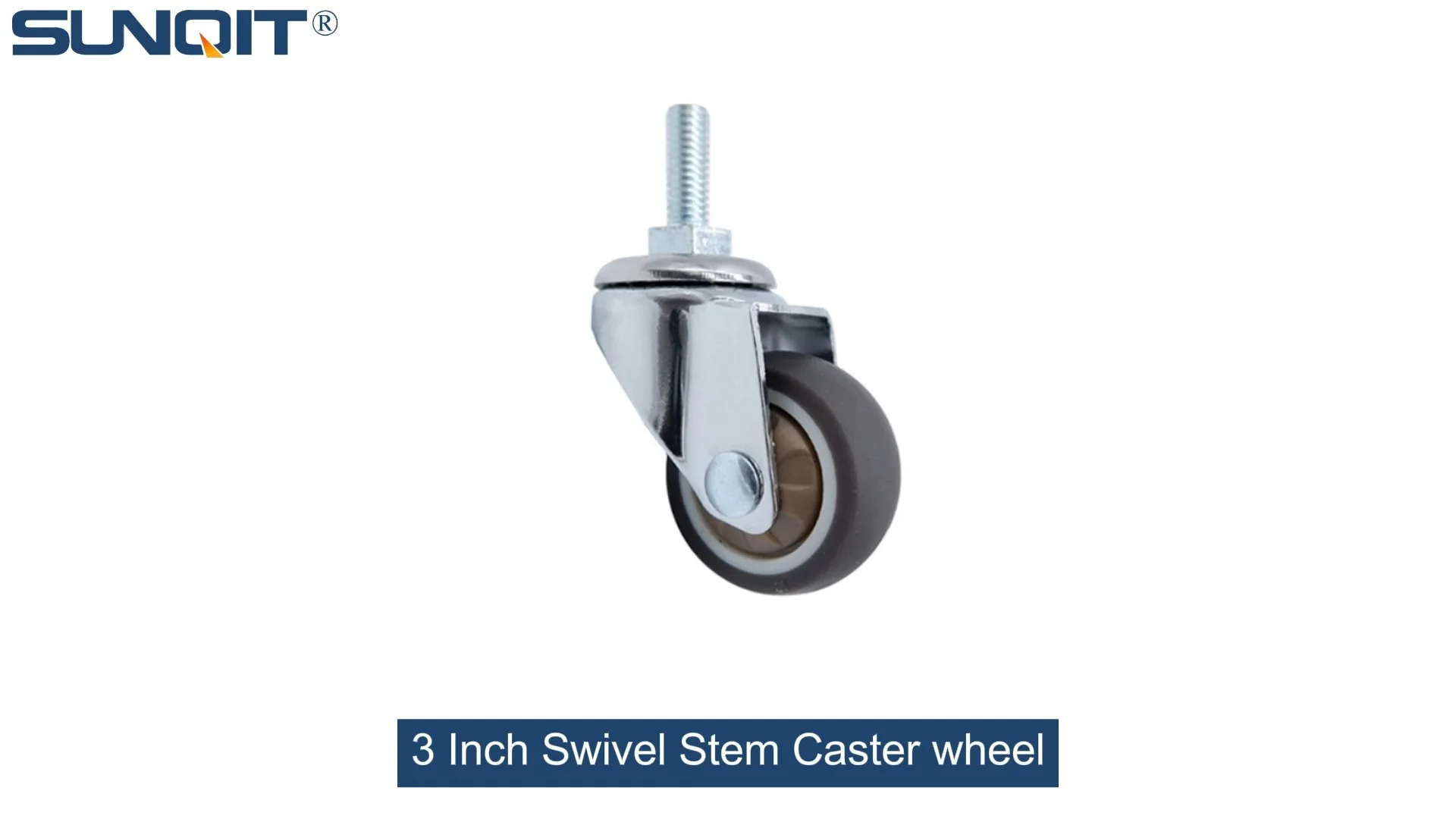
Swivel Stem Caster wheel
360 Degree Swivel Stem Caster. Threaded-post mount design, castors diameter 3 inch.Each swivel caster wheels loading 70KGS. Heavy enough and widely suit for carts, chairs, cabinet, flow rack, workbench, turnover rolley.
In the hustle of a busy warehouse, factory, or distribution center, the difference between a smooth shift and a frustrating one often comes down to the smallest details. Take, for example, the swivel stem caster wheels on your material handling equipment. These unassuming components might seem like an afterthought, but they're the unsung heroes that keep carts, racks, and workbenches moving—safely, efficiently, and without a hitch. Choosing the wrong ones? It can lead to jammed trolleys, damaged floors, strained team members, and even costly downtime. But get it right, and you'll wonder how you ever managed without them. Let's dive into what it takes to pick the perfect swivel stem caster wheels for heavy-duty tasks, so you can keep your operations rolling (literally) and your team thriving.
What Are Swivel Stem Caster Wheels, Anyway?
Before we jump into the "how," let's clarify the "what." A swivel stem caster wheel is a wheel assembly mounted on a stem (a rod or post) that allows 360-degree rotation. Unlike fixed casters, which only roll forward and backward, swivel stems let you maneuver equipment around tight corners, navigate narrow aisles, and reposition loads with minimal effort. The "stem" part refers to how they attach to your equipment—typically via threading, a grip ring, or an expanding mechanism—making them ideal for heavy-duty setups where stability and secure mounting are non-negotiable.
These casters aren't just for "heavy" loads, though that's their specialty. They're also about precision: a well-chosen swivel stem caster balances weight, mobility, and control, even when you're pushing a fully loaded cart or adjusting a workbench mid-shift. Now, let's break down the key factors that will guide your choice.
1. Start with Load Capacity: Know What You're Hauling
The first rule of caster wheel selection? Never guess the weight. Heavy-duty material handling means dealing with loads that can range from a few hundred pounds to several thousand, and overestimating (or underestimating) your caster's capacity is a recipe for disaster. Here's how to get it right:
Calculate the total load. This isn't just the weight of the materials you're moving—it includes the cart, rack, or workbench itself. For example, if your steel cart weighs 200 lbs and you regularly load it with 800 lbs of parts, your total load is 1,000 lbs. If the cart uses four casters, each caster should handle at least 250 lbs (and then some—more on that below).
Dynamic vs. static load: There's a difference. Static load is the weight a caster bears when it's standing still (like a parked cart). Dynamic load is what it handles when moving—pushing, turning, or rolling over small bumps. For heavy-duty use, always prioritize the dynamic load rating. Why? Because movement adds stress: a sudden jolt or uneven floor can spike the load temporarily, and you don't want your casters to fail mid-roll.
Add a safety buffer. Even if your math says you need 250 lbs per caster, aim for 30-50% more. So, 250 lbs becomes 375-400 lbs. This buffer accounts for unexpected heavy loads, wear and tear over time, and the occasional "oops" when someone piles on a few extra boxes. Better safe than sorry—especially when safety is on the line.
| Swivel Stem Caster Model | Stem Diameter (inches) | Wheel Diameter (inches) | Dynamic Load Capacity (lbs) | Best For |
|---|---|---|---|---|
| Heavy-Duty Threaded Stem | 1/2" | 5" | 800 | Medium carts, tool chests |
| Expanding Stem Caster | 3/4" | 6" | 1,200 | Pallet jacks, mobile workbenches |
| Industrial Grip Ring Stem | 1" | 8" | 2,000 | Large material racks, turnover trolleys |
| Stainless Steel Stem Caster | 1 1/4" | 10" | 3,500 | Heavy machinery, outdoor loading docks |

2. Match the Wheel Material to Your Floor Type
Your caster wheels don't exist in a vacuum—they interact directly with your floors, and that relationship matters. A wheel that works great on smooth concrete might destroy a tile floor, or get stuck on a carpeted warehouse section. Here's how to pair wheel material with your environment:
Hard, smooth floors (concrete, tile, polished concrete): For these, you'll want wheels that offer traction without scuffing. Polyurethane is a top pick here—it's durable, quiet, and gentle on floors. It also absorbs shocks, which is easier on both the equipment and the team pushing it. Rubber is another option, but it can leave marks if overloaded, so stick to polyurethane for heavy loads.
Rough or uneven floors (cracked concrete, gravel, outdoor surfaces): Steel or cast iron wheels are your best bet here. They're tough enough to handle bumps and debris without bending, and they won't wear down quickly. The tradeoff? They're noisy on smooth floors and can scratch delicate surfaces, so reserve them for rough terrain.
Soft floors (carpet, vinyl, or floors prone to indentation): Nylon wheels are a solid choice. They're hard enough to roll over carpet without sinking, yet smooth enough to avoid tearing or leaving marks. They're also resistant to chemicals and moisture, making them versatile for indoor use.
Pro tip: If your space has mixed floor types (e.g., a warehouse with concrete main aisles and carpeted office areas), consider dual-wheel casters or adjustable treads. They'll adapt to different surfaces without skipping a beat.

3. Factor in Environmental Conditions
Heavy-duty material handling doesn't always happen in climate-controlled rooms. Maybe your facility deals with extreme temperatures, moisture, chemicals, or fine dust—and each of these can take a toll on your swivel stem caster wheels if you're not prepared.
Moisture and corrosion: If your space is humid (like a food processing plant) or exposed to water (outdoor loading docks), stainless steel casters are a must. They resist rust and corrosion, ensuring smooth swiveling even in damp conditions. For extra protection, look for sealed bearings—they'll keep water and debris out of the internal mechanisms.
Extreme temperatures: Freezers, foundries, or outdoor setups in hot climates require wheels that can handle the heat (or cold). Rubber and polyurethane can become brittle in freezing temps or melt in high heat, so opt for high-temperature nylon or steel in these cases. Some manufacturers even offer "extreme duty" lines specifically designed for -40°F to 500°F environments.
Chemicals and oils: In auto shops, factories, or labs, exposure to oils, solvents, or acids is common. Standard rubber or plastic wheels can degrade quickly here, so choose wheels made from chemical-resistant materials like polyurethane (rated for oil resistance) or phenolic resin. These materials stand up to spills without cracking or swelling.
Dust and debris: In woodworking shops or construction sites, fine dust can gum up caster bearings, making swiveling stiff or impossible. Look for casters with dust covers or "sealed for life" bearings—they'll keep particles out and extend the life of your wheels.

4. Prioritize Mobility and Maneuverability
Heavy loads don't have to mean heavy pushing. The right swivel stem caster wheels should make even a fully loaded cart feel light and easy to maneuver—saving your team from strained backs and keeping productivity high. Here's what to look for:
Swivel radius: This is the distance from the center of the stem to the edge of the wheel. A smaller swivel radius means the caster can turn tighter, which is crucial for navigating narrow aisles or tight corners. For example, a 6" wheel with a 3" swivel radius will turn more sharply than an 8" wheel with a 5" radius—perfect for spaces where every inch counts.
Bearing type: The bearings inside the caster determine how smoothly it rolls. Ball bearings are standard for light to medium loads, but for heavy-duty use, precision roller bearings or tapered roller bearings are better. They distribute weight more evenly, reduce friction, and make pushing easier—even with thousands of pounds on board.
Tread width: Wider treads (the part of the wheel that touches the floor) provide better stability, especially on uneven surfaces. A 2" wide tread will grip better than a 1" tread, reducing the risk of tipping or slipping. Just keep in mind: wider treads can be harder to push on soft floors, so balance width with your floor type.
Ever tried pushing a cart with a seized swivel? It's like trying to steer a boulder—frustrating and exhausting. Invest in casters with smooth, well-lubricated swivel mechanisms (look for "pre-lubricated" or "maintenance-free" options) to keep movement effortless, even after months of use.
5. Don't Overlook Locking Mechanisms and Caster Accessories
Mobility is great, but sometimes you need your equipment to stay put—and that's where locking mechanisms and caster accessories come in. For heavy-duty material handling, a flimsy brake can mean disaster: a cart rolling downhill, a workbench shifting during assembly, or a load tipping because the caster wouldn't lock. Here's what to consider:
Total lock vs. directional lock: Total lock brakes (also called "dual lock") lock both the wheel and the swivel, preventing any movement. They're ideal for stationary workbenches or carts parked on inclines. Directional locks only stop the swivel, keeping the wheel rolling straight but preventing turns—useful for moving in a straight line without veering off course.
Brake reliability: Look for brakes with large, easy-to-reach pedals—no one wants to bend down and struggle with a tiny lever when their hands are full. Rubber or textured pedals provide better grip, even with gloves on. And test the brake: it should engage firmly with a satisfying "click" and release just as easily.
Beyond brakes, caster accessories can extend the life of your wheels and improve performance. Dust covers keep debris out of the swivel joint, (yáncháng shòumìng—wait, no, stick to English!). (oops, again!).… no, focus. Dust covers keep debris out of the swivel joint, extending life. Bearing protectors shield internal parts from moisture, and floor-saving glides can be added to steel wheels to prevent scratches on sensitive surfaces. When in doubt, ask your supplier about accessories that match your specific needs—they'll often have recommendations tailored to your environment.
6. Installation and Compatibility: Get the Fit Right
You've nailed the load capacity, wheel material, and brakes—now it's time to make sure your swivel stem caster wheels actually fit your equipment. Nothing is more frustrating than ordering the "perfect" caster only to realize the stem is too short, the threading doesn't match, or it won't attach to your cart's frame.
Stem types: The most common stem types for heavy-duty use are:
- Threaded stems: These have a screw-like end that twists into a threaded hole on your equipment. They're secure and easy to install, but you'll need to match the thread size (e.g., 1/2"-13 or 3/4"-10) exactly.
- Grip ring stems: These have a metal ring that compresses when inserted into a hole, creating a tight fit. They're quick to install but require a precise hole diameter (usually 1/2" or 3/4").
- Expanding stems: Ideal for hollow tubes or irregularly shaped mounting points, these stems expand when tightened, creating a secure grip without threading. They're popular for custom carts and racks.
If your equipment has a mounting plate instead of a stem hole, you might need a stem-to-plate adapter—but double-check the weight rating of the adapter to ensure it can handle your load. For extra stability, especially with tall or top-heavy equipment, consider adding a heavy-duty split foot seat. This accessory reinforces the stem's connection to the equipment, reducing wobble and preventing bending under stress.
Pro tip: Measure twice, order once. Write down your equipment's mounting hole diameter, depth, and thread type (if applicable) before shopping. If you're unsure, take a sample caster (or even a photo of the mounting area) to your supplier—they'll help you find the right fit.
Common Mistakes to Avoid
Even with all this knowledge, it's easy to slip up. Here are a few pitfalls to steer clear of:
Going for the cheapest option: It's tempting to save a few dollars, but low-quality casters often have weak stems, poor bearings, or flimsy brakes. They'll wear out faster, leading to frequent replacements—and in the long run, that costs more than investing in quality upfront.
Ignoring future needs: Your current load might be 1,000 lbs, but what if your business grows? Choosing casters with a higher load capacity than you need now can save you from upgrading later.
Mixing and matching components: Pairing a heavy-duty wheel with a lightweight stem, or a steel wheel with a plastic brake, is a recipe for failure. Stick to matching sets from the same manufacturer to ensure compatibility.
Forgetting maintenance: Even "maintenance-free" casters need occasional love. Clean debris from wheels, lubricate swivel joints (if recommended), and replace worn brakes to keep them rolling smoothly for years.
Final Thoughts: Invest in Reliability, Reap the Rewards
Choosing swivel stem caster wheels for heavy-duty material handling isn't just about buying a part—it's about investing in your team's safety, your equipment's longevity, and your operation's efficiency. By focusing on load capacity, wheel material, environment, mobility, locking mechanisms, and fit, you'll find casters that don't just meet your needs but exceed them. And when you do? You'll notice the difference: carts that glide with minimal effort, floors that stay scratch-free, and a team that can focus on the work that matters—not wrestling with uncooperative equipment.
So, take the time to evaluate your space, measure twice, and don't be afraid to ask questions. Your supplier should be a partner, not just a vendor—someone who understands your challenges and can guide you to the right solution. After all, the best swivel stem caster wheels are the ones you never have to think about—because they're too busy keeping your operation moving forward.