- Company Articles
- Products and Technology
- Product knowledge
- How to Choose T-Groove Aluminum Pipe Size Based on Load Capacity Requirements

How to Choose T-Groove Aluminum Pipe Size Based on Load Capacity Requirements
Related Product
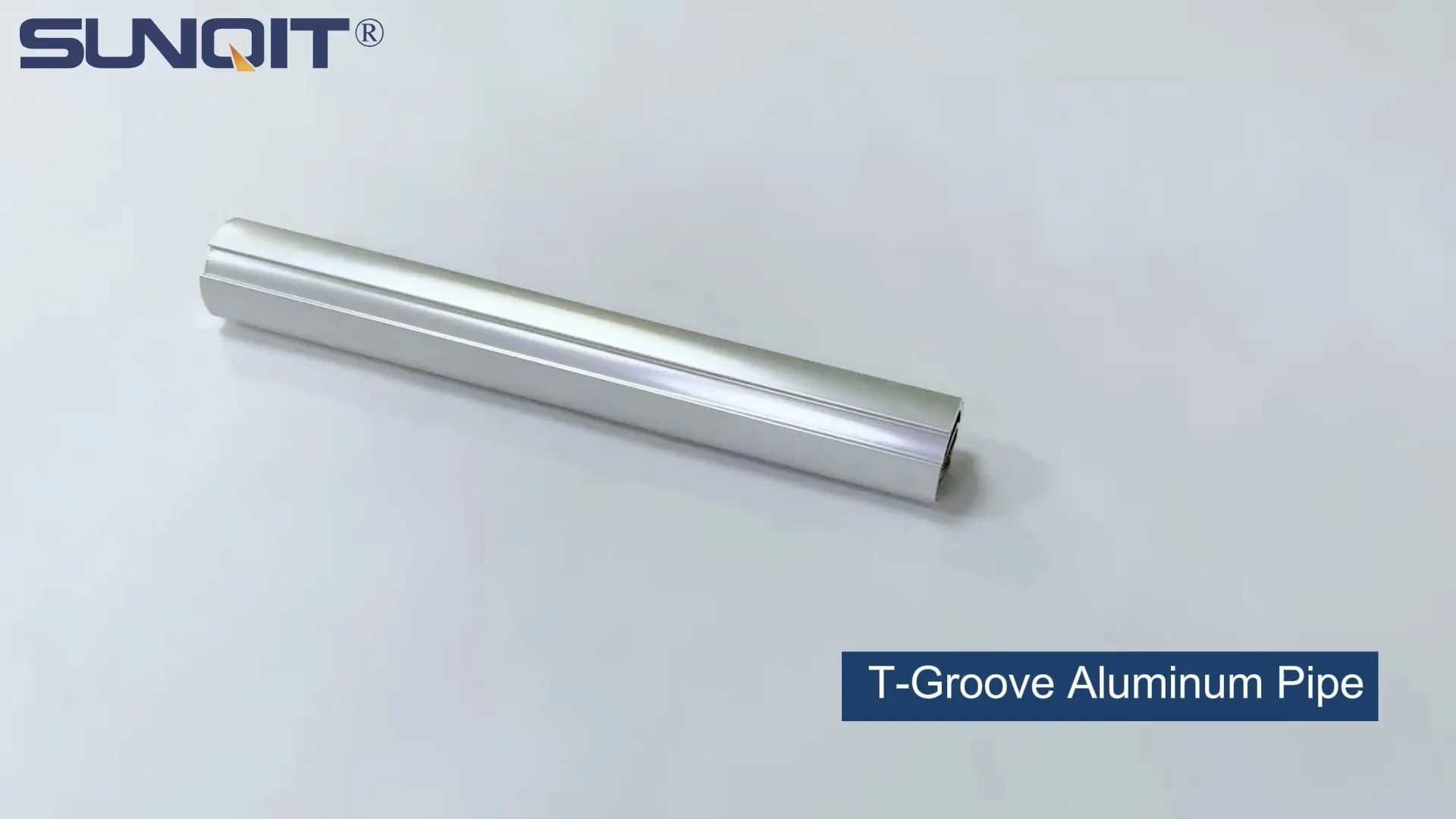
T-Groove Aluminum Pipe
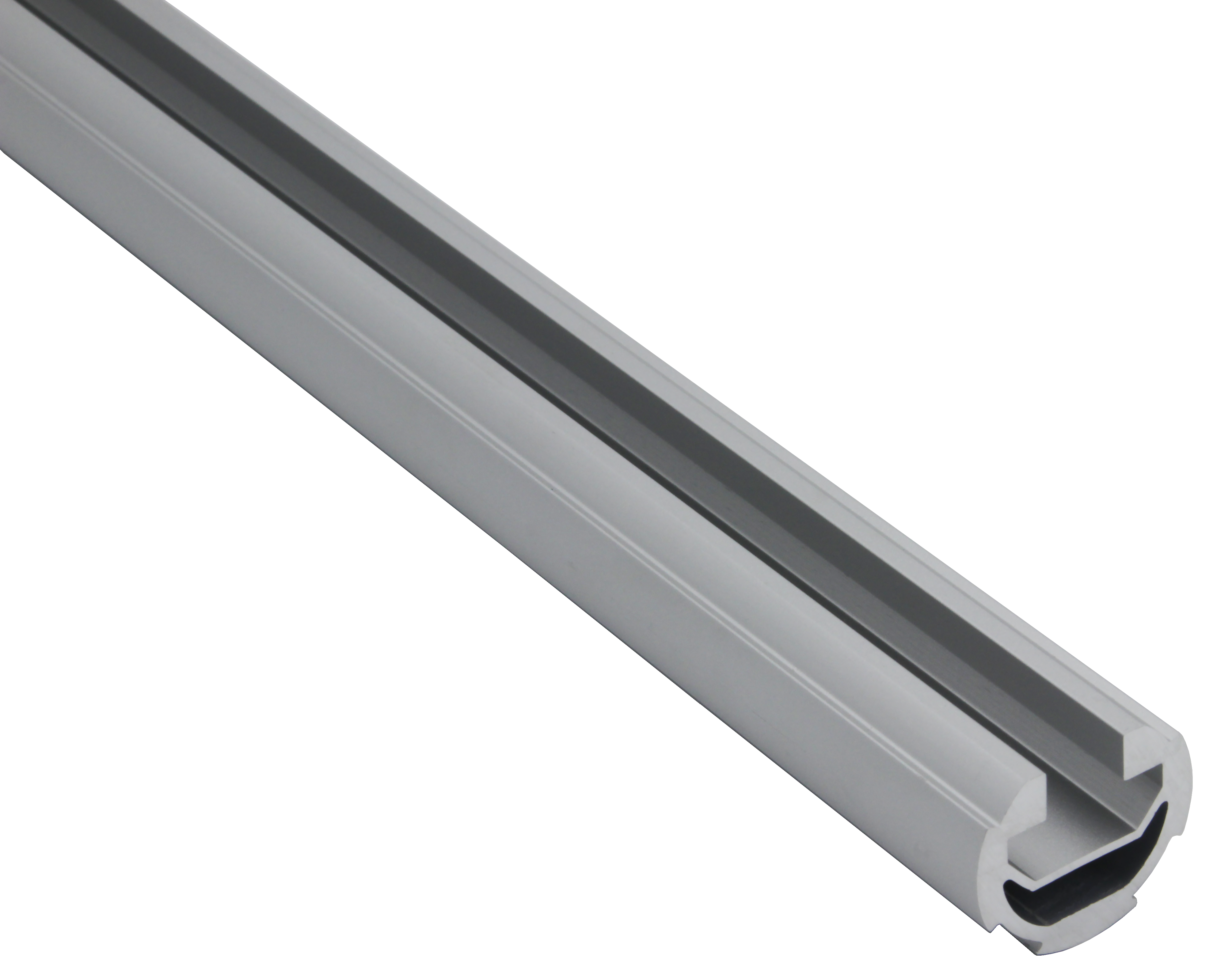
The aluminum pipe opening 10mm is installed into the T-shaped slider, which can be installed with casters or other matching functional parts. The groove can be used for positioning and is used for the track of the roller.
In the world of industrial manufacturing, assembly lines, and workshop setups, the backbone of efficiency often lies in the yet critical components that hold everything together. T-groove aluminum pipes, a staple in modular construction, are one such component. These lightweight, versatile structures form the basis of workbenches, material racks, conveyors, and countless other fixtures that keep operations running smoothly. But here's the thing: not all T-groove aluminum pipes are created equal. Choose the wrong size, and you could be looking at wobbly workbenches, sagging material racks, or even safety hazards that grind productivity to a halt. The key? Matching the pipe size to your specific load capacity needs.
Whether you're setting up a small electronics assembly station or a heavy-duty material handling system, understanding how to select the right T-groove aluminum pipe size is non-negotiable. This guide will walk you through the ins and outs of load capacity, the factors that influence it, and how to pair those needs with the perfect pipe size—all in plain, practical terms. Let's dive in.
1. Introduction to T-Groove Aluminum Pipes: More Than Just Metal Tubes
First, let's get clear on what we're talking about. T-groove aluminum pipes—also called aluminum extrusion profiles—are precisely engineered aluminum tubes with a T-shaped groove running along their length. This groove isn't just for show; it's the secret to their modular magic. It allows you to slide in brackets, connectors, panels, and other accessories without welding or drilling, making assembly, modification, and disassembly a breeze. Think of them as the building blocks of a customizable workspace.
Why aluminum? Unlike steel, aluminum offers a winning combo of strength and lightness. It's resistant to corrosion, which is a boon for workshops with humidity or chemical exposure, and its smooth finish makes cleaning easy. But the real star is the T-groove design. Whether you're constructing a workbench for tool storage, a material rack for parts, or a conveyor system for moving goods, these profiles adapt to almost any need. From small-scale labs to large factories, T-groove aluminum pipes are the unsung heroes of flexibility.
But here's where it gets tricky: their versatility can also be a double-edged sword. With sizes ranging from tiny 20x20mm profiles to beefy 80x40mm ones, choosing the right fit feels overwhelming. The good news? It doesn't have to be. By focusing on load capacity—the maximum weight a pipe can support without deforming or failing—you can narrow down your options quickly.
2. Understanding Load Capacity: Why It's the Make-or-Break Factor
Let's start with the basics: What is load capacity? Simply put, it's the maximum weight a structure (in this case, a T-groove aluminum pipe) can safely hold under specific conditions. But it's not just about "how much weight it can take before breaking." Load capacity also accounts for factors like how the weight is distributed, how long the pipe is, and whether the load is static (sitting still) or dynamic (moving or changing).
Why does this matter? Imagine you're building a material rack B (3 row and 3 floor) to store heavy automotive parts. If you skimp on pipe size, the middle shelf might sag under the weight over time, bending the pipes and making it hard to slide parts in and out. Worse, if the load exceeds the pipe's capacity, the whole rack could collapse—risking damage to parts, equipment, or even injury to workers. On the flip side, overestimating and choosing an overly large pipe wastes money and adds unnecessary weight, making the structure bulkier and harder to move or modify.
To avoid these pitfalls, you need to think about three types of loads:
- Static Loads: These are loads that don't move. A stack of boxes sitting on a shelf, tools resting on a workbench, or a stationary machine mounted to a frame—all static. The pipe must support this weight consistently over time without deforming.
- Dynamic Loads: Loads that move or change. Think of parts sliding down a roller track on a material rack, or a conveyor belt carrying components. Dynamic loads add stress because of movement—even a small bump can create sudden force that the pipe must absorb.
- Impact Loads: The most demanding of all. These are sudden, forceful loads, like dropping a heavy tool on a workbench or a pallet slamming into a rack. Even if your pipe handles static and dynamic loads, an impact could exceed its limits if you're not prepared.
In short, load capacity isn't a single number—it's a range that depends on how the pipe is used. And that's why choosing the right size starts with understanding your unique load scenario.
3. Key Factors Influencing Load Capacity of T-Groove Aluminum Pipes
Now that we know why load capacity matters, let's break down what determines how much weight a T-groove aluminum pipe can handle. It's not just about the pipe's width or height—though those matter. A mix of design and material factors come into play, and ignoring any of them could lead to a mismatched setup.
3.1 Material Thickness and Wall Strength
At the most basic level, thicker walls mean stronger pipes. A T-groove aluminum pipe with a 2mm wall thickness will support more weight than one with a 1mm wall, assuming all other factors are equal. But thickness isn't the only measure of strength. The way the wall is distributed—whether it's uniform around the pipe or reinforced in critical areas (like the T-groove)—also plays a role. For example, some profiles have thicker walls near the groove to withstand the stress of brackets and connectors being tightened into place.
3.2 Profile Dimensions: Size Does Matter
When we talk about "size" in T-groove aluminum pipes, we're referring to their cross-sectional dimensions—typically given as width x height (e.g., 2020, 3030, 4040). A 4040 profile, for instance, is 40mm wide and 40mm tall, while a 4080 is 40mm wide and 80mm tall. Generally, larger profiles (wider or taller) can handle more weight because they have more material to distribute the load. But it's not linear: a 4080 profile isn't just twice as strong as a 4040. The shape of the profile—whether it's square, rectangular, or has internal ribs—also affects rigidity. Ribbed profiles, for example, add internal support, making them stronger than hollow profiles of the same outer dimensions.
3.3 Aluminum Alloy and Temper
Aluminum isn't just aluminum. Different alloys (mixtures of aluminum and other metals like magnesium or silicon) have different strength properties. The most common alloy for T-groove profiles is 6063-T5. It's lightweight, corrosion-resistant, and has good structural strength—perfect for general-purpose use. For heavier loads, you might see 6061-T6, which is stronger but slightly heavier. The "T5" or "T6" refers to the temper (heat treatment process), which hardens the aluminum. T6 is stronger than T5, so a 6061-T6 profile will outperform a 6063-T5 profile of the same size.
3.4 Support Spacing: How Far Apart Are the Brackets?
Even the strongest pipe will sag if it's supported too far apart. Imagine a diving board: the longer it is, the more it bends under weight. The same logic applies to T-groove pipes. If you have a 1-meter long pipe supported only at the ends, it will carry less weight than the same pipe supported every 30cm. This is called "span" or "support spacing," and it's one of the most overlooked factors in load capacity. Most manufacturers provide load charts that show maximum weight based on span—for example, a 4040 profile might support 50kg over a 50cm span but only 20kg over a 100cm span. Always check these charts!
3.5 Mounting Method and Accessories
You could have the strongest pipe in the world, but if you attach it with flimsy brackets or loose joints, it won't matter. Aluminum profile accessories —like joints, connectors, and end supports—play a huge role in load capacity. A pipe mounted with heavy-duty corner brackets will distribute weight better than one held by flimsy plastic clips. Similarly, using T-nuts and bolts to secure accessories into the T-groove creates a tighter, more stable connection than relying on friction alone. Even something as simple as how tightly you torque the bolts can affect load capacity: too loose, and the joint shifts; too tight, and you risk stripping the groove.

4. How to Calculate Your Load Requirements: A Step-by-Step Guide
Now comes the practical part: figuring out exactly how much weight your T-groove aluminum pipe needs to support. This isn't about guessing—it's about breaking down your application into measurable numbers. Let's walk through the process step by step.
4.1 Step 1: Identify Your Application
Start by asking: What am I building? A workbench? A material rack? A conveyor? Each has different load needs. A workbench E (single deck-without caster) for small tools will have far lower load requirements than a material rack B (3 row and 3 floor) designed to hold heavy automotive parts. Write down your application and any specific details (e.g., "3-row material rack for storing 20kg boxes, 3 floors high").
4.2 Step 2: List All Load-Bearing Components
Next, list every item that will add weight to the pipe. For a workbench, this might include the bench top itself, tools, equipment (like a drill press), and even the weight of the person using it. For a material rack, it's the weight of the shelves, the boxes or parts on the shelves, and any accessories like dividers or labels. Be thorough—even small items add up.
4.3 Step 3: Calculate the Total Static Load
Add up the weight of all these components. Let's use a material rack B (3 row and 3 floor) as an example. Suppose each floor has 3 rows of boxes, with 5 boxes per row, and each box weighs 15kg. The shelves themselves are 8kg each, and there are 3 floors. Total static load would be:
Boxes per floor: 3 rows x 5 boxes = 15 boxes; 15 boxes x 15kg = 225kg per floor. 3 floors = 225kg x 3 = 675kg. Shelves: 3 floors x 8kg = 24kg. Total static load = 675kg + 24kg = 699kg. That's the baseline.
4.4 Step 4: Account for Dynamic and Impact Loads
Static load is just the start. If your application involves movement (dynamic load) or sudden impacts, you'll need to multiply the static load by a "dynamic factor" to get the effective load. For most industrial applications, a dynamic factor of 1.2–1.5 is standard. For example, if parts are regularly slid onto the material rack (dynamic load), multiply the static load by 1.3: 699kg x 1.3 = 908.7kg. If there's a risk of heavy impacts (like dropping boxes), bump that up to 1.5: 699kg x 1.5 = 1048.5kg.
4.5 Step 5: Add a Safety Margin
Even with precise calculations, real-world conditions are unpredictable. Maybe you add more boxes than planned, or a heavier tool ends up on the workbench. To account for this, add a safety margin—typically 20–50% of the effective load. For our material rack example with a dynamic load of 908.7kg, a 30% safety margin would be 908.7kg x 1.3 = 1181.3kg. This is the minimum load capacity your T-groove aluminum pipes need to support.
4.6 Example Load Calculation Table
| Application | Static Load (kg) | Dynamic Factor | Effective Load (kg) | Safety Margin (%) | Required Load Capacity (kg) |
|---|---|---|---|---|---|
| Small workbench (tools only) | 150kg (bench top + tools) | 1.0 (no movement) | 150kg | 30% | 195kg |
| Workbench with drill press (occasional use) | 300kg (bench + tools + drill press) | 1.2 (occasional movement) | 360kg | 30% | 468kg |
| Material rack B (3 row, 3 floor) – sliding parts | 699kg (boxes + shelves) | 1.3 (regular sliding) | 908.7kg | 30% | 1181.3kg |
| Conveyor for heavy parts (continuous movement) | 500kg (parts + conveyor belt) | 1.5 (constant dynamic load) | 750kg | 40% | 1050kg |

5. Common T-Groove Aluminum Pipe Sizes and Their Load Capacities
Now that you know your required load capacity, it's time to match it to a pipe size. T-groove aluminum pipes come in a range of standard sizes, each with its own load-handling capabilities. Let's take a look at the most common ones and what they're typically used for.
5.1 Standard Sizes and Their Typical Load Limits
Sizes are usually labeled by their cross-sectional dimensions in millimeters (width x height). Here's a breakdown of the most popular options, along with their approximate load capacities at common support spacings (remember, support spacing is the distance between brackets holding the pipe—closer spacing = higher load capacity):
| Profile Size (WxH, mm) | Wall Thickness (mm) | Max Static Load at 500mm Span (kg) | Max Static Load at 1000mm Span (kg) | Common Applications |
|---|---|---|---|---|
| 2020 | 1.0–1.5 | 80–120 | 30–50 | Small shelving, light-duty workbenches, display racks |
| 3030 | 1.5–2.0 | 200–250 | 80–120 | Medium workbenches, tool carts, small material racks |
| 4040 | 1.8–2.5 | 350–450 | 150–200 | Heavy workbenches, 2–3 floor material racks, conveyors |
| 4080 | 2.0–3.0 | 600–800 | 250–350 | Heavy-duty material racks, industrial conveyors, machine frames |
| 3060 | 1.8–2.5 | 400–500 | 180–250 | Wide shelving, workbenches with overhangs, medium conveyors |
5.2 What This Means for Your Application
Let's circle back to our material rack B (3 row and 3 floor) example, which needed a load capacity of ~1180kg. Looking at the table, a 4080 profile with a 500mm span can handle 600–800kg per pipe. But wait—most racks use multiple pipes (e.g., 4 vertical pipes for a 4-post rack). If the total load is 1180kg, and it's distributed across 4 pipes, each pipe would need to support ~295kg. A 4080 profile at 500mm span (600–800kg) would easily handle that. Alternatively, a 4040 profile at 500mm span (350–450kg) could also work, but with less margin for error. For peace of mind, the 4080 is the safer bet here.
For a small electronics workbench requiring 195kg (from the earlier table), a 3030 profile at 500mm span (200–250kg) would be perfect. It's strong enough to handle the load with room to spare, without overspending on a larger pipe.
6. Practical Selection Guide: Matching Size to Application
Now that you have the numbers, let's put it all together with a simple selection process. Here's how to translate your required load capacity into the right pipe size:
6.1 Step 1: Determine Your Required Load per Pipe
Divide your total required load capacity (from Section 4) by the number of pipes supporting the structure. For example, a 4-post material rack has 4 vertical pipes, so total load ÷ 4 = load per pipe.
6.2 Step 2: Choose Your Support Spacing
Decide how far apart your support brackets will be. For most racks and workbenches, 500mm–1000mm spacing is standard. If you need more load capacity, opt for closer spacing (e.g., 500mm instead of 1000mm).
6.3 Step 3: Cross-Reference with the Load Capacity Chart
Use the chart in Section 5.1 to find a pipe size where the max load at your chosen span exceeds the load per pipe. If your load per pipe is 295kg and you're using 500mm spacing, a 4040 profile (350–450kg at 500mm) or 4080 (600–800kg) would work. Choose the smaller size if you're on a budget and the load is well within the limit; go larger for extra durability or future expansion.
6.4 Step 4: Don't Forget the Accessories
Even the best pipe will fail if paired with weak accessories. Make sure your brackets, joints, and connectors are rated for the same load capacity as the pipe. For example, a 4080 pipe with flimsy plastic joints won't support 800kg—invest in heavy-duty aluminum or steel connectors.
7. Common Mistakes to Avoid
Even with the best intentions, it's easy to slip up when choosing T-groove aluminum pipe sizes. Here are the most common mistakes and how to steer clear of them:
- Underestimating dynamic loads: Many people only calculate static load and forget about movement. If parts are sliding, rolling, or being placed/removed regularly, always factor in dynamic load.
- Ignoring support spacing: A 4040 pipe might handle 400kg at 500mm span, but drop to 150kg at 1000mm. Always check the span rating.
- Sacrificing accessories for cost: Cheap joints or brackets can reduce the pipe's effective load capacity. Think of accessories as part of the strength equation.
- Overlooking future needs: If you might expand the rack or add heavier tools later, size up now. It's cheaper than rebuilding later.
8. Conclusion: Your Turn to Build Strong, Smart Structures
Choosing the right T-groove aluminum pipe size isn't rocket science—but it does require a bit of homework. By understanding your load capacity needs, the factors that influence them, and how to match those needs to standard sizes, you can build structures that are safe, durable, and perfectly tailored to your workflow. Whether you're assembling a workbench for daily use or a material rack to hold tons of inventory, the right pipe size is the foundation of success.
Remember: When in doubt, size up. It's better to have a pipe with extra capacity than one that struggles to keep up. And don't hesitate to consult with your aluminum extrusion profile supplier—they can provide detailed load charts for their specific products and help you fine-tune your selection.
Now go out there and build something that lasts.