- Company Articles
- Products and Technology
- Procurement Guidelines
- How to Choose T Slot Aluminum Pipe: Size, Wall Thickness, and Load Capacity

How to Choose T Slot Aluminum Pipe: Size, Wall Thickness, and Load Capacity
Related Product
T Slot Aluminum Pipe
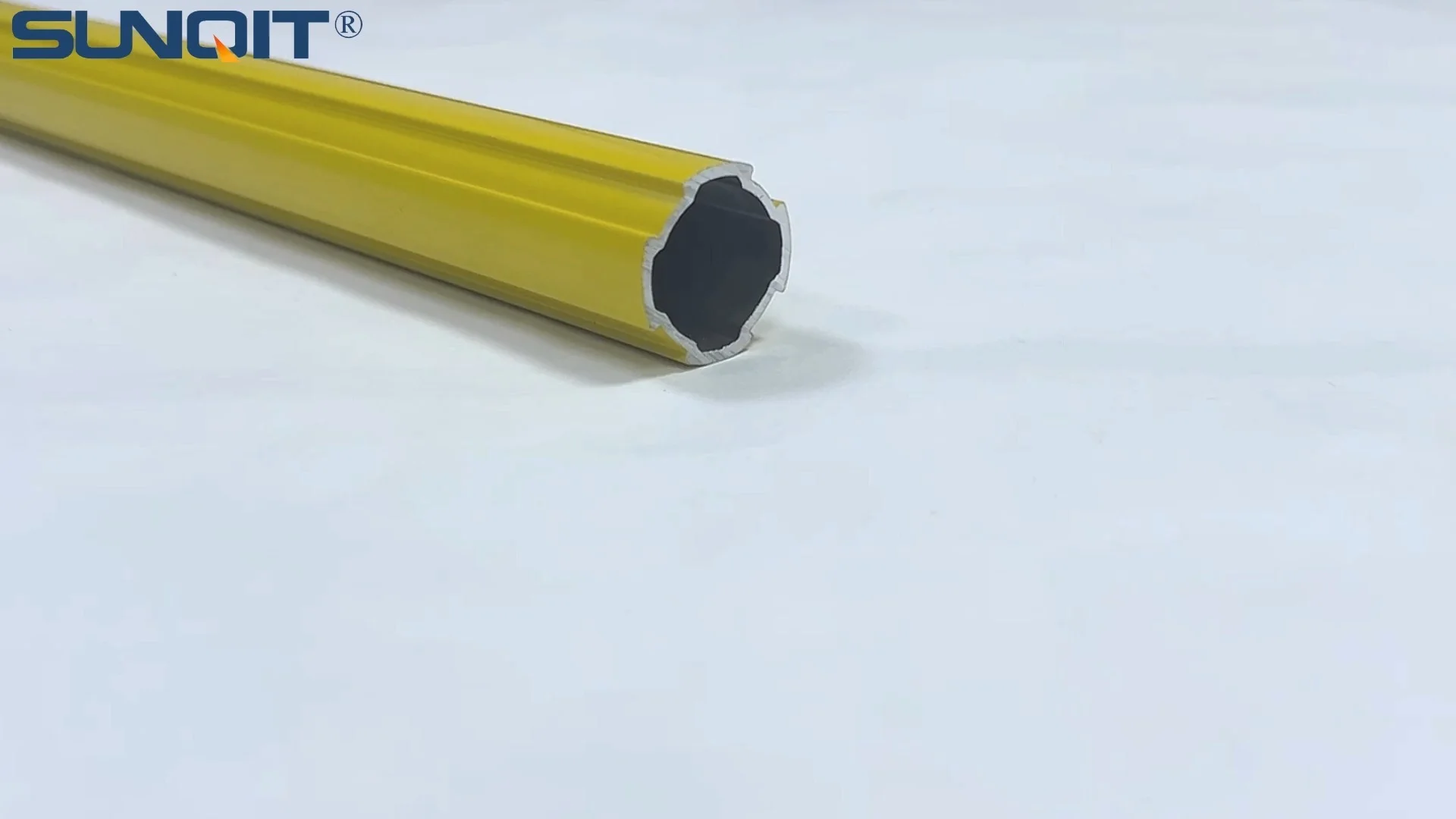
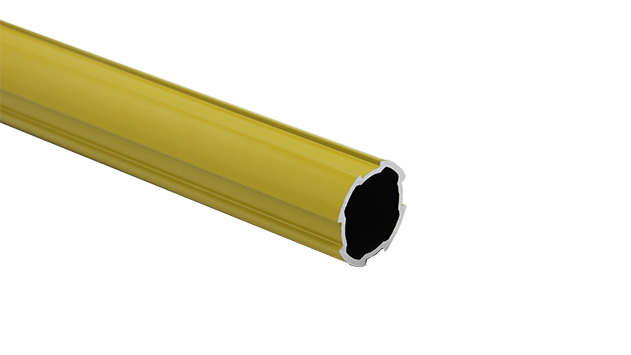
Aluminum pipe, it is used for workbench, flow rack,hand trolley assemble work with advantage of flexible and durable, yellow color makes it more attactive as a caution remind.
If you've ever walked through a manufacturing plant, visited a workshop, or even peeked into a well-organized garage, chances are you've seen T slot aluminum pipe in action. Those sleek, modular metal frames holding up workbenches, guiding conveyor belts, or organizing tools—they're everywhere. And it's no wonder why: T slot aluminum pipe is like the Swiss Army knife of industrial and DIY building materials. Its modular design lets you bolt, clamp, or slot in accessories to create everything from simple shelving to complex machinery guards. But here's the catch: not all T slot aluminum pipes are created equal. Choose the wrong size, skimp on wall thickness, or underestimate load capacity, and you could end up with a wobbly workbench, a sagging material rack, or worse—safety hazards that put your project (and people) at risk.
In this guide, we're going to break down the three most critical factors when choosing T slot aluminum pipe: size, wall thickness, and load capacity. We'll skip the jargon, use real-world examples, and even throw in a handy comparison table to make sure you walk away feeling confident about your next project. Whether you're building a small electronics workbench or setting up an industrial material handling system, let's get started.
First Things First: What Even Is T Slot Aluminum Pipe?
Before we dive into the nitty-gritty, let's make sure we're on the same page. T slot aluminum pipe—often just called "T slot aluminum" or part of the broader category of "aluminum profile"—is a type of extruded aluminum product. The "T slot" refers to the T-shaped grooves running along its length, which let you slide in bolts, brackets, or accessories without drilling holes. Think of it as building with giant, metal Lego blocks—only sturdier and infinitely more customizable.
Most T slot aluminum is made using an aluminum extrusion profile process. That means raw aluminum is heated and pushed through a die to create the specific shape (like the T slot design). This process is efficient, consistent, and why T slot aluminum comes in such a wide range of sizes and configurations. And because it's aluminum, it's lightweight, corrosion-resistant, and easy to work with—no need for heavy machinery to cut or drill it.
But here's where it gets confusing: T slot aluminum is just one type of aluminum profile. There are square tubes, round pipes, and even specialty shapes, but T slot stands out for its versatility. It's used in everything from automotive assembly lines to 3D printer frames, and yes—even that fancy home brewery setup you saw online. Now, let's talk about how to pick the right one for your project.
Factor 1: Size—Bigger Isn't Always Better (But Sometimes It Is)
When people talk about T slot aluminum pipe "size," they're usually referring to the cross-sectional dimensions—think width and height. Common sizes are labeled with numbers like 2020, 3030, 4040, or 4080. The first two digits are the width in millimeters, the last two are the height. So a 2020 profile is 20mm wide by 20mm tall, a 4080 is 40mm wide by 80mm tall, and so on. Simple enough, right? But how do you know which size to choose?
Small Sizes: 2020 and 3030—Great for Light-Duty Projects
Let's start small: the 2020 profile. At 20x20mm, this is the tiny but mighty option. It's lightweight (we're talking under 0.5kg per meter) and perfect for projects where space and weight matter most. Think: small 3D printer frames, electronics enclosures, or temporary display stands. I once helped a friend build a custom camera slider using 2020 T slot aluminum, and it worked like a charm—smooth, lightweight, and easy to adjust. But here's the catch: 2020 isn't built for heavy loads. Stack a few textbooks on a 2020 shelf, and you might start seeing some sag.
Step up to 3030 (30x30mm), and you get a bit more muscle. This is the "everyday" size for many DIYers and small workshops. It's still lightweight enough to handle with one hand but sturdy enough for small workbenches, tool racks, or even a mini assembly line for jewelry making. I've used 3030 to build a wall-mounted tool organizer in my garage, and it holds everything from hammers to drills without a hint of bending. The extra 10mm in width and height might not sound like much, but it makes a big difference in stability.
Medium Sizes: 4040—The Workhorse of T Slot Aluminum
If 3030 is the "everyday" size, 4040 (40x40mm) is the workhorse. This is where T slot aluminum starts to feel industrial. At around 1-1.5kg per meter (depending on wall thickness), it's heavy enough to anchor serious projects but still manageable for one person to install. 4040 is the go-to for industrial workbenches, material racks in warehouses, and even conveyor system frames. I visited a local electronics manufacturer last year, and their entire PCB assembly line was built with 4040 profiles—holding soldering stations, component bins, and testing equipment without a single wobble.
What makes 4040 so popular? It strikes the perfect balance between size, weight, and versatility. It can handle most medium-duty loads, and there's a huge range of aluminum profile accessories designed specifically for it—think heavy-duty brackets, locking casters, and even panel mounts for attaching plywood or metal sheets.
Large Sizes: 4080 and Beyond—For Heavy-Duty Industrial Use
When you need to go big, there's 4080 (40x80mm) and larger profiles like 5050 or 6060. These are the heavyweights, designed for industrial settings where load capacity and rigidity are non-negotiable. A 4080 profile, for example, is twice as tall as it is wide, giving it exceptional resistance to bending under heavy loads. I've seen 4080 used for everything from large material racks holding hundreds of pounds of automotive parts to machine guards around CNC mills. These profiles are not for casual DIY projects—they're heavy (2-3kg per meter) and require more planning to install, but when you need to support serious weight, they're worth every penny.
Pro tip: Don't oversize! It's tempting to grab the biggest profile "just to be safe," but larger sizes cost more, add unnecessary weight, and can make your project bulkier than it needs to be. A small garage workbench doesn't need 4080 any more than a 3D printer needs 4040. Match the size to the job.
Factor 2: Wall Thickness—Thicker Isn't Always Heavier, But It's Almost Always Stronger
If size is about "how big," wall thickness is about "how tough." The wall thickness of T slot aluminum pipe is exactly what it sounds like: the thickness of the metal walls that make up the profile. It's measured in millimeters (mm), and it has a huge impact on how much weight the pipe can support, how rigid it is, and even how much it costs. Let's break down the most common options and when to use them.
1.2mm—Lightweight, Temporary, or Low-Load Projects
At 1.2mm, this is the thinnest wall thickness you'll commonly find in T slot aluminum. It's lightweight, affordable, and great for projects that don't need to support much weight or will only be used temporarily. Think: trade show displays, temporary storage racks, or prototype frames that might get disassembled later. I once used 1.2mm wall 2020 profile to build a pop-up market stall, and it worked perfectly—light enough to carry in a car, sturdy enough to hold merchandise for a weekend. But I wouldn't trust it with anything heavy or permanent.
1.5mm—The Sweet Spot for Most Projects
If there's a "standard" wall thickness, it's 1.5mm. This is the Goldilocks of T slot aluminum—strong enough for most medium-duty jobs, not so thick that it adds unnecessary weight or cost. I'd estimate that 80% of the T slot projects I've seen use 1.5mm walls. From 3030 workbenches in home garages to 4040 material racks in small warehouses, 1.5mm hits that perfect balance. For example, a 4040 profile with 1.5mm walls can easily support 80-100kg over a 1-meter span (more on span later)—plenty for tools, parts, or even small machinery.
2.0mm and 3.0mm—Heavy-Duty and Industrial-Grade
When you need to step up the strength, 2.0mm and 3.0mm walls are where it's at. These are industrial-grade options, designed for high-load applications like heavy machinery bases, large conveyor systems, or material racks holding hundreds of pounds. A 4040 profile with 2.0mm walls can support 120-150kg over a 1-meter span—more than enough for a workbench loaded with power tools or a shelf stacked with metal parts. And 3.0mm? That's for specialized jobs, like supporting equipment that vibrates (which adds stress to the frame) or holding up heavy machinery components.
One thing to note: thicker walls mean heavier profiles. A 4040 with 3.0mm walls weighs almost twice as much as the same size with 1.5mm walls. That might not matter in a fixed industrial setup, but if you're building something mobile (like a rolling cart), the extra weight could make it hard to move. Always factor in weight along with strength.

Factor 3: Load Capacity—The Most Critical Number to Get Right
Here's where the rubber meets the road: load capacity. This is the maximum weight a T slot aluminum pipe can safely support without bending, sagging, or failing. Get this wrong, and your project could literally collapse. But calculating load capacity isn't as simple as "bigger size + thicker walls = more weight." It also depends on span (how far apart your supports are) and how the weight is distributed (concentrated in one spot vs. spread out).
Span: The Silent Enemy of Load Capacity
Span is the distance between two supports—like the legs of a workbench or the uprights of a shelf. The longer the span, the less weight the T slot aluminum can support. For example, a 4040 profile with 1.5mm walls might handle 100kg over a 1-meter span, but if you stretch that span to 2 meters, the same profile might only support 50kg. Why? Because the longer the unsupported section, the more the metal bends under weight—it's basic physics.
Let's use a real example. Suppose you're building a workbench with a 4040 top frame. If you space the legs 1 meter apart (so the span between legs is 1m), that 4040 with 1.5mm walls can hold a solid 100kg on top. But if you spread the legs to 2 meters apart to save on materials, suddenly that 100kg becomes 50kg. If you then place a 75kg tool chest in the middle, you'll start to see sagging within weeks. Moral of the story: keep spans short if you need to support heavy loads.
Distributed vs. Concentrated Loads
How you place weight matters too. A distributed load—like a shelf full of evenly spaced boxes—puts less stress on the T slot aluminum than a concentrated load, like a single heavy tool sitting in the middle. For example, a 3030 profile with 1.5mm walls might handle 50kg spread evenly over 1 meter, but only 30kg if that 50kg is all in one spot. Why? Because concentrated weight creates more bending force at the center of the span.
When planning your project, ask: Will the weight be spread out (like bins of small parts) or focused in one area (like a vice or a machine)? If it's the latter, either shorten the span or upgrade to a thicker wall or larger size.

Putting It All Together: A Handy Comparison Table
To make this easier, here's a comparison table of common T slot aluminum sizes, wall thicknesses, and typical load capacities over a 1-meter span. Remember, these are general guidelines—always check the manufacturer's specs for your specific profile!
| Profile Size (WxH in mm) | Wall Thickness (mm) | Approx. Weight per Meter (kg) | Typical Load Capacity (1m Span, Distributed Load) | Best For |
|---|---|---|---|---|
| 2020 | 1.2 | 0.3 | 15-20kg | Small frames, 3D printers, lightweight displays |
| 2020 | 1.5 | 0.4 | 25-30kg | Sturdier small projects, electronics enclosures |
| 3030 | 1.5 | 0.8 | 50-60kg | Home workshops, small tool racks, 3D printer frames |
| 3030 | 2.0 | 1.0 | 75-85kg | Medium-duty workbenches, small material racks |
| 4040 | 1.5 | 1.2 | 80-100kg | Industrial workbenches, conveyor frames, tool storage |
| 4040 | 2.0 | 1.6 | 120-140kg | Heavy-duty workbenches, material racks, machine bases |
| 4040 | 3.0 | 2.2 | 180-200kg | High-load industrial applications, machinery supports |
| 4080 | 2.0 | 2.0 | 150-170kg | Large material racks, conveyor systems, machine guards |
| 4080 | 3.0 | 2.8 | 220-250kg | Industrial material handling, heavy machinery frames |
Bonus: Don't Forget the Accessories
You could choose the perfect size and wall thickness, but if you skimp on aluminum profile accessories , your project will still fall short. Accessories like brackets, connectors, and end caps might seem like afterthoughts, but they're critical for transferring load safely and keeping your structure rigid. For example, a heavy-duty corner bracket rated for 200kg is useless if you pair it with a flimsy bolt that snaps under pressure. Always match accessories to the load capacity of your profile, and opt for high-quality, corrosion-resistant options (like anodized aluminum or stainless steel) if your project will be exposed to moisture or chemicals.
Pro tip: Look for accessories with "T slot" compatibility. Many brackets and connectors are designed to slide directly into the T slots, eliminating the need for drilling and making assembly a breeze. Brands like 80/20 or Misumi offer great accessories, but even budget-friendly options from Amazon or local suppliers work well for most projects—just check the weight ratings!
Final Thoughts: It's All About Balance
Choosing T slot aluminum pipe isn't rocket science, but it does require a bit of planning. Start by asking: What am I building? How much weight will it need to support? How far apart will the supports be? Then, use the size, wall thickness, and load capacity guidelines here to narrow down your options. And remember: balance is key. Oversizing adds cost and weight; undersizing risks failure. The goal is to find the profile that's just right for your project.
Whether you're a seasoned engineer or a weekend DIYer, T slot aluminum pipe is a fantastic material to work with. Its versatility means your project can evolve over time—add a shelf here, a bracket there, and suddenly you've got something entirely new. But it all starts with choosing the right foundation. So take your time, measure twice, and when in doubt, reach out to the manufacturer or a supplier—they're usually happy to help you calculate load capacity or recommend the best profile for your needs.
Now go build something awesome. And when you do, send us a photo—we'd love to see it.