- Company Articles
- Products and Technology
- Product knowledge
- How to Choose the Right 40 Aluminum Roller Track Grey for Your Manufacturing Needs

How to Choose the Right 40 Aluminum Roller Track Grey for Your Manufacturing Needs
Related Product
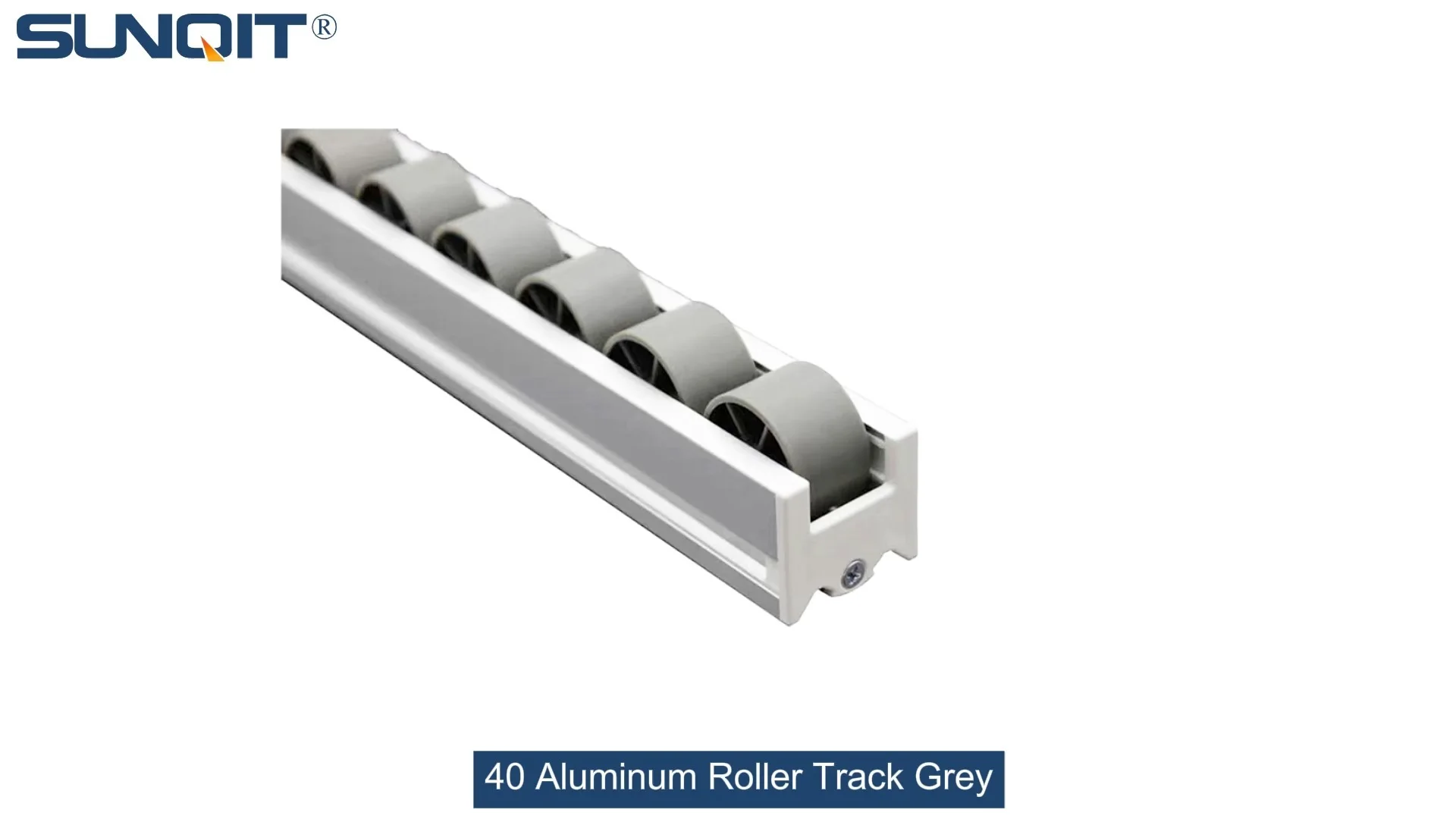
40 Aluminum Roller Track Grey
Durable and smooth-running modular roller rails. The system is fully assembled. The roller rail profile contains plastic rollers mounted on steel axles. Aluminum frame with plastic wheel make it anti corrosion,and material convey more smooth.
In the world of manufacturing, where every second counts and efficiency is the bottom line, the flow of materials can make or break your operations. Imagine a busy assembly line where parts get stuck on a clunky conveyor, or a workbench where tools take too long to reach the next station—these small hiccups add up to missed deadlines, frustrated teams, and lost revenue. That's where the right equipment comes in, and few tools are as quietly transformative as the humble roller track. Today, we're zeroing in on a workhorse of modern manufacturing: the 40 Aluminum Roller Track Grey. This unassuming component might just be the key to unlocking smoother workflows, faster production, and a leaner operation overall. But with so many options on the market, how do you choose the one that fits your needs? Let's dive in.
Understanding 40 Aluminum Roller Track Grey: More Than Just a "Track"
First things first: What exactly is 40 Aluminum Roller Track Grey, and why does it matter? At its core, it's a linear track system made from high-grade aluminum profile, designed to support and guide materials as they move through production lines, workbenches, or storage racks. The "40" refers to its width (typically 40mm), a common size that balances stability with flexibility, making it suitable for a wide range of loads. The "grey" finish isn't just aesthetic—think of it as a practical choice: it hides minor scratches (inevitable in busy factories), resists fading under harsh lighting, and offers better visibility for workers, reducing the risk of misplacing small parts.
But what really sets this roller track apart is its construction. Aluminum, by nature, is lightweight yet surprisingly strong—strong enough to handle daily wear without bending or warping. Unlike steel, it won't rust, making it ideal for environments where moisture or humidity is a concern (think food processing or pharmaceutical facilities). And because it's part of the aluminum extrusion family, it plays well with other aluminum profile accessories, from roller track connectors to placon mounts, letting you customize it to fit your exact setup. Whether you're building a material rack, integrating it into a flow rack system, or mounting it under a workbench, this track is built to adapt.
Key Factors to Consider When Choosing 40 Aluminum Roller Track Grey
Choosing a roller track isn't as simple as picking the first grey aluminum option you see. To ensure it aligns with your manufacturing goals, you'll need to weigh several critical factors. Let's break them down:
1. Load Capacity: Know What You're Moving
The most fundamental question is: How much weight will this track need to support? 40 Aluminum Roller Track Grey comes in different load ratings, and exceeding that limit is a recipe for disaster—bent tracks, stuck rollers, or even safety hazards. Start by calculating the average weight of the materials you'll be moving. Are they small electronic components (lightweight) or heavy metal parts (up to 50kg per linear meter)? Don't forget to account for "peak loads," like when a worker places a full bin of parts on the track. Most suppliers will list load capacities (e.g., 30kg/m, 50kg/m, 80kg/m), so match that number to your needs. When in doubt, opt for a slightly higher capacity—overestimating is better than replacing a track that fails prematurely.
2. Compatibility: Does It Play Well with Your Existing Setup?
Manufacturing facilities rarely start from scratch, so your new roller track needs to fit into your existing ecosystem. If your factory already uses aluminum profile workbenches, flow racks, or lean pipe systems, the 40 Aluminum Roller Track Grey must be compatible with those components. This is where attention to detail matters: Check the track's connection points. Does it use standard roller track placon mounts for aluminum profile (flat or high)? Will it fit with your existing roller track guide rails (grey, yellow, or another color)? For example, if your current setup uses aluminum guide rail A, ensure the track's placon mounts align with its slots. Mismatched parts lead to wobbly installations, uneven material flow, and extra costs for adapters. When in doubt, ask your supplier for a compatibility chart—reputable ones will have no problem sharing this.
3. Environmental Conditions: Will It Stand Up to Your Workplace?
A roller track that thrives in a dry, temperature-controlled electronics plant might falter in a humid warehouse or a factory with frequent temperature swings. Aluminum's rust resistance is a plus, but consider other factors: If your facility deals with static-sensitive components (like circuit boards), do you need ESD (electrostatic discharge) protection? While 40 Aluminum Roller Track Grey isn't inherently ESD-safe, some suppliers offer versions with conductive coatings or ESD-compliant rollers. Similarly, if your track will be exposed to oils, chemicals, or heavy debris, look for a grey finish that's resistant to staining or corrosion. Even something as simple as UV light can fade cheaper tracks—opt for anodized aluminum, which has a protective layer that stands up to harsh conditions.
4. Workflow Integration: Does It Fit Your Lean System?
At the end of the day, your roller track should serve your lean system —not the other way around. Lean manufacturing is all about minimizing waste, and a well-chosen track can eliminate waste in spades: less time retrieving parts, fewer bottlenecks, and smoother handoffs between stations. Ask: How will this track fit into your current flow? If you're using a kanban system, will it connect material racks to workbenches efficiently? Can it integrate with conveyor systems or flow racks to create a continuous "pull" of materials? For example, a 40 Aluminum Roller Track Grey mounted on a workbench can feed parts directly to assemblers, reducing the need for workers to walk to storage. Or, paired with a flow rack, it can ensure that the oldest parts (first in) are used first (first out), cutting down on inventory waste. The goal is to make the track feel like an invisible helper, not an afterthought.
5. Durability vs. Cost: Investing in the Long Run
Let's talk money. It's tempting to go for the cheapest roller track you can find, but remember: this is a tool you'll use daily, for years. A low-cost plastic track might save you $50 today, but if it cracks after six months, you'll spend more replacing it (not to mention the downtime). 40 Aluminum Roller Track Grey sits in the sweet spot of durability and affordability. Aluminum's longevity means you won't need to replace it every year, and its lightweight design reduces shipping and installation costs. When comparing options, calculate the "cost per year" rather than the upfront price. A slightly pricier aluminum track that lasts 5 years is a better deal than a cheap plastic one that lasts 18 months. And don't forget to factor in maintenance: aluminum requires almost none—no painting, no rust treatment, just an occasional wipe-down. That's time and money saved in the long run.

Comparing Roller Tracks: How 40 Aluminum Roller Track Grey Stacks Up
To help you visualize how 40 Aluminum Roller Track Grey compares to other common options, let's look at a quick breakdown. This table focuses on key features that matter most in manufacturing settings:
| Track Type | Material | Typical Load Capacity (kg/m) | Best For | Pros | Cons |
|---|---|---|---|---|---|
| 40 Aluminum Roller Track Grey | Aluminum profile | 30–80 | General manufacturing, workbenches, flow racks | Lightweight, rust-resistant, customizable with aluminum accessories | More expensive than plastic; not ideal for extremely heavy loads (>100kg/m) |
| 40 Steel Roller Track Yellow Wheel | Steel | 80–150 | Heavy machinery parts, automotive manufacturing | High load capacity, very durable | Heavy, prone to rust, requires more maintenance |
| 38 Aluminum Roller Track Black ESD | Aluminum with ESD coating | 20–50 | Electronics assembly, static-sensitive environments | ESD protection, lightweight | Narrower (38mm), lower load capacity |
| Plastic Roller Track (Grey) | PVC/Polypropylene | 10–30 | Light parts, low-budget setups | Cheapest option, lightweight | Easily cracks, fades in sunlight, limited lifespan |
As you can see, 40 Aluminum Roller Track Grey shines in versatility. It's not the absolute strongest (steel wins there) or the cheapest (plastic takes that title), but for most mid-sized manufacturing operations—where you need a balance of strength, durability, and adaptability—it's hard to beat.

Common Mistakes to Avoid When Choosing Your Roller Track
Even with the best intentions, it's easy to overlook critical details when shopping for roller tracks. Here are a few pitfalls to steer clear of:
Mistake #1: Skipping Load Testing
Never assume a track can handle your load based solely on the supplier's specs. If possible, request a sample and test it with your actual materials. A track rated for 50kg/m might struggle with unevenly distributed weight (like a lopsided bin), so simulate real-world conditions. It's better to be safe than sorry—no one wants to explain a production halt because the track bent on day one.
Mistake #2: Ignoring Compatibility with Lean Pipe Systems
If your facility uses lean pipe (or plans to), make sure the 40 Aluminum Roller Track Grey works with your existing lean pipe joints and accessories. For example, if you have a lean pipe workbench, can the track mount directly to its frame using standard brackets? Mixing aluminum and lean pipe isn't impossible, but mismatched components will require adapters, adding cost and complexity. Ask your supplier: "Will this track integrate with my current lean system without extra parts?"
Mistake #3: Choosing Based on Color Alone
Yes, the grey finish is practical, but don't pick a track just because it matches your factory's color scheme. Prioritize function over form. A yellow track might be easier to spot in dimly lit areas, or a black ESD track could be non-negotiable for electronics work. Grey is a great all-rounder, but ensure it aligns with your needs , not just your aesthetic preferences.

Case Study: How One Manufacturer Transformed Their Line with 40 Aluminum Roller Track Grey
Let's put this all into context with a real-world example. Take "TechPro Assemblies," a mid-sized electronics manufacturer that was struggling with bottlenecks in their circuit board production line. Their old setup used plastic roller tracks under workbenches, which frequently jammed when parts (like small resistors or capacitors) got caught in cracks. Workers were spending 15–20 minutes per shift unjamming tracks, and the plastic was starting to warp under the weight of tool bins, leading to uneven material flow.
After assessing their needs, TechPro switched to 40 Aluminum Roller Track Grey. They opted for a load capacity of 50kg/m (more than enough for their parts) and paired it with aluminum profile workbenches and roller track placon mounts for aluminum profile flat (to ensure a secure fit). The results? Within a month, unplanned downtime dropped by 40%, and workers reported "smoother, faster" material movement. The grey finish made it easier to spot misplaced parts, and the aluminum held up to daily use without warping. Best of all, because the track was compatible with their existing aluminum guide rail A, they didn't need to replace their entire setup—just the tracks. Total cost? About $2,000 for 20 meters of track and accessories. ROI? Priceless, according to their operations manager: "We're hitting production targets we thought were impossible before."
Sourcing the Right 40 Aluminum Roller Track Grey: What to Look for in a Supplier
Once you've nailed down your requirements, the next step is finding a supplier you can trust. Not all aluminum roller tracks are created equal, and a shoddy supplier can leave you with subpar products that fail when you need them most. Here's what to ask before you buy:
1. "Can You Provide Material Certifications?"
Reputable suppliers will have no problem sharing certifications for their aluminum profile (e.g., ISO 9001 for quality management) or test reports for load capacity. This ensures the track meets industry standards and isn't made from cheap, recycled aluminum that might crack under stress.
2. "Do You Offer Samples?"
Always test before you buy in bulk. A sample lets you check the finish (is the grey uniform? Does it scratch easily?), test the rollers (do they spin smoothly?), and verify compatibility with your existing accessories. If a supplier refuses to send samples, that's a red flag.
3. "What's Your Lead Time for Custom Orders?"
If you need a specific length, load capacity, or custom accessories (like specialized roller track connectors), ask how long it will take. A good supplier should be able to accommodate custom requests within a reasonable timeframe (2–4 weeks is standard) without inflating prices.
Final Thoughts: Your Roller Track, Your Success
Choosing the right 40 Aluminum Roller Track Grey isn't just about picking a "track"—it's about investing in your team's productivity, your customers' satisfaction, and your bottom line. By focusing on load capacity, compatibility with aluminum profile and lean systems, environmental needs, and supplier reliability, you'll find a track that doesn't just "work"—it elevates your operations. Remember, the best roller track is the one that fits so seamlessly into your workflow, you forget it's there—until you look at the numbers: faster production, fewer delays, and a team that can focus on what they do best, not fighting with equipment.
So, take the time to assess your needs, test your options, and don't settle for anything less than a track that's built to grow with your business. After all, in manufacturing, the right tools don't just keep the lights on—they help you shine.