- Company Articles
- Products and Technology
- Product knowledge
- How to Choose the Right 4080B EU Standard Aluminum Profile for Your Project

How to Choose the Right 4080B EU Standard Aluminum Profile for Your Project
Related Product
4080B EU Standard Aluminum Profile
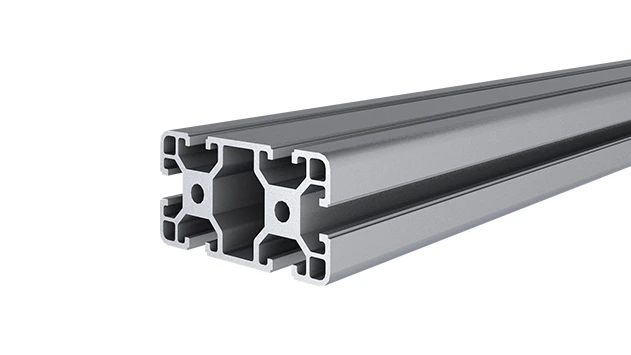
4080B is a 4.00x8.00 CM fractional 40 series square extrusion T-slot profile with two side open T-slots, each side with 4.00cm face, two side with 8.00cm face. The profile has align-a-grooves to assist in aligning connecting profiles.
Whether you're building a sturdy workbench for your workshop, designing a material rack for a factory floor, or constructing a lean system to streamline production, the aluminum profile you choose can make or break the project. Among the many options available, the 4080B EU standard aluminum profile stands out for its versatility and strength—but how do you know if it's the right fit? Let's walk through everything you need to consider, from understanding its specs to matching it with your project's unique needs.
What Even Is a 4080B EU Standard Aluminum Profile?
First things first: Let's decode the name. The "4080" in 4080B refers to its cross-sectional dimensions—40 millimeters in width and 80 millimeters in height. It's like the profile's ID card, telling you exactly how much space it will take up and hinting at its structural capabilities. The "EU standard" part means it adheres to strict European guidelines for quality, dimensions, and material composition, ensuring consistency whether you buy it from a supplier in Germany, France, or your local aluminum profile supplier.
Most 4080B profiles are made from 6063-T5 aluminum alloy, a material known for its excellent balance of strength, corrosion resistance, and machinability. Think of it as the workhorse of aluminum alloys—tough enough to handle heavy loads but light enough to make assembly manageable. The surface is usually anodized, giving it a smooth, matte finish that resists scratches and tarnishing, which is a big plus if your project will be exposed to daily wear and tear.
But what really makes the 4080B special is its t-slot design. Running along its length are grooves (t-slots) that let you attach accessories like brackets, connectors, and panels without welding. It's like building with giant, industrial Legos—no special tools required, just a few bolts and a wrench. This flexibility is why it's a favorite for everything from simple workbenches to complex lean system setups.
Key Factors to Consider Before Choosing 4080B
Choosing an aluminum profile isn't just about picking a size and color. You need to dig into the details to ensure it aligns with what your project demands. Here are the critical questions to ask:
1. What's the Maximum Load Your Project Will Handle?
Let's say you're building a workbench for assembling heavy machinery parts. If the bench sags under the weight of tools and components, it's not just frustrating—it's unsafe. The 4080B is known for its impressive load capacity, but you need to get specific. Most manufacturers rate it for static loads (loads that don't move) of around 500-800 kg per linear meter, depending on how it's supported. For dynamic loads (like materials sliding on a conveyor or parts being placed and removed repeatedly), that number drops slightly, so factor in movement if your project involves motion.
Pro tip: If you're unsure, ask your supplier for a load chart. Reputable suppliers will have tested their profiles and can tell you exactly how much weight the 4080B can handle in different configurations—whether it's mounted horizontally as a shelf or vertically as a support beam.
2. How Will You Assemble It? Compatibility with Aluminum Profile Accessories Matters
One of the biggest perks of aluminum profiles is their modularity, but that only works if the accessories play nice. The 4080B's t-slots are designed to fit standard EU-compatible hardware, but not all accessories are created equal. For example, 90° aluminum profile connectors are a common choice for joining two profiles at a right angle, but you'll need to make sure the connector's bolt size matches the t-slot width (usually M6 or M8 for 4080B). Similarly, end caps—those small plastic or metal covers that seal the ends of the profile—come in specific sizes; a 4040 end cap won't fit a 4080B, no matter how hard you push.
Don't forget about brackets, gussets, and panel mounts, too. If your project requires attaching a plywood top to a workbench frame, you'll need brackets that can grip the t-slots securely. Cheap or ill-fitting accessories can turn a solid profile into a wobbly mess, so invest in quality parts from the same supplier if possible—they'll have already tested compatibility.
3. What's the Environment Like? Think About Corrosion and Wear
Aluminum is naturally resistant to rust, but that doesn't mean it's invincible. If your project will live in a damp garage, a factory with chemical fumes, or outdoors, you need to pay attention to the profile's surface treatment. Most 4080B profiles come with an anodized finish, which adds a thin layer of oxide to the surface, boosting corrosion resistance. For extra protection, some suppliers offer powder-coated options, which are great for vibrant colors or added durability in harsh environments.
Wear and tear is another consideration. If you're building a material rack where boxes will slide in and out daily, the edges of the t-slots might take a beating. Look for profiles with rounded slot edges—they're less likely to chip or catch on accessories over time. It's the little details like this that keep your project functional for years, not just months.

When Does 4080B Make the Most Sense? Common Applications
The 4080B isn't a one-trick pony. Its size and strength make it suitable for a range of projects, but some uses stand out more than others. Let's break down the scenarios where it shines brightest:
Workbenches and Assembly Stations
A workbench needs to be rock-solid—no one wants their tools bouncing around while they're trying to focus. The 4080B's 80mm height gives it excellent vertical rigidity, so even if you lean on the bench or clamp heavy objects to it, it won't flex. Pair it with a sturdy top (like plywood or aluminum honeycomb panel) and some adjustable feet, and you've got a workbench that can handle everything from woodworking to electronics assembly.
Lean Systems and Production Lines
Lean manufacturing is all about efficiency—minimizing waste, streamlining workflows, and keeping materials moving. The 4080B is a staple in lean system setups because it can support conveyor systems, flow racks, and turnover trolleys with ease. For example, you could build a material rack B (3 row and 3 floor) using 4080B uprights, ensuring each shelf can hold boxes of components without bowing. Its t-slots also make it easy to add accessories like tool holders or label brackets, keeping the line organized and clutter-free.
Machine Frames and Enclosures
If you're building a custom machine or enclosing equipment, the 4080B provides a robust frame. Its high load capacity means it can support motors, pumps, or heavy control panels, while its modular design makes it easy to add access panels or cable management slots. Plus, since it's lightweight compared to steel, you won't need a forklift to move the frame during assembly—always a bonus for small workshops.
Of course, there are times when 4080B might be overkill. If you're building a small shelving unit for a home garage, a smaller profile like 4040A would work just fine and save you money. But for projects that need to stand up to daily industrial use, 4080B is often worth the investment.
4080B vs. Other EU Standard Profiles: A Quick Comparison
With so many EU standard profiles out there—4040A, 3030A, 2020, to name a few—how do you know 4080B is the right pick? Let's compare it to some popular alternatives using a table to see how they stack up:
| Profile Type | Dimensions (WxH, mm) | Approx. Weight (kg/m) | Static Load Capacity (kg/m)* | Best For |
|---|---|---|---|---|
| 4080B EU Standard | 40x80 | 2.5-3.0 | 500-800 | Workbenches, machine frames, heavy-duty racks |
| 4040A EU Standard | 40x40 | 1.5-2.0 | 200-400 | Shelving, light workbenches, small enclosures |
| 3030A EU Standard | 30x30 | 1.0-1.2 | 100-200 | DIY projects, small carts, lightweight frames |
| 2020 EU Standard | 20x20 | 0.5-0.7 | 50-100 | Prototyping, desktop organizers, small robotics |
*Load capacities are approximate and vary by supplier and mounting configuration.
As you can see, 4080B sits in the middle of the pack in terms of weight but offers significantly higher load capacity than smaller profiles. If your project requires supporting heavy loads or needs extra rigidity, it's a clear step up from 4040A or 3030A. On the flip side, if you're working with tight spaces or need something lightweight, a smaller profile might be more practical.
Choosing the Right Supplier: What to Look For
Even the best profile design falls flat if you get a low-quality product. When shopping for 4080B, not all aluminum profile suppliers are created equal. Here's what to keep in mind to ensure you're getting a reliable product:
Certifications and Quality Control
EU standard profiles should come with documentation proving they meet EN standards (like EN 755-9 for aluminum extrusions). Ask the supplier for test reports or certificates—reputable ones will be happy to share them. You should also inquire about their quality control process: Do they inspect each batch for straightness, surface defects, or dimensional accuracy? A profile that's slightly bent or has uneven t-slots will make assembly a nightmare.
Range of Accessories
Remember earlier when we talked about compatibility? It's much easier to buy both the profile and accessories from the same supplier. Look for suppliers that stock a wide range of aluminum profile accessories, from 90° connectors and end caps to specialized parts like roller track placon mounts or caster wheels. This way, you can be sure everything will fit together seamlessly, and if there's an issue, you won't have to juggle multiple customer service teams.
Customer Support and Expertise
Unless you're an aluminum profile pro, you'll probably have questions. A good supplier should be able to help you calculate load capacities, recommend accessories, or even suggest design tweaks. Pay attention to how responsive they are—do they answer emails promptly? Do their sales reps seem knowledgeable, or do they just push products? A supplier that takes the time to understand your project is worth its weight in aluminum.
Avoid These Common Mistakes
Even with all this info, it's easy to slip up. Here are a few pitfalls to watch out for:
Overestimating (or Underestimating) Load Capacity
It's tempting to "play it safe" by choosing a beefy profile like 4080B for every project, but that can waste money. On the flip side, skimping on load capacity to save a few bucks can lead to collapsed shelves or wobbly workbenches. Take the time to calculate your project's maximum load—include the weight of the profile itself, accessories, and any materials it will hold—and choose accordingly.
Ignoring Environmental Factors
We touched on this earlier, but it's worth repeating: Don't assume all 4080B profiles are the same in harsh environments. If your project will be near saltwater, chemicals, or extreme temperatures, ask about specialized treatments. A standard anodized profile might not cut it, and replacing a corroded frame down the line will cost more than upgrading upfront.
Skipping Prototyping
For complex projects—like a custom lean system or multi-level material rack—build a small prototype first. Use scrap pieces of 4080B and a few accessories to test the design. Does the frame feel stable? Are the t-slots in the right place for your accessories? Prototyping helps you catch issues early, before you've invested in full-length profiles and a truckload of connectors.
Wrapping It Up: Is 4080B Right for You?
At the end of the day, choosing the right aluminum profile comes down to balancing your project's needs with the profile's capabilities. The 4080B EU standard aluminum profile is a strong, versatile option that works for everything from heavy-duty workbenches to lean system setups. It's not the cheapest or the lightest, but its reliability and adaptability make it a favorite for professionals and hobbyists alike.
To recap: Start by understanding your project's load requirements, environment, and assembly needs. Compare 4080B to other profiles using the table above, and don't forget to vet your supplier for quality and support. Avoid common mistakes like guessing load capacity or ignoring accessory compatibility, and when in doubt, prototype first.
Whether you're a seasoned engineer or a weekend DIYer, taking the time to choose the right profile will ensure your project is not just functional, but built to last. And if you do decide 4080B is the way to go, you'll be joining thousands of others who've trusted it to bring their ideas to life—one t-slot at a time.