- Company Articles
- Products and Technology
- Product knowledge
- How to Choose the Right Anti-Slip Adjustable Leveling Feet for Your Workbench

How to Choose the Right Anti-Slip Adjustable Leveling Feet for Your Workbench
Related Product
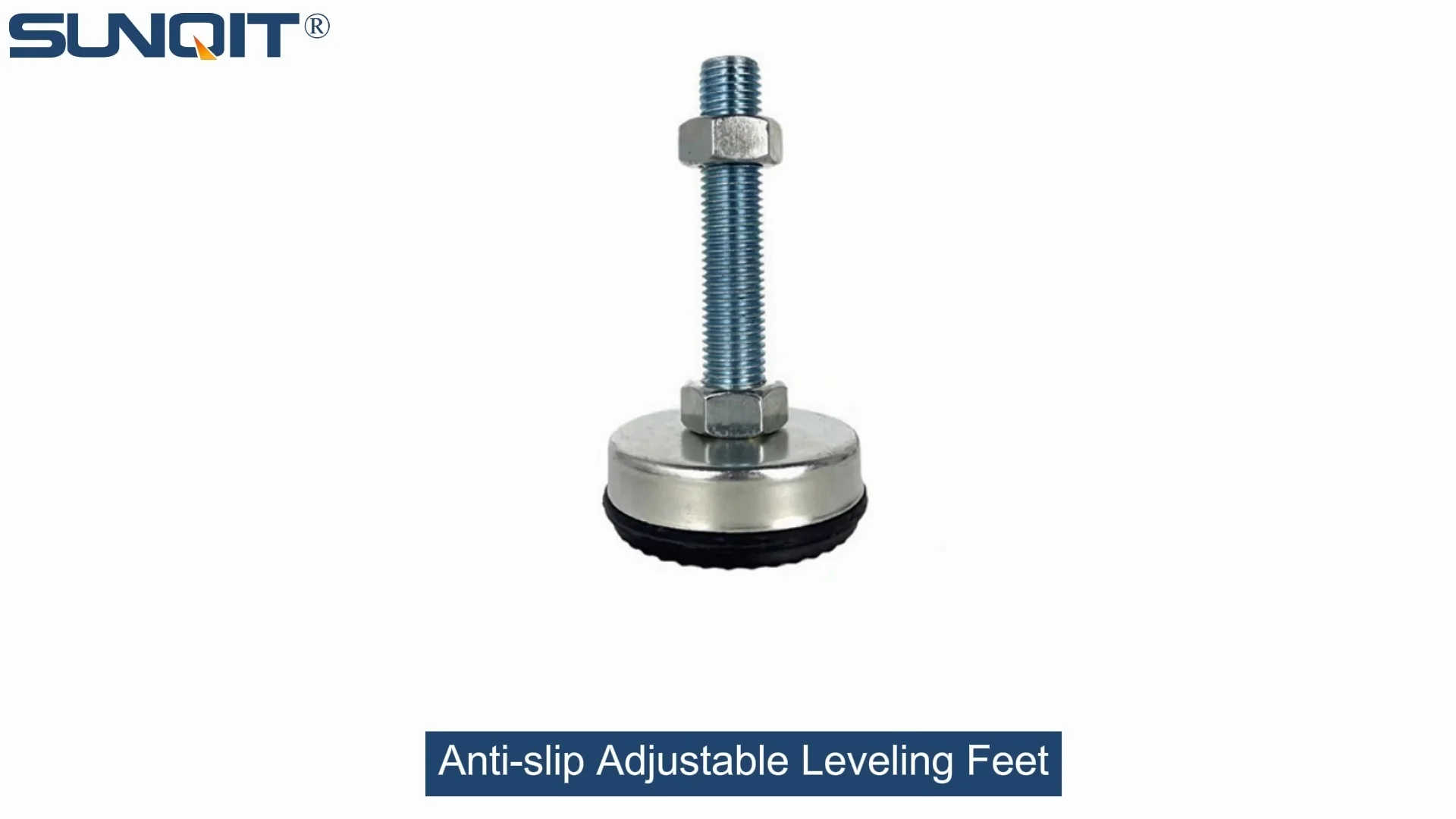
Anti-slip Adjustable Leveling Feet
Anti-slip Adjustable Leveling Feet are designed to keep machines level when placed on uneven or sloped ground, the rubber base will prevent product slip during work.
Picture this: You're in the middle of a critical project—maybe assembling a delicate electronic component on your workbench, or cutting a piece of hardwood for a custom furniture build. Suddenly, the workbench wobbles. Your hand slips, and the tool in your grasp skates across the surface, leaving a scratch (or worse, damaging the part you're working on). Frustrating, right? What if we told you this scenario is often avoidable? The culprit here might not be the workbench itself, but something far smaller yet infinitely important: the feet holding it up. Enter anti-slip adjustable leveling feet —the unsung heroes of stable, functional workspaces. Whether you're outfitting a garage workshop, a manufacturing floor with aluminum profile workbenches, or a home DIY station, choosing the right leveling feet can transform your workbench from a source of frustration into a reliable partner. In this guide, we'll walk you through everything you need to know to pick the perfect pair.
Understanding the Basics: What Are Anti-Slip Adjustable Leveling Feet?
Before diving into the nitty-gritty of selection, let's start with the fundamentals. Anti-slip adjustable leveling feet are small but mighty components attached to the bottom of furniture, equipment, or in our case, workbenches. Their primary job? Twofold: first, to level the workbench on uneven floors by allowing height adjustments, and second, to prevent slipping —ensuring the workbench stays put, even when you're applying force or moving heavy materials. Think of them as the workbench's "shoes": just as a good pair of boots provides traction and support for your feet, these feet do the same for your workspace.
Most leveling feet consist of three key parts: a base (the part that touches the floor), a stem (the threaded rod that connects the base to the workbench), and a locking mechanism (to keep the foot at the desired height once adjusted). The "anti-slip" feature usually comes from the base material—often rubber, nylon, or a textured metal—that grips the floor surface, while "adjustable" refers to the threaded stem, which can be twisted to raise or lower the foot as needed.
Key Factors to Consider When Choosing Leveling Feet
Not all leveling feet are created equal. The right choice depends on your specific workbench, the environment it's in, and how you use it. Let's break down the critical factors to evaluate before making a purchase.
1. Your Workbench Type and Material
First things first: What kind of workbench are you working with? A lightweight wooden workbench in a home garage has different needs than a heavy-duty aluminum profile workbench in a factory. For example, aluminum profile workbenches—popular in industrial settings for their durability and modularity—often require feet that can handle higher weight loads and resist wear from constant use. Similarly, if your workbench is mobile (think: a rolling cart with caster wheels that you sometimes lock in place), you'll need leveling feet that can coexist with casters, maybe even with a mechanism to raise the casters off the floor when stability is needed.
Workbench material matters too. Metal workbenches may require feet with metal stems to avoid corrosion, while wooden ones might pair better with nylon stems to prevent splitting the wood. And if your workbench has pre-drilled holes for feet, you'll need to match the stem diameter to those holes—measure twice, buy once!
2. Load Capacity: How Much Weight Will It Support?
This is non-negotiable. Every leveling foot has a maximum load capacity—the total weight it can safely support without bending, breaking, or losing grip. To calculate the required capacity, start with the weight of the workbench itself, then add the maximum weight of tools, materials, and any items you'll place on it. Divide that total by the number of feet (most workbenches have 4, but some larger ones have 6 or more) to get the minimum load each foot should handle. For example, a 200-pound workbench with 500 pounds of tools and materials on top totals 700 pounds. With 4 feet, each foot needs to support at least 175 pounds. Always err on the side of caution—opt for feet with a capacity 20-30% higher than your calculated needs to account for sudden impacts (like dropping a heavy tool) or uneven weight distribution.
3. The Floor Surface: Smooth, Rough, or Somewhere in Between?
Your floor type dictates the kind of anti-slip base you need. Let's say you're working on concrete (common in garages and factories). Concrete is hard and often slightly porous, so a rubber base with a textured surface will grip well. But if your floor is smooth tile or polished wood, rubber might still work, but you may want to avoid overly soft materials that could leave marks. Nylon bases are a good alternative here—they're firm enough to resist indentation but still provide traction. For uneven floors (like old wooden planks or outdoor surfaces), look for feet with larger base diameters (3 inches or more) to distribute weight and reduce sinking into gaps.
4. Environmental Conditions: Moisture, Chemicals, and Temperature
Where is your workbench located? A damp basement workshop will expose feet to moisture, so you'll need rust-resistant stems (stainless steel is a good bet) and bases that won't degrade in humidity (avoid untreated metal). If you're working with oils, solvents, or chemicals (common in automotive or manufacturing settings), the base material should be chemical-resistant—nylon or Viton rubber, for example, hold up better than standard rubber, which can break down when exposed to harsh substances. Extreme temperatures are another consideration: If your workbench is in a cold garage or a hot warehouse, ensure the base material won't become brittle (in cold) or soft (in heat), which would compromise grip.
5. Adjustment Range: How Much Height Do You Need to Cover?
Floors are rarely perfectly level, so the adjustment range of the leveling feet—how much you can raise or lower each foot—is crucial. Measure the worst-case unevenness in your workspace: Is one corner of the floor an inch lower than the others? Then you'll need feet that can extend at least 1 inch to compensate. Most standard leveling feet offer adjustment ranges between ½ inch and 2 inches, but if you're dealing with severely uneven floors (like a garage with a sloped floor for drainage), you may need extended-stem options that can adjust up to 4 inches or more. Keep in mind: The longer the stem, the more thread it has, which means more adjustability—but also potentially less stability if over-extended. Look for feet with a sturdy stem (thicker diameter) if you need a large adjustment range.
6. Anti-Slip Features: More Than Just "Grip"
The "anti-slip" label is a bit broad—what exactly makes a foot "anti-slip"? It's not just about the material; texture and design play a role too. Look for bases with a patterned or ribbed surface, which creates more friction than a smooth base. Some feet even have a "cup" shape, which helps channel away small debris (like sawdust or metal shavings) that could get between the base and the floor, reducing grip. For extra security, consider feet with a "non-marking" base—important if you're working on delicate floors (like polished concrete in a showroom) where scuffs or stains would be a problem.

Types of Anti-Slip Adjustable Leveling Feet: Which Is Right for You?
Now that you know what to look for, let's explore the most common types of anti-slip adjustable leveling feet. Each has its own strengths, so we'll break down the options to help you match them to your needs.
Threaded Stem vs. Fixed-Height Feet
The majority of leveling feet are threaded stem —meaning the stem is a screw that twists into a threaded hole in the workbench leg. This allows for precise height adjustment by simply turning the foot. These are ideal for most workbenches, as they're easy to install and adjust on the fly. Fixed-height feet , on the other hand, don't adjust; they're more like sturdy, non-slip pads. These are only useful if your floor is perfectly level and you never need to reposition the workbench. For most users, threaded stem is the way to go.
Base Material: Rubber, Nylon, or Metal?
The base material is the star of the anti-slip show. Here's how the most common options stack up:
- Rubber: The gold standard for grip. Rubber bases conform slightly to the floor surface, creating a strong bond. They're great for most indoor floors (wood, concrete, tile) and absorb vibrations—useful if you're using power tools that shake the workbench. However, rubber can degrade in extreme heat, oil, or chemicals, so it's not ideal for industrial settings with harsh substances.
- Nylon: Durable and chemical-resistant, nylon bases are a workhorse for manufacturing or automotive shops. They're stiffer than rubber, so they don't mark floors as easily, and they hold up well to oils, solvents, and moisture. Grip is slightly less than rubber, but still excellent for most applications.
- Metal (with texture): Metal bases (often steel or aluminum) are tough and long-lasting, but they're slippery on smooth floors unless they have a textured or serrated surface. They're best for outdoor workbenches or heavy machinery where load capacity is critical (think: workbenches holding 1,000+ pounds). Pair with a rubber insert for better grip if needed.
Swivel vs. Fixed Bases
Some leveling feet have swivel bases—meaning the base can pivot slightly to match the angle of uneven floors. This is a game-changer for severely uneven surfaces, as the base can "tilt" to maintain full contact with the floor, ensuring maximum grip. Fixed bases, by contrast, stay flat, so they work best on floors that are only slightly uneven. Swivel bases are more expensive but worth the investment if your workspace has sloped or bumpy floors.
| Type of Leveling Foot | Best For | Pros | Cons |
|---|---|---|---|
| Rubber Base, Threaded Stem | Indoor workbenches, general use, vibration reduction | Excellent grip, absorbs shock, affordable | Not chemical/oil resistant, can mark floors |
| Nylon Base, Threaded Stem | Industrial settings, chemical exposure, heavy loads | Chemical-resistant, durable, non-marking | Slightly less grip than rubber |
| Metal Base (Textured), Swivel | Outdoor workbenches, uneven floors, extreme loads | High load capacity, weather-resistant | Requires textured surface for grip, heavier |

Matching Leveling Feet to Your Workbench: Real-World Scenarios
To make this tangible, let's walk through a few common scenarios and what leveling feet would work best in each. This will help you apply the factors we've discussed to your own workspace.
Scenario 1: The Home Garage Woodworker
You have a wooden workbench in your garage, which has a concrete floor (slightly uneven, thanks to years of settling). You use it for cutting, sanding, and assembling furniture—so the workbench sees moderate loads (up to 300 pounds) and occasional vibrations from a miter saw. The floor gets dusty, but no chemicals or extreme moisture. Best pick: Rubber base, threaded stem leveling feet with a 1-2 inch adjustment range. Rubber will grip the concrete, absorb saw vibrations, and the threaded stem will let you level out the uneven corners. Look for a 1.5-inch diameter base for stability, and a load capacity of 100 pounds per foot (since 4 feet x 100 pounds = 400 pounds, which covers your 300-pound max plus a buffer).
Scenario 2: The Manufacturing Plant with Aluminum Profile Workbenches
Your factory floor has aluminum profile workbenches used for assembling electronic components. The workbenches are heavy (500 pounds empty) and hold additional tools and parts (another 300 pounds), so total load is 800 pounds. The floor is concrete, and the area uses mild solvents for cleaning parts. Best pick: Nylon base, threaded stem leveling feet with a 1-inch adjustment range. Nylon resists solvents, the aluminum profile workbench's metal legs will pair well with steel stems (to avoid corrosion), and each foot should have a load capacity of at least 250 pounds (4 feet x 250 = 1000 pounds, covering the 800-pound load). A swivel base could help if the factory floor has minor cracks or unevenness from heavy machinery traffic.
Scenario 3: The Mobile Workbench with Caster Wheels
You have a rolling workbench (fitted with caster wheels) that you move around your workshop but lock in place when working. The problem? Even with the casters locked, the workbench wobbles on your garage's sloped floor. Best pick: Leveling feet with a "caster cup" design, which allows you to lower the feet to lift the casters off the floor when stability is needed. Look for heavy-duty rubber bases (to grip the floor once lowered) and a stem long enough to raise the casters completely—usually 2-3 inches of adjustment. This way, you get the mobility of casters and the stability of leveling feet in one.

Installation Tips for Optimal Performance
Even the best leveling feet won't work well if installed incorrectly. Here's how to ensure a solid, stable setup:
- Prep the workbench legs: Clean the mounting surface of the workbench legs to remove dirt, rust, or paint—this ensures a tight fit between the stem and the leg. If the legs aren't pre-threaded, you may need to drill and tap holes to match the stem diameter (use a tap and die set for clean threads).
- Hand-tighten first: Screw each leveling foot into the leg by hand until it's snug. Avoid using tools to tighten initially—over-tightening can strip the threads or crack wooden legs.
- Level the workbench: Place a spirit level on the workbench surface. Adjust each foot by turning the stem clockwise (to lower) or counterclockwise (to raise) until the bubble is centered. Start with the lowest corner first, then work your way around.
- Lock the feet in place: Once level, use the locking nut (most leveling feet come with one) to secure the stem. Tighten the nut against the leg to prevent the foot from twisting loose over time.
- Test for stability: Push gently on all corners of the workbench to check for wobbling. If it moves, readjust the feet and re-lock. For extra security, apply a drop of thread-locking adhesive (like Loctite) to the stem threads (avoid getting it on the base, as it can damage the anti-slip material).
Common Mistakes to Avoid
Even with careful planning, it's easy to slip up. Here are the most frequent errors we see, and how to steer clear of them:
- Underestimating load capacity: Don't skimp on load rating! A foot that's rated for 100 pounds might hold 150 pounds temporarily, but over time, the stem will bend or the base will crack. Always calculate total load and divide by the number of feet, then add 25-50% for safety.
- Ignoring environmental factors: Using rubber feet in a chemical shop, or metal feet on a polished floor, is a recipe for failure. Match the base material to the environment.
- Overlooking adjustment range: Buying feet that only adjust ½ inch when your floor is uneven by 1 inch will leave you with a wobbly workbench. Measure the floor's unevenness first!
- Forgetting to lock the feet: Leveling the workbench is half the battle—if you don't lock the nuts, the feet will slowly twist loose as you use the workbench, undoing all your hard work.
Maintenance: Keeping Your Leveling Feet in Top Shape
Like any tool, leveling feet need a little TLC to last. Here's how to keep them performing their best:
- Clean the bases regularly: Dirt, dust, and debris can build up under the base, reducing grip. Wipe them down with a damp cloth every few weeks, especially if you work in a dusty environment.
- Lubricate the threads: If the stem starts to stick when adjusting, apply a small amount of silicone lubricant to the threads (avoid oil-based lubricants, which can attract dirt).
- Check for wear: Inspect the base material periodically. If rubber is cracked, nylon is chipped, or metal is rusted, replace the foot immediately—compromised bases mean reduced grip and stability.
- Retighten locking nuts: Over time, vibration can loosen the locking nuts. Give them a quick twist with a wrench every month or so to keep the feet secure.
Final Thoughts: Your Workbench Deserves the Best Feet
At the end of the day, a workbench is only as good as the support beneath it. Anti-slip adjustable leveling feet might seem like a small detail, but they're the difference between a frustrating, wobbly workspace and one that's stable, secure, and ready to tackle any project. By considering your workbench type (aluminum profile, wood, mobile), load capacity, floor surface, and environment, you can narrow down the options and find the perfect fit. Remember: The goal isn't just to "level" the workbench—it's to create a foundation you can trust, so you can focus on what matters most: the work itself.
So, the next time you're setting up a new workbench or upgrading an old one, don't overlook the feet. Your projects (and your sanity) will thank you.