- Company Articles
- Products and Technology
- Product knowledge
- How to Choose the Right Castor Install Base for Medical Equipment Trolleys

How to Choose the Right Castor Install Base for Medical Equipment Trolleys
Related Product
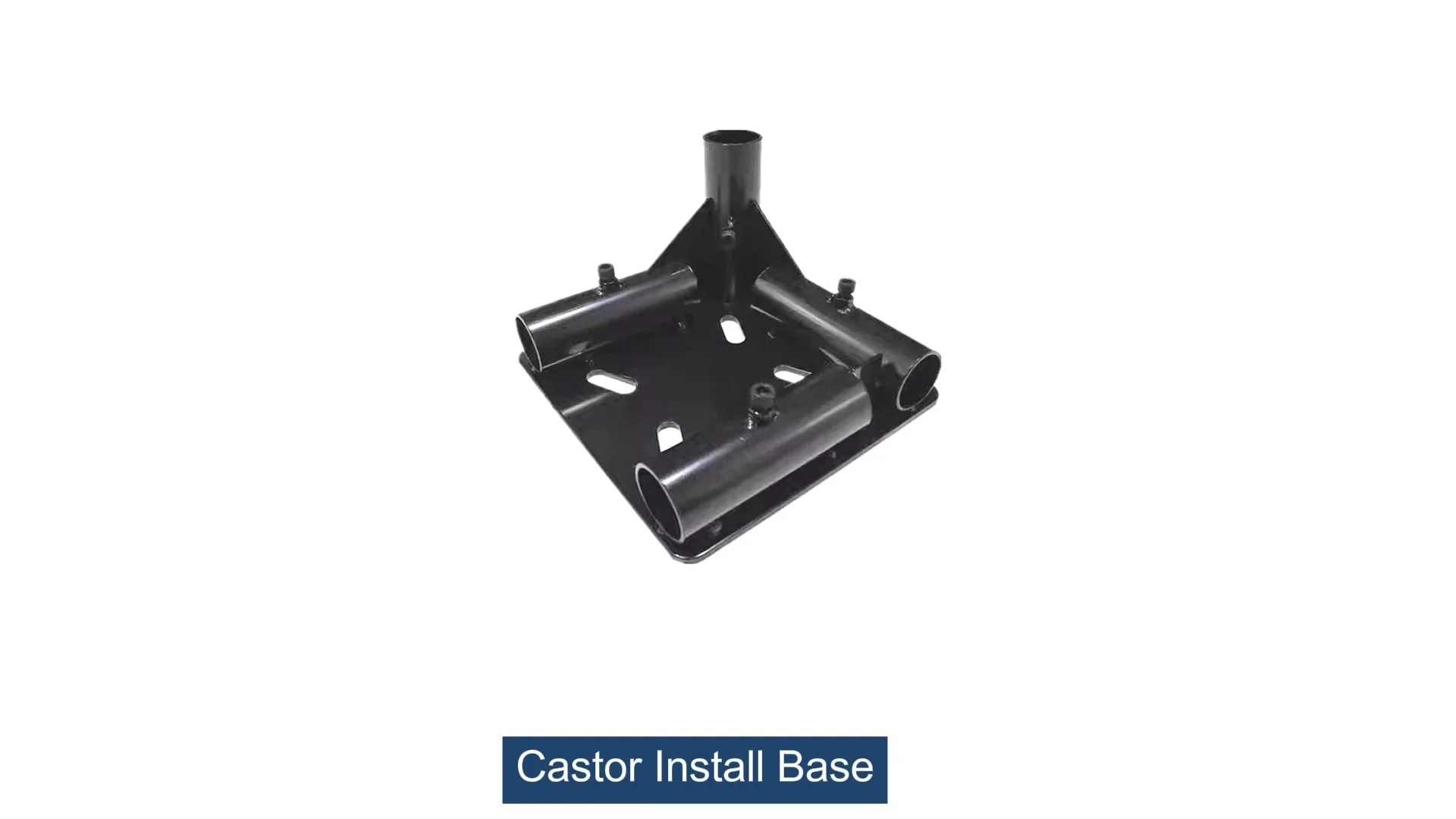
Castor Install Base
Castor install base, used for connection between pipe and castor, it can connect 4 pcs pipe by 1 pcs castor base, to make the structure strong and stable.
In the fast-paced world of healthcare, where every second counts and precision is non-negotiable, medical equipment trolleys stand as unsung workhorses. These mobile units glide through hospital corridors, navigate tight patient rooms, and carry everything from life-saving medications and sterile surgical tools to lab samples and monitoring devices. Yet, for all their visibility, the true backbone of their reliability lies in a component often overlooked: the castor install base. This unassuming part connects the trolley's frame to its caster wheels, bearing the weight of critical supplies, ensuring smooth movement, and maintaining stability—all while withstanding the rigors of daily use in sterile, high-stakes environments. Choosing the right castor install base isn't just a matter of functionality; it's a decision that impacts patient safety, staff efficiency, and the longevity of expensive medical equipment. In this guide, we'll walk through the key considerations, types, and best practices to help you select a castor install base that meets the unique demands of medical settings.
Understanding the Critical Role of Castor Install Bases in Medical Trolleys
Before diving into selection criteria, let's clarify why the castor install base matters so much in medical contexts. Unlike standard industrial trolleys, medical equipment trolleys operate under extraordinary conditions. They must move quietly to avoid disturbing patients, remain stable when parked to prevent spills of hazardous materials, and resist corrosion from frequent cleaning with harsh disinfectants. The castor install base is the bridge between the trolley's structure and its wheels, tasked with distributing weight evenly, absorbing shocks from uneven floors, and supporting the trolley's load—whether that's a 50kg medication cart or a 300kg surgical instrument trolley. A poorly chosen base can lead to wobbling, which risks spills of blood samples or IV fluids; premature wear on caster wheels, causing noisy or jerky movement; or even structural failure, endangering both staff and patients. In short, the castor install base isn't just a "part"—it's a critical safety component.
Key Factors to Consider When Selecting a Castor Install Base
Selecting the right castor install base requires balancing multiple factors, each tailored to the unique challenges of medical environments. Let's break down the most important considerations:
1. Load Capacity: Matching the Base to the Trolley's Weight
The first and most non-negotiable factor is load capacity. Medical trolleys carry varying weights: a lightweight medication cart might hold 80kg, while a mobile surgical unit could exceed 250kg when fully stocked with tools, drapes, and monitoring equipment. The castor install base must be rated to handle not just the static weight (when the trolley is parked) but also dynamic loads (when moving, which can increase stress due to bumps or sudden stops). Underestimating load capacity is a common pitfall—even a base that "feels sturdy" can bend or crack over time if overloaded, leading to wobbly wheels, uneven weight distribution, or catastrophic failure. Always check the manufacturer's specifications for both the base and the caster wheel, as the combined rating determines the trolley's safe operating limit. For example, a steel plate mount base rated for 150kg per caster, paired with a 200kg-rated caster wheel, will still be limited by the base's 150kg capacity.
2. Material Durability: Withstanding Chemicals, Corrosion, and Wear
Medical environments are harsh on equipment. Trolleys are subjected to daily cleaning with aggressive disinfectants (chlorine, alcohol, hydrogen peroxide), constant humidity, and occasional exposure to bodily fluids. The castor install base must resist corrosion, chipping, and degradation to maintain structural integrity and hygiene. Stainless steel is a top choice here: its chromium content forms a protective oxide layer, making it resistant to rust and chemical damage, while its smooth surface is easy to wipe clean—no crevices for bacteria to hide. Aluminum is another option, prized for its lightweight nature and corrosion resistance, though it has lower load capacity than stainless steel (best for lighter trolleys like patient meal carts). Plastic bases, often made from nylon or polypropylene, are cost-effective and chemical-resistant but are limited to very light loads (e.g., 50kg or less) and may warp under prolonged stress. Avoid materials like untreated steel or painted metals, which can chip or rust when exposed to moisture and cleaners.
3. Floor Compatibility: Protecting Surfaces While Ensuring Mobility
Hospitals and clinics feature a mix of flooring: smooth linoleum in operating rooms, carpet in waiting areas, and concrete in storage facilities. The castor install base, in conjunction with the caster wheel, must glide smoothly across all these surfaces without scratching, scuffing, or leaving marks. For hard floors like linoleum or tile, a base with a wide, flat mounting plate distributes weight to reduce pressure, while soft wheel materials (e.g., polyurethane) prevent indentations. In areas with uneven floors or thresholds, adjustable leveling feet—often integrated into the castor install base—can stabilize the trolley, preventing rocking that might spill contents. For example, a base with built-in threaded leveling feet allows staff to tweak height by a few millimeters, ensuring the trolley remains steady even on slightly sloped surfaces. This is especially critical for trolleys holding fragile items like glass vials or electronic monitors.
4. Compatibility with Caster Wheels and Trolley Frames
A castor install base is only as good as its ability to work with the trolley's frame and caster wheels. Most bases are designed for specific mounting styles: plate-mount bases feature pre-drilled holes to bolt directly to flat trolley frames, while stem-mount bases have a cylindrical stem that inserts into hollow trolley legs. Mismatched mounting styles can lead to instability—for instance, using a stem-mount base with a frame designed for plate mounting will result in loose, wobbly connections. Additionally, the base must accommodate caster wheel accessories like brakes or swivel locks. Many medical trolleys require brakes to keep them stationary during use (e.g., when a nurse is preparing medication), so the base should include a bracket or notch to mount the brake mechanism. Always check the trolley manufacturer's guidelines for compatible base types, and opt for bases from the same supplier as your caster wheels to ensure a seamless fit.

Types of Castor Install Bases and Their Medical Applications
Castor install bases come in several designs, each suited to different trolley types and use cases. Below is a breakdown of the most common options, along with their pros, cons, and ideal medical applications:
| Base Type | Load Capacity (per caster) | Installation Method | Best For | Pros | Cons |
|---|---|---|---|---|---|
| Plate Mount Base | 100–500kg | Bolted to trolley frame via pre-drilled holes | Heavy trolleys (surgical instrument carts, MRI contrast carts) | High stability, easy to install, compatible with most frames | Heavier than stem-mount bases; requires flat frame surface |
| Stem Mount Base | 50–150kg | Stem inserts into hollow trolley leg; secured with set screw | Light/medium trolleys (medication carts, mobile IV stands) | Lightweight, compact, ideal for tubular frames | Lower load capacity; stem can loosen over time without periodic tightening |
| Weld-On Base | 300–800kg | Permanently welded to metal trolley frames | Industrial-grade medical trolleys (mobile X-ray machines, heavy lab equipment) | Extremely strong; no risk of bolts loosening | Permanent installation (hard to replace); requires professional welding |
| Adjustable Leveling Base | 80–200kg | Bolt-on or stem-mount with integrated threaded leveling feet | Trolleys in uneven areas (pharmacies, storage rooms with sloped floors) | Stabilizes on rough surfaces; prevents rocking | Added height may reduce clearance; leveling feet can get caught on cords |
Specialized Bases for High-Risk Environments
Some medical settings demand extra features. For example, in operating rooms, where sterility is paramount, anti-microbial castor install bases are treated with silver ions or other agents to inhibit bacterial growth. In MRI suites, non-magnetic bases (often made from brass or non-ferrous aluminum) prevent interference with imaging equipment. For pediatric wards, where noise is a concern, bases with rubberized gaskets reduce rattle between the base and wheel, ensuring quiet movement that won't disturb sleeping children. These specialized options may cost more, but they're worth the investment for environments with unique risks.

Compatibility with Caster Wheels and Accessories
A castor install base doesn't work alone—it's part of a system that includes the caster wheel and accessories like brakes, swivel locks, and wheel guards. To ensure optimal performance, these components must be compatible. For instance, a heavy-duty steel base should pair with a wheel that can handle the same load and has a mounting hub that fits the base's bolt pattern. If the trolley requires a brake (and most medical trolleys do), the base must have a bracket or slot to attach the brake mechanism. Swivel caster wheels, which allow 360° movement, need a base with a smooth bearing race to prevent sticking—a critical feature for navigating tight patient rooms. Even small details matter: a base with a recessed axle nut will prevent snags on cords or linens, while a flanged design can protect the wheel from debris buildup. When in doubt, consult the manufacturer for a "matched set" of base, wheel, and accessories to avoid compatibility issues.

Installation and Maintenance: Ensuring Longevity and Safety
Even the best castor install base will underperform without proper installation and upkeep. Here's how to maximize its lifespan:
Installation Best Practices
Start by prepping the trolley frame: clean off rust, paint, or debris from mounting surfaces to ensure a flush fit. For plate mount bases, use stainless steel bolts (to prevent corrosion) and torque them to the manufacturer's specifications—over-tightening can crack the base, while under-tightening leads to loosening. Stem mount bases require the set screw to be tightened firmly against the trolley leg; adding a drop of thread-locking fluid (like Loctite) prevents it from vibrating loose. After installation, test the trolley by rolling it over different floor types, applying gentle pressure to check for wobbling, and engaging the brakes to ensure they hold. A level tool can confirm the base is mounted evenly—uneven installation causes premature wear on wheels and bases alike.
Maintenance Tips for Longevity
Regular maintenance is key to extending the life of your castor install base. Inspect bases weekly for signs of damage: cracks in metal, stripped threads, or bent mounting plates. Tighten loose bolts or set screws monthly—vibration from daily use can loosen fasteners over time. Clean bases with mild soap and water (avoid abrasive scours that scratch stainless steel) and dry thoroughly to prevent water spots. For swivel bases, lubricate the bearing race quarterly with a food-grade lubricant (safe for medical environments) to keep movement smooth. If a base shows signs of corrosion or structural damage, replace it immediately—delaying replacement puts staff and patients at risk of spills or falls.
Conclusion: Investing in Safety and Efficiency
Choosing the right castor install base for a medical equipment trolley is a decision that impacts every aspect of healthcare delivery—from staff productivity and patient safety to equipment longevity. By prioritizing load capacity, material durability, floor compatibility, and compatibility with wheels/accessories, you can select a base that meets the unique demands of medical settings. Remember, this isn't just a "part"—it's a foundation for reliability in an environment where there's no room for error. Whether you're equipping a small clinic or a large hospital, investing in a high-quality castor install base pays dividends in fewer repairs, smoother operations, and most importantly, safer care for patients.