- Company Articles
- Products and Technology
- Procurement Guidelines
- How to Choose the Right End Support for Roller Track Placon Mount with Stop: A Buyer's Guide

How to Choose the Right End Support for Roller Track Placon Mount with Stop: A Buyer's Guide
Related Product
End Support for Roller Track Placon Mount with Stop
Roller track placon mount work as a connector for roller track and pipe or aluminum profile in rack syetem, it is a necessary parts in rack system which widely used in industrial plant and logistic,warehouse storage.
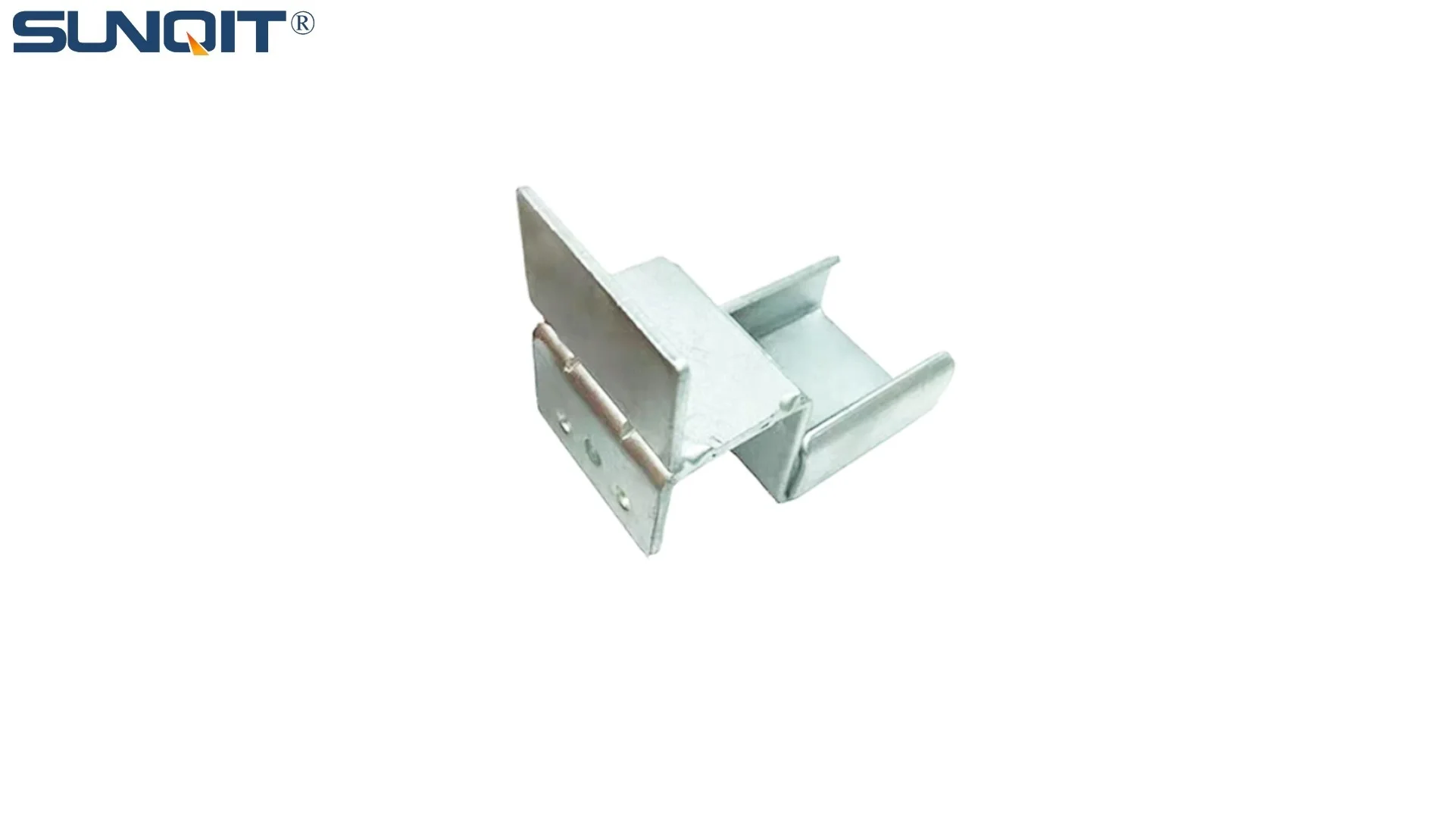
In the fast-paced world of manufacturing, where every second counts and efficiency is the backbone of success, the smallest components often play the biggest roles. Take roller tracks, for example—they're the silent workhorses that keep materials flowing smoothly from one workstation to the next, whether in a bustling 3C assembly line, a precision medical device factory, or a high-volume warehouse. But what keeps these roller tracks stable, secure, and performing at their best? Enter the unsung hero: the end support for roller track placon mount with stop.
You might be thinking, "It's just a support—how complicated can it be?" But anyone who's dealt with a wobbly track, misaligned rollers, or a sudden halt in production because of a failed component knows better. The right end support doesn't just hold the track in place; it safeguards your workflow, protects your materials, and ensures your lean pipe system, flow racks, and conveyors work in harmony. In this guide, we'll walk you through everything you need to know to pick the perfect end support for your roller track placon mount with stop—because when it comes to manufacturing, the details make all the difference.
Why End Supports Matter More Than You Think
Let's start with the basics: roller tracks are designed to move materials quickly and evenly. But without a sturdy end support, that "quick and even" can turn into "chaotic and risky" in no time. Imagine this: you're running a conveyor line in an automotive parts plant, and a heavy component is gliding down the track. If the end support is weak or ill-fitting, the track could shift, causing the part to slide off. Suddenly, you're looking at damaged goods, a paused line, and a team scrambling to fix the mess. That's not just a hassle—it's a hit to your bottom line and your team's morale.
But it's not just about avoiding disasters. The right end support with a reliable stop mechanism ensures materials stop exactly where they need to, reducing collisions and wear on both the track and the products. In industries like 3C assembly, where precision is non-negotiable, even a millimeter of misalignment can throw off an entire production sequence. And when paired with a well-designed lean pipe system, these supports become part of a larger ecosystem that boosts efficiency, cuts waste, and keeps your lean manufacturing goals on track.
Key Factors to Consider When Choosing Your End Support
Now that you know why end supports are critical, let's dive into the details that will guide your decision. Think of this as your checklist—tick these boxes, and you'll be well on your way to a support that fits like a glove.
1. Load Capacity: Know What You're Hauling
First things first: how much weight will your roller track be carrying? A end support built for small plastic parts won't hold up to heavy metal components. Check the specifications of your roller track (like 40 steel roller track or 38 aluminum roller track) and match the end support's load rating to your typical materials. If you're dealing with variable weights, err on the side of caution—opting for a higher load capacity than you think you need can save you from future headaches.
2. Environment: Where Will It Live?
Manufacturing environments aren't one-size-fits-all. Are you working in a cleanroom for medical devices, where dust and corrosion are major concerns? Or is your facility a busy warehouse with constant foot traffic and occasional spills? Aluminum end supports are lightweight and resistant to rust, making them ideal for humid or clean environments. Steel supports, on the other hand, offer extra durability for heavy-duty, high-impact areas. And if you're in 3C assembly or electronics manufacturing, don't forget ESD (Electrostatic Discharge) protection—look for supports compatible with ESD workstations to keep sensitive components safe.
3. Compatibility: It's All About the Fit
Roller tracks come in different profiles: 40 roller track placon mount flat, 40 drop high, 85 staggered roller track—the list goes on. Your end support needs to match not just the track's size, but also its mounting style. A support designed for a flat placon mount won't work with a drop-high track, and forcing it could lead to instability. Always check the manufacturer's guidelines or consult with your lean pipe supplier to ensure a seamless fit.
4. The Stop Mechanism: More Than Just a "Bump"
The "with stop" in "end support for roller track placon mount with stop" is non-negotiable. But not all stops are created equal. Some use rubber pads to gently slow materials, while others have rigid blocks for heavier loads. Ask yourself: Do you need the stop to absorb impact (to protect fragile items like medical devices)? Or do you need a firm halt to ensure precise positioning (like in a conveyor system where parts must align with a workstation)? The right stop design prevents product damage and keeps your workflow predictable.
5. Material & Durability: Built to Last
Your end support should keep up with your production schedule, not slow it down. Aluminum is a popular choice for its balance of strength and weight—great for lean systems where flexibility and easy reconfiguration are key. Steel, though heavier, offers unmatched toughness for industrial settings with constant use. Also, look for finishes like powder coating to resist scratches and corrosion, ensuring your support stays functional for years, not just months.

End Support Types: Which One Fits Your Needs?
Not sure where to start? Let's break down the two most common types of end supports for roller track placon mount with stop: those with wheels and those with fixed stops. Use this comparison to narrow down your options.
| Feature | End Support with Stop (Fixed Block) | End Support with Wheel & Stop |
|---|---|---|
| Best For | Heavy loads, fixed production lines, precise stopping points | Light to medium loads, mobile workstations, temporary setups |
| Load Capacity | Higher (up to 500kg+ depending on model) | Medium (typically 100-300kg) |
| Installation | Permanent mounting (bolted to floor/frame) | Semi-permanent (wheels allow for easy repositioning) |
| Pros | Maximum stability, ideal for high-volume production, durable for long-term use | Flexible, easy to move, great for lean systems that need frequent adjustments |
| Cons | Hard to reconfigure once installed | Less stable for very heavy loads; wheels may wear over time |
| Top Industries | Automotive, heavy machinery, 3C assembly (fixed lines) | Medical devices (small-batch production), warehousing (temporary flow racks) |

Real-World Scenarios: How to Apply This Knowledge
Let's put this into context with examples from the industries we know best. After all, theory only gets you so far—seeing how these supports work in real factories will help you visualize your own needs.
Scenario 1: 3C Assembly Line (High Precision, ESD Requirements)
In a 3C assembly plant, where tiny circuit boards and sensitive electronics are handled daily, precision and ESD protection are non-negotiable. Here, you'd likely use an aluminum roller track (lightweight, easy to clean) paired with an end support for roller track placon mount with stop made of aluminum (to avoid static buildup). The stop mechanism should be soft but firm—think a rubber pad—to prevent jostling components. Compatibility is key here: if your track is a 40 aluminum roller track with side guides, your end support must match that profile to keep the track aligned. And since 3C lines often reconfigure for new product launches, a semi-permanent installation (not fully bolted down) gives you the flexibility to adapt quickly.
Scenario 2: Medical Device Manufacturing (Clean, Fragile Loads)
Medical device production demands cleanliness, precision, and gentle handling. For roller tracks moving delicate instruments, an end support with a soft-stop rubber pad is a must—it absorbs impact to prevent scratches or damage to sterile parts. Aluminum is the material of choice here, too, as it resists corrosion and is easy to sanitize. Plus, since medical facilities often have strict space constraints, a compact end support design ensures your roller track fits seamlessly into tight workstations without sacrificing stability.
Scenario 3: Warehouse Logistics (High Volume, Heavy Pallets)
Warehouses thrive on speed, so roller tracks here need to handle heavy pallets and constant use. A steel end support with a fixed stop block is the way to go—its high load capacity (300kg+) ensures pallets stop safely without shifting. Look for a stop with a textured surface to grip pallets, preventing slips. And since warehouse layouts can change with seasonal demand, a bolt-down design with pre-drilled holes makes installation and reconfiguration quick, so your flow racks and conveyors stay productive year-round.

Common Mistakes to Avoid
Even the best intentions can lead to missteps. Here are the top pitfalls buyers fall into when choosing end supports—and how to steer clear.
- Skipping the Load Test: Never assume a support can handle your load based on looks alone. Always check the manufacturer's load rating and, if possible, test it with your actual materials. A support that "feels strong" might buckle under real-world weight.
- Ignoring Compatibility: Mixing and matching brands or profiles is a recipe for disaster. A 40 roller track placon mount drop high won't pair well with an end support designed for a 38 aluminum track. Stick to compatible systems, or consult your lean pipe supplier for cross-brand guidance.
- Overlooking the Environment: Installing a steel support in a humid warehouse? Without proper coating, it'll rust in months. In ESD-sensitive areas like electronics manufacturing, using non-ESD materials can damage components. Always factor in your workspace's unique conditions.
- Sacrificing Quality for Cost: A cheap end support might save you money today, but it'll cost you more tomorrow—think repairs, replacements, and downtime. Invest in a mid-to-high range option from a trusted supplier; it'll pay off in reliability.
Maintaining Your End Support: Keep It Running Smoothly
You've picked the perfect end support—now how do you make sure it lasts? A little maintenance goes a long way.
- Regular Inspections: Check for loose bolts, worn stop pads, or bent frames weekly. Tighten bolts and replace worn parts before they fail.
- Cleanliness Counts: Wipe down supports and stops to remove dust, debris, or oil. Built-up grime can weaken the stop mechanism or cause the track to stick.
- Lubricate Moving Parts: If you have end supports with wheels, lubricate the axles monthly to keep them rolling smoothly. Use a light machine oil to avoid attracting dust.
- replace Stops Proactively: Rubber stops wear down over time. Swap them out at the first sign of cracking or flattening to maintain effective stopping power.
Final Thoughts: Your End Support, Your Success
Choosing the right end support for your roller track placon mount with stop might seem like a small decision, but it's one that ripples through your entire operation. It's the difference between a line that runs like clockwork and one that's constantly stopping, adjusting, and costing you time. Whether you're outfitting a new lean pipe system, upgrading your flow racks, or fine-tuning your conveyor setup, remember: the best end support is the one that fits your unique needs—your load, your environment, your workflow.
And when in doubt, partner with a supplier who understands manufacturing from the ground up. A team that knows the ins and outs of lean systems, ESD workstations, and custom solutions can help you navigate the options and find a support that doesn't just meet your requirements, but elevates your entire production process. After all, in manufacturing, success isn't just about the big machines—it's about the small components that hold it all together.