- Company Articles
- Products and Technology
- Product knowledge
- How to Choose the Right External Straight Aluminum Joint for Your Needs

How to Choose the Right External Straight Aluminum Joint for Your Needs
Related Product
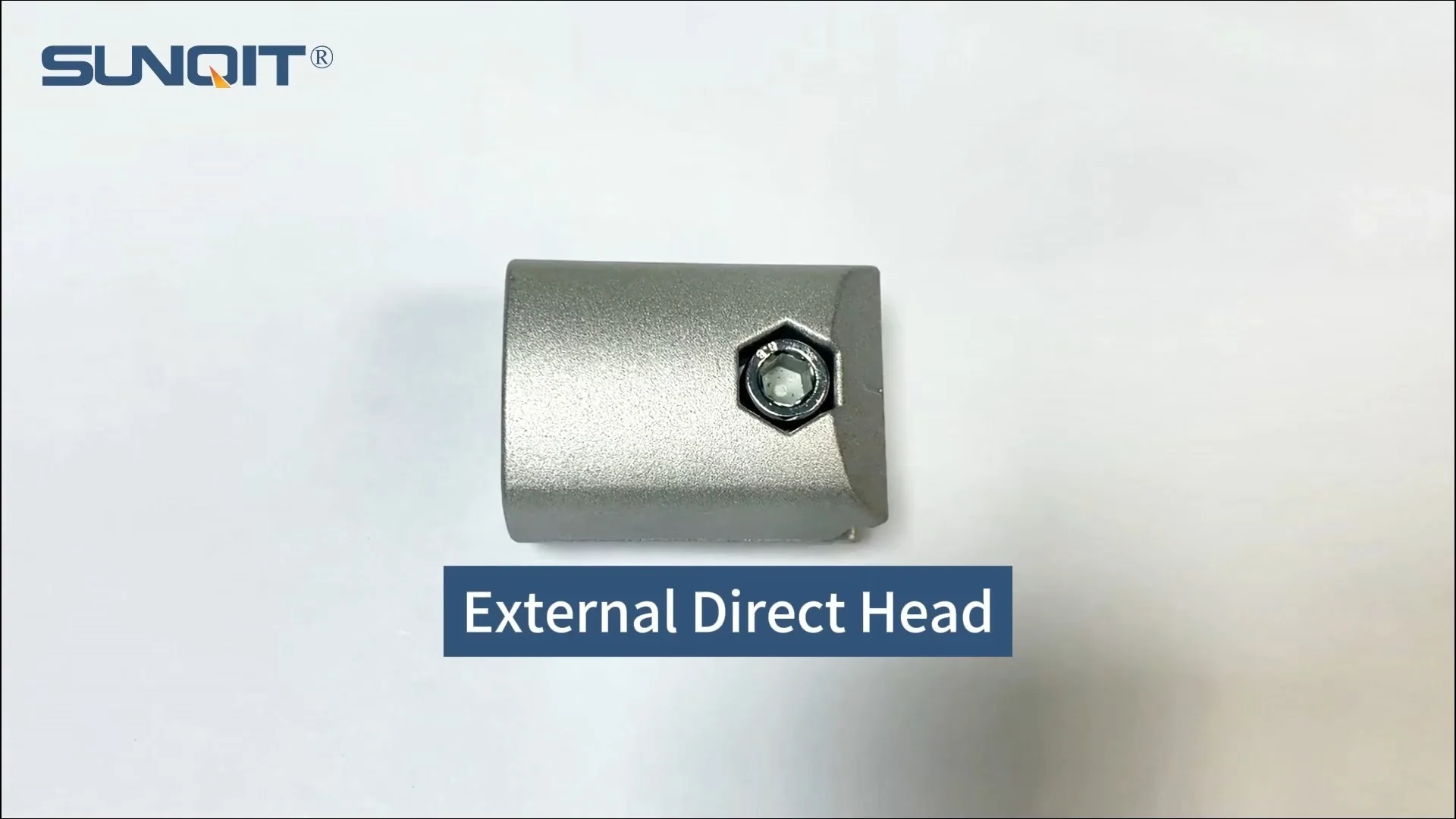
External Straight Aluminum Joint
Aluminum pipe joint outside connection used for two pcs 28pcs aluminum pipe connection in straight angle,it connects two pcs pipe from outside.
Picture this: You're standing in the middle of your workshop, surrounded by aluminum pipes, profiles, and a mountain of accessories. Your goal? To build a sturdy, efficient workbench for your team—a cornerstone of your lean system that will streamline production and keep everything running like clockwork. But as you sort through the parts, you pause at a small, unassuming component: the external straight aluminum joint. It looks simple enough, but you can't shake the feeling that this tiny piece might make or break the entire setup. Spoiler: It will.
External straight aluminum joints are the unsung heroes of any aluminum-based structure. They're the quiet connectors that hold your aluminum profile s together, ensuring stability, alignment, and longevity. Whether you're building a workbench, a flow rack, or a conveyor system, choosing the right joint isn't just about picking something that "fits"—it's about understanding how it will perform in your unique environment, under your specific loads, and as part of your broader operational goals.
In this guide, we'll demystify external straight aluminum joints. We'll break down what they are, why they matter, and how to sift through the options to find the perfect match for your project. By the end, you'll no longer see them as just another aluminum profile accessory —you'll see them as the critical link between a rickety, short-lived structure and one that stands the test of time.
What Are External Straight Aluminum Joints, Anyway?
Let's start with the basics. An external straight aluminum joint is a hardware component designed to connect two or more aluminum pipe s or profiles in a straight line. Unlike internal joints, which fit inside the profile's T-slot, external joints clamp around the outside of the profile, creating a secure bond without requiring access to the profile's interior. Think of them as the "external braces" of your structure—visible, but undeniably strong.
These joints come in various shapes and sizes, but they all share a common purpose: to align and fasten profiles along a straight axis. They're typically made from aluminum alloys (more on that later) and often feature threaded holes, bolts, or clamping mechanisms to lock the profiles in place. Some are simple two-piece clamps, while others include additional reinforcement for heavy loads.
Why use external straight joints over other types? For one, they're easy to install—no need to fish bolts through T-slots or disassemble existing structures to add a new section. They also provide excellent visibility, making it easy to check for looseness or wear during routine inspections. And because they clamp externally, they distribute pressure evenly across the profile's surface, reducing the risk of damage to the aluminum itself.
Why Choosing the Right Joint Matters More Than You Think
You might be thinking, "It's just a joint—how important can it be?" Let's put it this way: A poorly chosen joint is like a weak link in a chain. Even if every other component is top-of-the-line, that one flimsy joint can lead to misalignment, wobbling, or even structural failure. And in a lean system , where efficiency and safety are paramount, that's a risk you can't afford.
Consider the consequences of a subpar joint:
- Instability: A loose joint can cause your workbench or rack to wobble, making tasks harder (and more dangerous) for your team. Imagine trying to assemble delicate electronics on a shaky surface—errors skyrocket, and productivity plummets.
- Safety Hazards: If a joint fails under load, tools, materials, or even the structure itself could collapse. This puts your team at risk of injury and your business at risk of costly downtime.
- Wasted Time and Money: A joint that wears out quickly means frequent replacements. And if it causes misalignment, you might have to rebuild entire sections of your setup—time better spent on actual production.
On the flip side, the right joint becomes an invisible asset. It keeps your structure stable, reduces maintenance headaches, and ensures your lean system operates at peak efficiency. It's an investment in peace of mind—and in the long-term success of your operations.

Key Factors to Consider When Selecting Your Joint
Now that you understand why external straight aluminum joints matter, let's dive into how to choose one. The process isn't about picking the "best" joint on the market—it's about finding the best joint for your specific needs. Here are the critical factors to weigh:
1. Application: What Are You Building?
The first question to ask is: What's the joint going to do? Are you building a lightweight shelving unit for small parts, or a heavy-duty conveyor that will bear hundreds of pounds daily? The answer will dictate everything from load capacity to material choice.
For example, if you're constructing a workbench in a electronics workshop—part of a lean system focused on precision—you'll need a joint that maintains tight alignment to prevent wobbling. A basic external clamp might suffice here, as the load is relatively light (tools, components, maybe a laptop). But if you're building a material rack for metal sheets or automotive parts, you'll need a reinforced joint with higher tensile strength to handle the constant stress.
Don't forget to consider movement, too. Will the structure be static (like a fixed workbench) or subject to vibration (like a conveyor near a production line)? Vibration can loosen joints over time, so in dynamic environments, look for joints with locking mechanisms or higher friction clamps.
2. Material: Not All Aluminum Is Created Equal
External straight aluminum joints are made from aluminum alloys, but the type of alloy matters. The two most common options are 6061 and 6063 aluminum—each with its own strengths:
- 6061 Aluminum: Known for its high strength and corrosion resistance, 6061 is often used in structural applications. It's heat-treatable, which means it can be strengthened further through processing. If your joint will bear heavy loads or be exposed to moisture (e.g., a workshop near a washdown area), 6061 is a solid bet.
- 6063 Aluminum: More malleable than 6061, 6063 is prized for its smooth finish and formability. It's less strong but more affordable, making it ideal for lightweight applications or projects where aesthetics matter (e.g., a display rack in a showroom).
Beyond the alloy, look at the finish. Most joints come anodized—a process that adds a protective oxide layer to the surface. Anodized joints are more resistant to scratches, corrosion, and wear, which is especially important if the structure will be used in harsh environments (think: warehouses with high humidity or exposure to chemicals).
3. Load Capacity: How Much Weight Will It Bear?
This is non-negotiable: You need to know the maximum load your joint will handle. Manufacturers typically list two types of load capacities: static (weight when the structure is stationary) and dynamic (weight when the structure is in motion, like a conveyor carrying parts). Always opt for a joint with a dynamic load rating higher than your expected daily use—overloading is the number one cause of joint failure.
To calculate your needs, start by estimating the weight of the materials the structure will hold. For a workbench, that might include tools (20-50 lbs), parts bins (10-30 lbs each), and a worker (150+ lbs if they lean on it). Add a 20-30% buffer to account for unexpected loads (e.g., someone placing a heavy box temporarily). Then, check the joint's specifications to ensure it can handle that total.
Pro tip: If you're connecting multiple joints in a single structure (e.g., a 10-foot-long rack with joints every 2 feet), distribute the load evenly. A single joint shouldn't bear the brunt of the weight—design the structure so each joint shares the load.
4. Compatibility: Does It Fit Your Aluminum Profile?
This might seem obvious, but it's how many people overlook it: The joint must fit your aluminum profile s. Aluminum profiles come in standard sizes, typically labeled by their width and height (e.g., 2020, 3030, 4040). A 2020 profile has a 20mm x 20mm cross-section, while a 4040 is 40mm x 40mm. External joints are designed to match these sizes—so a 3030 joint won't fit a 4040 profile, no matter how hard you try.
But size isn't the only factor. Some profiles have rounded edges, others have square edges; some have thicker walls, others thinner. Check the joint's specifications for compatibility with your profile's dimensions and edge type. If you're unsure, ask the supplier for a compatibility chart—most reputable manufacturers provide them.
Also, consider the connection method. Does the joint use bolts that thread into the profile's T-slot, or does it clamp directly onto the surface? If your profile has limited T-slot space (common in smaller profiles like 2020), a clamp-style joint might be better to avoid overcrowding the slot with other accessories.
5. Environment: Where Will It Live?
Your workshop's environment can be tough on aluminum joints. Humidity, temperature swings, chemicals, and even dust can affect performance. Here's how to adapt:
- Humid or Wet Areas: Corrosion is the enemy here. Look for anodized joints with a thick oxide layer, or consider stainless steel bolts (though the joint itself will still be aluminum). Avoid joints with exposed steel components, as they'll rust quickly.
- Dusty or Dirty Environments: Dust and debris can get between the joint and the profile, reducing clamping force. Opt for joints with rubberized gaskets or flared edges to seal out particles.
- High Temperatures: If the joint will be near ovens, furnaces, or other heat sources, check its temperature rating. Aluminum can weaken at high temps, so look for heat-resistant alloys or joints with thermal insulation.

Common Types of External Straight Aluminum Joints
Now that you know what to look for, let's explore the most common types of external straight aluminum joints. Each has its own strengths, so you can match the joint to your project's needs:
Standard External Clamp Joints
The workhorses of the joint world, standard external clamps are simple, affordable, and versatile. They consist of two aluminum plates that wrap around the profile, held together by bolts. Tightening the bolts squeezes the plates against the profile, creating friction that holds everything in place.
Best for: Light to medium loads, static structures, and projects on a budget. Think: shelving, small workbenches, or temporary displays.
Reinforced External Joints
For heavier loads, reinforced joints add extra material—usually a thicker clamp or a cross-brace—to boost strength. Some have integrated ribs or gussets to distribute stress more evenly, reducing the risk of bending or cracking under pressure.
Best for: Heavy-duty racks, conveyors, or structures with dynamic loads. If you're unsure whether you need reinforced, err on the side of caution—better to have extra strength than not enough.
Quick-Release External Joints
If you need to disassemble and reassemble your structure frequently (common in agile lean system s), quick-release joints are a game-changer. They use levers, cam locks, or spring-loaded mechanisms instead of bolts, allowing you to connect or disconnect profiles in seconds—no tools required.
Best for: Temporary setups, mobile structures (like rolling workbenches), or environments where reconfiguration is frequent. Note: Quick-release joints often have lower load capacities than bolted joints, so they're not ideal for heavy, static loads.

External Straight vs. Other Joint Types: When to Stick with Straight
External straight joints are great, but they're not the only option. Depending on your project, you might also encounter internal straight joints, 90-degree elbow joints, or swivel joints. How do you know when to choose external straight? Let's compare:
| Joint Type | Best For | Load Capacity | Installation Difficulty | Visibility | Cost |
|---|---|---|---|---|---|
| External Straight | Straight-line connections, high visibility, easy maintenance | Medium to high (varies by design) | Low (clamps externally, no T-slot access needed) | High (easily inspected for looseness/wear) | Moderate |
| Internal Straight | Clean, flush connections (no external hardware) | High (integrates with profile's T-slot) | Medium (requires access to T-slot, may need tools) | Low (hidden inside profile, hard to inspect) | Moderate to high |
| 90-Degree Elbow | Right-angle connections (e.g., corners of a workbench) | Medium (depends on design) | Low to medium | High (external) or low (internal) | Moderate |
External straight joints shine in scenarios where visibility and ease of maintenance are priorities. Because they're externally mounted, you can quickly check if they're loose or damaged during routine inspections—a huge plus in busy lean system s where downtime is costly. They're also easier to install than internal joints, which require threading bolts through the profile's T-slot (a hassle if the profile is already part of a larger structure).
Internal joints, on the other hand, are better for applications where aesthetics matter more than inspection ease—like customer-facing displays. They create a seamless, "floating" look since the hardware is hidden. But they're harder to repair; if an internal joint loosens, you might have to disassemble part of the structure to reach it.
So, when should you choose external straight? When you need a balance of strength, accessibility, and peace of mind. They're the practical choice for most workshop and industrial applications—especially in lean system s where efficiency and reliability are non-negotiable.
Installation Tips: Getting It Right the First Time
Even the best joint will fail if installed incorrectly. Follow these tips to ensure a rock-solid connection:
- Clean the Profiles First: Dust, oil, or debris on the aluminum surface can reduce friction, causing the joint to slip. Wipe the profiles with a clean cloth (and rubbing alcohol, if needed) before installing the joint.
- Align Before Tightening: Use a straightedge to ensure the profiles are perfectly aligned before clamping the joint. A slight misalignment now can lead to uneven stress later, weakening the joint over time.
- Torque to Spec: Over-tightening can strip threads or warp the joint; under-tightening leads to looseness. Check the manufacturer's specs for recommended torque (usually in inch-pounds) and use a torque wrench to get it right.
- Consider Thread Locker: In high-vibration environments, apply a small amount of thread locker (like Loctite) to the bolts. This prevents them from loosening due to movement without making future disassembly impossible.
- Test Before Full Deployment: Once installed, give the structure a gentle shake or apply a test load to ensure the joint holds. Better to catch a weak connection in the workshop than during production.
Troubleshooting Common External Straight Joint Issues
Even with careful selection and installation, issues can arise. Here's how to diagnose and fix the most common problems:
Issue: The Joint Keeps Loosening
Possible causes: Under-tightening, vibration, or insufficient friction between the joint and profile.
Solutions: Retighten to the recommended torque; add thread locker; if the profile is smooth, try a joint with rubberized clamping pads for extra grip. If vibration is extreme, upgrade to a reinforced joint with locking bolts.
Issue: The Joint Is Bent or Damaged
Possible causes: Overloading, impact (e.g., a dropped tool), or using a low-quality, thin-gauge joint.
Solutions: replace the joint immediately—damaged joints can't be repaired. Upgrade to a higher-strength joint with thicker aluminum or reinforcement ribs.
Issue: Corrosion on the Joint
Possible causes: Exposure to moisture, chemicals, or salt (e.g., coastal environments).
Solutions: Clean the joint with a mild detergent and dry thoroughly. If corrosion is minor, apply a protective coating (like clear enamel). For severe corrosion, replace with an anodized or stainless steel-bolted joint.
Case Study: How the Right Joint Transformed a Workshop's Efficiency
Let's wrap up with a real-world example (names changed for privacy). A mid-sized automotive parts manufacturer was struggling with their assembly line workbenches. Built with generic steel brackets and plastic joints, the workbenches wobbled constantly, leading to misaligned parts and frequent rework. Their lean system was anything but lean—team members spent more time adjusting the workbenches than assembling parts.
After consulting with a supplier, they switched to 4040 aluminum profile s and reinforced external straight aluminum joints. The results were immediate: The joints held the profiles rigid, eliminating wobble and reducing rework by 30%. Inspections became faster, too—managers could quickly check joint tightness during daily walkthroughs, catching issues before they caused downtime. Within six months, the company estimated the new joints saved them over 100 labor hours annually—more than justifying the initial investment.
The takeaway? A small, well-chosen aluminum profile accessory can have a ripple effect on your entire operation.
Final Thoughts: Your Joint, Your Success
External straight aluminum joints might not be the flashiest part of your lean system , but they're undeniably critical. They're the difference between a structure that lasts for years and one that collapses under pressure. By taking the time to understand your application, load requirements, and environment, you can choose a joint that not only fits your aluminum pipe s and profiles but also supports your team's efficiency and safety.
So the next time you're staring at that pile of parts in your workshop, remember: The external straight aluminum joint isn't just a connector. It's the foundation of your success. Choose wisely.