- Company Articles
- Products and Technology
- Product knowledge
- How to Choose the Right Five Way Straight Lean Pipe Joint for Your Project

How to Choose the Right Five Way Straight Lean Pipe Joint for Your Project
Related Product
Five Way Straight Lean Pipe Joint
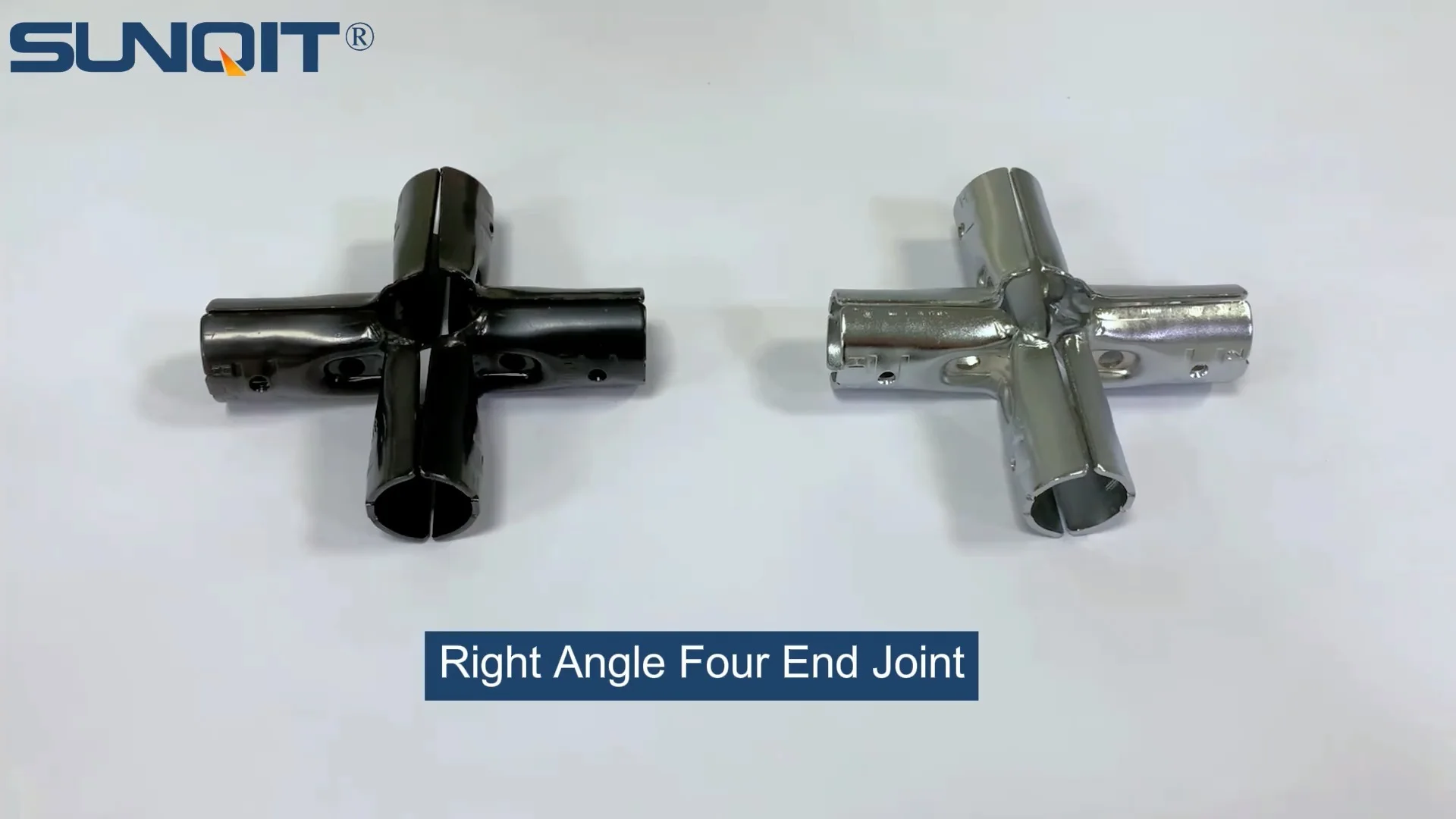
Five way straight lean pipe joint, for 5 pcs 28mm lean pipe connect in straight angle,which used widely in workbench, flow rack, hand trolley frame connection.
In the world of lean manufacturing and workshop optimization, every component plays a quiet but critical role in keeping operations running smoothly. From the workbenches where teams assemble products to the flow racks that move materials across the floor, the backbone of these systems often comes down to one unsung hero: the lean pipe joint. And among the many types of joints available, the five way straight lean pipe joint stands out for its versatility, allowing you to connect multiple pipes in a single, sturdy point. But choosing the right one isn't just about picking a part off a shelf—it's about matching the joint to your project's unique needs, environment, and long-term goals. Let's walk through how to make that decision with confidence.
Understanding the Role of the Five Way Straight Lean Pipe Joint in Your Lean System
First, let's clarify what a five way straight lean pipe joint is and why it matters. In simple terms, this joint is a connector designed to link up to five lean pipes in a straight configuration, creating stable intersections that support everything from workbenches and material racks to conveyor systems. Unlike basic two-way or three-way joints, its five connection points make it ideal for building complex, multi-directional structures without sacrificing rigidity. Think of it as the "hub" of your lean system—where pipes converge, and your workflow's efficiency takes shape.
In a lean system, flexibility is key. You need structures that can adapt as production needs change—maybe a workbench that grows with your team, or a flow rack that reconfigures when product sizes shift. The five way joint excels here because it reduces the need for extra connectors, simplifying adjustments and minimizing waste (a core lean principle). But to leverage this flexibility, you need a joint that's not just functional, but also durable enough to handle daily use. That's where the "right" choice comes in.
Key Factors to Consider When Selecting a Five Way Straight Lean Pipe Joint
1. Material: Balancing Strength, Weight, and Environment
Five way straight lean pipe joints come in several materials, each with its own strengths and weaknesses. The most common options are steel, aluminum, and plastic-coated variants. Your choice here will depend on the project's load requirements, the workshop environment, and even aesthetics.
| Material Type | Strength | Weight | Corrosion Resistance | Best For |
|---|---|---|---|---|
| Steel (Chrome-Plated) | High—handles heavy loads (up to 500kg+ per joint) | Heavier | Moderate—prone to rust in humid/wet areas without proper coating | Industrial workshops, material racks with heavy parts, static structures |
| Aluminum | Moderate—ideal for medium loads (200-400kg per joint) | Lightweight (30-40% lighter than steel) | High—naturally resistant to rust; great for clean rooms or outdoor use | Mobile workbenches, lean pipe workbenches with frequent reconfiguration, food/pharma facilities |
| Plastic-Coated Steel | Moderate-High (similar to steel, but coating adds grip) | Similar to steel | High—coating protects against moisture and minor chemicals | ESD workstations (electrostatic discharge protection), electronics assembly lines |
For example, if you're building a material rack B (3 row and 3 floor) to hold heavy automotive parts, a steel five way joint is likely your best bet—it won't bend under the weight of daily use. On the other hand, if your project is a mobile workbench e (single deck-without caster) that needs to be moved around a workshop, aluminum's lighter weight will make repositioning easier for your team. And if you're in an environment with moisture, like a food processing plant, aluminum or plastic-coated steel will outlast uncoated steel, which can rust and compromise structural integrity over time.
2. Load Capacity: Know What You're Lifting (and How Often)
Load capacity is where many projects go wrong. It's easy to underestimate how much weight a joint will need to support, especially when materials are stacked or moved dynamically (like on a roller track). The five way straight lean pipe joint's load rating isn't just about the weight it can hold statically—it also matters how that weight is distributed and whether it's subject to movement or vibration.
Start by calculating the maximum load your structure will bear. For a workbench, this might include tools, equipment, and the product being assembled. For a flow rack, factor in the weight of turnover boxes, plus the force of items sliding along roller tracks. Most manufacturers list load capacities for their joints (e.g., "supports up to 300kg per connection point"), but remember: if you're using all five ports, the total load will be distributed across those connections. A joint rated for 300kg per port might handle 1500kg total in theory, but real-world use (like uneven weight distribution) means you should aim for a 20-30% buffer to avoid stress fractures.
Don't forget dynamic loads, either. If your structure includes roller track and accessories—like plastic roller track guide rails that move materials quickly—the joint will experience sudden jolts or vibrations. In these cases, a steel joint with reinforced threading will hold up better than a lighter aluminum option, which might loosen over time with repeated movement.
3. Compatibility: Matching Joints to Your Lean Pipe and Accessories
A joint is only as good as its ability to connect with your existing (or planned) lean pipe and accessories. The first check here is pipe diameter: most lean pipes come in standard sizes (e.g., 28mm for pe coated lean pipe, 30mm for aluminum lean pipe), and the joint's ports must match this diameter exactly. A joint designed for 28mm pipes won't fit 30mm pipes, and forcing it can strip threads or create wobbly connections that fail under load.
Next, consider the type of lean pipe you're using. If you're working with aluminum pipe, ensure the joint is compatible with aluminum's smoother surface—some steel joints have aggressive threading that can scratch aluminum, weakening the connection. Similarly, if you're using stainless steel pipe series for corrosion resistance, look for joints with stainless steel components to avoid galvanic corrosion (a chemical reaction that occurs when dissimilar metals touch in moist environments).
Accessories matter too. If your project includes caster wheels (for mobile trolleys) or roller track connectors, the five way joint should integrate seamlessly with these parts. For example, if you're attaching a caster to the bottom of a structure, the joint's base should have pre-drilled holes or a mounting plate that aligns with caster accessories. Mismatched components can lead to instability—imagine a workbench with casters that wobble because the joint's mounting points don't line up with the caster's plate. It's a small detail, but it makes a big difference in usability.
4. Environmental Considerations: Protecting Against Rust, Chemicals, and Wear
Your workshop's environment will dictate the joint's longevity. Let's break down common scenarios and how to choose accordingly:
Humid or Wet Areas: Think warehouses near coastal regions or facilities with regular cleaning (like pharmaceutical labs). Here, aluminum lean pipe and aluminum joints are your best friends—aluminum naturally forms a protective oxide layer that resists rust. If steel is a must (for higher load capacity), opt for plastic-coated or stainless steel variants. Avoid uncoated steel, which will start to rust within months, weakening the joint's grip.
ESD-Sensitive Environments: In electronics manufacturing, electrostatic discharge (ESD) can damage components. An ESD workstation or ESD workbench requires joints that dissipate static, so look for plastic-coated steel joints with conductive additives. These joints prevent static buildup, keeping both products and workers safe.
High-Traffic or Abrasive Areas: If your structure is in a busy part of the workshop—where forklifts pass by or tools are frequently moved—abrasion resistance matters. Steel joints with thick chrome plating can withstand bumps and scrapes better than aluminum, which can dent if hit by heavy equipment. For added protection, consider joints with rounded edges to reduce the risk of damaging pipes or accessories during use.
5. Project Longevity: Temporary Setup or Permanent Infrastructure?
Finally, ask: How long will this structure be in place? If you're building a temporary workbench for a short-term project (e.g., a 3-month product launch), a lightweight aluminum joint might be sufficient—it's easy to assemble, disassemble, and reuse later. But if you're investing in a permanent lean system that will be part of your workshop for years, durability should take priority. Steel joints, while heavier, will stand up to repeated use, reconfiguration, and environmental wear better than aluminum or plastic, saving you the cost of replacing joints every 1-2 years.
Reusability is another angle. If you anticipate reconfiguring your system (e.g., expanding a flow rack from 3 rows to 5 rows next year), look for joints with easy-to-adjust threading. Some aluminum joints feature internal rotatary mechanisms that let you loosen and reposition pipes without tools, which is a time-saver compared to steel joints that often require wrenches. Just balance this with load capacity—rotary joints are convenient, but they typically support less weight than fixed-thread steel joints.

Avoiding Common Mistakes When Sourcing Your Five Way Straight Lean Pipe Joint
Even with the right criteria in mind, it's easy to fall into pitfalls when selecting a joint. Here are three mistakes to steer clear of:
Mistake 1: Choosing Based on Price Alone It's tempting to opt for the cheapest joint, but low-cost options often cut corners on material thickness or threading quality. A $5 steel joint might seem like a deal, but if it strips after 6 months of use, you'll end up replacing it—and potentially repairing damage to your lean system. Instead, prioritize value: a mid-range aluminum joint from a reputable lean pipe supplier will last longer and perform better than a budget steel joint from an unknown manufacturer.
Mistake 2: Ignoring Compatibility with Existing Systems If you're adding to an existing lean system, don't assume all joints are interchangeable. A five way joint from Supplier A might have slightly different threading or port spacing than one from Supplier B, even if they're both labeled "for 28mm lean pipe." Always ask your lean pipe supplier for samples or technical drawings to test fit before ordering in bulk. It's a small step that prevents the headache of returning hundreds of incompatible joints.
Mistake 3: Overlooking Long-Term Maintenance Joints need occasional tightening, especially in high-use areas. Steel joints with hex-head bolts are easier to adjust with a wrench than joints with recessed screws, which might require special tools. And if you're in a hard-to-reach area (like the top of a tall material rack), consider joints with locking nuts to prevent loosening over time—this reduces the need for frequent maintenance checks.

Sourcing from the Right Lean Pipe Supplier: What to Look For
Once you've narrowed down your joint's specs, the next step is finding a reliable lean pipe supplier. A good supplier isn't just a vendor—they're a partner who can help you troubleshoot, provide technical support, and ensure you're getting the right parts for your project. Here's what to ask:
Do they offer custom solutions? If your project has unique requirements (e.g., a joint with extended ports for thicker aluminum profile), a supplier with in-house manufacturing can tailor parts to your needs. Avoid suppliers who only stock off-the-shelf items if your project is outside the norm.
What's their quality control process? Reputable suppliers test joints for load capacity, corrosion resistance, and thread strength. Ask for certificates or test reports—any supplier who hesitates to share this information is a red flag.
Can they support your growth? As your business expands, you might need more joints, lean pipe, or accessories. A supplier with a wide range (from aluminum pipe accessories to stainless steel swivel roller balls) can simplify ordering and ensure consistency across your systems.

Putting It All Together: A Real-World Example
Let's say you're tasked with building a material rack B (3 row and 3 floor) for a automotive parts workshop. The rack will hold heavy engine components (up to 80kg per shelf), be located in a humid area, and need to integrate with existing 28mm pe coated lean pipes and plastic roller track guide rails (grey) for sliding materials. Here's how you'd apply the above steps:
Material: Aluminum joints are rust-resistant, but the load (80kg per shelf x 3 shelves = 240kg per vertical column) calls for steel's higher strength. Opt for plastic-coated steel joints to balance load capacity and corrosion resistance.
Load Capacity: Each five way joint will connect vertical pipes to horizontal shelves. With 240kg per column, choose a joint rated for at least 300kg per port (to account for dynamic loads from sliding materials on roller tracks).
Compatibility: Ensure the joint's ports fit 28mm pe coated lean pipe and that the base has mounting holes for roller track placon mount brackets (to attach the grey plastic roller track guide rails).
Supplier: Partner with a lean pipe supplier who stocks both the joints and roller track accessories, so you can confirm compatibility upfront.
The result? A sturdy, rust-resistant material rack that handles heavy loads and integrates seamlessly with your existing system—all because you took the time to choose the right five way straight lean pipe joint.
Final Thoughts: Your Joint, Your Project, Your Success
Choosing a five way straight lean pipe joint might seem like a small decision, but it's one that ripples through your entire lean system. The right joint keeps your workbenches stable, your flow racks moving, and your team productive. By considering material, load capacity, compatibility, environment, and supplier reliability, you're not just buying a part—you're investing in the efficiency and longevity of your project.
So the next time you're browsing lean pipe and accessories, take a moment to examine the joints. Hold them, check the threading, and ask: "Will this support my team's needs today, tomorrow, and next year?" The answer will guide you to the joint that turns a pile of pipes into a system that works as hard as you do.