- Company Articles
- Products and Technology
- Product knowledge
- How to Choose the Right Four Way Straight Lean Pipe Joint Chrome for Your Project

How to Choose the Right Four Way Straight Lean Pipe Joint Chrome for Your Project
Related Product
Four Way Straight Lean Pipe Joint Chrome
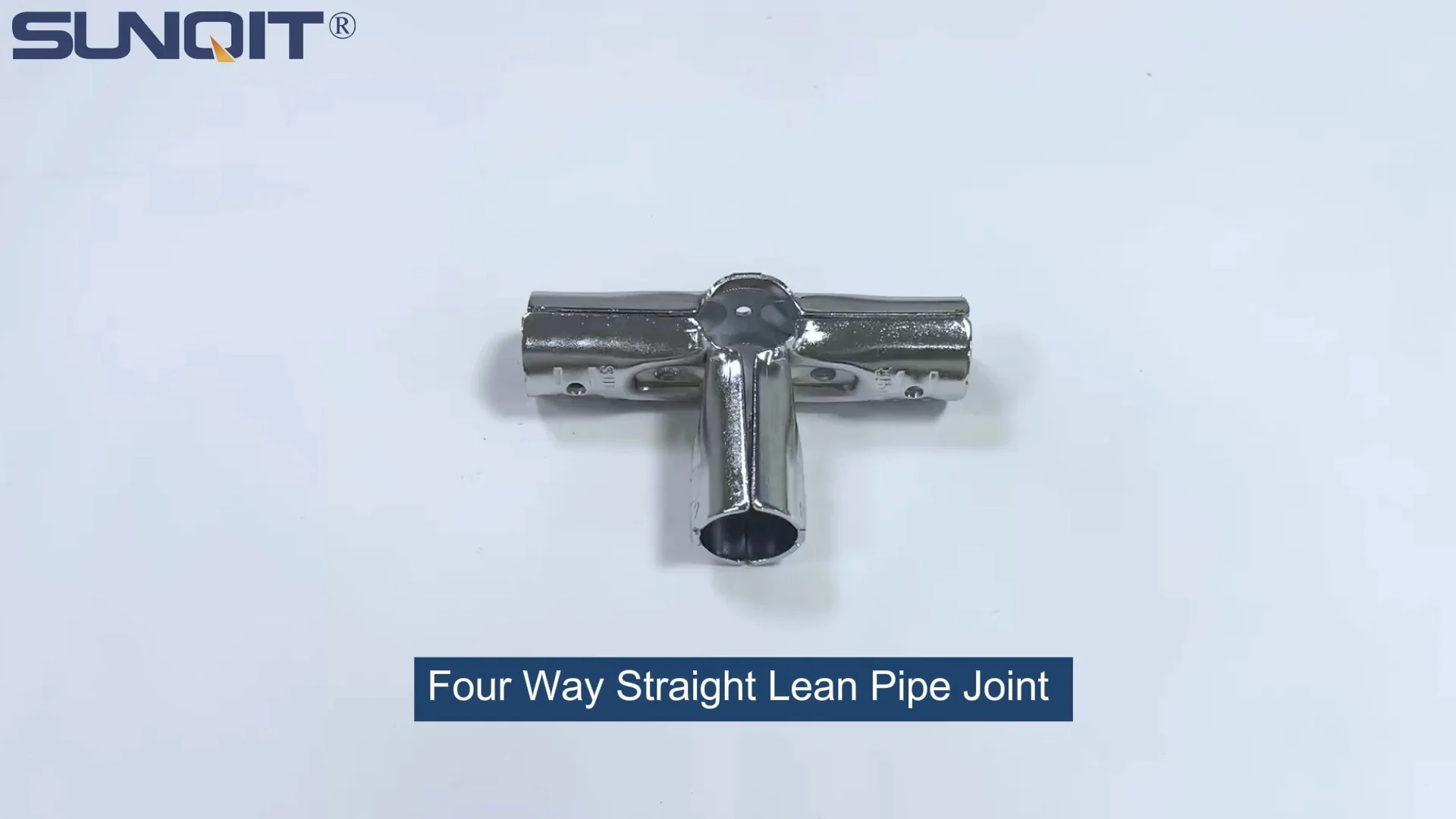
Four way lean pipe joint for 4 pcs 28MM lean pipe connection in straight angle, which used widely in workbench, flow rack, hand trolley frame connection.
In the world of lean manufacturing, where efficiency and adaptability are the backbone of every production line, even the smallest components play a starring role. Think about the last time you walked through a factory floor—those neatly organized workbenches, the smooth-flowing material racks, and the agile turnover trolleys that keep parts moving seamlessly. Behind all of that order lies a network of connections, and one of the most critical links in that network is the four way straight lean pipe joint chrome. It's not just a piece of metal; it's the silent architect that holds your lean system together, ensuring stability, flexibility, and longevity. But with so many options on the market, how do you pick the one that fits your project like a glove? Let's dive in.
What Even Is a Four Way Straight Lean Pipe Joint Chrome?
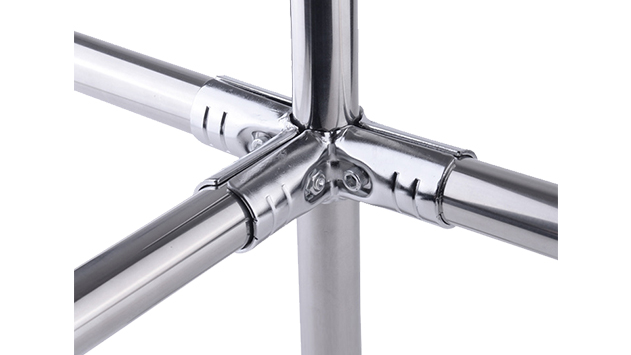
Before we get into the "how," let's make sure we're all on the same page about the "what." A four way straight lean pipe joint chrome is a specialized connector designed to join lean pipes at right angles, creating a sturdy, multi-directional framework. Picture it as a central hub with four equally spaced ports, each sized to fit standard lean pipes—whether they're aluminum lean pipe, stainless steel pipe series, or even PE-coated lean pipe. The "chrome" in its name refers to the plating process, which adds a layer of protection against rust and wear, making it ideal for busy industrial environments where durability is non-negotiable.
These joints are the unsung heroes of modularity. Unlike fixed welding or permanent fasteners, they let you assemble, disassemble, and reconfigure your structures with minimal effort. Need to adjust the height of a workbench? Swap out a short pipe for a longer one. Want to add an extra shelf to your material rack? Just connect a new pipe to the four way joint. This flexibility is why they're a cornerstone of lean systems, where adaptability to changing production needs can make or break efficiency.
Key Factors to Consider When Choosing Your Joint
1. Material Compatibility: It's All About the Pipe
First things first: your joint has to play nice with the pipes you're using. Lean pipes come in various materials—aluminum lean pipe for lightweight projects, stainless steel pipe series for corrosion resistance, and PE-coated options for basic applications. The four way straight lean pipe joint chrome is versatile, but that doesn't mean it's a one-size-fits-all solution. For example, if you're working with aluminum lean pipe, you'll want to ensure the joint's inner diameter matches the pipe's outer diameter precisely. A loose fit can lead to wobbly structures, while a tight fit might damage the pipe's surface or make assembly a frustrating chore.
Chrome plating adds another layer of compatibility here. It's naturally smooth, which reduces friction when inserting pipes, but it's also hard enough to withstand the pressure of clamping (if your joint uses a set-screw design). Just be mindful: if your project involves ESD workbench or ESD workstation setups, where static control is critical, you might need to pair the chrome joint with anti-static pipes or accessories—but that's a topic for another day. For most general manufacturing or warehouse projects, though, chrome's compatibility with standard lean pipes is more than sufficient.
2. Load Capacity: Don't Skimp on Strength
Imagine building a material rack b (3 row and 3 floor) to hold heavy automotive parts, only to have the joints buckle under the weight. Not only is that a safety hazard, but it's also a massive waste of time and money. That's why load capacity is non-negotiable. Every four way straight lean pipe joint chrome has a maximum weight it can support, and you need to match that number to your project's needs.
How do you calculate that? Start by listing out what your structure will hold. If it's a workbench where operators will place tools and small components, a joint with a 50kg load capacity might be enough. But if you're building a flow rack for bulk materials or a turnover trolley carrying heavy machinery parts, you'll need something sturdier—think 100kg or more. Don't forget to account for dynamic loads too: if parts will be sliding onto the rack or the trolley will be moved frequently, the joint will experience sudden jolts, so add a 20-30% buffer to your static load estimate.
Pro tip: Check the manufacturer's specs for "shear strength" and "tensile strength." Shear strength tells you how much force the joint can handle when pipes are pulled sideways, while tensile strength measures resistance to pulling forces along the pipe's length. Both matter—especially in multi-tiered structures like the material rack b, where weight is distributed across multiple joints.
3. Environmental Conditions: Chrome vs. the Elements
Your factory floor isn't a climate-controlled office, and your joints need to tough it out through whatever comes their way. Chrome plating is a champion here, but it's not invincible. Let's break down common environmental factors:
- Moisture: Chrome resists rust, but if your workspace is extremely humid (like a food processing plant or a facility near the coast), you might want to opt for stainless steel pipe series joints instead. They're pricier, but they'll stand up to salt air or frequent water exposure better.
- Dust and Debris: In woodworking shops or construction sites, fine particles can get into joint threads, making disassembly difficult. Look for joints with sealed threads or dust caps to keep gunk out.
- Temperature Fluctuations: If your project is in a warehouse with extreme heat or cold, check that the joint's chrome plating won't crack or peel under thermal stress. Most reputable manufacturers test their joints for temperature resistance, so ask for those specs!
4. Modularity: Plan for the Future
One of the biggest perks of lean systems is their ability to grow and change with your business. Today's simple workbench might become tomorrow's multi-station assembly line, and your four way straight lean pipe joint chrome needs to keep up. That means looking beyond just the immediate connection—think about how easy it will be to add accessories later.
For example, if you might want to add caster wheels to your structure down the line, ensure the joint has enough clearance to attach caster accessories without interfering with the pipes. Or, if you plan to integrate roller tracks for material flow, check that the joint's design won't block the track's path. Some joints have recessed set screws or smooth exteriors that make adding accessories a breeze, while others have bulky knobs that get in the way. It's the little details that save you headaches later.
5. Quality: Don't Let Cheap Parts Derail Your Project
It's tempting to go for the cheapest joint you can find, especially when you're buying in bulk for a large project. But here's the truth: a low-quality four way straight lean pipe joint chrome will cost you more in the long run. Think about it—if a joint fails, you'll have to stop production to replace it, rework the entire structure, and maybe even replace damaged pipes or accessories. That's downtime, and downtime in manufacturing is money down the drain.
So how do you spot quality? Look for joints with smooth, even chrome plating (no bubbles or flaking), tight tolerances (the ports should be perfectly round and evenly spaced), and sturdy set screws (preferably made of hardened steel). If possible, ask for a sample and give it a test: insert a pipe, tighten the screw, and give it a good shake. A quality joint will hold firm, with no creaking or slipping.
Common Mistakes to Avoid
Even with the best intentions, it's easy to slip up when choosing a four way straight lean pipe joint chrome. Let's highlight a few pitfalls to steer clear of:
- Underestimating load: This is the biggest offender. Don't guess—calculate! If you're unsure, err on the side of a higher load capacity. It's better to have a joint that's stronger than needed than one that's too weak.
- Mismatching pipe and joint sizes: A 28mm pipe won't fit a 30mm joint, and forcing it will only damage both. Always double-check the dimensions before ordering.
- Ignoring future expansion: "We'll never need to add more shelves" is famous last words in manufacturing. Choose a joint that lets you adapt later, even if you don't need it now.
- Sacrificing quality for price: A $2 joint might seem like a steal, but if it fails after a month, you'll end up paying more to replace it than if you'd bought a $ five joint upfront.

Why Choosing the Right Lean Pipe Supplier Matters
You could have the best checklist in the world, but if you're buying from a shoddy supplier, none of it matters. A reliable lean pipe supplier isn't just a vendor—they're a partner in your project's success. Here's what to look for:
Range of products: The best suppliers offer not just joints, but the full ecosystem—aluminum lean pipe, stainless steel pipe series, caster wheels, roller track accessories, and more. This ensures compatibility across all your components.
Technical support: If you're unsure about load capacity or material compatibility, a good supplier will have engineers or product specialists who can walk you through it. They should be able to provide test reports, material certifications, and even custom solutions if needed.
Consistency: Quality control is key. You don't want one batch of joints to fit perfectly and the next to be slightly off. Look for suppliers with ISO certifications or strict in-house testing processes.
Customer reviews: A quick search online can tell you a lot. Do other customers rave about their joints' durability? Or do they complain about frequent breakages? Real-world feedback is gold.
Case Study: Choosing the Right Joint for a Production Assemble Line
Let's put this all into context with a real-world example. Imagine a small electronics manufacturer that wants to upgrade its production assemble line. They need to build two structures: a material rack b (3 row and 3 floor) to store circuit boards and components, and a series of workbenches where operators will assemble the final products. Both need to be sturdy, easy to reconfigure, and compatible with aluminum lean pipe (their material of choice for lightweight maneuverability).
First, they calculate the load: each shelf of the material rack will hold around 80kg of components, so the joints need to support at least that per shelf. They also know the workbenches might later need caster wheels to move them closer to the assembly line, so modularity is a must. After researching, they settle on a four way straight lean pipe joint chrome with a 120kg load capacity, chrome plating for durability, and smooth ports that fit their 28mm aluminum lean pipe perfectly.
Six months later, the manufacturer expands, adding a second shift. They need to add two more shelves to the material rack and reposition the workbenches. Thanks to their choice of joint, they're able to do this in a weekend—no welding, no new tools, just a few adjustments. The joints hold firm, the structure remains stable, and production doesn't skip a beat. That's the power of choosing right.
A Quick Comparison: Four Way vs. Other Joint Types
| Joint Type | Material | Max Load (kg) | Compatible Pipes | Best For | Pros | Cons |
|---|---|---|---|---|---|---|
| Four Way Straight Chrome | Chrome-plated steel | 100-150 | Aluminum, stainless steel, PE-coated | Multi-directional structures (racks, workbenches) | High flexibility, strong, corrosion-resistant | Bulker than two-way joints |
| Three Way Chrome | Chrome-plated steel | 80-120 | Same as above | Corner structures, simple shelves | Compact, good for tight spaces | Less versatile than four-way |
| Two Way Straight Chrome | Chrome-plated steel | 60-100 | Same as above | Straight lines, support beams | Slim design, easy to install | Only for linear connections |
Final Thoughts: It's About the Big Picture
Choosing the right four way straight lean pipe joint chrome isn't just about picking a part off a shelf. It's about understanding your project's needs, anticipating future changes, and partnering with a supplier you can trust. Whether you're building a simple workbench or a complex production line, this small but mighty joint will be the foundation of your success. So take the time to research, test, and ask questions—your lean system (and your bottom line) will thank you.
At the end of the day, lean manufacturing is about making smart, intentional choices. And when it comes to your four way straight lean pipe joint chrome, that choice should be one that keeps your operations flowing smoothly, your team safe, and your business growing. Now go out there and build something great.