- Company Articles
- Products and Technology
- Product knowledge
- How to Choose the Right Heavy Duty Split Foot Seat for Your Workbench

How to Choose the Right Heavy Duty Split Foot Seat for Your Workbench
Related Product
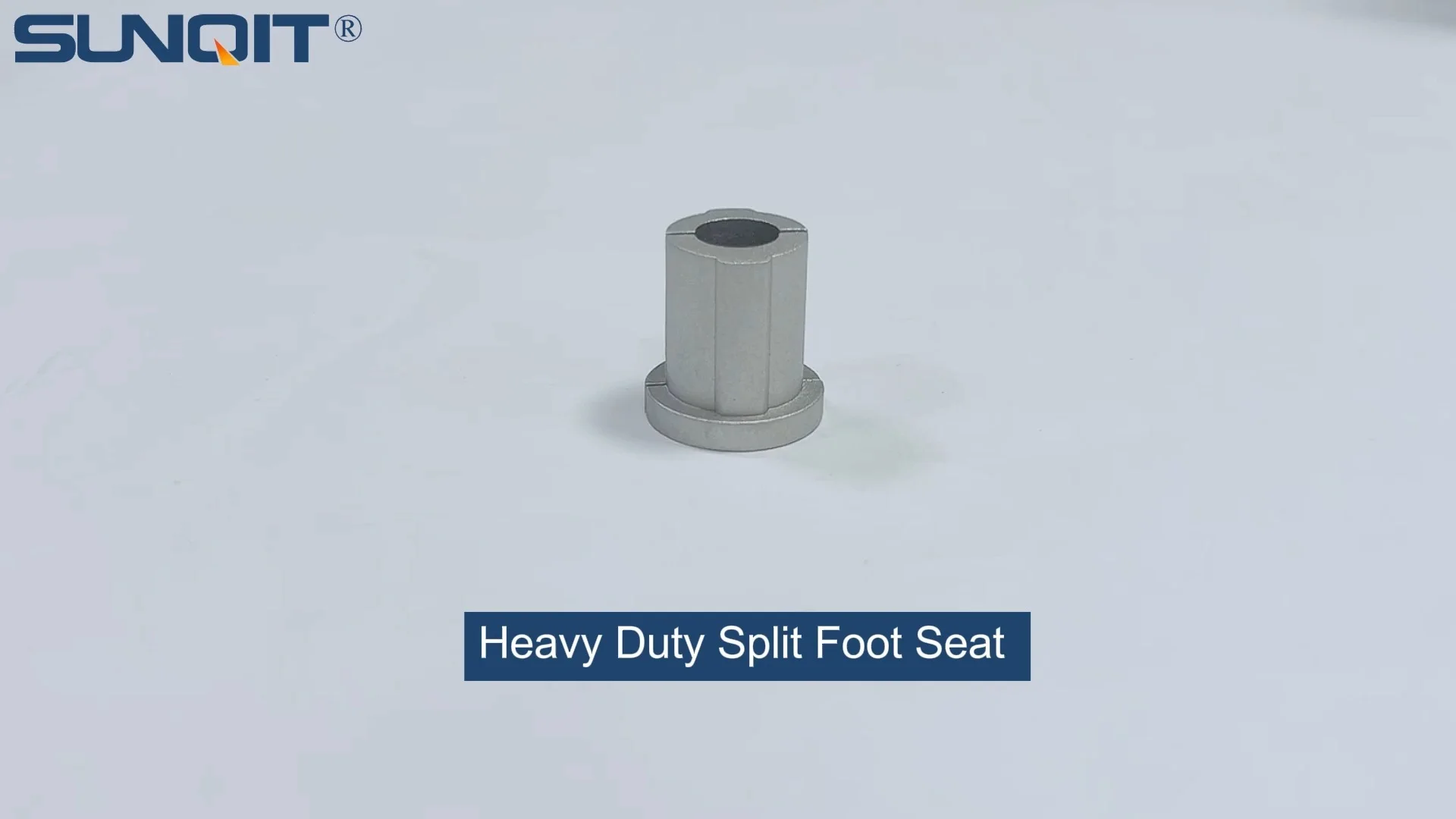
Heavy Duty Split Foot Seat
M10 aluminum heavy duty split foot deat with foot adjuster for workbench and flow rack.
Walk into any busy workshop, manufacturing plant, or even a home garage, and you'll notice something that often goes unnoticed but plays a critical role: the workbench. It's the silent workhorse where ideas take shape, products get assembled, and precision matters most. But here's the thing—even the sturdiest workbench can falter if it's not standing on the right foundation. A wobbly workbench isn't just an annoyance; it's a productivity killer, a safety hazard, and a threat to the quality of your work. If you've ever tried to drill a straight hole or assemble a delicate component on a surface that rocks with every movement, you know exactly what I'm talking about.
That's where the unsung heroes of workbench stability come in: foot seats. And among these, the heavy duty split foot seat stands out as a champion for supporting heavy loads and ensuring rock-solid stability. But with so many options on the market, how do you know which one is right for your setup? In this guide, we'll dive deep into everything you need to know about heavy duty split foot seats—what they are, why they matter, and how to pick the perfect one for your workbench, whether it's an aluminum workbench in a high-tech lab or a rugged industrial station on the factory floor.
What Exactly Is a Heavy Duty Split Foot Seat?
Let's start with the basics. A heavy duty split foot seat is a specialized type of support base designed to attach to the bottom of workbench legs, providing a stable, wide footprint that distributes weight evenly. Unlike standard single-piece feet, its "split" design features two separate, parallel plates (or a single plate split down the middle) that spread the load across a larger area. This might sound like a small detail, but in the world of heavy machinery and high-precision work, it's a game-changer.
Most heavy duty split foot seats are made from robust materials like steel or aluminum, chosen for their strength and resistance to wear. Steel versions are often favored for industrial settings where maximum load capacity is key, while aluminum options shine in environments where weight matters—like portable workbenches or setups where corrosion resistance is a priority. The split design isn't just for show, either: it allows the foot to adapt slightly to minor floor irregularities, reducing rocking, while the broad base prevents the workbench from sinking into soft surfaces (think concrete that's seen better days or uneven warehouse floors).
To visualize it, imagine placing a heavy book on a single pencil eraser versus placing it on two erasers side by side. The split design works similarly, reducing pressure per square inch and increasing stability. For workbenches that handle everything from engine blocks to delicate circuit boards, this kind of support isn't just nice to have—it's essential.
Why Your Workbench's Feet Matter More Than You Think
You might be thinking, "Can't I just use any old foot for my workbench?" Sure, but that's like using a bicycle tire on a truck—technically functional, but not built for the job. The feet of your workbench are the first line of defense against instability, and their importance grows exponentially with the weight of your tools, materials, and the precision required of your work.
Let's break down the risks of choosing the wrong foot seat:
- Safety Hazards: A wobbly workbench increases the risk of tools or materials sliding off, leading to injuries or damaged equipment. In extreme cases, an overloaded, unstable workbench could tip over entirely.
- Precision Issues: If you're working on tasks that demand accuracy—like assembling electronics, woodworking, or lab experiments—even a millimeter of wobble can ruin hours of work. A stable base ensures measurements stay true and cuts stay straight.
- Premature Wear: Constant rocking puts stress on workbench joints and legs, leading to loosened bolts, cracked frames, or bent components. Over time, this can shorten the lifespan of your workbench, forcing you to replace it sooner than necessary.
- Productivity Loss: Think about how much time you waste readjusting your workbench, clamping materials down extra tight, or fixing mistakes caused by instability. It adds up fast—especially in commercial settings where every minute counts.
The heavy duty split foot seat addresses all these issues by providing a stable, load-bearing foundation. Its design is engineered to handle the kind of abuse that would leave flimsier feet bent or broken. For example, in automotive repair shops, where workbenches often support engines or transmissions weighing hundreds of pounds, a split foot seat isn't just an upgrade—it's a necessity.

Key Factors to Consider When Choosing a Heavy Duty Split Foot Seat
Now that you understand why heavy duty split foot seats are important, let's talk about how to choose one. Not all split foot seats are created equal, and the right choice depends on your specific workbench, environment, and needs. Here are the critical factors to keep in mind:
1. Weight Capacity: Know Your Load
The first question to ask is: How much weight will my workbench actually support? This isn't just the weight of the workbench itself, but also the tools, materials, and any equipment that will be placed on it. A small aluminum workbench in a hobby shop might only need to handle 200-300 pounds, while an industrial workbench in a manufacturing plant could see loads of 1,000 pounds or more.
Heavy duty split foot seats are rated for specific weight capacities, usually listed in pounds or kilograms by the manufacturer. Always opt for a foot seat with a capacity higher than your maximum expected load—this is not the place to cut corners. For example, if your workbench and typical load add up to 800 pounds, choose a foot seat rated for at least 1,000 pounds to account for unexpected heavy items or dynamic loads (like dropping a tool on the bench).
2. Workbench Type: Match the Foot to the Bench
Your workbench's material and design play a big role in which foot seat will work best. Let's take the aluminum workbench as an example. Aluminum is lightweight yet strong, making it popular in settings where portability or corrosion resistance is key (like labs or cleanrooms). However, aluminum legs are often thinner than steel ones, so the foot seat must attach securely without damaging the leg.
Then there's the workbench e (single deck-without caster)—a common model in many production lines. As the name suggests, this workbench doesn't come with casters, which means it relies entirely on its feet for stability. For a stationary setup like this, a heavy duty split foot seat is ideal because it eliminates the need for mobility and focuses solely on providing a solid base. In contrast, a workbench with casters might use a different type of foot (like a caster with a brake), but for the workbench e, split foot seats are the way to go.
Other workbench types, like those with square steel legs or round tubing, will require foot seats with compatible mounting holes or clamping mechanisms. Always check your workbench's leg dimensions (diameter for round legs, width and thickness for square ones) before purchasing.
3. Floor Conditions: Adapt to Your Space
Not all floors are created equal. A smooth, level concrete floor in a new factory is a far cry from a cracked, uneven garage floor or a wooden shop floor with warped planks. Your heavy duty split foot seat needs to adapt to whatever surface it's on.
If your floor is relatively flat, a standard split foot seat will work well. But if there are minor unevenness, look for models with a slight degree of adjustability (some split foot seats come with small leveling screws to fine-tune height). For extremely rough surfaces, you might even pair a split foot seat with adjustable leveling feet—though we'll compare these two options in more detail later.
Moisture is another consideration. If your workspace is prone to spills (like a mechanic's shop) or high humidity (like a coastal area), choose a split foot seat made from corrosion-resistant materials, such as powder-coated steel or aluminum. This prevents rust from weakening the foot over time.
4. Material and Durability: Built to Last
Heavy duty split foot seats are typically made from one of two materials: steel or aluminum. Steel is the go-to for maximum strength and load capacity. It's tough, affordable, and can handle the heaviest workbenches. However, it's prone to rust if not treated, so look for steel foot seats with a powder-coated or zinc-plated finish for protection.
Aluminum, on the other hand, is lighter and naturally corrosion-resistant, making it a great choice for aluminum workbenches (matching materials helps prevent galvanic corrosion, where two dissimilar metals react and weaken). While aluminum isn't as strong as steel, high-grade aluminum alloys can still support substantial weight—perfect for medium-duty applications.
Don't forget to check the thickness of the foot seat's plates, too. Thicker steel (1/4 inch or more) or aluminum (3/8 inch or more) will resist bending under heavy loads better than thinner materials.

Heavy Duty Split Foot Seat vs. Adjustable Leveling Feet: Which One Do You Need?
When it comes to workbench feet, two options often stand out: heavy duty split foot seats and adjustable leveling feet. Both aim to stabilize your workbench, but they do so in different ways. Let's compare them side by side to help you decide which is right for your setup.
| Feature | Heavy Duty Split Foot Seat | Adjustable Leveling Feet |
|---|---|---|
| Design | Split, wide base for load distribution | Single base with threaded stem for height adjustment |
| Primary Use | Heavy static loads, even floors | Uneven floors, need for height fine-tuning |
| Weight Capacity | Very high (often 1,000+ lbs per foot) | High, but depends on stem strength |
| Adjustability | Limited (some have minor leveling screws) | High (adjust height by turning the stem) |
| Best For | Aluminum workbenches, workbench e (stationary), industrial setups | Workbenches on uneven floors, labs, precision work |
So, when should you choose a split foot seat over adjustable leveling feet? If your workbench is stationary, carries extremely heavy loads, and sits on a relatively even floor, the split foot seat is the better bet. Its wide base minimizes the risk of sinking or tipping, and it's simpler with fewer moving parts to fail.
On the other hand, if your floor is uneven or you need to adjust the workbench height slightly (to align with other equipment, for example), adjustable leveling feet offer more flexibility. They're also a good choice for lighter to medium loads where precision leveling is critical, like in a lab where a microscope or scales are used on the workbench.
In some cases, you might even use both! For example, a workbench with split foot seats could have small adjustable leveling feet attached to the split base, combining the load distribution of the split design with the adjustability of leveling feet. It's all about finding the right balance for your needs.

Step-by-Step Guide to Selecting the Perfect Heavy Duty Split Foot Seat
Now that you know what to look for, let's walk through the process of choosing your split foot seat step by step. This actionable checklist will help you avoid common mistakes and ensure you get the right product the first time.
Step 1: Calculate Your Total Load
Grab a notebook and add up the weight of your workbench, plus the heaviest tools, materials, and equipment you'll ever place on it. If you're unsure about specific items, overestimate—better safe than sorry. For example:
- Aluminum workbench weight: 150 lbs
- Tools (drill press, vice, etc.): 300 lbs
- Maximum material load (e.g., a 200-lb engine block): 200 lbs
- Total: 650 lbs
Divide this total by the number of legs on your workbench to get the load per foot. Most workbenches have 4 legs, so 650 lbs ÷ 4 = 162.5 lbs per foot. Choose a split foot seat rated for at least 200 lbs per foot to be safe.
Step 2: Measure Your Workbench Legs
Use a tape measure to get the exact dimensions of your workbench legs. For round legs, measure the diameter; for square or rectangular legs, measure width and thickness. Note the distance between mounting holes (if any) on the legs—this will determine if the split foot seat's bolt pattern matches.
If your workbench has no pre-drilled holes, you'll need a foot seat with a clamp-on design or be prepared to drill holes (if the leg material allows it). For aluminum workbench legs, be careful not to over-tighten clamps, as aluminum can dent under excessive pressure.
Step 3: Assess Your Floor
Take a level to your workspace and check for unevenness. If the floor slopes more than 1/4 inch over 4 feet, you might need a split foot seat with some adjustability or consider pairing it with shims. Also, note if the floor is concrete, wood, tile, or another material—this can affect whether you need non-slip pads on the foot seat to prevent sliding.
Step 4: Choose Material and Finish
Steel is best for maximum strength, but go with powder-coated or zinc-plated steel if moisture is a concern. Aluminum is lighter and corrosion-resistant, making it ideal for aluminum workbenches or clean environments. Avoid uncoated steel in damp areas—it will rust quickly.
Step 5: Read Reviews and Check Warranties
Don't just take the manufacturer's word for it—read reviews from other users. Look for comments about durability, ease of installation, and whether the foot seat lived up to its weight capacity claims. A good warranty (1 year or more) is also a sign of quality—if the manufacturer stands behind their product, it's more likely to perform well.
Installation Tips for Maximum Stability
Even the best heavy duty split foot seat won't perform well if installed incorrectly. Follow these tips to ensure your workbench stays stable for years to come:
- Clean the Legs: Before installing, wipe down the bottom of the workbench legs to remove dirt, grease, or rust. A clean surface ensures a tight bond between the leg and foot seat.
- Align Carefully: Position the split foot seat so that the split is parallel to the workbench's front edge (or in a direction that best distributes weight). Use a square to ensure the foot seat is perpendicular to the leg.
- Tighten Evenly: If using bolts, tighten them in a crisscross pattern (like tightening lug nuts on a car) to avoid uneven pressure. Over-tightening can strip threads or warp the leg, especially on aluminum workbenches.
- Check Level After Installation: Once all foot seats are installed, place a level on the workbench surface. If it's still uneven, adjust the foot seats slightly or add thin shims under the low side (only if the foot seat allows it).
- Test the Stability: Give the workbench a firm shake from all sides. It should not rock or shift. If it does, double-check the installation—you may have missed a bolt or need to readjust the alignment.
Maintaining Your Heavy Duty Split Foot Seat for Longevity
A heavy duty split foot seat is built to last, but a little maintenance goes a long way. Here's how to keep yours in top shape:
- Inspect Regularly: Every few months, check the foot seats for loose bolts, cracks, or signs of corrosion. Tighten any loose hardware and replace damaged foot seats immediately—don't wait for them to fail.
- Clean Debris: Sweep or wipe around the base of the foot seats to remove dirt, metal shavings, or other debris that could get trapped and cause uneven wear.
- Lubricate Moving Parts: If your split foot seat has adjustable components (like leveling screws), apply a small amount of lubricating oil to prevent seizing.
- Touch Up Paint: For steel foot seats, touch up chips in the powder coating with rust-resistant paint to prevent corrosion from spreading.
Real-World Case Studies: When the Right Foot Seat Made All the Difference
Still not convinced that a heavy duty split foot seat is worth the investment? Let's look at two real-world examples where upgrading to the right foot seat transformed a wobbly mess into a stable workspace.
Case Study 1: The Automotive Repair Shop
A small automotive repair shop in Ohio was struggling with a set of aluminum workbenches used for engine part assembly. The workbenches were lightweight and easy to move, but their standard plastic feet kept sinking into the shop's old, cracked concrete floor. Mechanics complained that the benches wobbled while torquing bolts, leading to stripped threads and rework.
After switching to heavy duty split foot seats with steel bases, the difference was immediate. The split design spread the weight of the workbenches and engine parts across a larger area, preventing sinking. The mechanics reported fewer mistakes and faster assembly times—all because the workbench stayed steady. "It's like night and day," said the shop foreman. "We should have done this years ago."
Case Study 2: The Electronics Manufacturing Plant
A electronics plant in California used workbench e (single deck-without caster) stations for circuit board assembly. The cleanroom environment required stable, non-corrosive equipment, but the concrete floor had minor unevenness from years of use. The original feet on the workbench e models couldn't compensate, leading to micro-wobbles that affected the precision of soldering and component placement.
The solution? Heavy duty split foot seats made from aluminum (to match the workbench) with small built-in leveling screws. The split base provided stability, while the leveling screws allowed workers to fine-tune each foot to account for floor unevenness. Post-installation, the plant saw a 15% reduction in defective circuit boards—a huge win for quality control.
Conclusion: Invest in Stability, Invest in Success
At the end of the day, your workbench is only as good as its foundation. A heavy duty split foot seat might not be the most glamorous tool in your workshop, but it's one of the most critical. It ensures safety, boosts productivity, and protects your investment in your workbench—whether it's an aluminum workbench, a workbench e, or a custom industrial setup.
By taking the time to calculate your load, measure your legs, assess your floor, and choose the right material, you'll ensure that your workbench stands strong for years to come. And when you're not fighting a wobbly surface, you'll be free to focus on what really matters: creating, building, and getting the job done right.
So, the next time you walk into your workshop, take a second look at those feet under your workbench. Are they up to the task? If not, it might be time to upgrade to a heavy duty split foot seat. Your back, your tools, and your finished products will thank you.