- Company Articles
- Products and Technology
- Product knowledge
- How to Choose the Right Size Three Way Aluminum Pipe Joint for Your Project

How to Choose the Right Size Three Way Aluminum Pipe Joint for Your Project
Related Product
Three Way Aluminum Pipe Joint
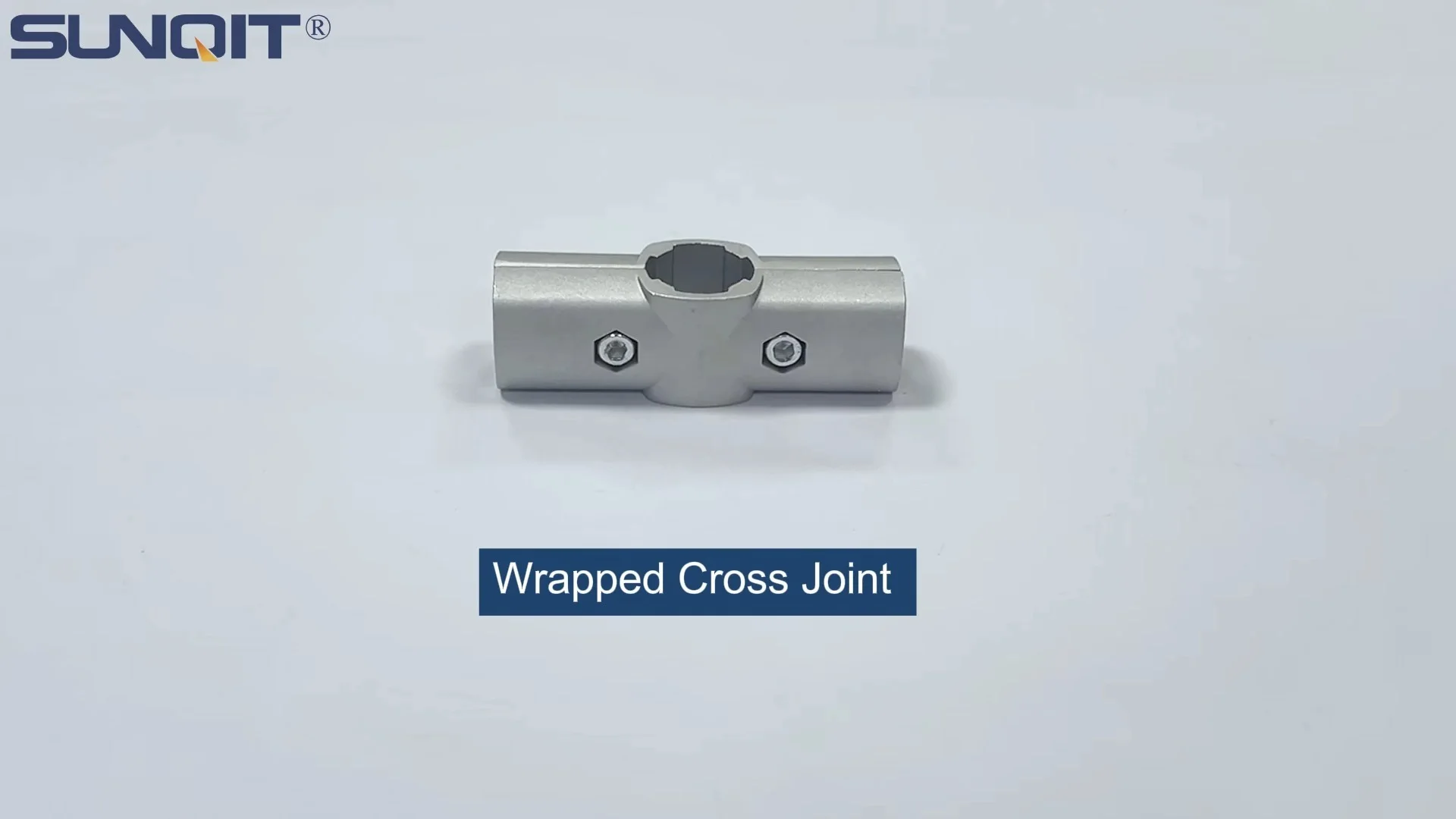
Aluminum 3 way pipe joint for 28mm aluminum pipe connection in 3 direction.
Let's start with a scenario we've all lived through (or at least heard horror stories about): You've spent weeks planning a project—maybe it's a custom workbench for your garage, a material rack for your small manufacturing shop, or even a lightweight conveyor system for your warehouse. You've carefully selected the aluminum profile, ordered all the necessary aluminum pipe accessories, and daydreamed about how much smoother your workflow will be once it's done. Then, assembly day arrives. You unbox the parts, line up the pipes, and reach for the three way aluminum pipe joints—the unsung heroes that hold everything together. But as you try to connect the first three pipes, you realize something's off. The joint is too loose, or maybe it's so tight you can't even slide the pipe in. Suddenly, that excitement fades. You're stuck, and all you can think is, "Did I really mess up the size this bad?"
If this sounds familiar, you're not alone. Choosing the right size three way aluminum pipe joint is one of those details that's easy to overlook until it derails your entire project. I've spent over a decade helping small businesses, DIY enthusiasts, and even large manufacturers avoid this exact problem, and I'm here to break it down for you. By the end of this article, you'll know exactly how to pick the perfect joint size for your project—whether it's a simple workbench or a heavy-duty material rack—and save yourself time, money, and a whole lot of frustration.
First Things First: What Even Is a Three Way Aluminum Pipe Joint?
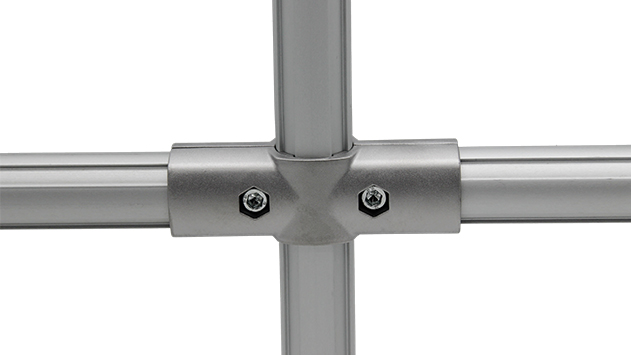
Before we dive into sizes, let's make sure we're all on the same page. A three way aluminum pipe joint is exactly what it sounds like: a small, often T-shaped or Y-shaped component designed to connect three aluminum pipes at once. Think of it as the "cornerstone" of modular aluminum structures. Unlike rigid welds or permanent fasteners, these joints let you build, adjust, and reconfigure structures with ease—hence why they're so popular in lean manufacturing, DIY projects, and industrial setups.
But here's the thing: not all three way joints are created equal. They come in different sizes, materials (though we're focusing on aluminum here), and designs (fixed, swivel, reinforced, etc.). Today, we're zeroing in on size because it's the most critical factor in whether your structure stands strong or falls apart.
Why Size Matters More Than You Think
I once worked with a startup that needed a material rack to store inventory—specifically, a "material rack b (3 row and 3 floor)" as they called it. They'd skimped on joint size to save a few dollars, figuring "smaller joints are lighter, right?" Big mistake. Within a month, the middle shelf started sagging under the weight of their products. By the second month, one of the joints cracked, and the entire rack tilted. They had to halt production, disassemble the rack, and buy new joints—costing them way more in downtime than they'd saved upfront.
Size isn't just about "fitting the pipe." It's about stability, safety, and longevity. A joint that's too small for your project will struggle to distribute weight evenly, leading to wobbly structures, bent pipes, or even collapse. A joint that's too large? You'll end up with loose connections, wasted space, and pipes that shift or rotate unexpectedly. Either way, you're looking at (fǎn gōng—rework, for my non-Chinese speakers), wasted materials, and maybe even injuries if things go really wrong.
Key Factors to Consider When Choosing Size
So, how do you avoid the "too small/too big" trap? Let's break down the four factors that should guide your decision. I'll walk through each with examples, so you can see how they apply to real projects.
1. Your Project Type: Workbench, Material Rack, or Something Else?
The first question to ask is: What am I building? A delicate workbench for assembling small electronics has very different needs than a heavy-duty material rack storing car parts. Let's compare two common projects to see why:
- Workbench: Let's say you're building a basic workbench—maybe something like "workbench e (single deck-without caster)" from a supplier catalog. Most workbenches need to support tools, materials, and maybe a laptop or two. They're stationary, so movement stress is low, but the joint still needs to handle vertical weight (from above) and lateral stress (when you lean on the bench or push/pull materials across it). For a standard workbench using 30mm aluminum pipe, a 30mm three way joint is usually ideal—it's snug enough to prevent wobble but not so tight that assembly is a hassle.
- Material Rack: Now, take that "material rack b (3 row and 3 floor)" I mentioned earlier. Each shelf might hold 50-100kg of products. The joints here aren't just holding up the shelves—they're also transferring weight from the top and middle shelves down to the base. A 30mm joint might work for a lightweight rack, but if you're stacking heavy items, you'll likely need a 40mm joint for added strength, especially at the bottom corners where weight (jízhōng—concentrates).
Pro tip: If your project involves movement (like a conveyor or a trolley), factor in dynamic stress too. Joints on a rolling trolley need to handle vibrations and sudden stops, so you might need a slightly larger size than you would for a stationary structure.
2. Load Capacity: How Much Weight Will It Really Hold?
This is where most people guess—and guess wrong. I've seen clients swear their project "only needs to hold 10kg," then later pile 30kg on it because "it seemed sturdy." Don't guess. Calculate. Here's how:
- List all items the structure will hold: For a workbench, that might be a drill press (15kg), a toolbox (10kg), and daily materials (5kg)—total 30kg. For a material rack, each shelf might have 10 boxes at 8kg each—80kg per shelf, 3 shelves = 240kg total.
- Add a safety margin: Always multiply your total by 1.5 (for stationary) or 2 (for moving structures). That workbench? 30kg x 1.5 = 45kg capacity needed. The material rack? 240kg x 1.5 = 360kg.
- Check the joint's load rating: Most suppliers list "static load capacity" (weight when stationary) and "dynamic load capacity" (weight when moving). Match your calculated capacity to the joint's rating. A 30mm three way joint might handle 50kg static, while a 40mm could do 100kg—so that 360kg rack would need 40mm joints (and maybe reinforced ones at the base).
Remember: Load isn't just about the total weight. It's about how that weight is distributed. A rack with evenly spaced shelves will stress joints less than one with all the weight on one shelf. If you're unsure, sketch a quick diagram of your project and mark where the heaviest items will go—that'll help you spot "high-stress" joints that might need a larger size.
3. Aluminum Pipe Size Compatibility: The "Diameter Dance"
This seems obvious, but I've lost count of how many times I've seen someone buy a 30mm joint for a 40mm pipe. Aluminum pipes (and aluminum profiles) come in standard diameters: 20mm, 30mm, 40mm, and 60mm are the most common. Joints are sized to match these diameters—so a "30mm three way joint" is designed to fit 30mm pipes, a "40mm joint" for 40mm pipes, and so on.
But here's the catch: Not all pipes are created equal. Some aluminum pipes have thicker walls than others, which can affect the "fit" even if the diameter is the same. For example, a 30mm pipe with a 1.5mm wall thickness will have a slightly smaller inner diameter than a 30mm pipe with a 1.2mm wall. Most joints account for this with a small tolerance (usually ±0.5mm), but it's worth checking the pipe's specs before buying joints. If you're using "basic aluminum tube" from a specific supplier, ask them which joints are recommended—they'll know their products best.
Another compatibility issue: joint design . Some three way joints are "fixed" (the pipes lock into place at 90° angles), while others are "rotary" (you can adjust the angle). Rotary joints often have slightly different internal dimensions to allow movement, so make sure you're not mixing fixed and rotary sizes by accident.
4. Environmental Conditions: Indoor, Outdoor, or Somewhere In-Between?
You might not think "environment" affects joint size, but hear me out. If your project is outdoors or in a humid space (like a food processing plant), aluminum joints can corrode over time—even though aluminum is naturally rust-resistant. A larger joint with more material (thicker walls) will hold up better against corrosion than a smaller, thinner joint. Similarly, if your project is in a cold environment, aluminum can become slightly brittle—so a larger joint with more structural support reduces the risk of cracking.
For example, a workbench in a dry, climate-controlled office? A standard 30mm joint is fine. A material rack in a warehouse with high humidity and temperature swings? You might want to bump up to a 40mm joint, or at least choose a joint with a thicker aluminum wall (2.0mm vs. 1.5mm).

A Step-by-Step Guide to Choosing the Right Size
Let's put this all together with a simple, actionable process. Follow these steps, and you'll be choosing joint sizes like a pro in no time.
Step 1: Define Your Project in Detail
Write down: What are you building? (Workbench, material rack, etc.) How big is it? (Dimensions: length, width, height) What will it hold? (List items and their weights) Where will it be located? (Indoor, outdoor, humid, dry?)
Example: "I'm building a material rack (3 rows, 3 floors) for my garage. It will be 1.2m tall, 1.5m wide, 0.5m deep. Each shelf will hold 5 boxes of tools, ~10kg per box. Location: Indoor, dry, but occasionally gets dusty."
Step 2: Calculate Total Load + Safety Margin
Total load = (weight per item) x (number of items). Safety margin = total load x 1.5 (stationary) or 2 (moving). For the example above: 5 boxes/shelf x 10kg = 50kg/shelf x 3 shelves = 150kg total. Safety margin: 150kg x 1.5 = 225kg.
Step 3: Choose Your Aluminum Pipe Size
Based on your project and load, pick a pipe diameter. For most small to medium projects: 20mm (light duty, like small workbenches), 30mm (medium duty, like garage racks), 40mm (heavy duty, like industrial material racks). Our example (225kg total) would need 30mm or 40mm pipes. Let's go with 30mm for this case.
Step 4: Match Pipe Size to Joint Size
Now, pick a joint size that matches your pipe size. For 30mm pipes, a 30mm three way joint is the starting point. Check the joint's load rating: If a 30mm joint can handle 80kg per connection, and our rack has 4 corner joints (each supporting ~56kg with the safety margin), 30mm should work. If the load were higher (say, 300kg total), we'd need 40mm joints.
Step 5: Check for Special Conditions
Is your project outdoors? Add 10% to the joint size (e.g., 30mm → 40mm). Using rotary joints? Make sure they're rated for your load. If in doubt, ask your supplier—reputable "lean pipe supplier" or "aluminum profile supplier" will have technical support teams happy to help.

Common Mistakes to Avoid (Because I've Seen Them All)
Even with the steps above, it's easy to slip up. Here are the three biggest mistakes I see, and how to steer clear:
Mistake #1: "Bigger Is Always Better"
Nope. A 60mm joint on a 20mm pipe is overkill. It adds unnecessary weight, makes assembly harder, and can actually weaken the structure by creating "loose" connections. Use the smallest joint that meets your load and size needs—don't overcompensate.
Mistake #2: Ignoring Joint Material Thickness
Two joints might be "30mm," but one has a 1.2mm wall thickness and the other 1.5mm. The thicker one will handle more load. Always check the joint's material specs—don't just go by size alone.
Mistake #3: Forgetting About Assembly and Adjustments
If you're building a structure that needs to be adjusted later (like a workbench that might need extra shelves), a slightly larger joint with more tolerance can make disassembly/reassembly easier. Fixed joints are great for stability, but rotary joints offer flexibility—balance the two based on your project's needs.
Three Way Aluminum Pipe Joint Sizes: A Quick Reference Table
| Joint Size (mm) | Compatible Pipe Diameter (mm) | Typical Load Capacity (Static, kg) | Best For |
|---|---|---|---|
| 20mm | 20mm | 30-50 | Small workbenches, lightweight shelving, desktop organizers |
| 30mm | 30mm | 60-100 | Garage material racks, medium workbenches, mobile trolleys |
| 40mm | 40mm | 120-200 | Industrial material racks, heavy workbenches, conveyor supports |
| 60mm | 60mm | 250-400 | Large-scale storage racks, outdoor structures, high-load conveyors |
*Load capacities are approximate and vary by manufacturer. Always check with your supplier for exact specs.
Final Thoughts: Your Project Deserves the Right Joint
Choosing the right size three way aluminum pipe joint might not be the most glamorous part of your project, but it's the foundation that holds everything together. Take the time to calculate your load, match your pipe size, and consider your environment. Talk to your supplier—reputable ones (like a "lean pipe workbench supplier" or "aluminum profile supplier") will have the expertise to guide you. And remember: A few extra minutes spent choosing the right joint now will save you hours of frustration (and dollars) later.
So, what's your project? Whether it's a simple workbench or a complex material rack, I'd love to hear about it. drop a comment below, and let's make sure you get those joints right the first time.