- Company Articles
- Products and Technology
- Procurement Guidelines
- How to Choose the Right Swivel Stem Caster Wheel with Brake for Automotive Plants

How to Choose the Right Swivel Stem Caster Wheel with Brake for Automotive Plants
Related Product
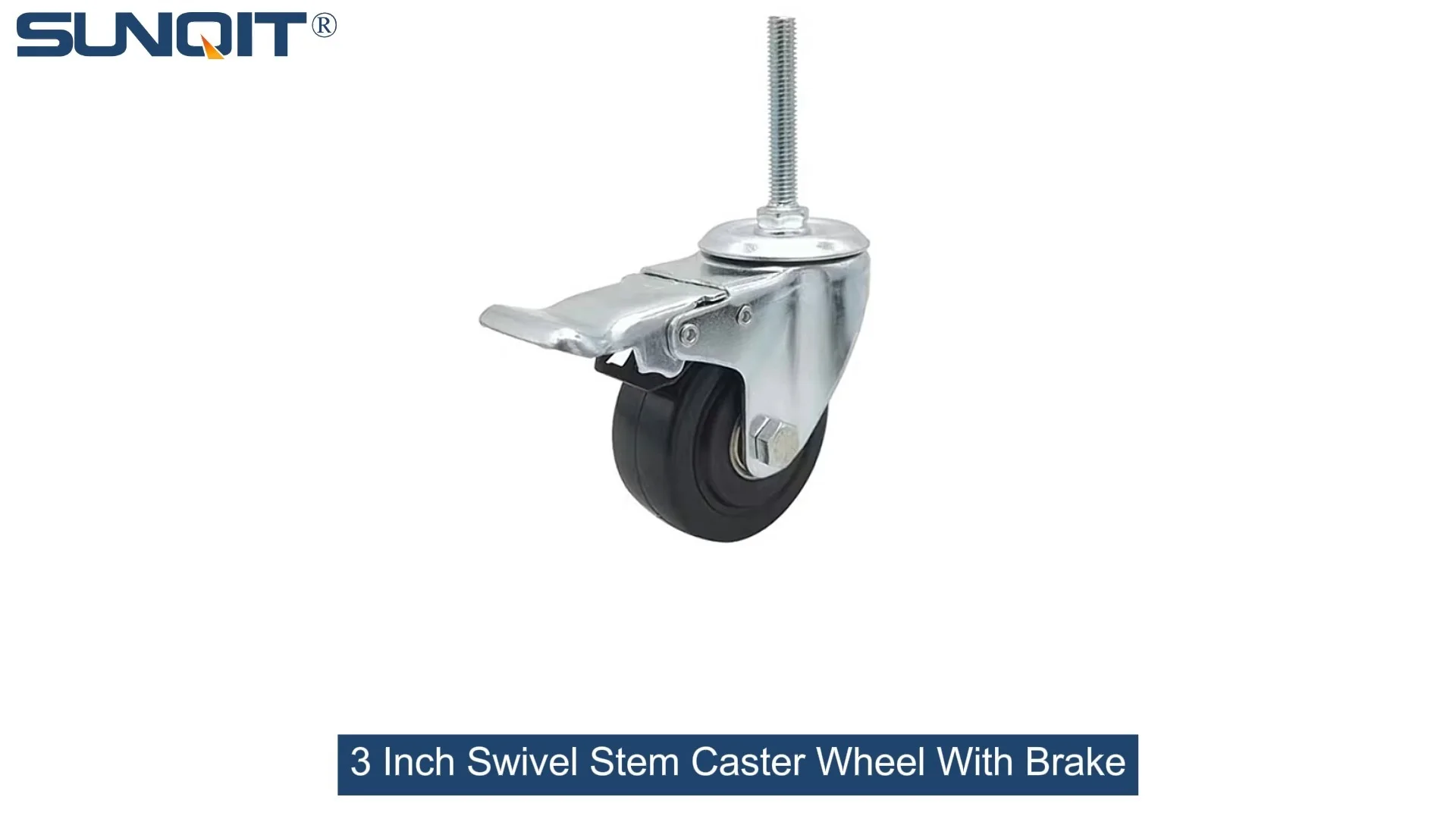
Swivel Stem Caster Wheel with Brake
360 Degree Swivel Stem Caster with brake. Threaded-post mount design, castors diameter 3 inch.Each swivel caster wheels loading 70KGS. Heavy enough and widely suit for carts, chairs, cabinet, flow rack, workbench, turnover rolley.
Walk through any automotive plant, and you'll see a symphony of movement: tool carts gliding between assembly stations, parts trolleys weaving through workbenches, and material racks shifting to feed production lines. At the heart of this orchestration? Caster wheels. These small but mighty components are the unsung heroes of manufacturing efficiency, quietly bearing the weight of heavy engines, delicate electronics, and bulky body panels—all while keeping operations flowing smoothly. But not all casters are created equal, especially in automotive environments where precision, safety, and durability aren't just goals—they're requirements. When it comes to swivel stem caster wheels with brakes, the stakes are even higher: a poorly chosen caster can slow down production, compromise worker safety, or even damage expensive equipment. In this guide, we'll break down how to select the perfect swivel stem caster wheel with brake for your automotive plant, ensuring every roll, stop, and pivot supports your team's hard work and your facility's lean system goals.
Why Swivel Stem Caster Wheels with Brakes Matter in Automotive Plants
Automotive manufacturing is a world of tight deadlines, heavy loads, and constant motion. From the moment raw materials arrive to the final inspection of a finished vehicle, every step relies on the ability to move tools, parts, and equipment quickly and safely. Swivel stem casters with brakes are critical here for three key reasons: mobility, stability, and control. Unlike rigid casters, swivel stems allow 360-degree rotation, making it easy to maneuver trolleys around tight corners or position workbenches with pinpoint accuracy—essential in spaces where every inch of floor space is optimized. The brake feature, meanwhile, transforms a moving cart into a stationary workstation in seconds, preventing accidental rolls during loading/unloading or when workers are using tools. In a lean system, where waste reduction and efficiency are prioritized, reliable casters minimize downtime from stuck wheels, damaged floors, or accidents, keeping your production line on track.
Consider this: A typical automotive assembly line might use 50+ mobile workstations daily, each carrying 200–500 pounds of tools and parts. If even one caster fails—a stuck brake, a cracked wheel, or a stem that won't swivel—it can halt a section of the line, costing thousands in lost productivity. That's why choosing the right swivel stem caster wheel with brake isn't just a purchase; it's an investment in your plant's ability to meet deadlines, protect workers, and maintain the high standards automotive manufacturing demands.
Key Factors to Consider When Selecting Swivel Stem Caster Wheels with Brakes
1. Load Capacity: Don't Underestimate the Weight
The first rule of caster selection? Always overestimate your load. Automotive plants deal with heavy items: a single engine block can weigh 300+ pounds, and a trolley stacked with brake components might hit 800 pounds. If you undersize your casters, you risk bent stems, cracked wheels, or brakes that fail under pressure. To calculate the right load capacity, start with the total weight your trolley or workstation will carry—this includes the weight of the cart itself plus the maximum load it will hold (e.g., a 50-pound cart + 450 pounds of parts = 500 pounds total). Divide that by the number of casters (most carts use 4), then add a 30% safety margin to account for uneven loading or sudden impacts (500 lbs ÷ 4 casters = 125 lbs per caster; 125 + 30% = 162.5 lbs). Choose a caster rated for at least 163 lbs per wheel. When shopping, look for "dynamic load capacity" (weight when moving) and "static load capacity" (weight when stationary with brakes engaged)—both matter in automotive settings.
2. Floor Type: Match the Wheel to the Surface
Automotive plant floors are a mixed bag: smooth epoxy-coated concrete in assembly areas, rough unfinished concrete in warehousing zones, and even occasional oil or coolant spills. The wrong wheel material can scratch floors, create noise, or slip, turning a simple roll into a hazard. Here's how to match wheels to common surfaces:
- Smooth, finished floors (epoxy, polished concrete): Polyurethane wheels are ideal. They're soft enough to avoid scratches but firm enough to roll smoothly, even with heavy loads. Plus, they dampen noise—critical for keeping work environments comfortable.
- Rough or uneven floors (unfinished concrete, warehouse areas): Nylon or cast iron wheels work best. Their hard, durable surfaces resist chips and cracks, while wide treads handle bumps without getting stuck.
- Wet/oily surfaces (engine assembly, maintenance bays): Rubber wheels with a treaded pattern offer superior grip, reducing the risk of skidding when brakes are off. Look for oil-resistant rubber formulas to prevent degradation.
Pro tip: If your plant has multiple floor types, consider a hybrid setup—e.g., polyurethane wheels for assembly lines and nylon wheels for warehouses. Consistency is good, but adaptability prevents headaches.
3. Brake Mechanism: Safety First, Always
In automotive plants, brakes aren't just for parking—they're for protecting workers and products. A cart that rolls unexpectedly can crush fingers, damage parts, or collide with expensive machinery. When evaluating brake types, prioritize reliability, ease of use, and compatibility with your workflow:
- Total-lock brakes: These lock both the wheel and the swivel motion, keeping the cart completely stationary. Perfect for workstations where stability is key (e.g., when using power tools on a parts cart).
- Wheel-only brakes: Lock the wheel but allow the caster to swivel. Useful for temporary stops where you might need to reposition the cart slightly without unlocking.
- Foot-operated brakes: The most common in automotive settings. A simple tap with the foot engages the brake, leaving hands free to handle tools or parts. Look for large, easy-to-reach pedals—critical when workers are wearing steel-toed boots.
Avoid "pinch-style" brakes, which can jam with debris like metal shavings or oil—common in automotive plants. Instead, opt for enclosed brake mechanisms or those with a protective shield to keep contaminants out.
4. Environmental Conditions: Fight the Elements
Autom plants are tough on equipment: high temperatures near welding stations, chemical spills (coolant, lubricants), and constant exposure to dust and metal particles. A caster that works in a clean office won't last a week here. Look for these features to ensure durability:
- Corrosion resistance: Stainless steel stems or zinc-plated hardware prevent rust from moisture or chemicals.
- Heat tolerance: For areas near ovens or welding, choose wheels rated for 200°F+ (e.g., high-temp polyurethane or phenolic resin).
- Chemical resistance: If your plant uses harsh cleaners or coolants, check that wheel materials (e.g., polyurethane, rubber) are labeled "chemical-resistant."
5. Maneuverability: Navigating Tight Spaces
Automotive assembly lines are designed for efficiency, which often means tight quarters: workbenches inches apart, robotsing floor space, and workers moving in every direction. A swivel stem caster with a large turning radius can turn a simple "grab that wrench" into a frustrating puzzle. Look for a swivel radius (the distance from the stem center to the wheel edge) of 3–5 inches for most carts—small enough to pivot in tight spots but large enough to maintain stability. Also, consider the caster's "lead" (the angle of the swivel joint)—a 10–15° lead makes steering smoother, reducing strain on workers pushing heavy loads.

Common Types of Swivel Stem Caster Wheels with Brakes for Automotive Use
Now that you know what to look for, let's explore the most popular options for automotive plants. Each type has its strengths, so matching the caster to the task is key:
| Caster Type | Wheel Material | Best For | Key Benefits | Potential Drawbacks |
|---|---|---|---|---|
| Heavy-Duty Polyurethane Swivel Stem with Total-Lock Brake | Polyurethane on steel core | Assembly line workstations, tool carts | Quiet, floor-friendly, handles 300–800 lbs per caster; total-lock brake for stability | Not ideal for extreme heat (over 180°F) |
| Nylon Swivel Stem with Wheel-Only Brake | Reinforced nylon | Warehouse material racks, heavy parts trolleys | Durable on rough floors, chemical-resistant, high load capacity (500–1,200 lbs) | Harder ride; can be noisy on smooth floors |
| Rubber Swivel Stem with Oil-Resistant Brake | Oil-resistant rubber | Engine maintenance carts, fluid handling areas | Superior grip on wet/oily surfaces; shock-absorbing | Prone to wear on rough floors; lower load capacity (200–400 lbs) |
| Stainless Steel Swivel Stem with Enclosed Brake | Stainless steel wheel | Clean rooms, food-grade automotive components (e.g., interior trim) | Corrosion-proof, easy to sanitize; enclosed brake resists dust/debris | Expensive; heavy; can scratch soft floors |

Mistakes to Avoid When Buying Swivel Stem Caster Wheels with Brakes
Even with the best intentions, it's easy to overlook details that turn a "good enough" caster into a problem. Here are the most common pitfalls and how to steer clear:
Mistake #1: Underestimating Load (or Ignoring Dynamic vs. Static Ratings)
A caster rated for 200 lbs static load might only handle 150 lbs when moving. If you load a cart to 200 lbs and start rolling, you risk bending the stem or shearing the brake mechanism. Always check both ratings and add that 30% safety margin—your team (and your budget) will thank you.
Mistake #2: Choosing Style Over Substance (e.g., "Pretty" vs. Practical Brakes)
Sleek, minimalist brakes might look good in catalogs, but in a plant with oil-covered floors and gloved hands, they're a disaster. Prioritize brakes with large, textured pedals that are easy to find by feel and require minimal force to engage. Remember: If a worker struggles to lock the brake, they might skip using it altogether.
Mistake #3: Forgetting About Maintenance
Casters need love too! Grease fittings, replaceable wheels, and easy-to-access brakes make maintenance a breeze. Avoid "sealed-for-life" models—even the best casters wear down, and being able to swap a wheel instead of replacing the entire caster saves time and money. Check if the supplier offers replacement parts like caster accessories (e.g., brake pads, swivel bearings) to keep your casters rolling for years.

How to Test a Swivel Stem Caster Wheel with Brake Before Buying
Don't rely solely on specs—test the caster in your actual work environment. Here's a quick checklist:
- Load test: Stack a cart with weights equal to your max load and roll it across your most common floor type. Does it roll smoothly? Do the brakes hold without slipping?
- Maneuverability test: Pivot the cart in a tight space (e.g., between two workbenches 3 feet apart). Does the swivel stem move freely, or does it stick?
- Brake test: Engage the brake on a slight incline (even 1–2 degrees) with a loaded cart. Does it stay put? Try disengaging the brake with one foot—easy or a struggle?
- Durability test: Roll the cart over a 1-inch threshold (simulating floor joints) 50 times. Check for loose stems, cracked wheels, or brake misalignment.
Many suppliers offer sample casters for testing—take advantage of this! It's cheaper to return a sample than to replace 50 faulty casters later.
Choosing the right swivel stem caster wheel with brake for your automotive plant isn't just about checking boxes on a spec sheet—it's about understanding your team's daily challenges, your facility's unique conditions, and how even small components contribute to big-picture success. By prioritizing load capacity, floor compatibility, brake reliability, and maneuverability, you'll select casters that keep your production line moving, your workers safe, and your lean system goals on track. Remember: The best caster is the one that works so well, your team forgets it's there—until they need to stop, pivot, or roll forward again. Invest wisely, test thoroughly, and let your casters carry the weight so your team can focus on building the next great vehicle.