- Company Articles
- Products and Technology
- Product knowledge
- How to Choose the Right T Slot Aluminum Pipe with Board Holder for Your Workshop

How to Choose the Right T Slot Aluminum Pipe with Board Holder for Your Workshop
Related Product
T Slot Aluminum Pipe with Board Holder
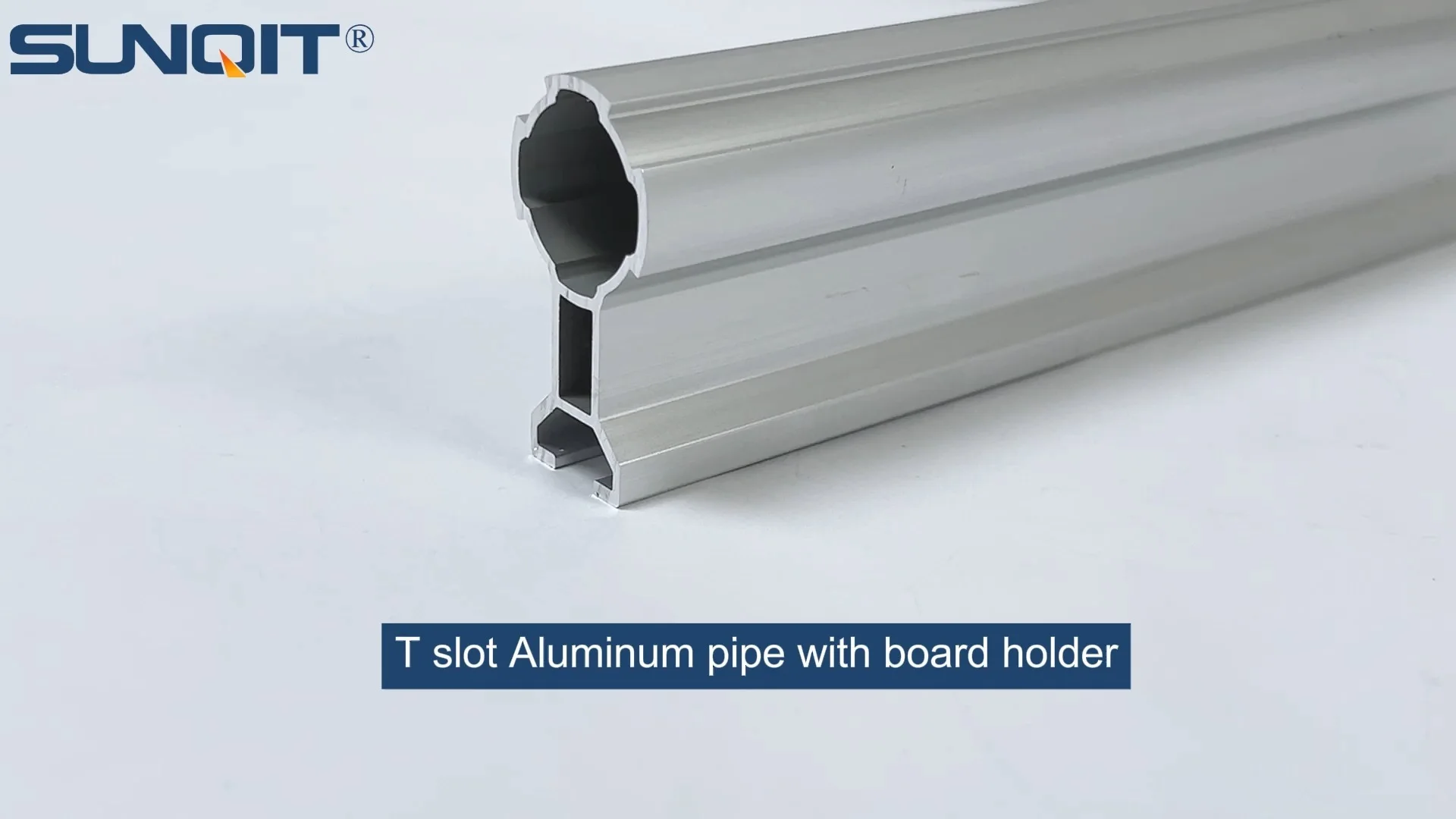
T slot Aluminum pipe with board holder,the pipe one side connected by a joint, the other side with a slot which can hold a tray or a aluminum pannel
Walk into any well-run workshop, and you'll notice a common thread: organization. Tools have their place, materials flow smoothly, and every square inch of space works as hard as the people in it. But for many small to mid-sized shops, achieving that level of efficiency can feel like chasing a moving target. Cluttered workbenches, jumbled tools, and materials that take forever to retrieve—these are more than just annoyances; they're productivity killers. If this sounds familiar, you've probably wondered: What's the secret to turning chaos into order?
The answer might lie in a humble yet powerful tool: the T slot aluminum pipe with a board holder. These unassuming components are the backbone of modern workshop organization, offering flexibility, durability, and customization that rigid, one-size-fits-all solutions can't match. Whether you're building a custom workbench, a material rack, or a flow system to keep parts moving, choosing the right T slot aluminum pipe with a board holder can transform how your workshop operates. But with so many options on the market—different sizes, materials, and accessories—it's easy to feel overwhelmed. That's why we've put together this guide: to break down the process, simplify the jargon, and help you make a choice that fits your workshop's unique needs.
What Exactly Is a T Slot Aluminum Pipe with Board Holder?
Let's start with the basics. A T slot aluminum pipe is exactly what it sounds like: a lightweight, hollow aluminum tube with a longitudinal "T" shaped slot running along its length. This slot isn't just a design quirk—it's the secret to its versatility. It allows you to slide in bolts, nuts, brackets, or specialized accessories (like board holders) without drilling holes or welding. The board holder, as the name suggests, is an accessory that attaches to the T slot, providing a stable surface to hold wooden or metal boards, shelves, or work surfaces. Together, they create a modular system that you can reconfigure, expand, or repurpose as your workshop needs change.
Think of it as building with giant, industrial-grade Legos. The T slot aluminum pipe is the "brick," and the board holder is one of the many "connectors" that let you snap different elements together. Need a taller workbench? Add longer pipes. Want to add a shelf above your tools? Attach a board holder and slide in a plywood sheet. This flexibility is why these systems are a favorite in manufacturing, garages, labs, and even home workshops—they grow with you.
5 Key Factors to Consider When Choosing Your T Slot Aluminum Pipe with Board Holder
Not all T slot aluminum pipes and board holders are created equal. To find the right fit, you'll need to dig into the details. Here are the five most important factors to evaluate:
1. Material Quality: Why Aluminum (and the Right Aluminum) Matters
At first glance, aluminum might seem like a lightweight choice compared to steel, but don't let that fool you. High-grade aluminum—especially the kind used in industrial T slot pipes—is surprisingly strong, corrosion-resistant, and lightweight enough to make assembly a one-person job. When shopping, look for pipes made from 6063-T5 aluminum alloy. This is the industry standard for extruded aluminum profiles because it balances strength, weldability, and resistance to wear and tear. Cheaper alloys might save you a few dollars upfront, but they'll bend under heavy loads or corrode faster in humid workshops—costing you more in replacements later.
Also, pay attention to the finish. Most T slot aluminum pipes come anodized, which adds a protective layer that resists scratches and rust. A smooth, even anodized finish isn't just about looks; it's a sign of quality manufacturing. Avoid pipes with rough edges, inconsistent coloring, or visible dents—these are red flags for shoddy production.
And don't forget about the board holder itself. It should be made from the same high-quality aluminum or a sturdy plastic composite that can handle the weight of your boards and whatever you place on them. Flimsy plastic holders might crack under pressure, so opt for metal or reinforced plastic if you're using heavy materials.
2. Size and Dimensions: Getting the Fit Right for Your Workbench
Size matters—especially when it comes to T slot aluminum pipes. The two most critical measurements are the pipe's outer diameter and the size of the T slot. Common pipe diameters range from 20mm to 40mm, with 30mm and 40mm being the most popular for workshop use. The T slot width (the opening that accepts bolts and accessories) typically comes in 6mm, 8mm, or 10mm. Why does this matter? Because the slot size determines which accessories—including your board holder—will fit. A board holder designed for an 8mm slot won't work with a 6mm slot, no matter how hard you try.
You'll also need to consider the length of the pipes. Most suppliers sell them in standard lengths (1m, 2m, 3m), but many will cut them to custom lengths if needed. Measure your workshop space carefully before ordering. If you're building a workbench, for example, you'll need pipes long enough to span the width and height you want, plus extra for any overhang or additional shelves. It's better to order a little longer than you think you need—you can always cut them down later, but you can't add length to a too-short pipe.
Another dimension to check is the board holder's depth. This determines how thick a board it can accommodate. If you're using ¾-inch plywood, a holder with a 20mm depth should work, but if you're using thicker hardwood, you'll need a deeper holder. Most manufacturers list this spec, so double-check before purchasing.
3. Load Capacity: Don't Skimp on Strength
Imagine this: You build a beautiful workbench with T slot aluminum pipes and a board holder, load it up with your power tools, and mid-project, the whole thing sags. Not only is this frustrating, but it's also dangerous. That's why load capacity is non-negotiable.
Load capacity refers to how much weight the pipe and board holder can support without bending or breaking. It's usually measured in kilograms per linear meter or pounds per foot. For example, a 30mm aluminum pipe might have a load capacity of 50kg/m, while a 40mm pipe could handle 100kg/m. The board holder itself will have its own load rating, which might be lower than the pipe's, so you'll need to go with the lower of the two numbers.
To calculate how much weight you'll need to support, add up the weight of your boards, tools, materials, and any other items that will sit on the holder. If you're unsure, err on the side of caution and choose a higher load capacity than you think you need. It's better to have a system that's overbuilt than one that fails when you need it most.
Also, consider how the weight is distributed. A load (like a heavy drill press in one spot) puts more stress on the pipe than a evenly distributed load (like a layer of screws spread across the board). If you'll be placing heavy, concentrated items, you might need to add extra support pipes or use a thicker pipe diameter.
4. Accessories and Compatibility: The Little Parts That Make a Big Difference
A T slot aluminum pipe is only as good as the accessories that go with it. That's where aluminum profile accessories come into play. From brackets and connectors to aluminum guide rails and end caps, these small parts turn a basic pipe into a fully functional system. When choosing your pipe and board holder, make sure they're compatible with the accessories you need.
Start with the basics: bolts and nuts. T slot pipes use special T-nuts that slide into the slot and tighten with a bolt. These come in different sizes to match the slot width (6mm nuts for 6mm slots, etc.), so make sure you get the right ones. Your board holder should come with the necessary hardware, but it never hurts to buy a few extras—they have a way of disappearing when you need them most.
Aluminum guide rails are another useful accessory, especially if you're building a material flow system or a sliding shelf. These rails attach to the T slot and allow items to glide smoothly, reducing friction and making it easier to move heavy materials. Look for guide rails that are anodized to match your pipes and have a smooth finish to prevent snags.
Other accessories to consider: end caps (to cover sharp pipe ends), corner brackets (for 90-degree joints), and leveling feet (to stabilize your workbench on uneven floors). Most suppliers sell accessory kits that include the basics, which can save you time and money compared to buying individual parts.
Pro tip: Stick with accessories from the same manufacturer as your pipes and board holder if possible. While many T slot systems are "compatible" across brands, there can be slight variations in slot size or bolt threading that cause headaches. Sticking to one brand ensures a perfect fit.
5. Integration with Lean Systems: Building for Efficiency
In today's fast-paced workshops, efficiency isn't just a buzzword—it's a necessity. That's where lean systems come in. Lean manufacturing (or lean thinking) focuses on minimizing waste and maximizing value by streamlining processes, organizing workflows, and reducing unnecessary steps. A well-chosen T slot aluminum pipe with a board holder can be a cornerstone of your lean system.
How? By creating a flexible workspace that adapts to your workflow. For example, if you're assembling products, you can use T slot pipes and board holders to build a U-shaped assembly line, with materials stored on shelves (held by board holders) within arm's reach of each station. This reduces the time workers spend walking to retrieve parts, cutting down on waste.
Aluminum guide rails can be used to create gravity-fed material racks, where parts roll down to the next station as they're needed—no more searching for bins or lifting heavy boxes. And because T slot systems are modular, you can reconfigure them as your processes change, ensuring your workspace always supports your lean goals.
When choosing your T slot system, think about how it will fit into your current or future lean initiatives. Do you need to expand the system later? Will you need to move it to a different area of the workshop? Look for pipes and holders that are easy to disassemble and reassemble, with accessories that support quick changes. For example, quick-release brackets allow you to swap out board holders or shelves in minutes, rather than hours.
Many suppliers now offer "lean kits" specifically designed for this purpose, with pre-configured pipe lengths, board holders, and accessories optimized for lean workflows. These can be a great starting point if you're new to lean systems or want to ensure your setup aligns with best practices.

Common Mistakes to Avoid
Even with the best intentions, it's easy to make missteps when choosing T slot aluminum pipes and board holders. Here are a few pitfalls to steer clear of:
- Ignoring the environment: If your workshop is humid, corrosive (like a auto shop with oil and chemicals), or exposed to the elements, standard aluminum might not be enough. Look for stainless steel components or extra-corrosion-resistant anodizing in these cases.
- Overlooking assembly ease: Some T slot systems require special tools or complicated assembly. If you're a DIYer or have limited time, opt for systems with simple, tool-free connectors (like lever-action brackets) that speed up setup.
- Forgetting future expansion: You might only need a small workbench now, but what if your business grows? Choose a system that's easy to expand—look for modular designs and suppliers that offer additional pipes and accessories.
- Sacrificing quality for price: It's tempting to go with the cheapest option, but low-quality pipes and holders will cost you more in the long run. Invest in mid-to-high-range products from reputable suppliers—your back (and your wallet) will thank you.

Comparing T Slot Aluminum Pipe Options: A Quick Guide
To help you visualize the differences between common T slot aluminum pipe options, here's a comparison table of three popular models, including their key specs and best uses:
| Model | Material | Pipe Diameter | T Slot Width | Load Capacity (per linear meter) | Board Holder Depth | Best For |
|---|---|---|---|---|---|---|
| Basic 30mm | 6063-T5 Aluminum, Anodized | 30mm | 8mm | 75kg | 20mm | Small workbenches, light shelving, hobby workshops |
| Heavy-Duty 40mm | 6063-T5 Aluminum, Anodized | 40mm | 10mm | 120kg | 25mm | Industrial workbenches, material racks, heavy tool storage |
| ESD-Safe 30mm | 6063-T5 Aluminum, ESD Anodized | 30mm | 8mm | 75kg | 20mm | Electronics workshops, labs, static-sensitive environments |
Note: Load capacities are approximate and may vary by supplier. Always check the manufacturer's specs for exact numbers.
Final Thoughts: Your Workshop Deserves the Best
Choosing the right T slot aluminum pipe with a board holder isn't just about buying a product—it's about investing in your workshop's efficiency, safety, and future. By considering material quality, size, load capacity, accessories, and integration with lean systems, you can create a workspace that adapts to your needs, reduces frustration, and helps you get more done in less time.
Remember, the best system is the one that works for you . Take the time to assess your current setup, think about your future goals, and don't be afraid to ask suppliers questions. Most reputable companies are happy to help you choose the right products or even provide samples to test before you buy.
So go ahead—measure your space, check those load capacities, and start building. With the right T slot aluminum pipe and board holder, you'll transform your workshop from a chaotic mess into a well-oiled machine. Your tools (and your sanity) will thank you.