
- Company Articles
- Products and Technology
- Product knowledge
- How to Choose the Right Two Way Aluminum Pipe Joint for Your Material Rack Project
Introduction: The Unsung Hero of Material Racks
Let's start with a scenario we've all heard (or lived) before: A manufacturing plant invests in a shiny new material rack to organize their production floor. The design looks perfect on paper—sturdy aluminum profiles, sleek shelves, and a layout that should cut down on material handling time. But within weeks, the rack starts to wobble. A few months later, a shelf sags under the weight of components, and suddenly, what was supposed to streamline operations becomes a bottleneck. What went wrong? More often than not, the culprit is something small but critical: the two way aluminum pipe joint holding it all together.
Material racks are the backbone of efficient workflows, especially in lean system environments where every inch of space and every second of movement counts. They keep parts accessible, reduce clutter, and ensure that production lines run without unnecessary delays. But none of that matters if the joints connecting the aluminum pipes and profiles aren't up to the task. Think of it like building a house: even the best lumber won't hold if the nails are weak. In the world of material racks, two way aluminum pipe joints are those nails—and choosing the right ones can make or break your project.
In this guide, we're going to walk through everything you need to know to pick the perfect two way aluminum pipe joint for your material rack project. Whether you're building a simple shelving unit or a complex multi-tiered system like the popular Material Rack B (3 row and 3 floor), we'll break down the key factors, common pitfalls, and practical tips to ensure your rack is strong, durable, and built to last. Let's dive in.
Material racks are the backbone of efficient workflows, especially in lean system environments where every inch of space and every second of movement counts. They keep parts accessible, reduce clutter, and ensure that production lines run without unnecessary delays. But none of that matters if the joints connecting the aluminum pipes and profiles aren't up to the task. Think of it like building a house: even the best lumber won't hold if the nails are weak. In the world of material racks, two way aluminum pipe joints are those nails—and choosing the right ones can make or break your project.
In this guide, we're going to walk through everything you need to know to pick the perfect two way aluminum pipe joint for your material rack project. Whether you're building a simple shelving unit or a complex multi-tiered system like the popular Material Rack B (3 row and 3 floor), we'll break down the key factors, common pitfalls, and practical tips to ensure your rack is strong, durable, and built to last. Let's dive in.
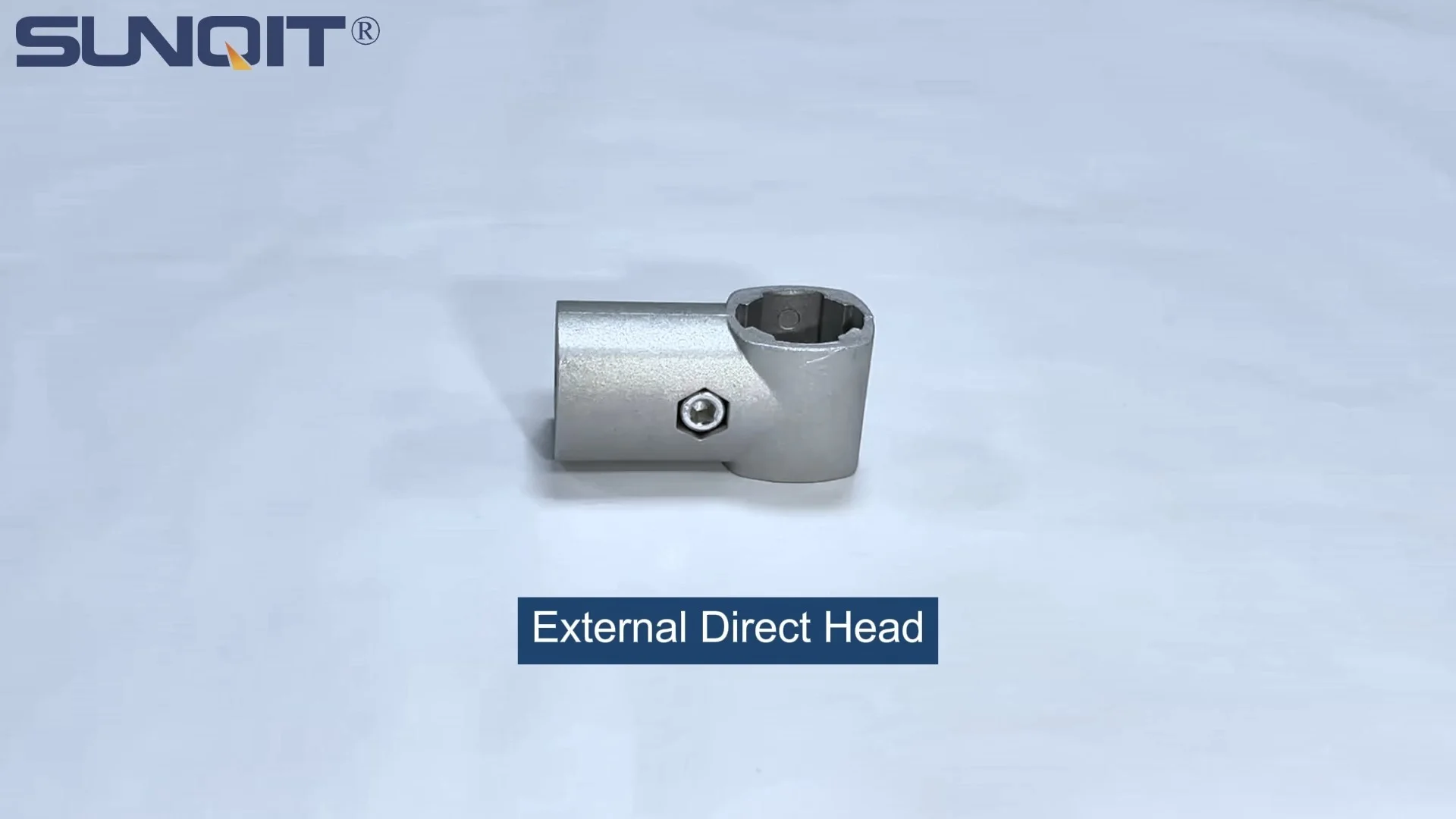
Why Two Way Aluminum Pipe Joints Matter More Than You Think
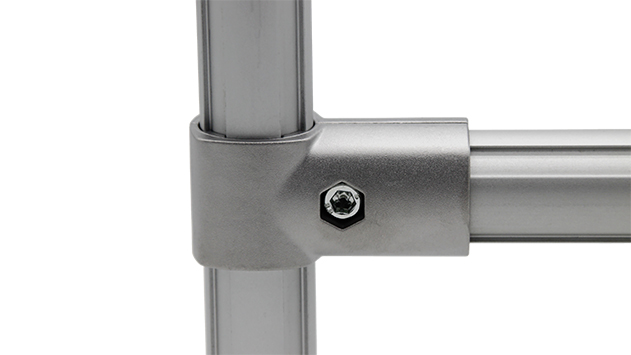
Before we get into the "how," let's talk about the "why." Two way aluminum pipe joints are the connectors that link horizontal and vertical aluminum pipes, forming the frame of your material rack. They might seem like components, but their role is pivotal:
Structural Integrity: Joints distribute weight evenly across the rack. A weak joint can cause the entire structure to twist or collapse under load, putting workers and materials at risk.
Flexibility: Aluminum profiles are prized for their modularity—you can reconfigure racks as needs change. But that flexibility depends on joints that can be easily adjusted or disassembled without compromising strength.
Longevity: Material racks are long-term investments. Joints made from low-quality materials or with poor design will corrode, loosen, or wear out quickly, forcing you to replace the entire rack sooner than expected.
Safety: A rack that wobbles or sags isn't just inefficient—it's dangerous. Loose joints can lead to falling materials, damaged equipment, or even workplace injuries.
Take the example of a automotive parts supplier we worked with last year. They were expanding their production line and decided to build a Material Rack B (3 row and 3 floor) to store small components. To save costs, they opted for generic, off-brand two way joints instead of ones specifically designed for aluminum profiles. Six months in, the middle shelf began to dip, and during a routine inspection, engineers found that the joints had started to crack at the connection points. The fix? Replacing all 48 joints with high-quality aluminum-specific ones. The lesson? Skimping on joints isn't a savings—it's a costly mistake.
Structural Integrity: Joints distribute weight evenly across the rack. A weak joint can cause the entire structure to twist or collapse under load, putting workers and materials at risk.
Flexibility: Aluminum profiles are prized for their modularity—you can reconfigure racks as needs change. But that flexibility depends on joints that can be easily adjusted or disassembled without compromising strength.
Longevity: Material racks are long-term investments. Joints made from low-quality materials or with poor design will corrode, loosen, or wear out quickly, forcing you to replace the entire rack sooner than expected.
Safety: A rack that wobbles or sags isn't just inefficient—it's dangerous. Loose joints can lead to falling materials, damaged equipment, or even workplace injuries.
Take the example of a automotive parts supplier we worked with last year. They were expanding their production line and decided to build a Material Rack B (3 row and 3 floor) to store small components. To save costs, they opted for generic, off-brand two way joints instead of ones specifically designed for aluminum profiles. Six months in, the middle shelf began to dip, and during a routine inspection, engineers found that the joints had started to crack at the connection points. The fix? Replacing all 48 joints with high-quality aluminum-specific ones. The lesson? Skimping on joints isn't a savings—it's a costly mistake.
Key Factors to Consider When Choosing Two Way Aluminum Pipe Joints
Now that we understand why joints are critical, let's break down the five key factors you need to evaluate before making a purchase. These aren't just technical specs—they're practical considerations that will impact how your rack performs day in and day out.
1. Load Capacity: Know What You're Lifting
The first question to ask is: How much weight will your material rack actually hold? This isn't just about the total weight of the rack itself, but the distributed weight of the materials on each shelf. For example, Material Rack B (3 row and 3 floor) typically holds small to medium-sized parts—think nuts, bolts, or electronic components—but if you're storing heavier items like metal castings, your joint needs will be very different.
Two way aluminum pipe joints are rated for specific load capacities, usually listed in kilograms or pounds per joint. But here's the catch: that rating is often for static loads (weight that doesn't move). If your rack will be used in a dynamic environment—where parts are constantly being loaded and unloaded, or where the rack might vibrate (like near a production line)—you'll need to factor in a safety margin. A good rule of thumb is to choose a joint with a load capacity 30-50% higher than your expected maximum load.
Let's say your Material Rack B has three shelves, each holding 50kg of parts. The total weight per vertical column (supported by two way joints) would be around 150kg. In this case, a joint rated for 200kg static load might seem sufficient, but if the parts are frequently being added/removed (dynamic load), opt for a 250kg or higher rating to be safe. Always check the manufacturer's specs—reputable suppliers will provide detailed load charts for different scenarios.
Two way aluminum pipe joints are rated for specific load capacities, usually listed in kilograms or pounds per joint. But here's the catch: that rating is often for static loads (weight that doesn't move). If your rack will be used in a dynamic environment—where parts are constantly being loaded and unloaded, or where the rack might vibrate (like near a production line)—you'll need to factor in a safety margin. A good rule of thumb is to choose a joint with a load capacity 30-50% higher than your expected maximum load.
Let's say your Material Rack B has three shelves, each holding 50kg of parts. The total weight per vertical column (supported by two way joints) would be around 150kg. In this case, a joint rated for 200kg static load might seem sufficient, but if the parts are frequently being added/removed (dynamic load), opt for a 250kg or higher rating to be safe. Always check the manufacturer's specs—reputable suppliers will provide detailed load charts for different scenarios.
2. Compatibility: Not All Aluminum Profiles Are Created Equal
Aluminum profiles come in all shapes and sizes, from the slim 2020 series to the heavy-duty 4080. Two way joints are designed to fit specific profile sizes, and using a joint that's too loose or too tight can compromise stability. For example, if you're building a Material Rack B (3 row and 3 floor) using 3030 aluminum profiles, a joint designed for 2020 profiles will be too small and won't grip properly, leading to wobbling. Conversely, a joint for 4040 profiles will be too large, leaving gaps that weaken the connection.
When shopping for joints, look for clear compatibility labels. Most manufacturers will list the profile sizes they work with (e.g., "fits 3030 and 4040 aluminum profiles"). If you're unsure, bring a sample of your aluminum profile to the supplier or ask for a test fit. It's also worth noting that some joints are adjustable, with screws or clamps that let you fine-tune the fit—these are great for projects where you might be using mixed profile sizes, but they're often more expensive than fixed-size joints.
Another compatibility consideration is the type of connection: T-slot vs. non-T-slot. Most modern aluminum profiles use T-slots, which allow joints to be secured with bolts that slide into the slot. If your rack uses T-slot aluminum profiles, make sure the two way joint is designed to work with this system—otherwise, you'll end up drilling holes or using adhesives, which weaken the profile and create weak points.
When shopping for joints, look for clear compatibility labels. Most manufacturers will list the profile sizes they work with (e.g., "fits 3030 and 4040 aluminum profiles"). If you're unsure, bring a sample of your aluminum profile to the supplier or ask for a test fit. It's also worth noting that some joints are adjustable, with screws or clamps that let you fine-tune the fit—these are great for projects where you might be using mixed profile sizes, but they're often more expensive than fixed-size joints.
Another compatibility consideration is the type of connection: T-slot vs. non-T-slot. Most modern aluminum profiles use T-slots, which allow joints to be secured with bolts that slide into the slot. If your rack uses T-slot aluminum profiles, make sure the two way joint is designed to work with this system—otherwise, you'll end up drilling holes or using adhesives, which weaken the profile and create weak points.
3. Material and Durability: Fight the Elements
Two way aluminum pipe joints are typically made from aluminum, steel, or plastic. Each material has its pros and cons, depending on your environment:
Aluminum: Lightweight, corrosion-resistant, and compatible with aluminum profiles (no galvanic corrosion issues). Ideal for indoor use in dry or moderately humid environments, like assembly lines or warehouses. Most joints for Material Rack B projects are aluminum, as they balance strength and weight.
Steel: Stronger than aluminum but heavier and prone to rust if not coated. Good for outdoor use or heavy-load applications, but they can cause galvanic corrosion if in direct contact with aluminum profiles (unless the steel is coated with zinc or another protective layer).
Plastic: Lightweight and affordable, but only suitable for very light loads (e.g., small parts storage). They're not recommended for Material Rack B or other multi-tiered racks, as they can warp under weight or degrade over time with exposure to heat or chemicals.
For most indoor material rack projects, aluminum joints are the way to go. Look for joints made from high-grade aluminum (6061 or 6063 alloys are common) with an anodized finish—this adds a protective layer that resists scratches and corrosion. If your rack will be in a humid area (like a food processing plant) or exposed to chemicals, opt for stainless steel joints with a passivated finish to prevent rust.
Aluminum: Lightweight, corrosion-resistant, and compatible with aluminum profiles (no galvanic corrosion issues). Ideal for indoor use in dry or moderately humid environments, like assembly lines or warehouses. Most joints for Material Rack B projects are aluminum, as they balance strength and weight.
Steel: Stronger than aluminum but heavier and prone to rust if not coated. Good for outdoor use or heavy-load applications, but they can cause galvanic corrosion if in direct contact with aluminum profiles (unless the steel is coated with zinc or another protective layer).
Plastic: Lightweight and affordable, but only suitable for very light loads (e.g., small parts storage). They're not recommended for Material Rack B or other multi-tiered racks, as they can warp under weight or degrade over time with exposure to heat or chemicals.
For most indoor material rack projects, aluminum joints are the way to go. Look for joints made from high-grade aluminum (6061 or 6063 alloys are common) with an anodized finish—this adds a protective layer that resists scratches and corrosion. If your rack will be in a humid area (like a food processing plant) or exposed to chemicals, opt for stainless steel joints with a passivated finish to prevent rust.
4. Ease of Assembly: Save Time (and Sanity)
Unless you're a professional installer, the last thing you want is a joint that requires special tools, complex instructions, or hours of fiddling to get right. Time is money, especially in lean system environments, so ease of assembly is a key factor.
Look for joints with intuitive designs: quick-release levers, pre-threaded holes, or simple bolt-on systems. Some joints even come with built-in Allen wrenches or tool-free clamps, which can speed up installation significantly. For example, we recently helped a small manufacturer assemble a Material Rack B in under four hours using tool-free two way joints—something that would have taken twice as long with traditional bolt-on joints.
Also, consider future disassembly or reconfiguration. If you think you might need to adjust the rack's layout later (a common scenario in lean systems), choose joints that can be easily loosened and re-tightened without damaging the aluminum profiles. Avoid joints that require glue or welding, as these are permanent and make modifications nearly impossible.
Look for joints with intuitive designs: quick-release levers, pre-threaded holes, or simple bolt-on systems. Some joints even come with built-in Allen wrenches or tool-free clamps, which can speed up installation significantly. For example, we recently helped a small manufacturer assemble a Material Rack B in under four hours using tool-free two way joints—something that would have taken twice as long with traditional bolt-on joints.
Also, consider future disassembly or reconfiguration. If you think you might need to adjust the rack's layout later (a common scenario in lean systems), choose joints that can be easily loosened and re-tightened without damaging the aluminum profiles. Avoid joints that require glue or welding, as these are permanent and make modifications nearly impossible.
5. Application: Match the Joint to the Rack
Not all material racks are created equal, and neither are their joints. A joint that works for a small benchtop shelf won't cut it for a tall, multi-tiered Material Rack B (3 row and 3 floor). Here are a few common rack types and the joints that work best:
Light-duty shelves (up to 50kg per shelf): Standard two way aluminum joints with plastic or aluminum bodies. These are affordable and lightweight, perfect for storing small parts or office supplies.
Medium-duty racks (50-150kg per shelf): Heavy-duty aluminum joints with reinforced corners. Material Rack B (3 row and 3 floor) falls into this category, as it typically holds medium-weight components. Look for joints with thicker walls and extra support ribs.
Heavy-duty racks (150kg+ per shelf): Steel or reinforced aluminum joints with high load ratings. These are used for storing large machinery parts or industrial equipment and often require additional bolts or welding for extra strength.
It's also worth considering the rack's orientation. If your Material Rack B will have horizontal pipes that extend far from the vertical supports (creating cantilevers), you'll need joints with extra lateral stability to prevent bending. Some joints come with built-in braces or gussets for this purpose—they're slightly more expensive but well worth the investment for cantilevered designs.
Light-duty shelves (up to 50kg per shelf): Standard two way aluminum joints with plastic or aluminum bodies. These are affordable and lightweight, perfect for storing small parts or office supplies.
Medium-duty racks (50-150kg per shelf): Heavy-duty aluminum joints with reinforced corners. Material Rack B (3 row and 3 floor) falls into this category, as it typically holds medium-weight components. Look for joints with thicker walls and extra support ribs.
Heavy-duty racks (150kg+ per shelf): Steel or reinforced aluminum joints with high load ratings. These are used for storing large machinery parts or industrial equipment and often require additional bolts or welding for extra strength.
It's also worth considering the rack's orientation. If your Material Rack B will have horizontal pipes that extend far from the vertical supports (creating cantilevers), you'll need joints with extra lateral stability to prevent bending. Some joints come with built-in braces or gussets for this purpose—they're slightly more expensive but well worth the investment for cantilevered designs.

Comparing Common Two Way Aluminum Pipe Joints: A Practical Table
To make it easier to compare your options, we've put together a table of three popular two way aluminum pipe joints, including their key specs and best-use scenarios. This isn't an exhaustive list, but it will give you a sense of what to look for when shopping.
| Joint Type | Material | Compatible Profile Sizes | Static Load Capacity (per joint) | Best For | Price Range (USD) |
|---|---|---|---|---|---|
| Standard Two Way Aluminum Joint | Anodized Aluminum | 2020, 3030 | 80kg | Light-duty shelves, small racks | $2-$5 |
| Heavy-Duty Two Way Joint | Reinforced Aluminum | 3030, 4040 | 150kg | Material Rack B (3 row and 3 floor), medium-duty racks | $5-$10 |
| Adjustable Two Way Joint | Aluminum with Steel Clamps | 2020, 3030, 4040 | 120kg | Mixed profile projects, reconfigurable racks | $8-$15 |
Note: Prices are approximate and may vary by supplier. Always check load ratings and compatibility with your specific project before purchasing.

Common Mistakes to Avoid
Even with the best intentions, it's easy to make missteps when choosing two way aluminum pipe joints. Here are three common mistakes we've seen (and how to avoid them):
Mistake #1: Choosing Based on Price Alone
It's tempting to go for the cheapest joint, but as we saw earlier, this can backfire. A $2 joint might save you money upfront, but if it fails and you have to replace it (or worse, repair a damaged rack), the total cost will be much higher. Instead, focus on value: a $5 heavy-duty joint that lasts 10 years is a better investment than a $2 joint that needs replacing every 2 years.
Mistake #2: Ignoring Environmental Factors
We once worked with a company that installed standard aluminum joints in a warehouse with high humidity. Within a year, the joints started to corrode, and the rack became unstable. They should have opted for stainless steel or corrosion-resistant coated joints. Always consider the environment: humidity, temperature, chemicals, and even UV exposure (for outdoor racks) can impact joint durability.
Mistake #3: Overlooking the "Test Fit"
Never assume a joint will fit your aluminum profile based on the label alone. Manufacturing tolerances can vary, and a joint that's supposed to fit 3030 profiles might be slightly off. Always test-fit a sample joint with your profile before buying in bulk—it's a small step that can save you from a big headache later.
Mistake #1: Choosing Based on Price Alone
It's tempting to go for the cheapest joint, but as we saw earlier, this can backfire. A $2 joint might save you money upfront, but if it fails and you have to replace it (or worse, repair a damaged rack), the total cost will be much higher. Instead, focus on value: a $5 heavy-duty joint that lasts 10 years is a better investment than a $2 joint that needs replacing every 2 years.
Mistake #2: Ignoring Environmental Factors
We once worked with a company that installed standard aluminum joints in a warehouse with high humidity. Within a year, the joints started to corrode, and the rack became unstable. They should have opted for stainless steel or corrosion-resistant coated joints. Always consider the environment: humidity, temperature, chemicals, and even UV exposure (for outdoor racks) can impact joint durability.
Mistake #3: Overlooking the "Test Fit"
Never assume a joint will fit your aluminum profile based on the label alone. Manufacturing tolerances can vary, and a joint that's supposed to fit 3030 profiles might be slightly off. Always test-fit a sample joint with your profile before buying in bulk—it's a small step that can save you from a big headache later.
Pro Tip: When in Doubt, Consult the Experts
If you're unsure which two way aluminum pipe joint is right for your Material Rack B or other project, don't hesitate to reach out to your aluminum profile supplier. Most suppliers have technical teams that can help you calculate load requirements, recommend compatible joints, and even provide installation tips. They've seen hundreds of projects like yours and can offer insights you might not find in a product spec sheet.Conclusion: Build with Confidence
Choosing the right two way aluminum pipe joint might not be the most glamorous part of your material rack project, but it's one of the most important. From load capacity and compatibility to durability and ease of assembly, each factor plays a role in ensuring your rack is strong, safe, and built to support your lean system goals.
Remember: A material rack is only as good as its joints. Whether you're building a simple shelf or a complex Material Rack B (3 row and 3 floor), take the time to evaluate your needs, test-fit joints, and avoid common pitfalls like choosing based on price alone. By investing in the right joints, you'll create a rack that not only streamlines your workflow today but also stands the test of time tomorrow.
So, the next time you're planning a material rack project, give those small but mighty two way aluminum pipe joints the attention they deserve. Your production line (and your budget) will thank you.
Remember: A material rack is only as good as its joints. Whether you're building a simple shelf or a complex Material Rack B (3 row and 3 floor), take the time to evaluate your needs, test-fit joints, and avoid common pitfalls like choosing based on price alone. By investing in the right joints, you'll create a rack that not only streamlines your workflow today but also stands the test of time tomorrow.
So, the next time you're planning a material rack project, give those small but mighty two way aluminum pipe joints the attention they deserve. Your production line (and your budget) will thank you.