- Company Articles
- Products and Technology
- Product knowledge
- How to Choose Turning Angle Code 3030: Factors to Consider Before Purchase

How to Choose Turning Angle Code 3030: Factors to Consider Before Purchase
Related Product
Turning Angle Code 3030
The turning angle aluminum profile connector provides a 90 degree hidden corner connection. 3030 it is means this size is used for 30 series aluminum profile.The corner code comes with set screws that allow for quick, easy connections.
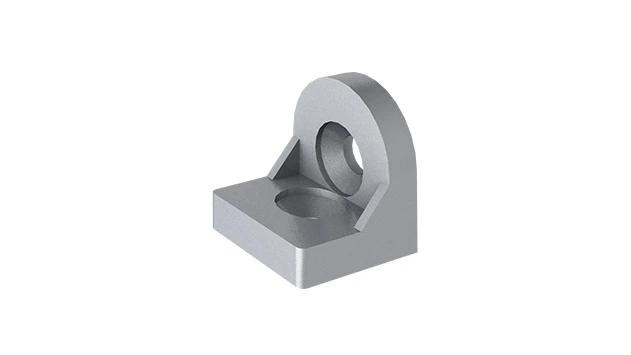
In the world of manufacturing, assembly lines, and industrial workspaces, the smallest components often play the biggest roles in ensuring efficiency, safety, and durability. Take, for example, the Turning Angle Code 3030—a seemingly unassuming piece of hardware that connects and reinforces 3030 aluminum profiles. These profiles are the backbone of countless structures: workbenches, material racks, conveyor systems, and even custom machinery. Yet, without the right angle code, these structures can wobble, fail under load, or require constant repairs, grinding operations to a halt and costing businesses time and money.
If you've ever walked through a busy factory, you've likely seen the results of well-designed aluminum profile systems: sleek workstations where tools are within arm's reach, sturdy material racks holding heavy components without bending, and smooth conveyors moving products from one stage to the next. Behind that seamless functionality? Carefully chosen accessories like the Turning Angle Code 3030. This guide will walk you through everything you need to know to select the perfect angle code for your needs, from material composition to supplier reliability. Let's dive in.
Understanding the Basics: What Is a Turning Angle Code 3030?
Before we get into the nitty-gritty of selection, let's clarify what a Turning Angle Code 3030 actually is. At its core, it's a specialized connector designed to join two or more 3030 aluminum profiles at specific angles—most commonly 90 degrees, but also 45, 135, or custom angles depending on the design. Think of it as the "hinge" that gives rigidity to a frame, ensuring that the structure doesn't twist or collapse under stress.
3030 aluminum profiles, for context, are extrusion profiles with a cross-section of 30mm x 30mm, featuring T-slots along their length. These slots allow for easy attachment of accessories like angle codes, brackets, and panels, making them incredibly versatile for building modular systems. The Turning Angle Code 3030 is part of the broader category of aluminum profile accessories, which includes everything from end caps to pipe clamps, all working together to turn raw profiles into functional structures.
But not all angle codes are created equal. A cheap, poorly made code might save you a few dollars upfront, but it could lead to loose joints, misaligned frames, or even structural failure. On the flip side, a high-quality Turning Angle Code 3030 will distribute weight evenly, resist wear and tear, and keep your aluminum profile system stable for years. So, how do you tell the difference?
Key Factors to Consider When Choosing a Turning Angle Code 3030
1. Material Composition: The Foundation of Strength
The first thing to check when evaluating a Turning Angle Code 3030 is its material. Most angle codes are made from aluminum alloys, but the type of alloy matters significantly. The two most common options are 6061 and 6063 aluminum:
- 6061 Aluminum Alloy: Known for its high strength and excellent corrosion resistance, 6061 is often used in applications where durability is critical. It contains magnesium and silicon, which enhance its tensile strength (around 310 MPa) and make it weldable. If your structure will bear heavy loads—like a material rack holding steel components—6061 angle codes are a solid choice.
- 6063 Aluminum Alloy: More malleable than 6061, 6063 is prized for its smooth finish and formability. It has lower tensile strength (around 215 MPa) but offers better surface quality, making it ideal for visible structures like workbench frames or display racks. It's also more cost-effective than 6061, which can be a plus for budget-sensitive projects.
Some manufacturers also offer angle codes with steel or stainless steel components, especially for high-load or outdoor applications. Stainless steel, for example, adds extra corrosion resistance, making it suitable for humid environments like food processing plants or outdoor storage areas. However, steel is heavier than aluminum, so it may not be the best choice for lightweight, mobile structures like turnover trolleys.
2. Load Capacity: Matching Strength to Your Needs
Perhaps the most critical factor is load capacity—the maximum weight the Turning Angle Code 3030 can support without deforming or failing. This isn't just about the weight of the objects on the structure; it also includes dynamic loads (e.g., items being placed or removed) and static loads (e.g., constant weight over time).
Manufacturers typically list load capacity in kilograms (kg) or pounds (lbs) for their angle codes. For example, a light-duty angle code might support 50 kg, while a heavy-duty model could handle 200 kg or more. To determine the right capacity, ask yourself:
- What will the structure hold? A workbench with hand tools will need less capacity than a material rack storing engine parts.
- Is the load static or dynamic? A conveyor system with moving parts exerts dynamic loads, which are harder on connectors than static loads.
- How many angle codes will be used? Distributing the load across multiple angle codes can reduce stress on individual components.
Pro tip: Always choose an angle code with a load capacity that exceeds your expected maximum load by 20-30%. This "safety margin" accounts for unexpected stress, like accidental impacts or uneven weight distribution.
3. Compatibility: Ensuring a Perfect Fit with Your 3030 Aluminum Profile
Not all 3030 aluminum profiles are the same, and neither are their angle codes. Compatibility is key—an angle code designed for an EU standard profile might not fit a national standard profile, even if both are 30mm x mm. Here's what to check:
- Profile Standard: 3030 profiles come in two main standards: EU (European) and national (e.g., Chinese, American). EU standard profiles often have deeper T-slots and stricter tolerances, while national standards may vary slightly in slot width or depth. For example, a 3030 national standard profile A might have a T-slot width of 6mm, whereas an EU standard 3030 profile could have a 8mm slot. The Turning Angle Code 3030 must match this slot size to attach securely.
- Connection Type: Angle codes connect to profiles using bolts, screws, or snap-on mechanisms. T-slot bolts, for instance, slide into the profile's slot and tighten with a nut, creating a strong, adjustable joint. Snap-on angle codes, on the other hand, click into place without tools, which is great for quick assembly but may not offer the same holding power as bolted connections. Ensure the angle code's connection method aligns with your assembly process—do you need tool-free setup, or is maximum strength a priority?
- Angle Design: While most Turning Angle Code 3030 models are for 90-degree joints, some are adjustable (e.g., 45-135 degrees) or designed for specific angles like 135 degrees. If your structure has non-right-angle joints—say, a triangular material rack—you'll need an angle code that matches that angle.
4. Environmental Resistance: Protecting Against the Elements
The environment where your aluminum profile system operates will also influence your angle code choice. Consider these factors:
- Humidity and Corrosion: In damp environments—like marine workshops or laundries—aluminum angle codes can corrode over time. Look for codes with anodized finishes (a protective oxide layer) or powder coating, which add a barrier against moisture. Stainless steel components or zinc plating can also boost corrosion resistance.
- Temperature Extremes: High temperatures (e.g., near furnaces) can weaken aluminum alloys, while extreme cold can make them brittle. If your structure is exposed to temperature swings, ask the manufacturer about the angle code's operating temperature range. For example, 6061 aluminum retains its strength better at high temperatures than 6063.
- Chemical Exposure: In factories using oils, solvents, or cleaning agents, the angle code's finish should resist chemical damage. Anodized aluminum is generally chemical-resistant, but for harsh substances, consider stainless steel or plastic-coated angle codes.
5. Supplier Reliability: Why Quality Starts with the Source
Even the best specs on paper won't matter if the angle codes you receive are inconsistent or poorly made. That's why choosing a reputable aluminum profile accessories supplier is just as important as evaluating the product itself. Here's what to look for in a supplier:
- Quality Control: Top suppliers invest in rigorous testing, like load testing each batch of angle codes or inspecting for dimensional accuracy. Ask if they have ISO 9001 certification, which indicates a commitment to consistent quality.
- Consistency: In modular systems, even small variations in angle code size can throw off the entire structure. Reliable suppliers ensure tight tolerances—meaning each angle code is nearly identical in size and shape.
- Customer Support: A good supplier will help you select the right angle code for your project, answer technical questions, and offer after-sales support if issues arise. Avoid suppliers who can't provide detailed specifications or rush through your inquiries.
- Lead Times: For time-sensitive projects, short lead times are critical. Check if the supplier keeps Turning Angle Code 3030 in stock or if they require custom manufacturing, which can delay delivery.
Don't hesitate to ask for references or case studies. A supplier who's worked with businesses in your industry (e.g., automotive manufacturing, electronics assembly) will have a better understanding of your unique needs.

Comparing Turning Angle Code 3030 Options: A Practical Table
To put these factors into perspective, let's compare three hypothetical Turning Angle Code 3030 models from a reputable aluminum profile accessories supplier. This table will help you see how different features align with various applications:
| Model Name | Material | Load Capacity (Static/Dynamic) | Compatibility | Finish | Best For |
|---|---|---|---|---|---|
| AC-3030-6061 | 6061 Aluminum Alloy | 200 kg / 150 kg | EU Standard 3030 Profiles | Anodized (Silver) | Heavy-duty material racks, industrial workbenches |
| AC-3030-6063 | 6063 Aluminum Alloy | 120 kg / 90 kg | National Standard 3030 Profile A | Powder Coated (Black) | Lightweight workstations, display racks |
| AC-3030-SS | Stainless Steel (304) | 250 kg / 200 kg | EU & National Standard 3030 Profiles | Polished | Outdoor storage, food processing facilities |

Common Mistakes to Avoid When Selecting Angle Codes
Even with careful research, it's easy to fall into common traps when choosing Turning Angle Code 3030. Here are a few pitfalls to steer clear of:
- Choosing Based Solely on Price: It's tempting to opt for the cheapest angle code, but low-cost options often cut corners on material quality or manufacturing. A $2 angle code that fails could cost you $200 in repairs or downtime. Invest in quality upfront.
- Ignoring Dynamic Loads: Many buyers focus only on static load capacity (weight at rest) and forget about dynamic loads (weight in motion). For example, a conveyor system with moving parts exerts dynamic stress on angle codes, which can cause failure even if the static load is within limits.
- Mismatching Profile Standards: Using an EU-standard angle code with a national-standard 3030 profile is a recipe for loose joints. Always check the profile's specifications (slot size, tolerance) before purchasing angle codes.
- Overlooking Installation Ease: Some angle codes require specialized tools or complex assembly, which can slow down setup. If you need to build structures quickly (e.g., for a temporary production line), prioritize angle codes with tool-free or quick-connect designs.
Practical Tips for Making the Right Choice
Now that you know what to look for, here are some actionable tips to ensure you select the perfect Turning Angle Code 3030:
- Consult with Your Engineering Team: If you're unsure about load requirements or material selection, involve your in-house engineers. They can calculate the exact stress the angle codes will face and recommend the right specs.
- Test Samples First: Most suppliers offer sample angle codes for testing. Mount them on your 3030 profiles, apply weight, and check for wobbling or deformation. This hands-on test is worth the small cost of a sample.
- Check for Certifications: Look for angle codes that meet industry standards, like RoHS compliance (for electronics manufacturing) or REACH (for chemical safety in the EU). Certifications indicate that the product meets strict safety and environmental guidelines.
- Plan for the Long Term: Consider maintenance and replacement. Will you need to replace angle codes in 5 years? Choose a supplier who will still be in business and stock the same model then.
Conclusion: The Small Component That Makes a Big Difference
The Turning Angle Code 3030 may be small, but its impact on your aluminum profile system is enormous. By prioritizing material quality, load capacity, compatibility, and supplier reliability, you can ensure your structures are strong, stable, and built to last. Remember, every component in your workspace—from the largest conveyor to the tiniest angle code—plays a role in keeping your operations running smoothly. Invest the time to choose wisely, and you'll reap the rewards in efficiency, safety, and peace of mind.
So, the next time you're planning a workbench, material rack, or conveyor system, don't overlook the Turning Angle Code 3030. It's not just a connector—it's the unsung hero that holds everything together.